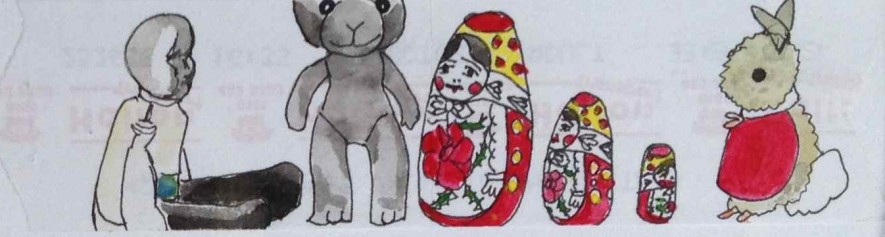
Embroidery and Textiles: A Novel Perspective on Women Artists’ Art Practice https://rupkatha.com/V13/n4/v13n437.pdf
In the Journal above I found a paper by three PhD Scholars, the keywords were Art, Feminism, Women, Gender, Embroidery, Textiles, Autobiographical Practice. This is an area of practice that I am familiar with, I use textiles, toys, methods that would be considered feminine, I have considered this element throughout my work as a method of executing my narrative.
The articles I have chosen have raised several questions, the contemporary modes of communicating through the use of medium, art therapy as a mode of self healing, does my use of medium, add to or take away from the narrative, would my art be viewed differently, if I used paint or ceramics instead of cloth. Does the fact that I am a woman pre position my choices, or do they kick back at contemporary notions of what art should be. Do the methods I use in my practice determine my art as a feminist as well as/or artist who is surviving childhood trauma?
Reading the article on Embroidery and Textiles, it struck me that this conversation was current, and that it was also a feature when I graduated from BA (Hon) in Embroidery at Manchester Metropolitan University in 2004.
The article refers to the exhibition “Entangled: Threads & Making” a contemporary woman artist art exhibition Turner Contemporary 28th January to 7th May 2017, 13 years after I graduated.
My interest still holds, the article raised questions are we still here? I know that in some areas we are not still where we were then, but it did initially make me angry. The fact that this conversation is still going strong suggests that the same issues are still prevalent today.
I plan to explore this issue further through research also through a renewed vigour to use textiles, embroidery and print on to cloth. I see the use of these mediums as tactile medium, I had not fully considered that the medium could be viewed as feminine. I deal with childhood traumatic experiences that are play over and over in a sepia coated memory loop that layers itself with coping mechanisms, unreliable accounts, sibling accounts of the timeline differing to my memory, therefore, I will explore these through creative research methods in a new body of work using current methods with textiles, embroidery and printing as a medium while I explore and analyse this challenge.
Film Club (Thursday 3rd February 2022)
Brogan Burke’s Film, I do not know the title, the film starts with images of what appear to be buildings, the sound is of running water, there is overlay of colour that merges into black and white then back to colour. The sound of running water did not match the film and therefore for me added another level of interest as to why the sound of water. It felt like a memory of place, not any particular place, just a place, such as you would encounter in a dream.
The film that stayed with me was (Incident at the bank 2010) where a robbery unfolded as a few individuals witnessed and their commentary is heard, For me the film questioned what we do in times of crisis, when occurrences out of the normal happen, as creatures of habit and routine how do we react, having spent many years working in an environment with individuals with complex challenging behaviour where fight or flight endorphins are never very far away, this film for me was also interesting from an ethical point of view, should the individuals ring the police, or as they did just viewed the whole thing unfolding before them, there was initially disbelief then questions, then the moral questions. I think that this film stuck with me as I am interested in the human character, and it feeds into my practice, fear, emotional.
Relevant Articles
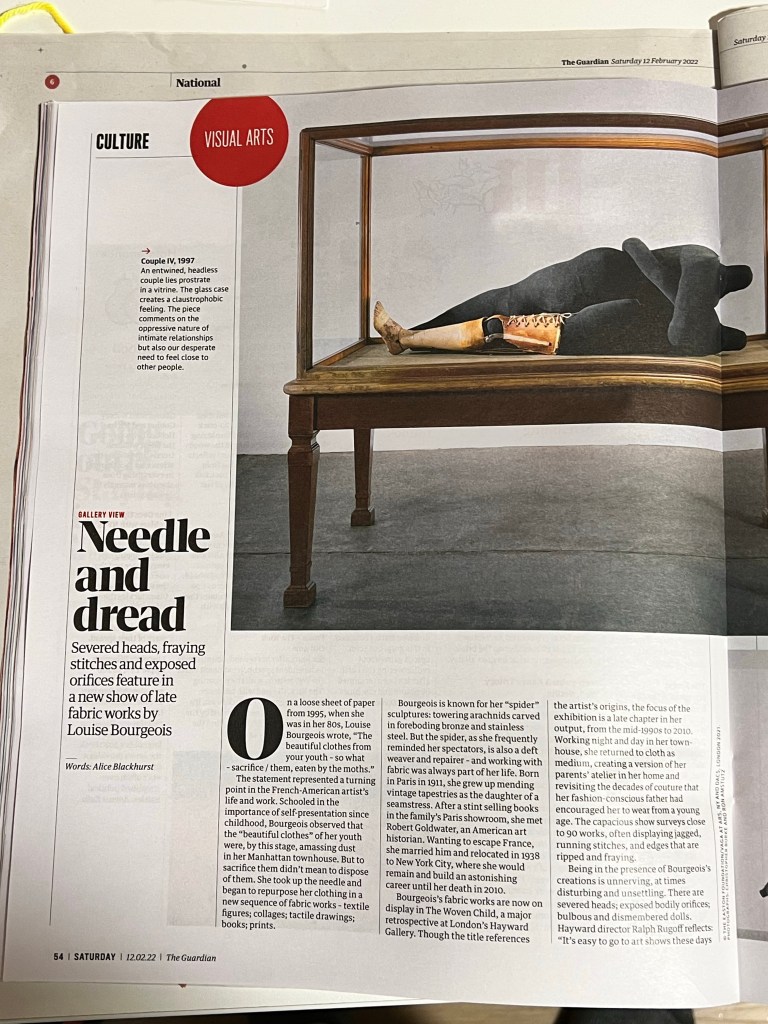
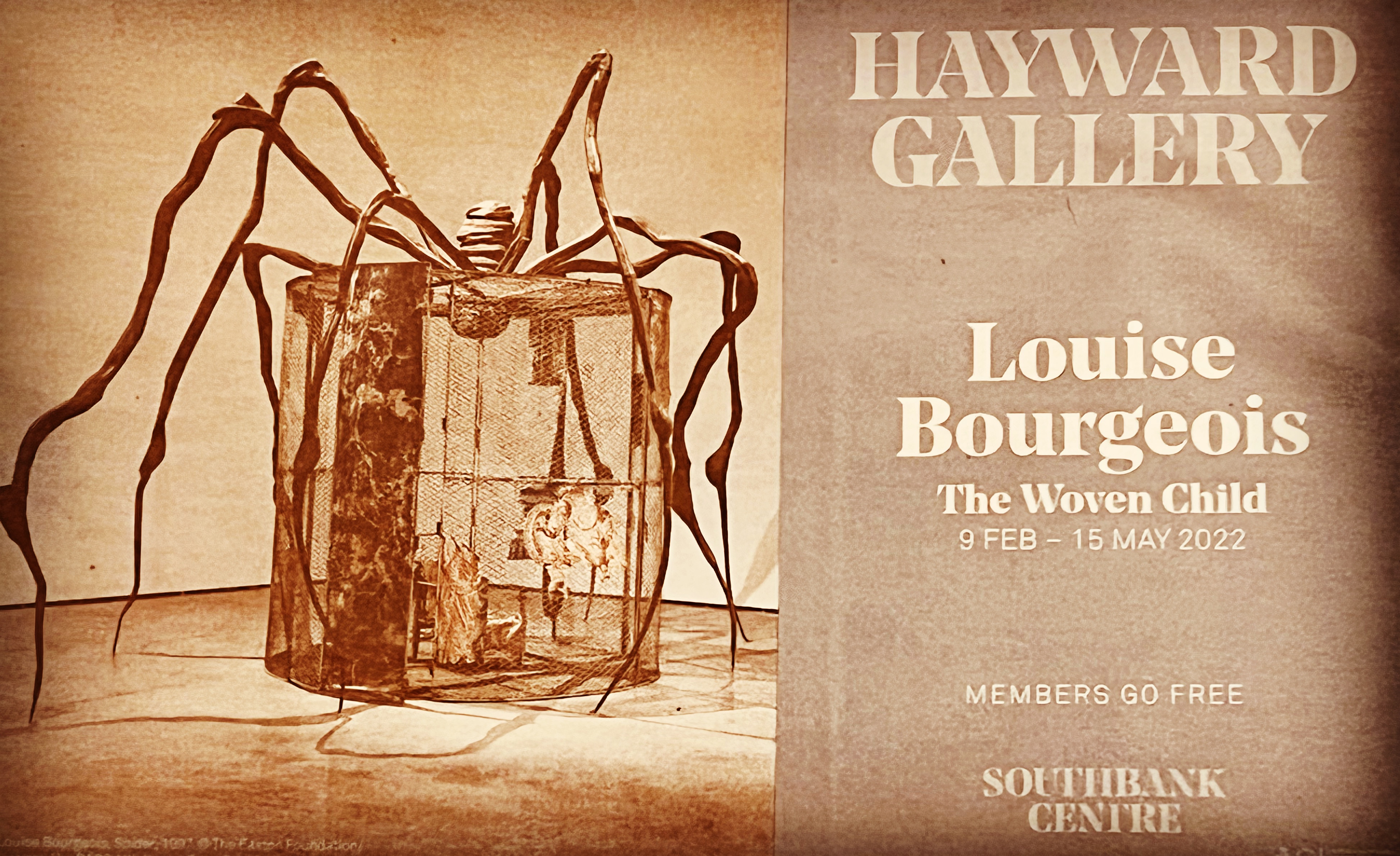
The Evening Standard had an article 1st February written by Tracey Emin on Louise Bourgeois: “Working with her was like holding hands with history” The article is written by Tracey Emin and is ahead of a new Hayward Gallery Exhibition about Louise Bourgeois. The article is about Tracey Emin as much as it is about Louise, however I will book tickets to the Hayward Gallery it is the first to focal exclusively using fabric and textiles, this interests me from a subversive point of view, using cloth, textiles can be seen as a predominantly female characteristic and this interests me along with my use of toys, textiles to convey a narrative of trauma.

On-line platform maker membership (Ruth Singer)
This week I also joined Ruth Singer online platform Maker Membership “for textile makers who want to be inspired, creative, imaginative and making work with meaning” It is a research, idea-generation and finding your own voice in creative making, it is not a taught course or workshop, there is a monthly series of prompts, ideas, techniques, tips, suggestions with much more focus on the meaning behind the work, Ruth guides participants through the way she researches new projects, develop ideas, test and trial things and refine her finished work to be uniquely hers. This is a huge difference from other textile platforms that I joined as fact finding missions, the participants are all involved in their own practices and areas of speciality. I viewed the previous zoom meeting as it had been recorded and this group crit scenario was refreshing, sharing of ideas with hints and suggestions given, unlike Textile.org, where you are given a materials list, and you follow the tutor exactly in the chosen activity without much room for creativity, and possibly this is the fundamental difference between these two platforms, the absence of research in the latter lending itself more to dare I say ‘woman’s work’ cross stitch patterns, samplers that follow the pattern and dare not veer from that, I even found the commentator’s both men, on Textiles.org condescending, you were not allowed to enter any part of the site until you had watched all of the annoying instruction videos as if I was not intelligent enough to find my own way around. I have discussed this further on the main page. I have ordered the Criminal quilts book from Ruth Singer.
Seminar on Visual Research
This week we had a seminar on Visualising Research, what I found really interesting and fired up about from this seminar was that I can totally relate to this, can research be visualised? material exploration, testing through making. Art based research stages of visualising the research, ON, IN, FOR, past, present and future respectively.
How far can just visual research be done without written material, labels, explanations, rational, contextualising the research with visuals. Creating time management visual plan?
What Methods, drawing, diagrams, pieces.
Contribution to culture not science, how would we articulate the reflection, could this also be done with visuals. I used to produce mood boards such as they use in fashion but these always were verbally explained? For me my methods within my practice lead to material thinking then further research of materials, con this constitute research as in depth as a science paper, would it also need a co existing written explanation?
My Initial thesis question:
How can visual art research methods heal the reactions to memories of childhood trauma?
This is evolving as I research my interest in this area, what works what doesn’t, initially I felt that my area of research would be predominantly trauma led, however within the process of this module, I am less interested in theories around trauma, more interested in how having faced traumatic events as a child young person, I respond emotionally within my responses to the events that had a profound traumatic effect on me, but shaped the differences in the way i see the world, I now celebrate those differences, my artwork practice continues to be an emotional response, it is a guttural response to the memory of the event, it ebbs and flows through my psyche. at its worst its an overwhelming insecurity that tells me i am not good enough, its a knot in the stomach, a sickening bile that raises to the mouth, at these times I can draw it into the practice to fuel the emotive, or I can suppress it back to the shadows until I feel brave enough to open the lid again.
Ty Pawb critique of current ideas from research exploration of current papers in academic papers.

I shared my printing experiments and how I had been angry at the paper I had chosen, I felt that nothing had changed, I have discussed this on the page. I stated that I am planning to explore this module using textile techniques. The piece above is an image of myself with my mother’s knitting. Gender manipulation or affirmation?
Continuing with the theme of research, I found the earlier workshop on Practice, what is practice, made me question pre conceived ideas, actively listening to arguments for and against what constitutes practice, is it just a new word for work? It made me really think about my own use of the word practice, what does this mean, what does it mean to me? After my academic tutorial, I made notes of what had been discussed and it helped me to contextualise my practice, such as, Why Artist not Arts for health, my use of material thinking, tactile, visual research, my idea to use fabric for my poster, at this point. Making by thinking by pushing boundaries.
This week we looked at these themes and explored the differences that I have commented on my main page for this module creative research methods.
Research into art and design
Research through art and design
Research for art and design
Statement of intent workshop in the afternoon, we discussed as a group what needs to be included, the format for this and then discussed it in small groups, we were then given 20 minutes to write out statement.
Statement of Intent
‘How can visual art heal memories of childhood trauma?’
My reason to explore this area is that it is a personal journey. I aim to research through practice; the act of making as a reaction to the emotional response to the memory of the actual trauma.
I aim to work with Wrexham Glyndwr University’s Psychology unit looking at Trauma in childhood, I feel that my input into this project could add a different dimension, trauma explored through visual art, and I am interested to find out what comes from working together in this area.
I will explore how do other artists convey their emotional experiences of trauma. Through material thinking, tactile / visual research, my intention for this module is to produce a body of work consisting of dolls, prints, drawings, using this physical research methods ‘through’ the act of making art, printing techniques on to fabric, ceramic investigation, stitch and embroidery techniques, the use of sketchbook and mind maps, to embellish and communicate a narrative within the body of work. Reflective writing through the act of making.
I plan to put together an A1 piece of cloth as a research poster presentation, this will be stitched and printed and will encompass elements of hidden research findings and information in the way of pockets/slits, 3D elements.
Using my blog platform, I plan to document my findings, new knowledge as well as, literature reviews, context reviews, visiting exhibitions/talks that are relevant to my practice, attending planned talk by artist Claire Curneen, meeting with researchers at the trauma unit, establishing ethical boundaries. Joining two online Maker’s platforms, Ruth Singer of Criminal Quilts and Textiles.org.
I was not sure if I had to produce completely new work or if I could continue with the body of work that I have already started? I was informed that I can continue with the body of work as well as new work.
Reflective Models
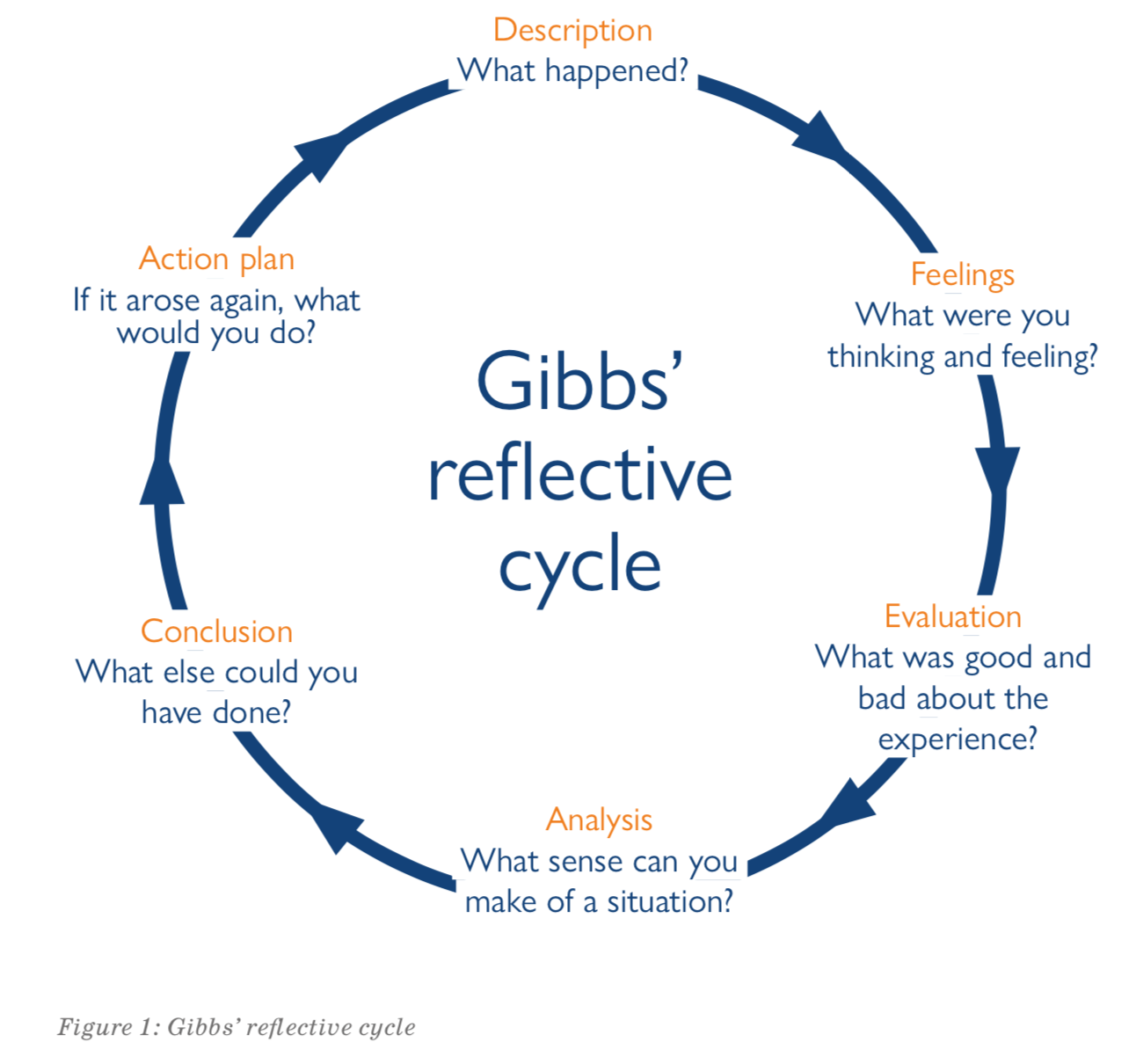
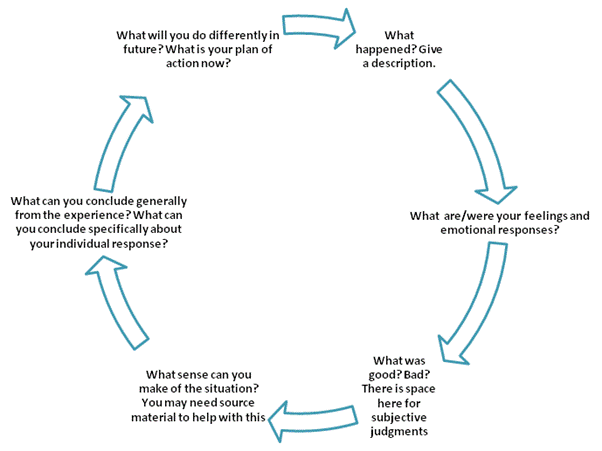
Group crit with Matthew Davies we discussed reflective modules, how could I use these models to reflect on my practice. I found that a combination of different models serves my methodology better than just one model, being able to ask myself what, so what, now what. these theories vary in their complexities but essentially enable the reflexion of learning in an activity with the emphasis on learning.
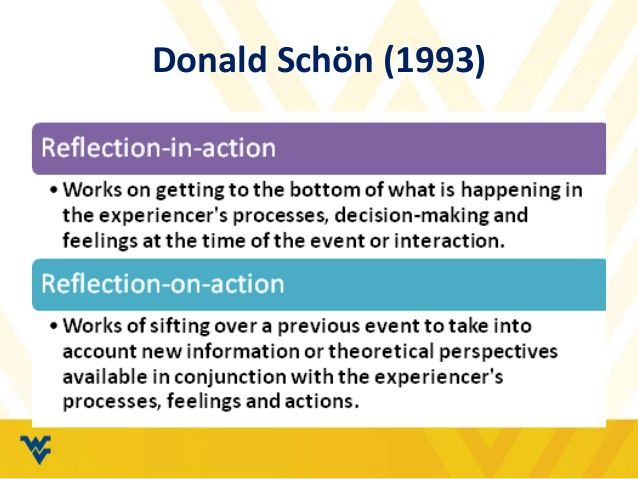
I find Schön’s reflective cycle below extremely relevant in the reflection of traumatic events for me, reflection in action, how I feel in the here and now, reflection on action after the event has happened and how these are different.

This is a Gibbs reflective model, having looked at these models, I conclude that they can be a useful as a tool to apply reflection, the difficulty can be that not all reflection follows every step, and not necessarily in the order here, however it is a good model to adopt to stop, take stock, especially for me, when I tend to flit from one method to another, to the onlooker, it may seem that I am in the process of chaos, when in actual fact I am testing out new processes that trigger further exploration and this quite often involves multi media.
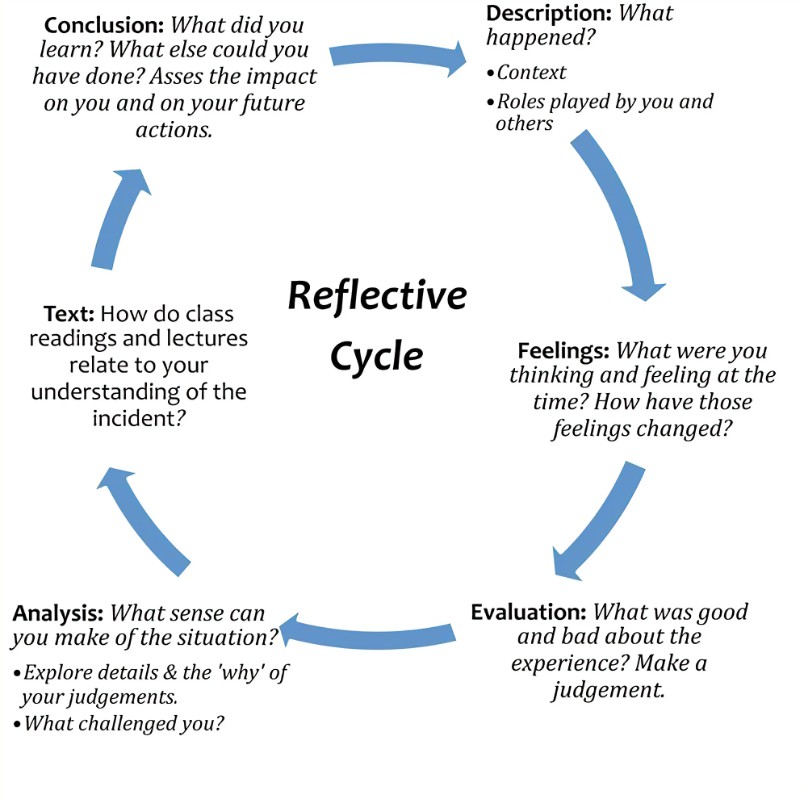
There are many others, they use Driscoll in nursing, I like the what, so what, now what but it is almost too simplistic.
These help to work out where I am and what I am doing.
 CarysAnne.Art