Liverpool Claire Curneen talk
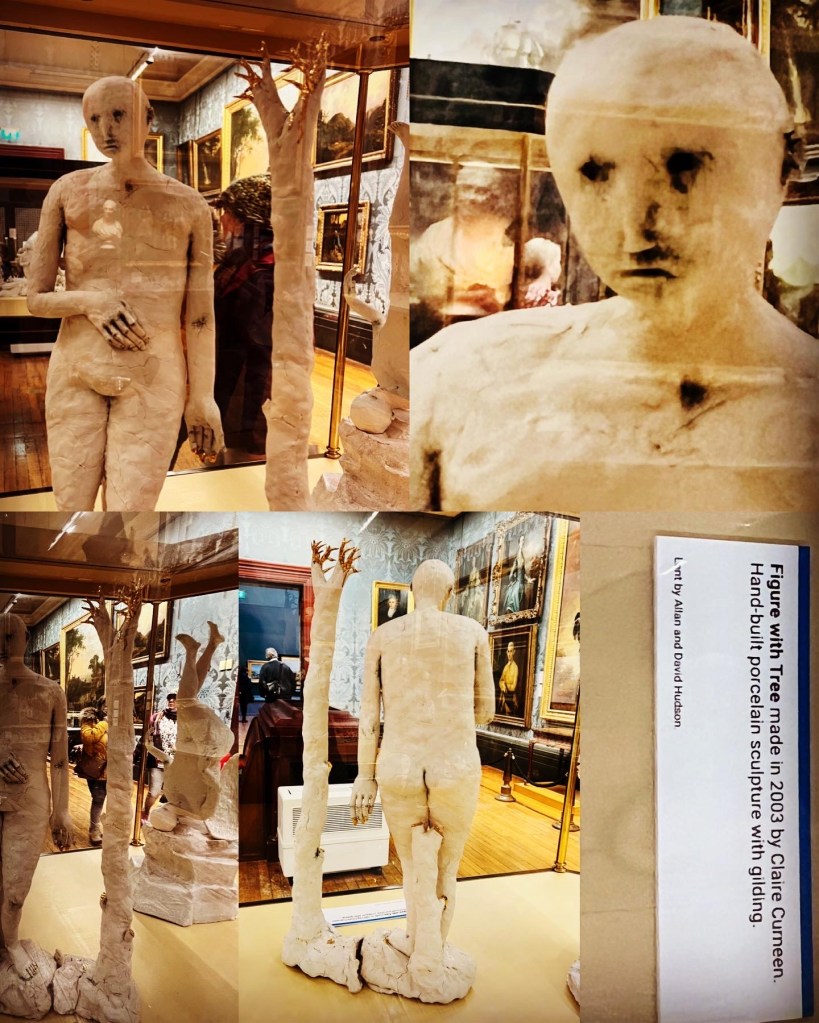
The figure, for me, the human condition is my way of expressing my trauma through my practice and through material thinking. It draws me towards artist who also work with what appears to be raw emotions, with figures such as Claire Curneen (below) a ceramicist who builds poignant figures, their venerability in their stance, the lack of facial features, their small heads and large hands, naked mostly without gender adding to the venerability, flowers growing out of their skin depicting life / death.
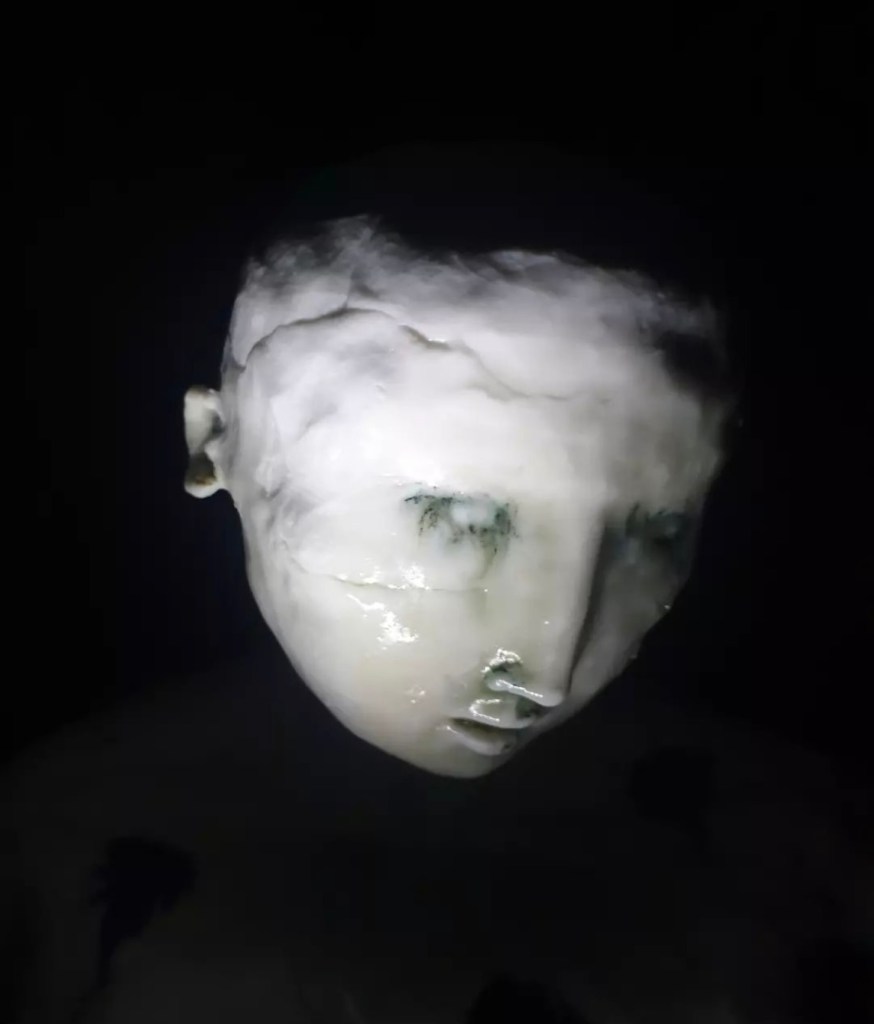
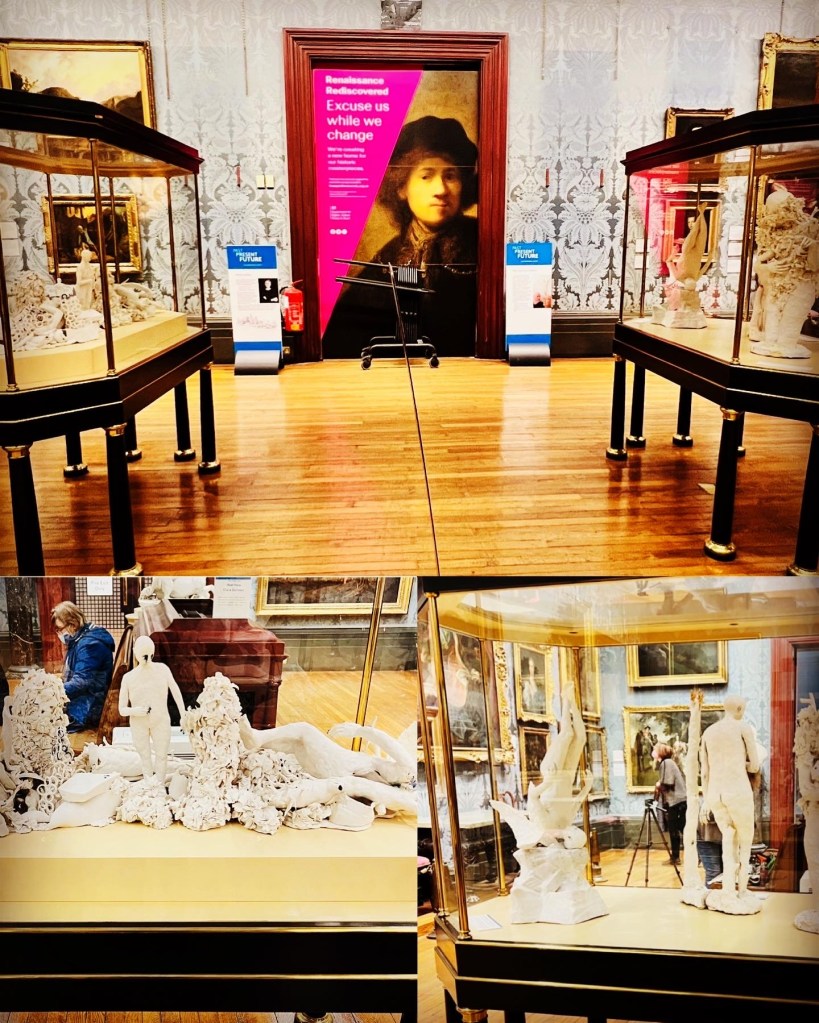
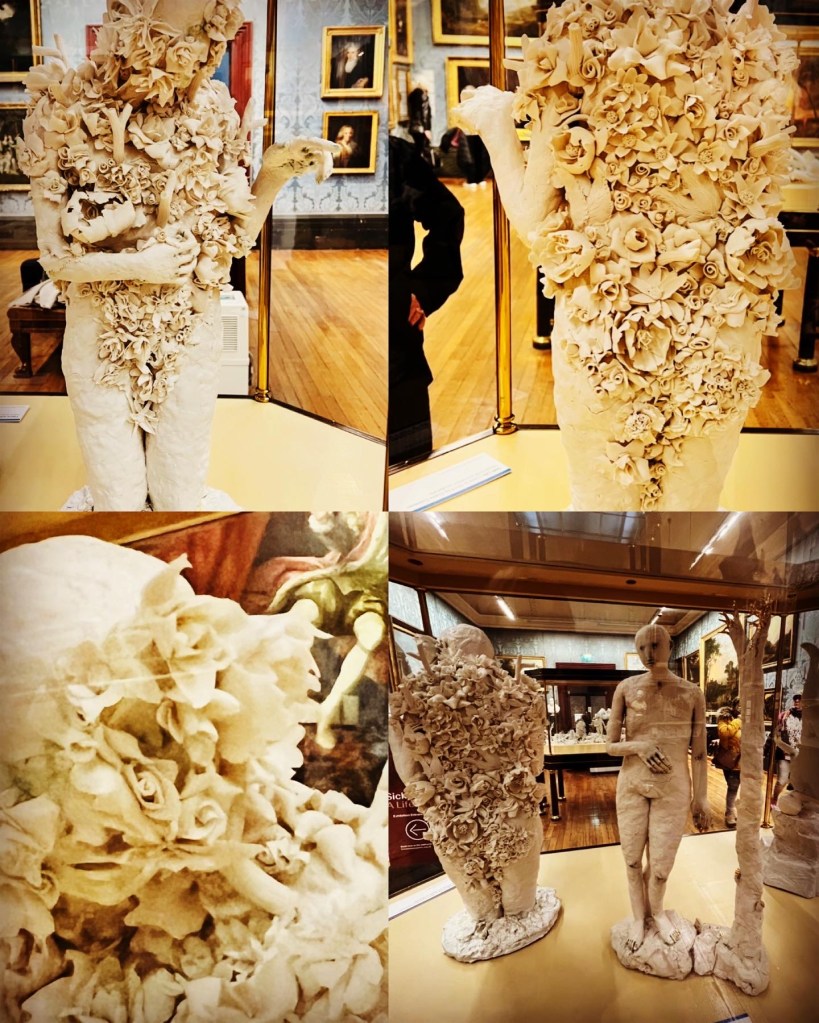
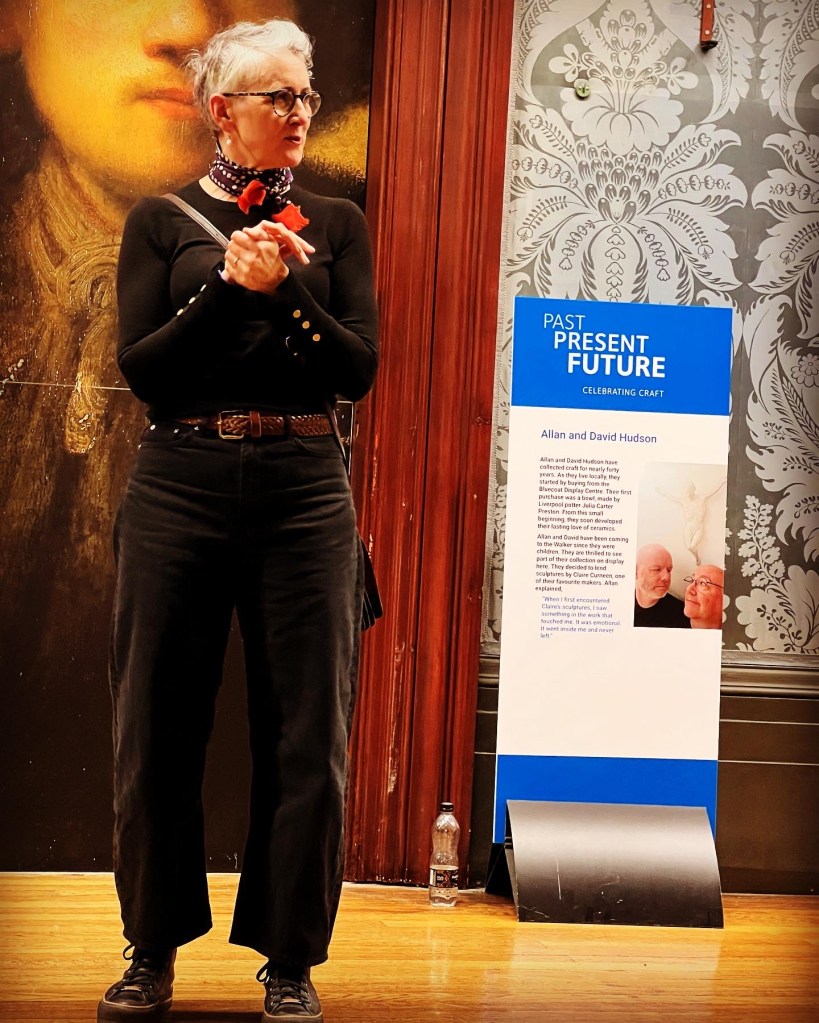
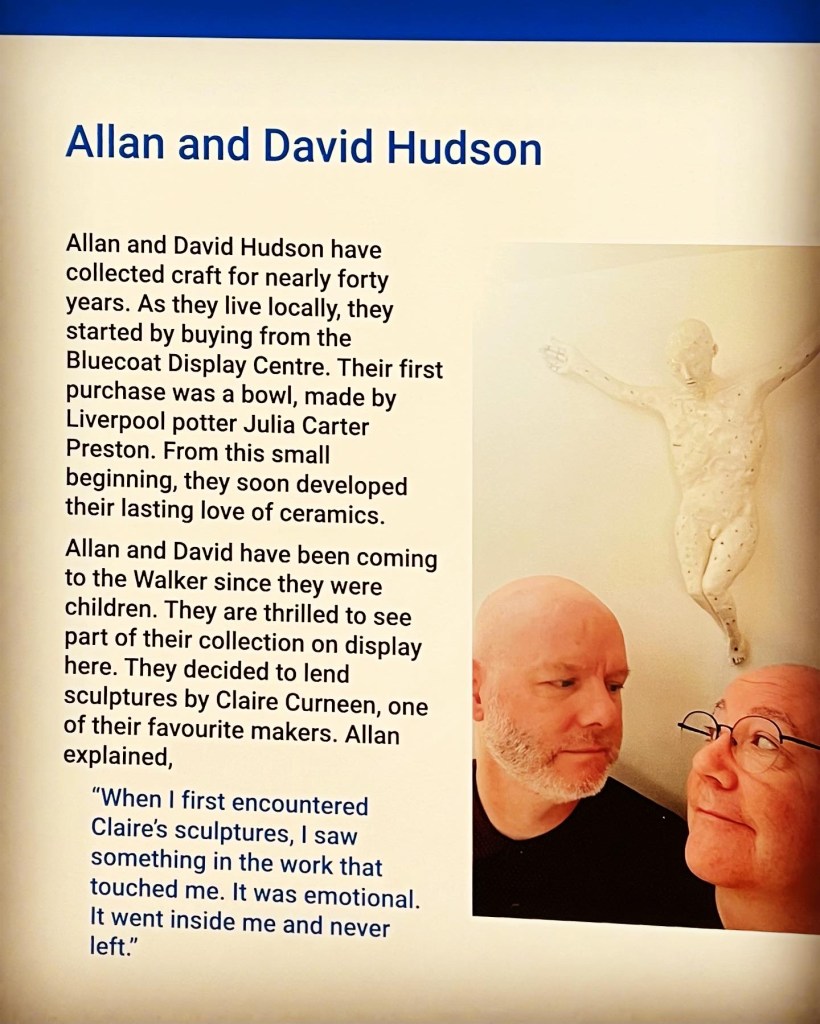
The talk was for over an hour, it was an informal talk in the gallery, I felt very honoured to be there, I already know Alan and Dave Hudson having met them years earlier, they have two of my pieces as well as a commissioned piece, they are important collectors and they semi detached home in Widnes is a shrine to collected artworks as well as William Morris wallpapers, they have several of Clair’s pieces in their collection. Talking to them both was monumental in establishing myself back on the artist platform, I may be gripping on for dear life but at least I am getting back to where I was.
Claire was charming, she went on the journey of her work, why she made the figures, how she felt about them what the symbols meant, the process of building these magnificent pieces, the technical skills involved in working with hand built porcelain, the importance of drawing. I asked her why the heads were small and the hands big, she said its just the way she made them, that then became her signature.
At this talk I also met Sharon Griffin Artist, Figurative sculpture in ceramics who’s figures have a huge anguish, her glazes add to the sense of rot as if the figures have been left in a forgotten forest to rot, their expressions and features quite often distorted.
I also met a dear friend of mine that I had not seen for an age, Angela Sidwell ceramic and mixed media artist who predominantly depicts animals within her work.
I was so glad that I had gone to the trouble to email the organisers for a ticket as it was sold out, I spent the day talking to likeminded people and it reminded me where I need to be.
London exhibition trip for three days including Louise Bourgeois at the Hayward Gallery, Foundling Hospital, Science museum, Natural History museum
The London trip was epic! I arrived late as I had booked a later train, but in time to see the full photographic exhibition but I did purchase books from their bookshop which was really good. Susan Sontag, (Regarding the pain of others and On photography) Both really interesting books.
Tate Modern Visit
We then went to the Tate Modern I elected to see the collections rather than the paid exhibition, having worked out my budget for the trip and decided which exhibitions to attend. The Radio Ballards room was brilliant, a tower of old radios, casette decks, gramophones all playing different sounds, it had a feeling of being in a different far off dimension, the light was dim with just the lights off the radio channel selection panels the noise merged was as if contact was trying to be made from far off other places, or I have watched too many films of this nature, the scale of the piece added to its majestic central position within the room.
The pieces I most admired from the collections was Patricia Belli pieces from 1996 Mixed media, textiles rope and wood, my favourite piece made from various used corsets stitched together to emphasise the painful effect that corsets have upon women’s bodies. In the description notes it states that the title refers to a paining by Freda Kahlo entitled The Broken Column 1944 where Kahlo depicted herself wearing a steel corset, it goes on to say, Belli’s layered corsets suggests the collective pressures and enduring inequalities that women face in a patriarchal society.
Natural History Museum
Photographer of the year was a paid for exhibition within the museum that I decided to visit instead of the V&A exhibition planned, This showcase of exhibition entriy winning categories were phenomenal, It showed the extraordinary talent of photography in this digital, everyone has a smartphone camera age, their categories spanned the earth, oceans, ecology, animals, human destruction, people’s choice and although less relivant to my practice than other exhibitions, I felt it was w worthwhile excursion.
The rest of the natural history museum was extraordinary, with all sorts of curiosities, granted not as dedicated to curiosities as Pitt rivers museum but it was a beautiful building, majestic and interesting.
Sience Museum
Initial thoughts were why am i here? but on the second floor it was dedicated to medicine, anatomy, prosthetics for children, illnesses and all manner of diseases and mental health issues, brain function and an original depiction of a pharmacy it really was brilliant.
Louise Bourgeois The Woven Child
The Hayward Gallery was the first major retrospective to focus exclusively on Textile pieces, the exhibition opens to a room with hanging clothing off a contraption that looks like an extended hallway coat hanger, yet many of the pieces are translucent, there is a black sequin dress, it takes me a few seconds to realise that these are hanging, not from hangers but from huge animal bones, like flesh hanging off the bone, lifeless hanging, waiting in limbo and I got quite emotional about the lifeless clothes, deceased former owner that no longer needs them, but the essence of her remains in these bits of fabric that once adorned her frame, if they did that is?
There were so many pieces that moved me, the (Cell XX11 Portrait, 2000) for me a child who had given up, I have no knowledge of why she made this piece sitting in its cage, head down without arms, the stitching visibly on purpose, but it felt more like a raw emotional way to stitch, was it rushed, the little shoes, almost missed these, are they shoes, or is it the way the feet have been stitched? Sitting on it’s own in a cage as it is brings forth strong emotions of abandonment and i am almost overwhelmed with grief for this piece, the Lady in Waiting 2003 a small figure sitting on a woven tapestry chair and from her stomach emits a spider it is part of her, its metal legs protruding, this figure has no arms as such only spider’s legs. the tapestry fabric that has been used is such a difficult fabric to use in this intricate way its unforgiving, its open weave so difficult to sculpt and I admire her skill.
What strikes me the most is the sheer volume of work produced here, the patchwork pieces the stacked cushions, but most of all of the bodies, the soft sculpture bodies, life hanging from each other, just legs, small bodies in different stages of pregnancy then with umbilical cord in a small scene indicative of a nativity scene for a maternity hospital except there are mirrors everywhere. On the whole this exhibition felt like I was privy to Louise’s private collection, where she worked things out her fabric sketchbook, some pieces felt raw and unfinished such as the pinned hooks and eyes. I was emotionally drained on leaving but in a very good way, knowing that I felt that other artist have poured their emotions into their work.
Foundling hospital museum, was harrowing in parts, reading about mothers who had no way of feeding their children having to give them up, also harrowing depictions from the former children who lived there, beautifully put together exhibitions, a good mix of how the fashion to be a patron became fashionable among the wealthy.
Serpentine North Gallery Radio Ballards opening day of this exhibition and it was such an emotive exhibition artists working with community groups responding to mental health, abusive relationships, dependancy, and the way that these groups had responded to working with the artists, the students on the Art for Health should visit this exhibition, wellbeing, community support and how they got through their issues. The film I saw about a young woman who had to find a way to cope to ward off mental illness by walking the soundtrack of a choir singing adding to the emotive film made me cry, for personal family reasons both my sisters suffer with bipolar condition, one walks the other heavily relies on medication, so its a subject close to my heart.
Whitechapel gallery A century of the Artist studio 1920-2020 was a fascinating look into how artists make their work, Fraces Bacon among those shown, such a different and interesting look at how we as artists produce work everyday. At this stage in the London trip I wish I had more time to explore further, the whole trip was enlightening and I feel it has helped me to contextualise my practice, asking the questions at each point, where do I sit within this.
Liverpool Tate Emily Speed,
I was slightly disappointed with this exhibition, it felt more like a project, but perhaps I missed the point, It did not tick any boxes, it may have been due to the setting which was dimly lit and i’m not sure why except that the film was also playing in the same space.
Bluecoat Craft display centre Jess Chorley
I have been following Jess Chorley’s work for some time, her work is indicative of lady’s samplers from victorian times, it has been popular in the stitching community, her shop in Camden market was on my hit list, but she has moved to new premises and I have moved on with what is now on my hit list.
Bluecoat exhibitions
Suki Chan, a series of films abut memory each film was set in a room adorned to look like that of a nursing home and it added to the sentiment of the films, there was a warning before entering that these could cause an emotional reaction, they were not wrong having worked in that field it was emotive, how memory fades, what is left behind, once you enter one of these places, where does your identity go to, it certainly does not come with you, formerly important people reduced to Bill in the room on top of the stairs who always looses his teeth, it made me think about my own mortality and what will be left after i have gone. very powerful exhibition beautifully put together, my reaction to the exhibition is that all that was missing was the smell of piss, apologies but its true.
Hayv Kahraman (The Guardian, 21st February 2022 printed 19.05.2022)
I am panning to go to see this when I visit London in June.
Plas Bodfa
Part of the Anglesey art open studios, a mansion in need of repair, a former steak house restaurant, old people’s home set in grounds overlooking the Menai Straights above Beaumaris a dramatic landscape where the sea channels the island away from the Carneuddau mountains and Snowdonia behind them in the blue haze of a beautiful clear day.
The house is now owned by Julie Upmaer they live in mobile home below the greenhouse where they begin to transform Plas Bodfa into a family home, an Artist who plans on setting up an Artist community and centre, the exhibition brought together 77 artists who responded to a “Continuum of time”
This exhibition for me is the best one I have been too! All the artists responded in their own style, some directly, using the surroundings to influence their making. I particularly was moved by the oil paintings of the former residents of the old peoples homes, especially the one where the outline of the person in the wheelchair looks out at the view.
What I felt was exiting was that this felt inclusive, it felt accessible, achievable as an artist it showed me where I felt my art belonged, it gave me courage for the possibilities ahead. The collective power of artists working together. I will post pictures to follow.
I have attended many other online and artist studios, but I’m out of time, my Instagram artist page feature on my home page has the images, my phone has decided that I cannot upload any images at this point, it is a learning curve that although technology is meant to improve speed and efficiency, I disagree and it has been an annoying hindrance at times but I am pleased of where I have got to with it.
 CarysAnne.Art