06/10/2022
Module Launch
KH went through the Module handbook, specifications, aims and timetable. Having been through this process with previous modules, I found it much easier this year. Transitional skills begins with a skills audit workshop, strategic planning of activity towards development of identified learning.
Initial Investigations
I have begun to investigate, through my practice, that due to my debilitating rheumatoid arthritis/ fibromyalgia diagnosis, that I have found that my strength in my hands has faded and at times long stitching and manipulating fabric processes to be extremely difficult and painful.
This has been mentally and physically devastating, coming to terms with a debilitating disease that limits one’s ability to make art in the way that I had chosen to express myself.
I am now resolving these recent issues, by accepting and exploring what I can do, rather than what I am no longer able to do.
Skills Audit
This workshop was really helpful to understand where I am as an artist, what my discipline is, where my strengths are. I had not considered these questions as a whole, I have concentrated on my art practice, the who, the what and the why of my practice rather than the inward looking that I have done over the summer, on reflection this has also been useful, but looking at the final picture above, I can see my artistic skills as a whole. My conclusion to the workshop is that I need all of these areas to continue to practice as a successful artist as I feel that they feed into each other.
My homework is a skills audit form. The form included in depth, detailed list of skills, such as critical, analytical and creative thinking, flexible team working, problem solving, communication, professional, adaptable, efficient at time management and planning, independent learner and researcher, reflective, self aware, self motivated, knowledge in my subject area, IT literate and competent in applying knowledge and skills. As a mature student, having a proven track record in some of these areas with transferable skills from different situations and life experiences, I identified that the area of critical and analytical thinking is where I need to focus on as these concepts are fairly new to me at this current level as well as being dyslexic I tend to apply practical hands on processes to problems and struggle with the literature.
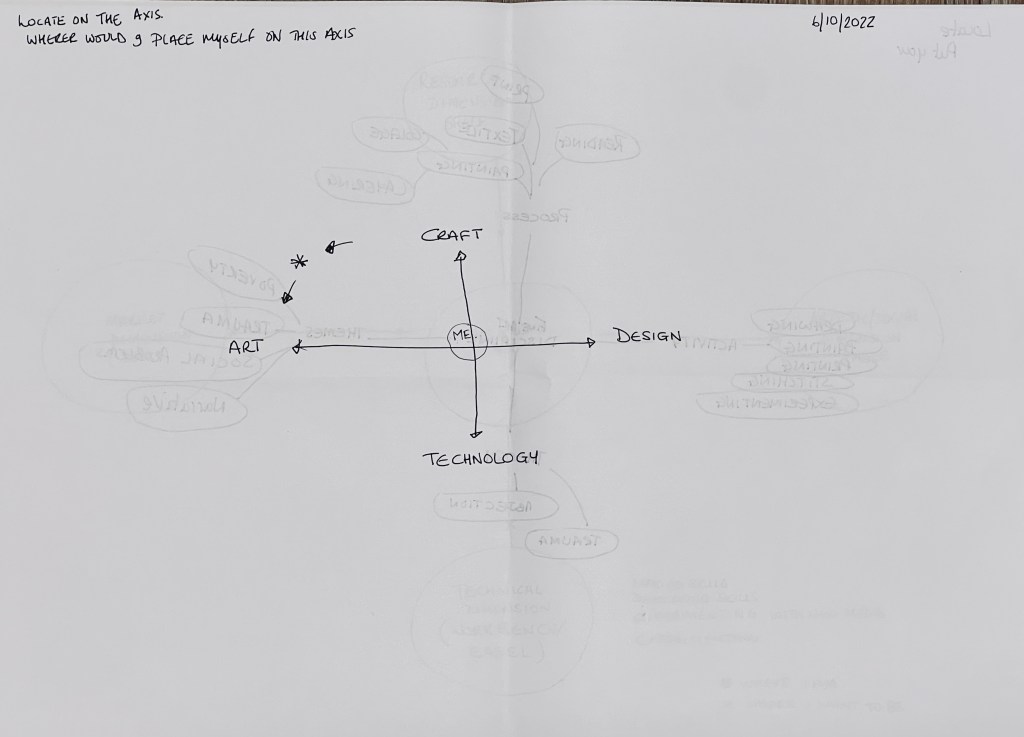

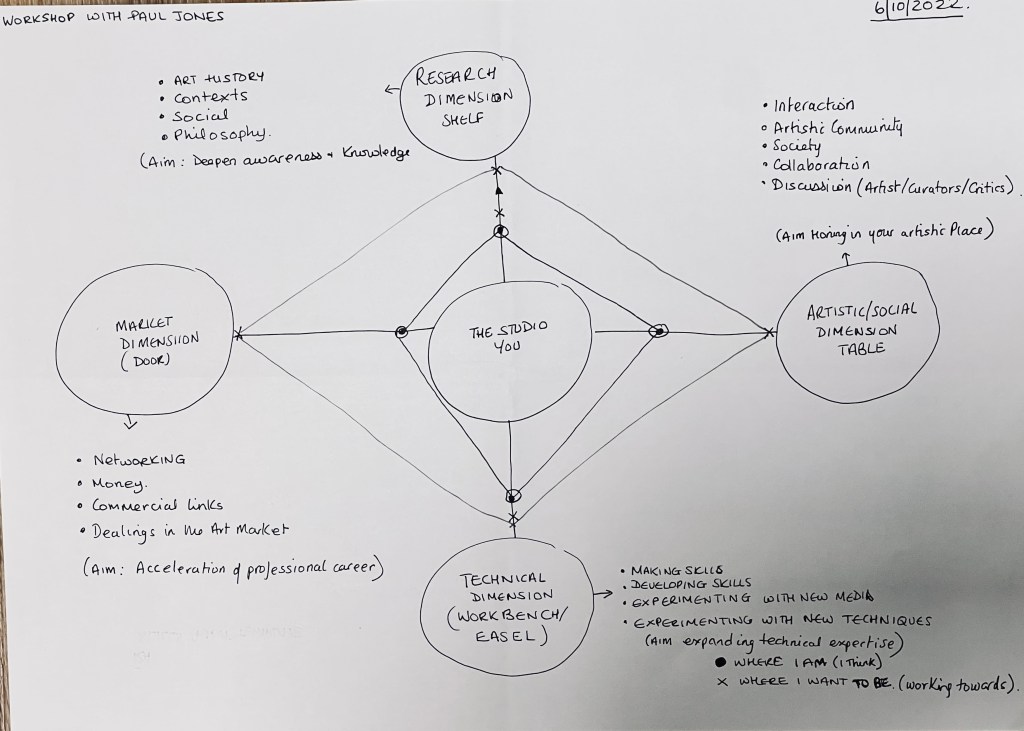
This Skills audit helped me to see where my gaps are, on reflection, I will do more reading to fully explore the critical, analytical and creative thinking. I struggle with reading and therefore I tend to avoid at all costs, audible is accessible but it lacks all the titles that I am looking for and therefore I have tasked myself to read small chunks each day and will get help from my dyslexic tutor.
Reflections
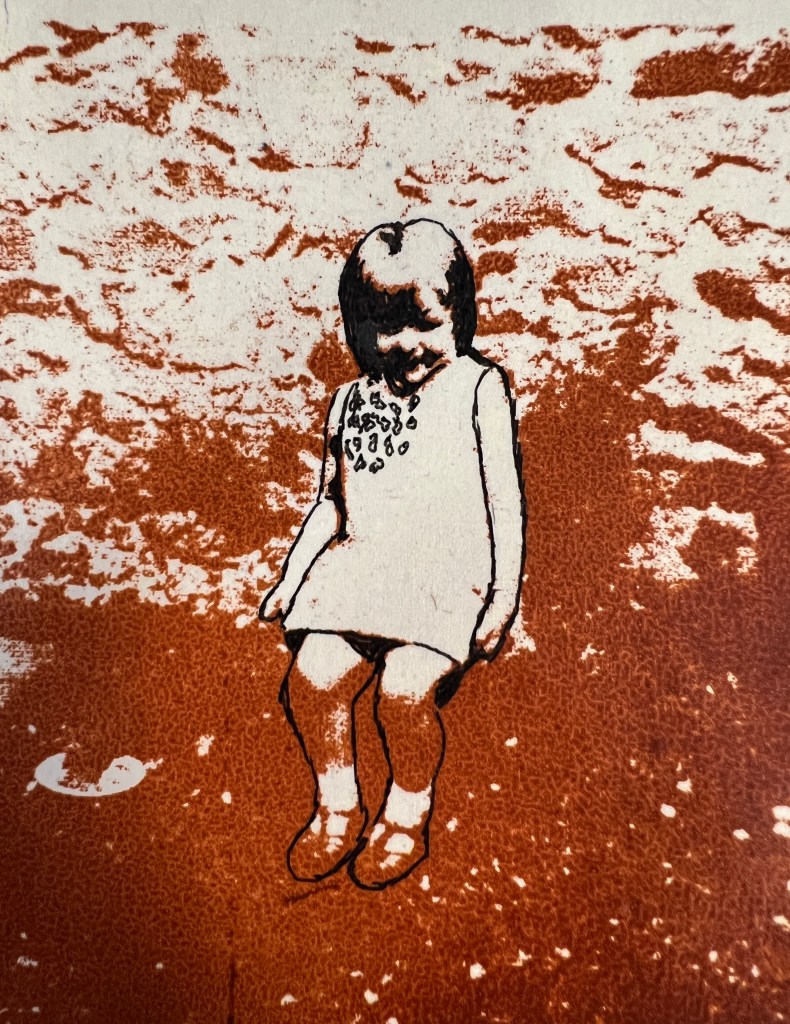
Having spent some time pondering these questions, overall my practice has been materialised through the use of found toys, dolls, that I have manipulated using deconstruction and re construction using a variety of methods to narrate a personal journey with trauma in the hope to communicate this through the work without spelling out the details that I still find too difficult to do and therefore this is the reason that I struggle to articulate what some work is about.
During my first year on the MA I feel that I resolved some of these issues, I found that it was ok to just say that the work is born from childhood trauma, not just my own but a collective trauma faced by so many children born into families where there were complex issues, domestic violence, financial problems.
There are several traumatic events that plagued my own childhood and early adulthood, for me it lead to shame, denial, an internal rage, and post-traumatic stress.
The internal rage and stress changes the way you deal with the world it also means you don’t tell anyone, you just bury it deep down, surviving in flight or fright where happiness could be snatched away at any moment. your ideas of a happy life are so screwed up from a dysfunctional family who are also dealing with their own demons and personal trauma. All you know is that you do not want that for your own children, and fight to ensure that the cycle is broken.
I took a long time and the love of a wonderful human being to undo some of that rage, the internal conflict that is suppressed and managed to a certain extent, It is always there a heightened sense of fight or flight that drains your mental health, makes forming friendships hard and can lead to insecurities, depression and mental health issues.
My outlet is and always has been through creative expression. Up until my Masters I was unable to acknowledge or articulate the trauma and pieces of work would have ambiguous or even humorous titles to hide behind, just like the tortured clown.
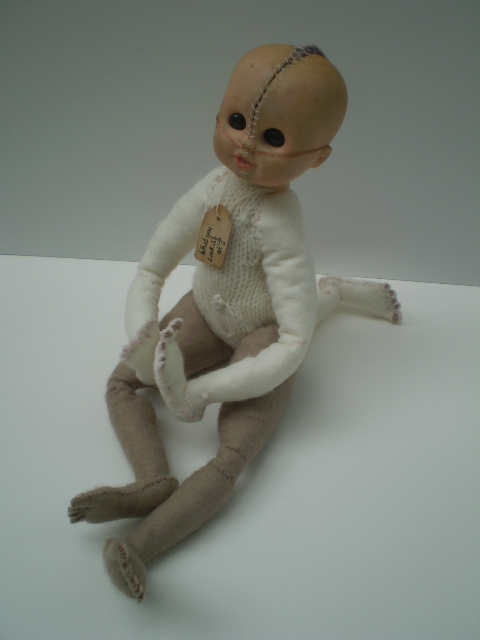
Being able to articulate what my work is about is a work in progress, having a creative outlet has helped me to heal old wounds.
My aim has always been to help others who have no voice, or have been through similar experiences. Be it that they sense some sort of identity to the trauma within my work, or to let them know they are not on their own.
This is what happened to me, I found artworks that spoke to me of what I saw as the artist’s internal rage and i saw a way to heal myself. It has taken a lifetime to admit these multiple complex traumatic experiences which led to many bad decisions in my early adulthood and to question why does trauma attract trauma?
Art that inspires my practice
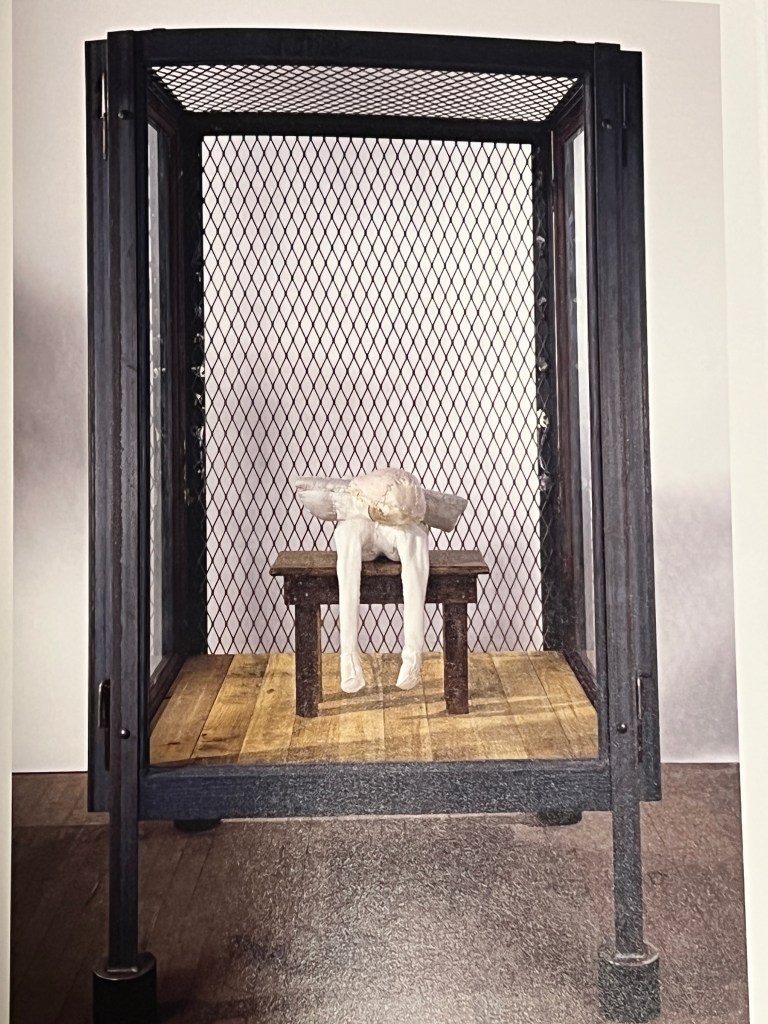
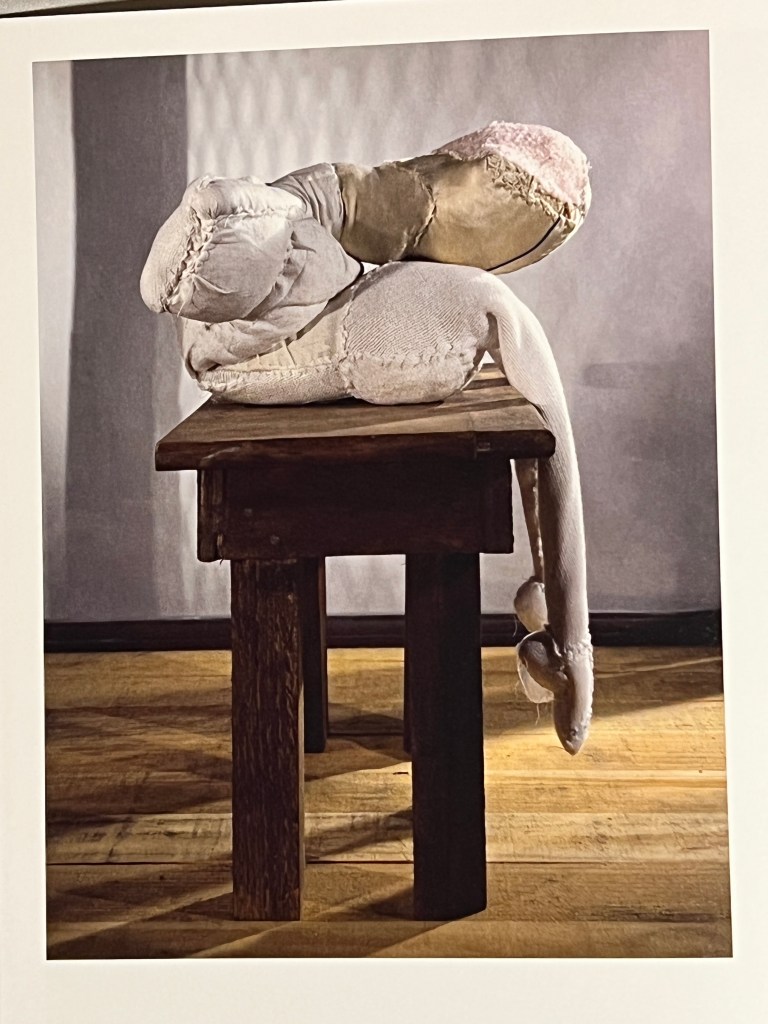
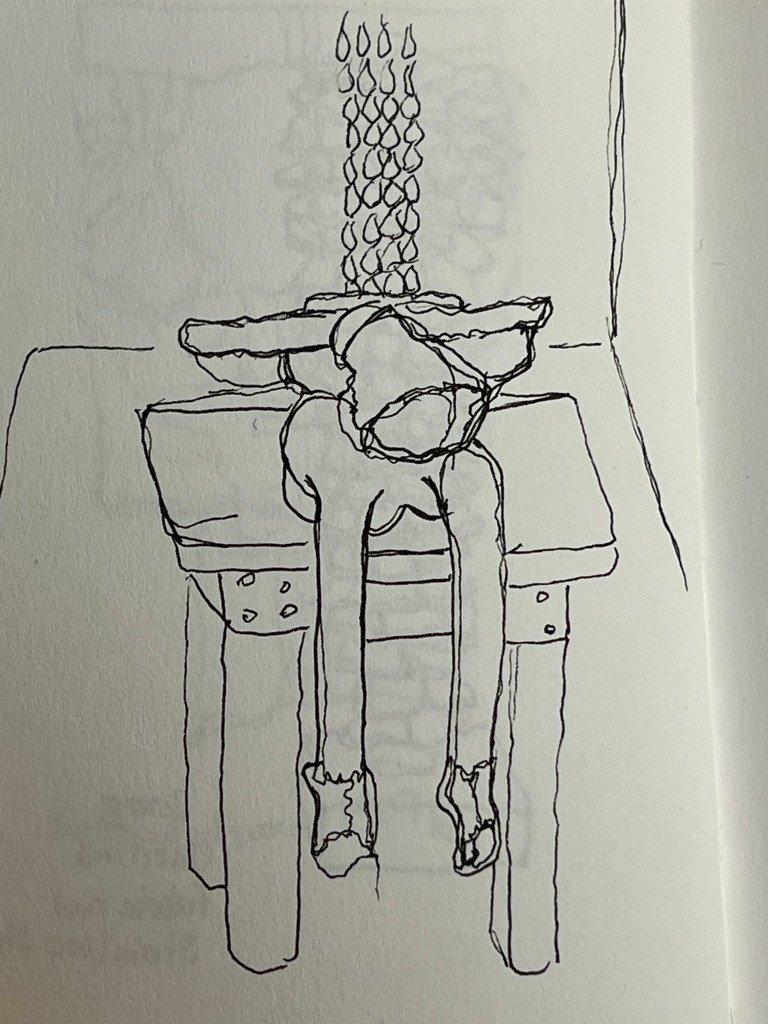
Louise Bourgeois images from the Woven child exhibition in the Hayward Gallery London February 2022 exploring her textile figurative pieces continue to inspire me. my drawing at the gallery brought me closer to this small child like soft sculpture who’s pose felt like one of defeat, submission, giving up, I connected with how I felt Louise was feeling in displaying this in this way, as with much of her work I felt that in this exhibition the pieces were powerful narrative of a sort of pain, internal, external, some were difficult to look at without feeling emotional. Until I got home I realised the power of drawing whilst studying, I took the time to consider the depth, the composition, each stitch, each placement that if I would have taken a flat picture it would not have had the same impact and I realised that drawing is somewhat more important visual exercise for me.

Reflections
During this year, my rheumatoid arthritis has triggered a new condition of Fibromyalgia which causes long periods of pain and fatigue and It has been a difficult to accept that my physical capabilities, especially the fine motor skills used to manipulate and sculpt my figures has diminished to some degree and continuing in the same way did not feel like an option, changing direction with media has been a progress throughout the summer, I took a free online class to explore acrylic and realised that I knew nothing about mediums or glazes and have spent this module exploring acrylic painting methods.
Plas Bodfa
Plas Bodfa in Beaumaris, Anglesey had their exhibition as part of the Anglesey open studios where x77 artists responded to the history of the building in a show called “Bodfa Continuum the possibilities of time” ‘History, storytelling and contemporary art collided in this fusion exhibition’.
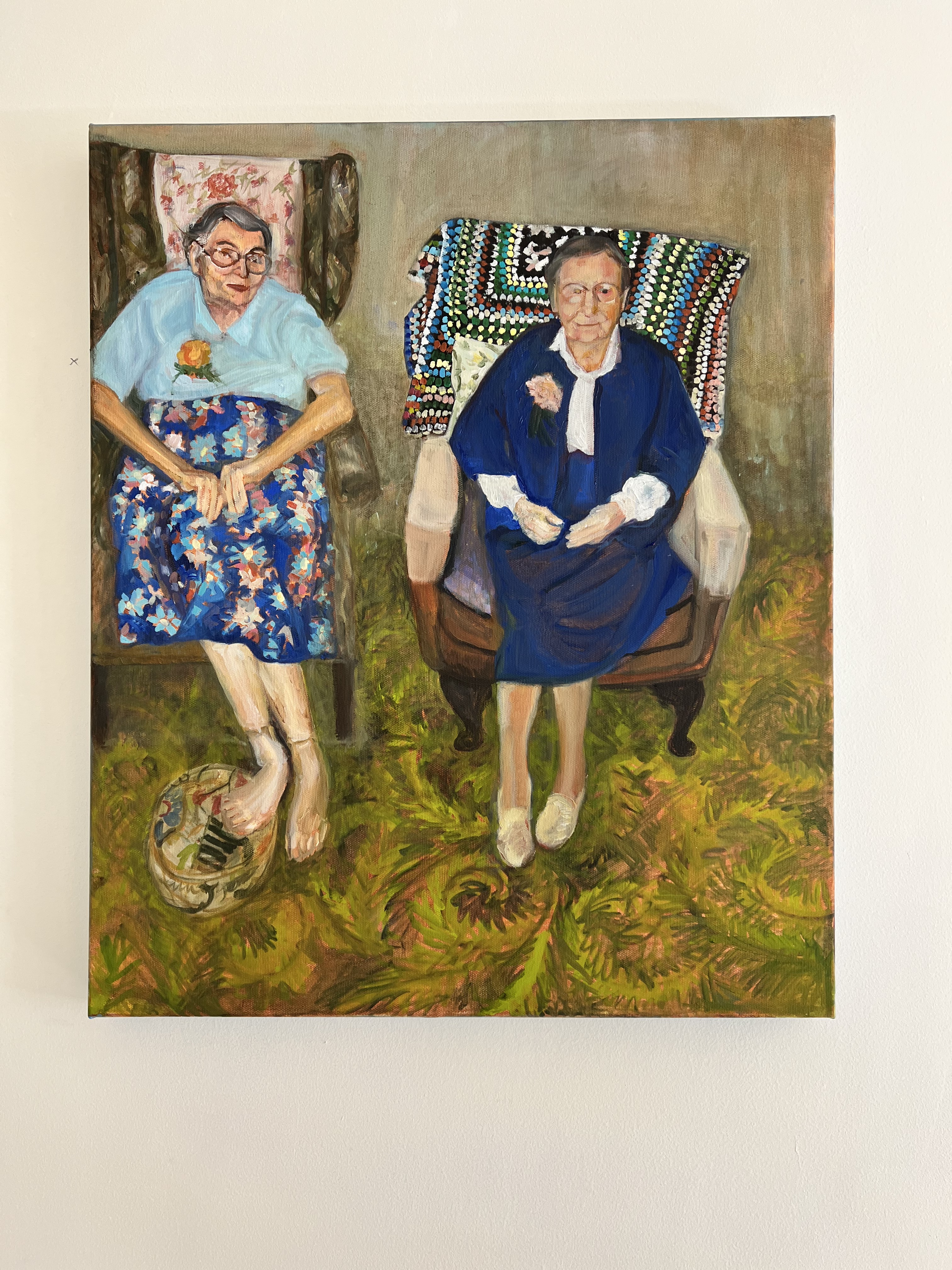
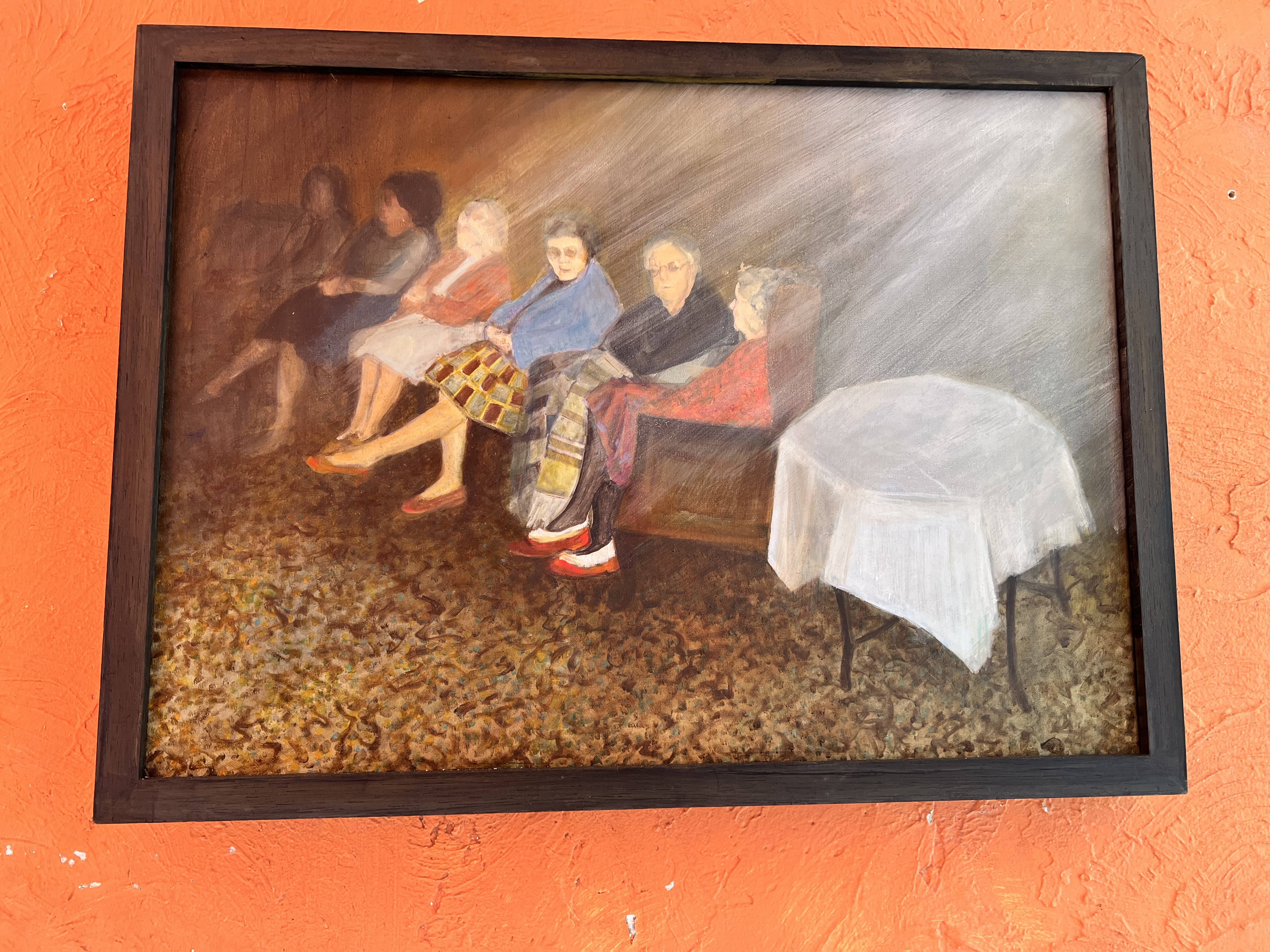
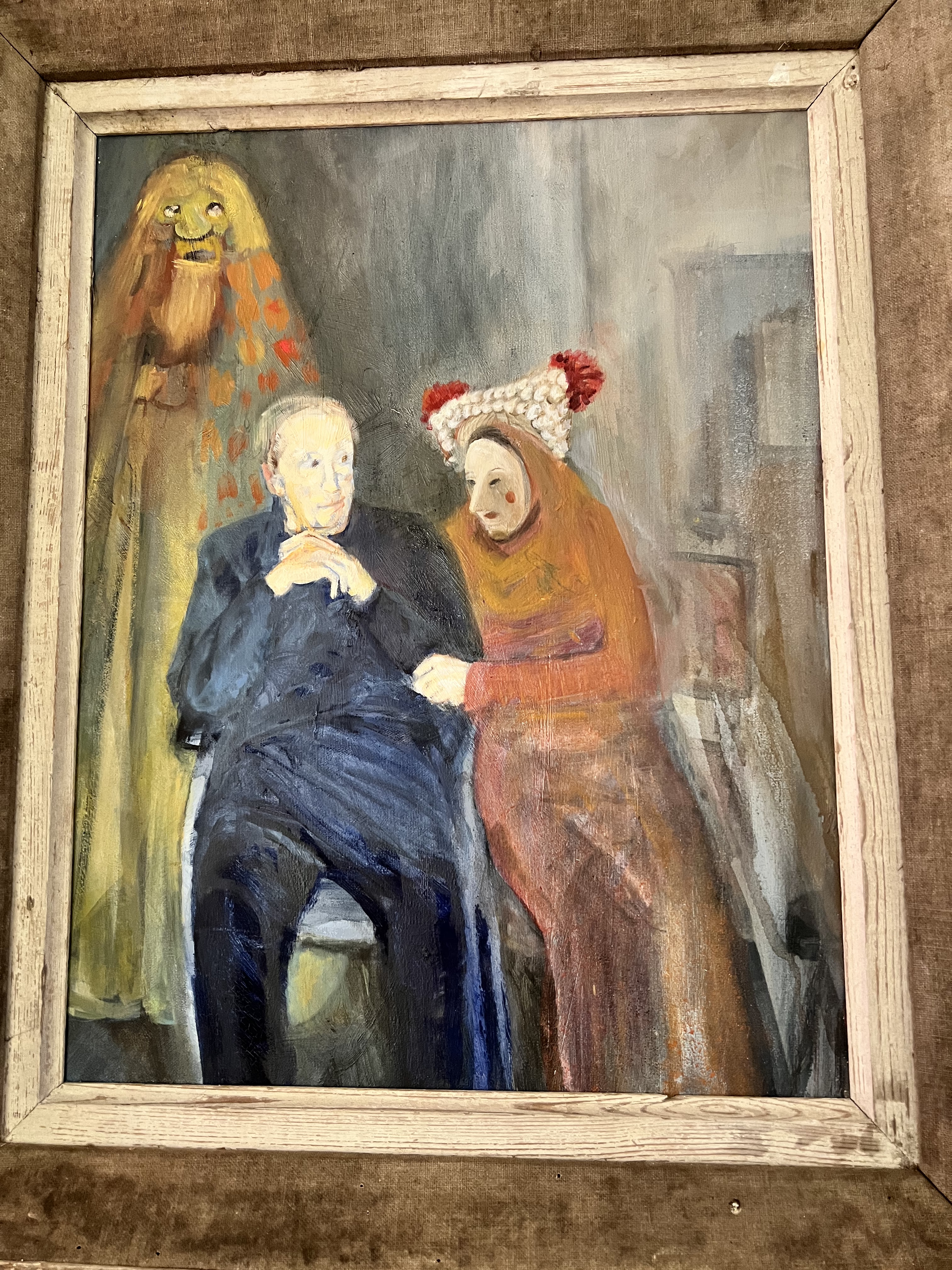
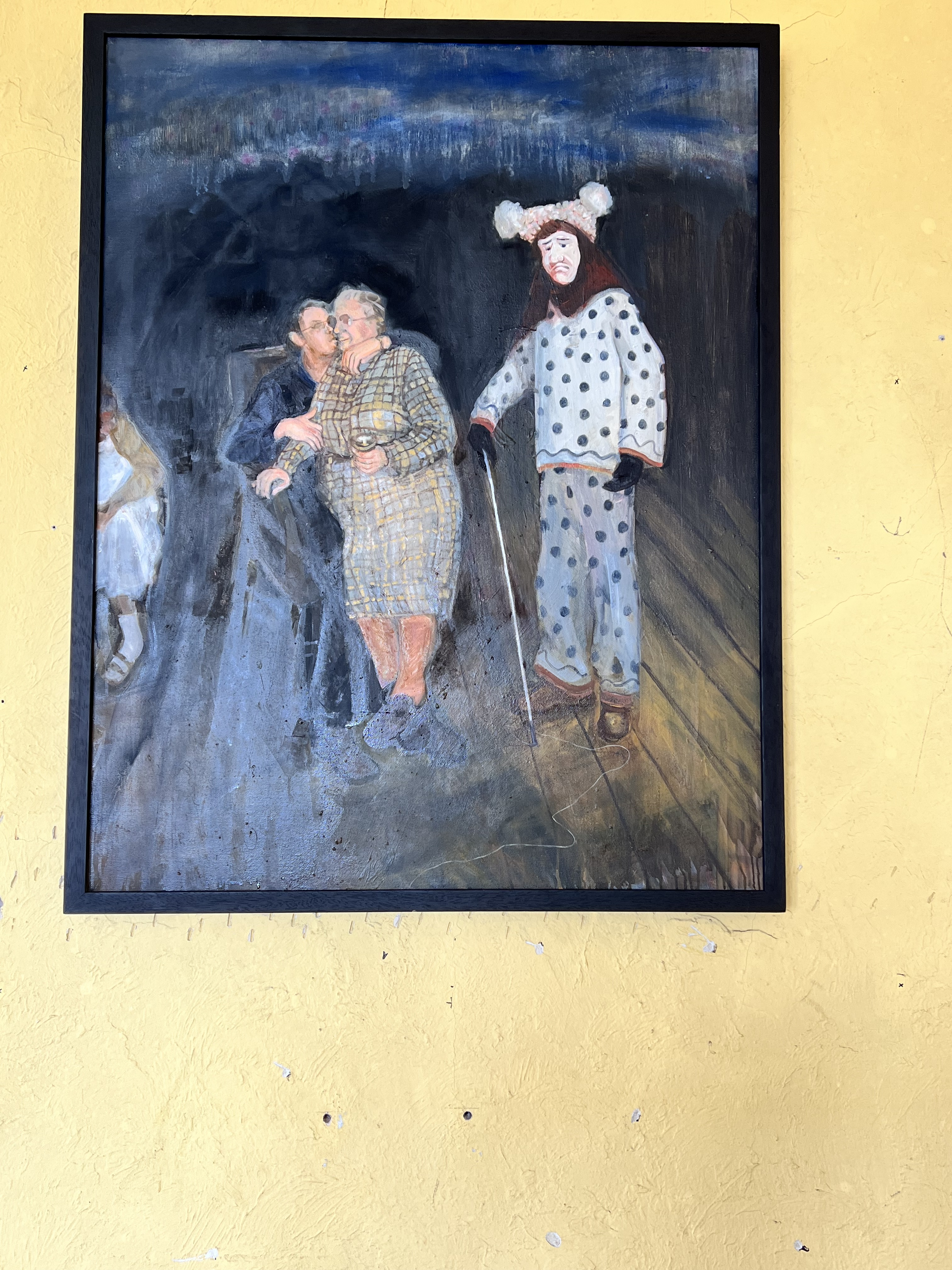
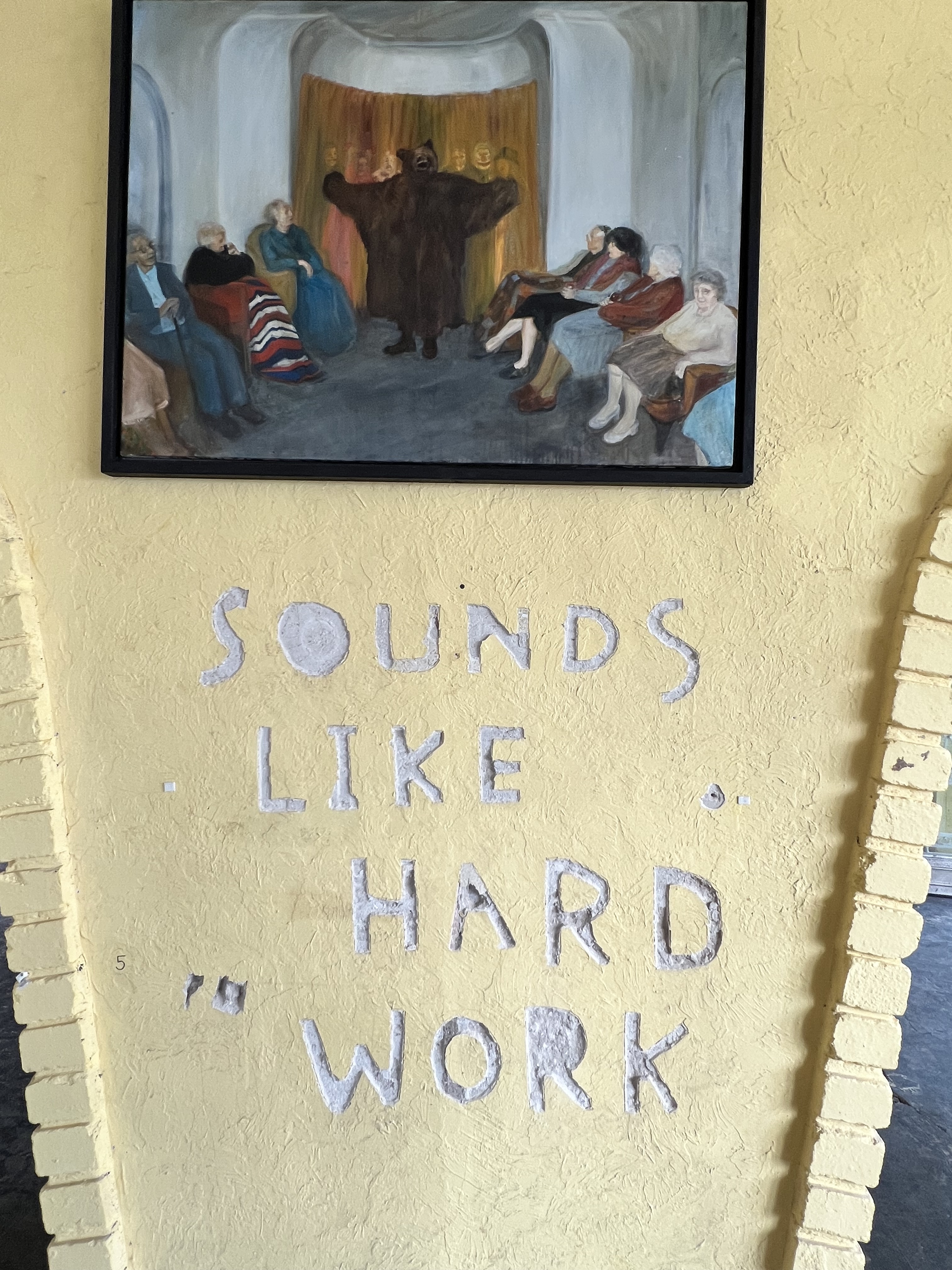
What stayed with me was Karen Birkin’s paintings “And the walls became the world all around” 2020-2022 oil on canvas. From a personal perspective, having worked with the elderly and individuals with dementia, I found the paintings extremely moving, painting individuals in their care home setting some at the end of their lives in such a beautiful and poignant way, quite often I feel they are the overlooked in our society, as I get older I see myself disappearing from view, especially in a world filled with social media where being 35 is considered old. The first painting of the person in the wheelchair looking out of the window is haunting, the second is a colourful masterpiece and depicts the carpet pattern I remember the scene could be of two older ladies but then one has no shoes on which made me smile, individuals with dementia would often take their shoes off.
“Many Residents at the Plas Bodfa care home had dementia, confused about place and time. These paintings imagine the liminal space they inhabited, using strange costumed figures from First Nacht to enter into these alternative realities. Are they psychopomps, signaling the journey to the next world?” (https://www.plasbodfa.com Karen Birkin

Sharon Griffin
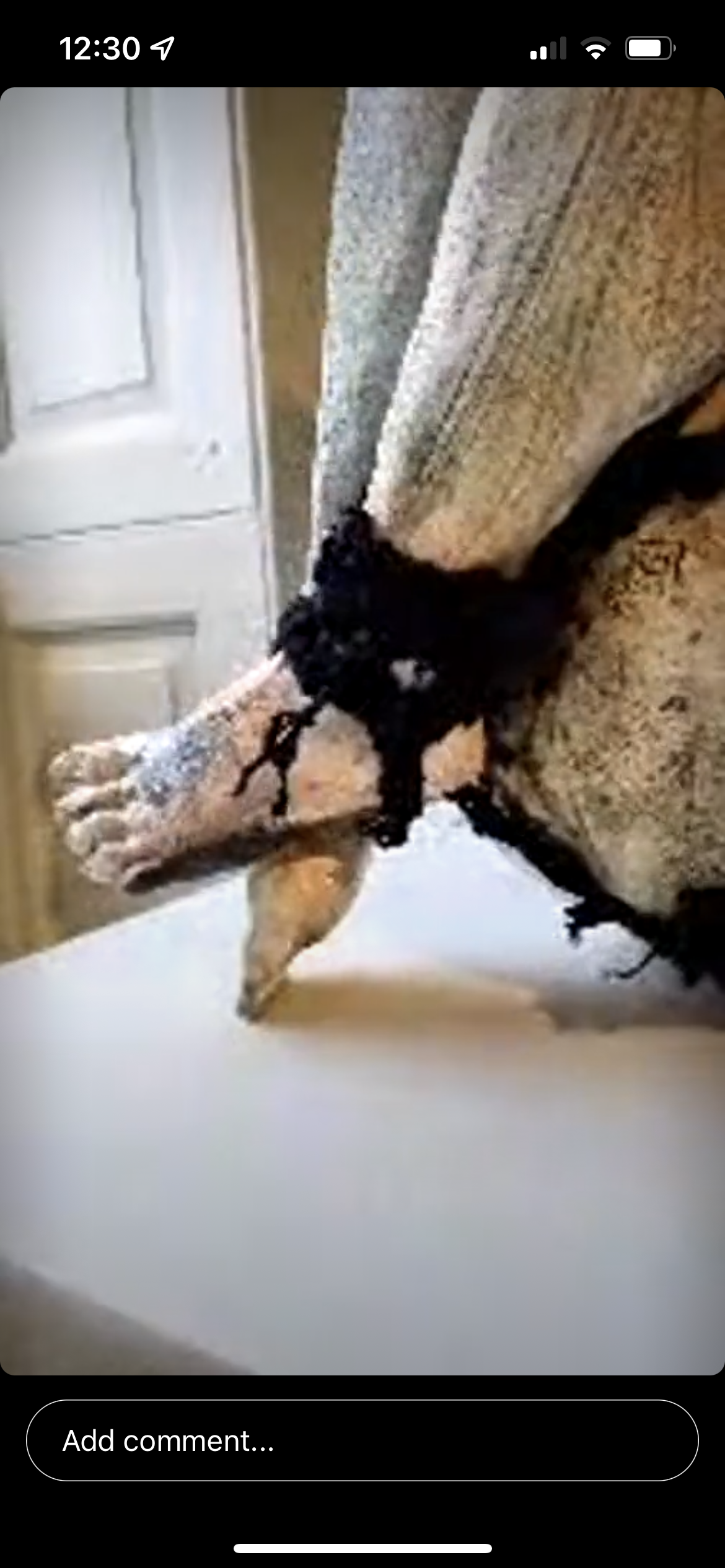
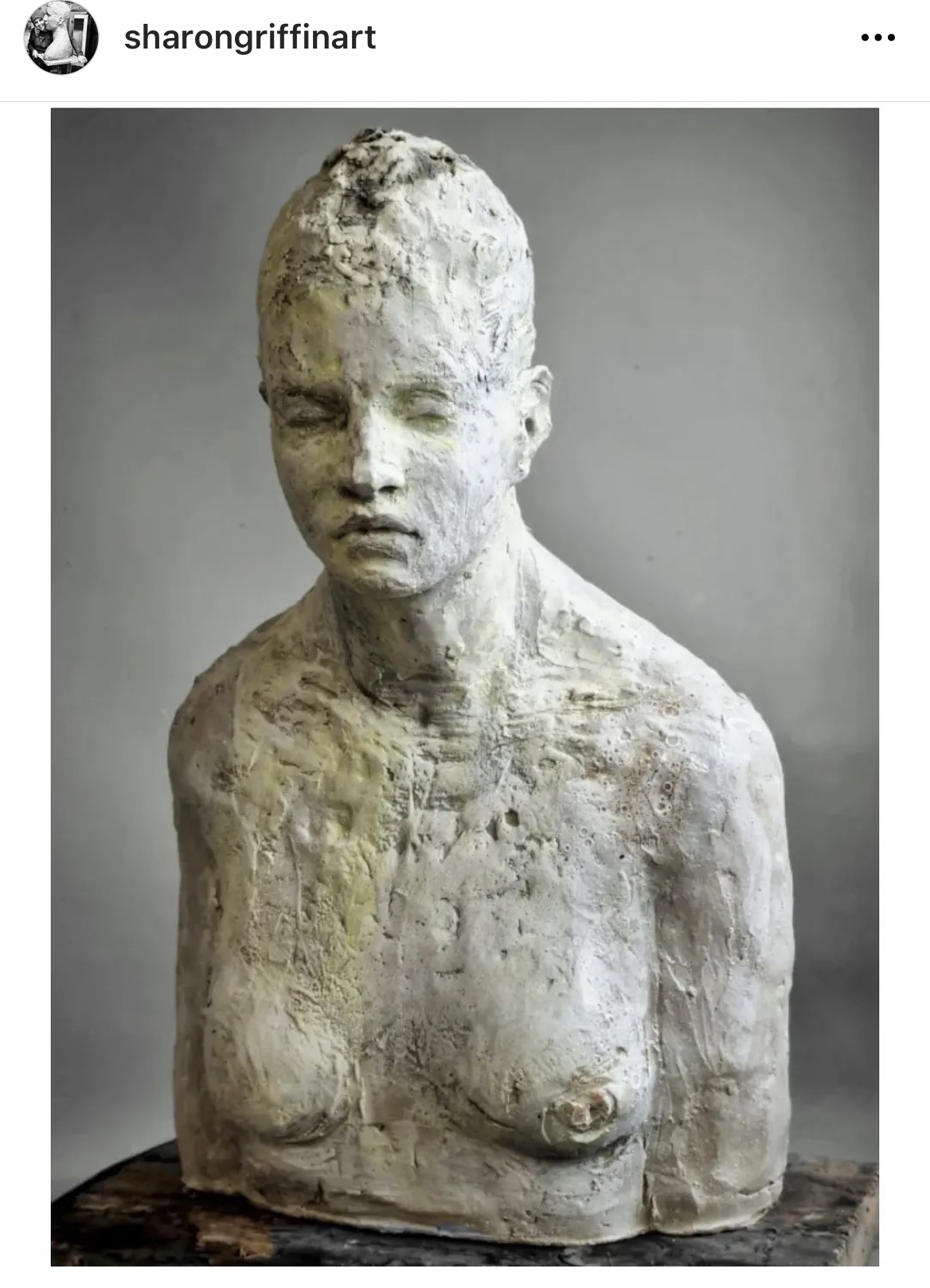
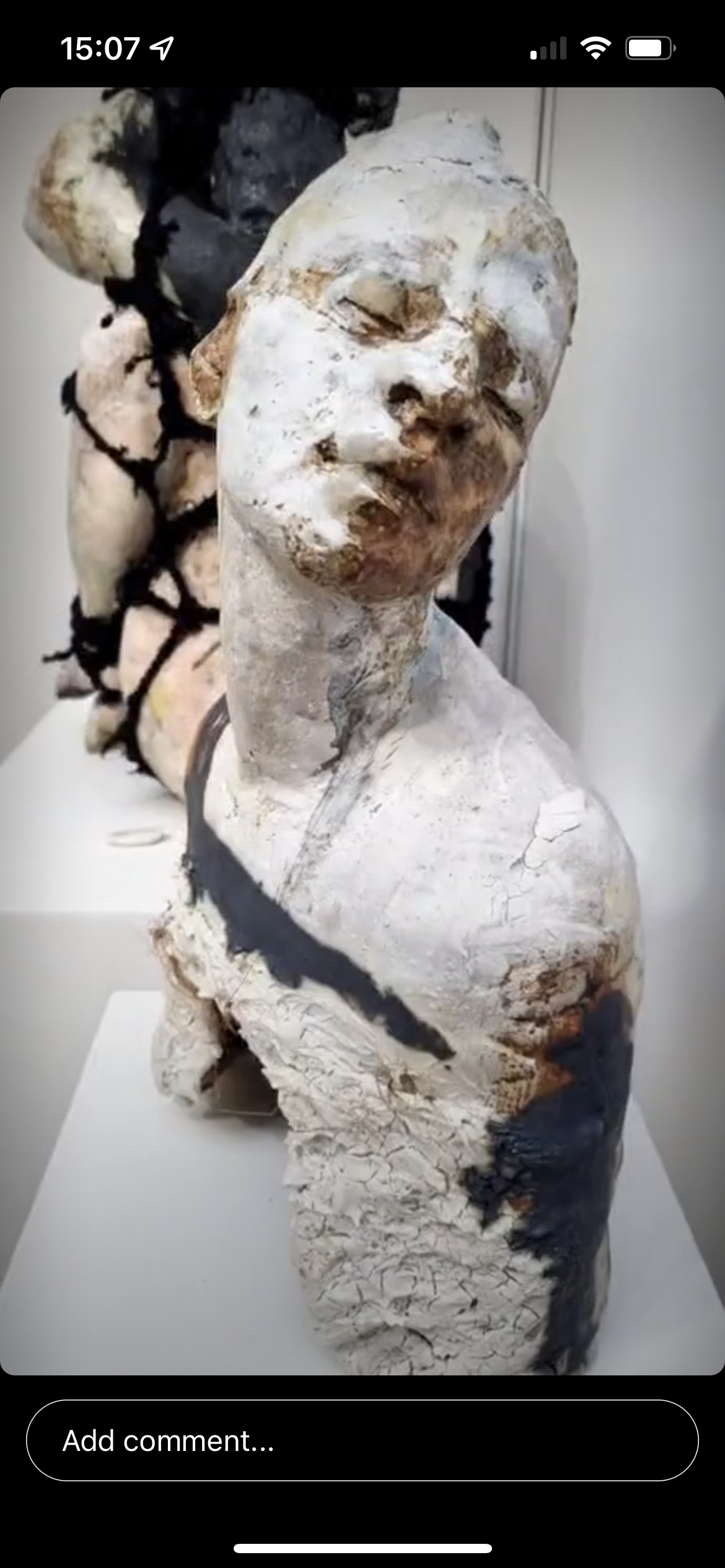
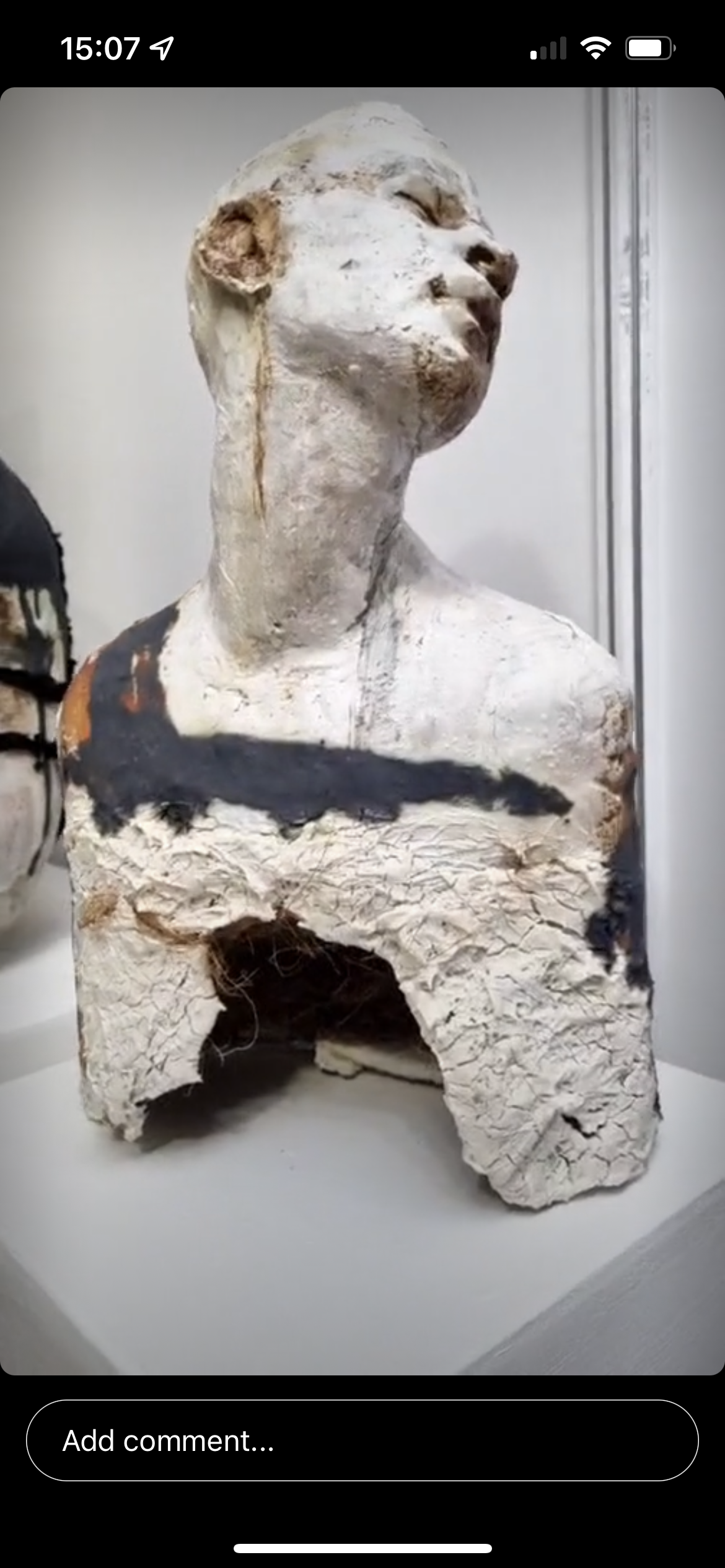
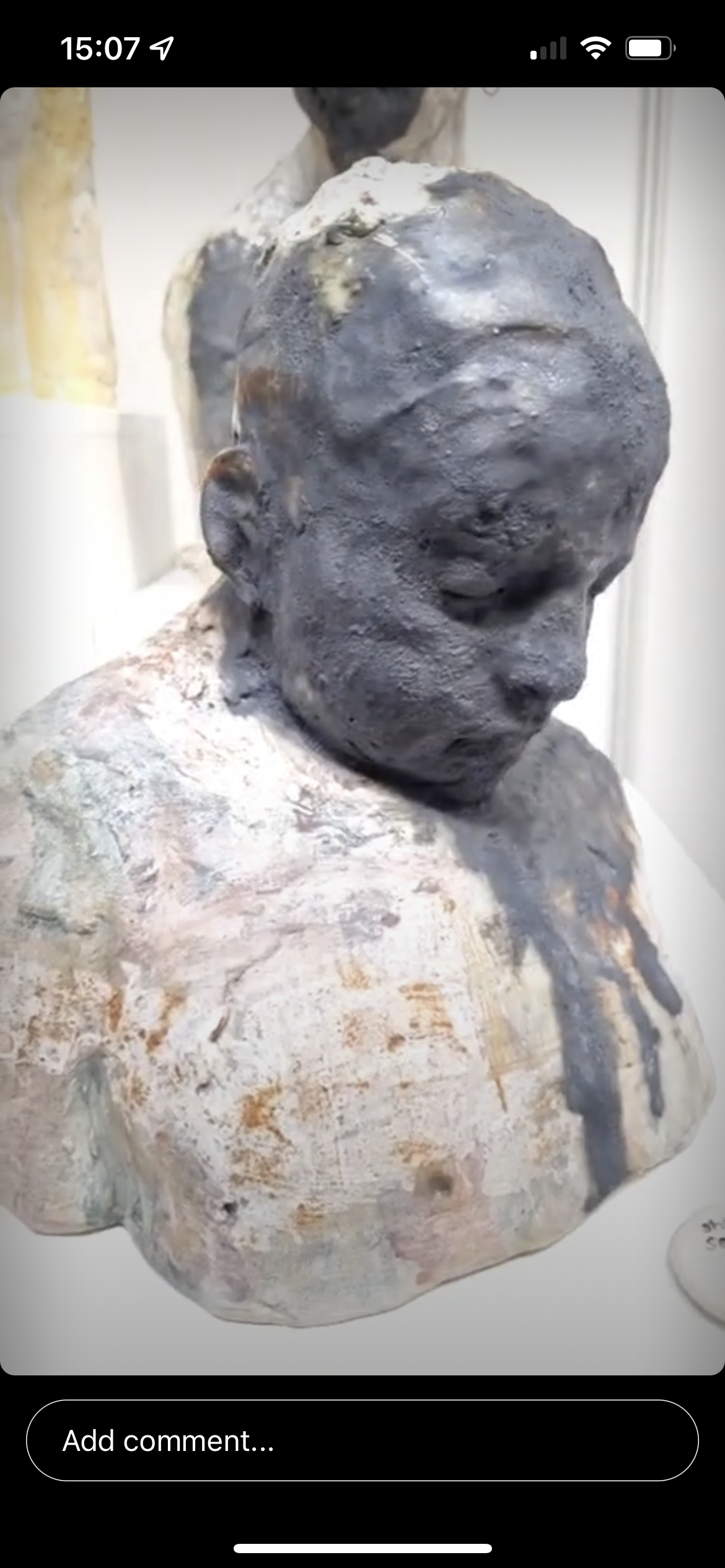
Sharon Griffin is another artist who I draw inspiration from, her ceramic pieces, in my opinion are exquisite depictions of her own struggles with her feelings, she admits to having ADAH and how this influences her working methods, having met Sharon by chance in Liverpool whilst at Claire Curneen’s talk at the Whitworth Gallery where we talked about Claire’s work.
I did a course in the summer, Make your Mark which Sharon Griffin was the tutor, the course helped me to work out how I go about my own creative practice, it was online through facebook private group with a 12 months of membership offered through the United Artist space, an online support network for artists of all media. It was expensive but working out how I research for new work, what is my process has enabled my voice in describing my working processes to others. It was also very useful to be part of an online group where we submitted ideas and works in progress and gave each other feedback and support. The works below are all from Sharon’s instagram feed, her small pieces are in Ffin Y Parc Gallery, Betws road, Llanrwst, Conwy the exhibition is on from the 13th November – 7th December 2022.

Practice, Reflection and Transition
I began to re explore painting as my re found medium, I used to paint previously and have always drawn, but I was never formally taught how to paint therefore I signed up for several free online Abstract painting courses using acrylics. I found the process of just painting, mindfully engaged in the process, but in the background was conflicts in Ukraine, the cost-of-living crisis and how this will be affecting so many children on both sides traumatised by poverty, war, famine.
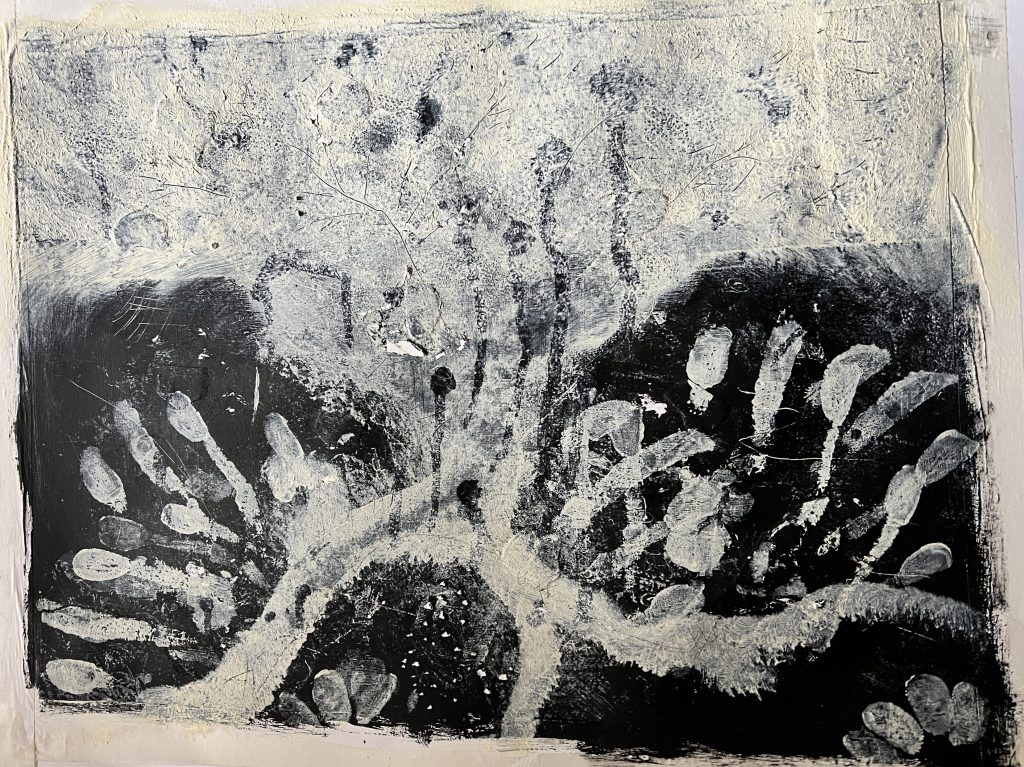
I initially had a loose plan and found that I began to express my own ways of experimenting with learnt applications adding my own collage of found images, from tabloid magazines, printing materials, test pieces, Lithograph pieces and screen-printing test papers, I added these to the layers. I began with a background and began to paint in layers adding mixed media with gel mediums, experimenting with these, having to let each layer dry is time consuming and therefore I initially started three at the same time but I found that this was only possible for the initial background, then each piece evolved differently I will show progress of each painting I have completed in this module. See below the recorded process of my first painting.
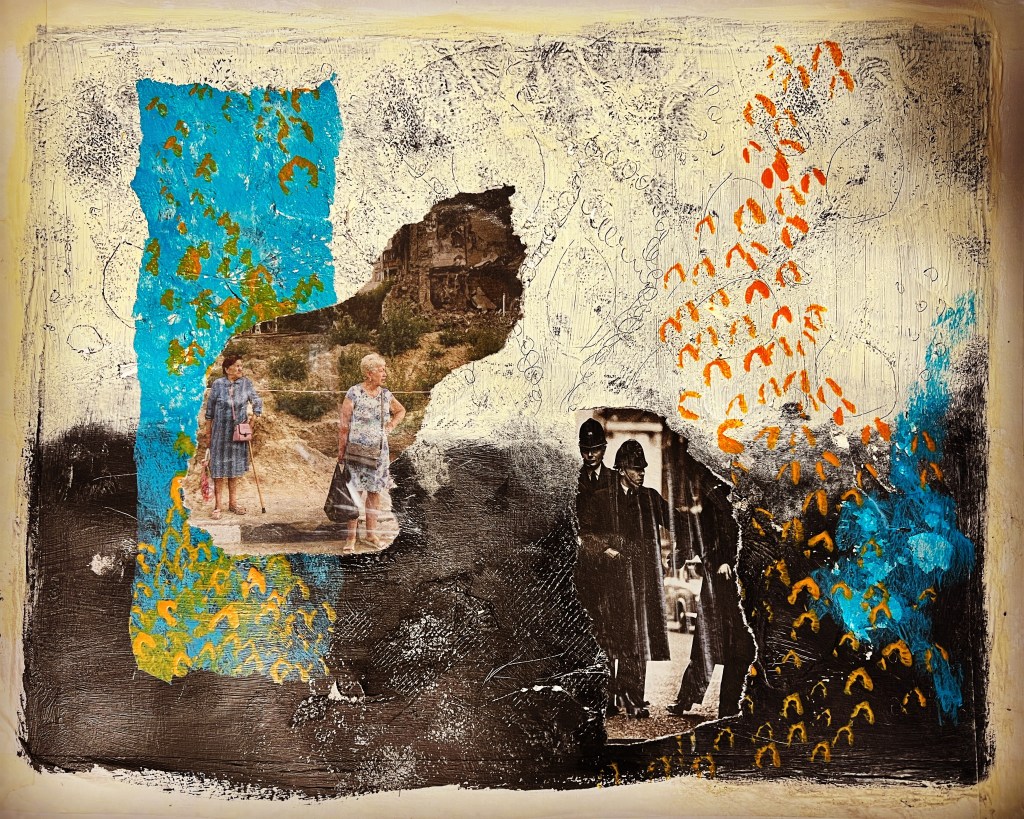
“Allan or glaw rh1/ Out of the rain pt1 Mixed media acrylic on heavy paper 30cm x 40cm unframed”.
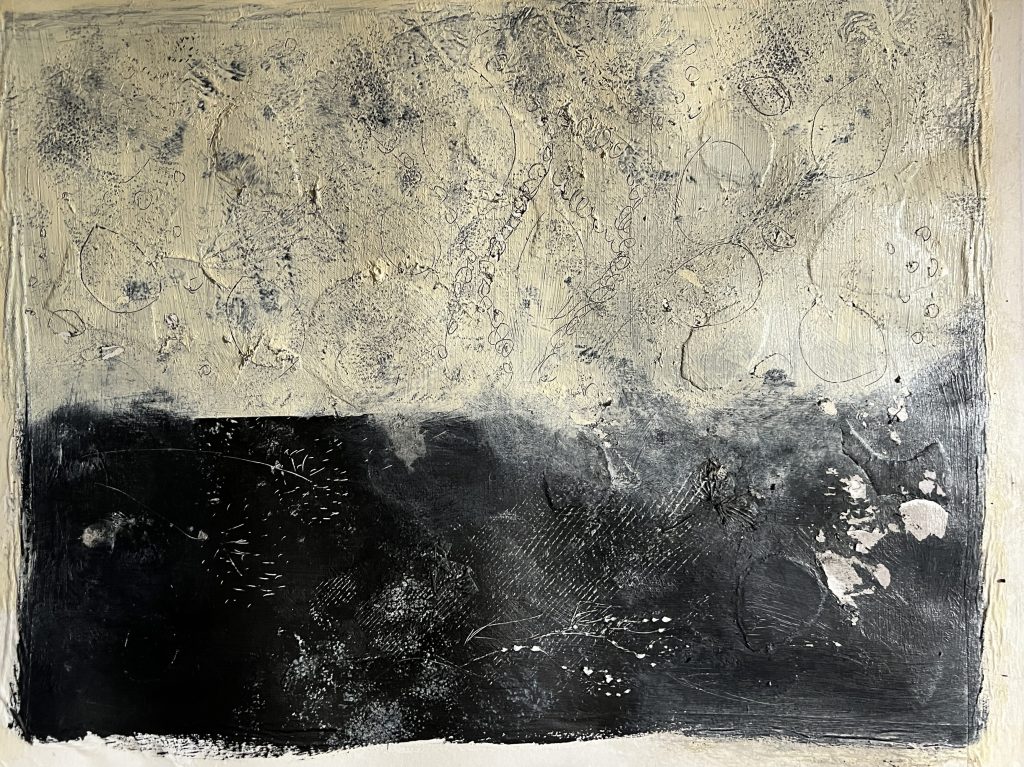
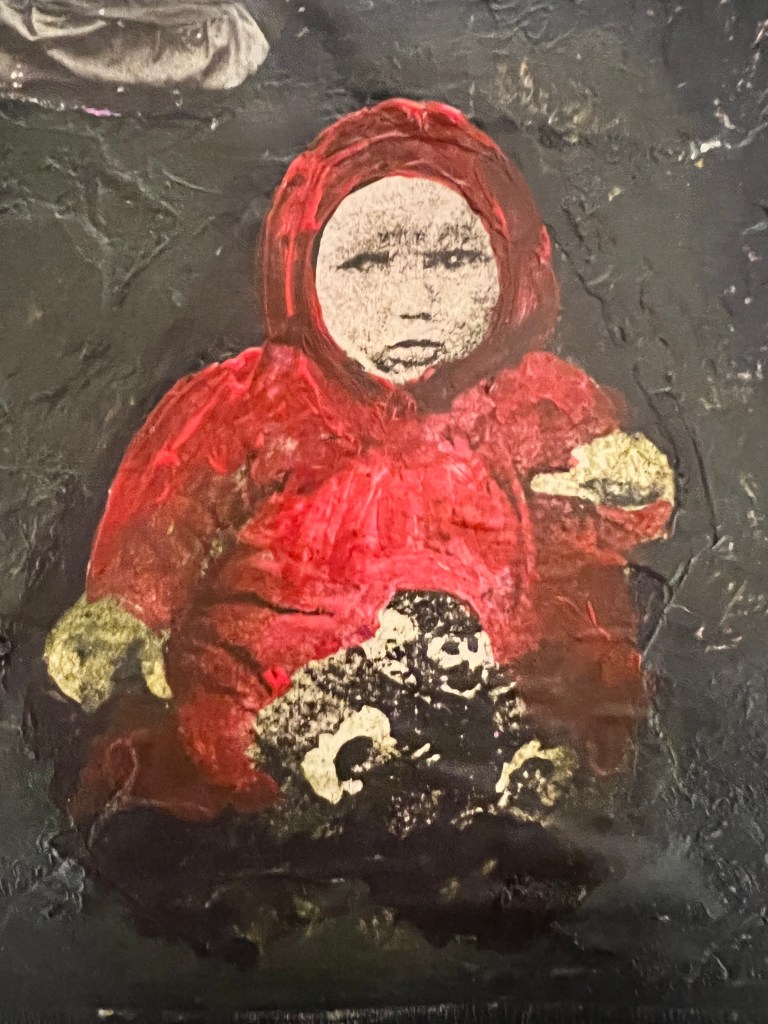
Progression of my painting from laying down three layers of white gesso and mixed media found materials to add texture, adding a layer of black acrylic paint, and marking in to it. I then added an off white layer masking off the lower part, and working some white into the black with my fingers, this was a joyous free feeling to use my fingers to paint. Further masking to add colour blocks. I found that I had added the mixed media layers too late and using PVA and this lifted off when I put pain over the top so I had to experiment a little at this stage. I decided to paint a figure into this landscape and took a long time to paint all the details, I let it dry and It did not sit right at all (second image). I added collage and began to cover the painting, it was at this stage that I began to struggle with the process, covering areas with collage and paint splattering colour and taking away the tightness of the previous painted face, the images I have used was myself with my childhood cat and an old lady in an article about the hardships the Russians are also facing due to the war in Ukraine, her posture, her clothing, reminding me of someone from my past. Picture 4 i began to re add the black, Picture 5 is a close up of the detail on the right of the painting where I have left the underneath layers of fingerprints as cocoons of details. Picture 6 I added more colour to cover the face, the Large picture is the finished painting.
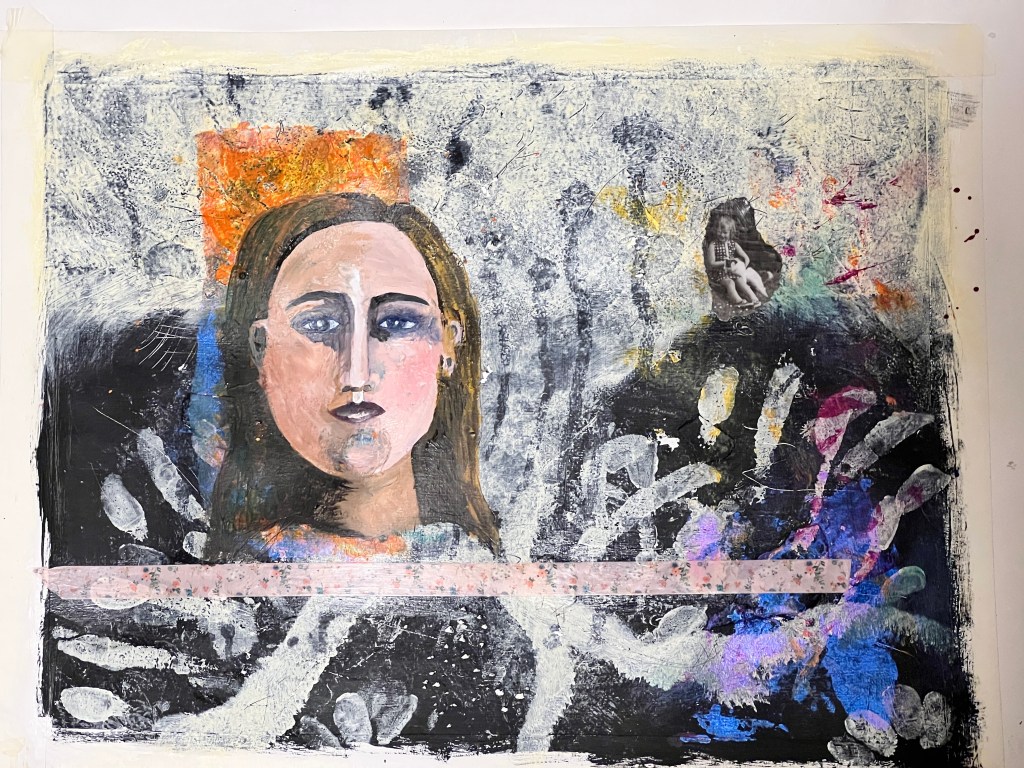
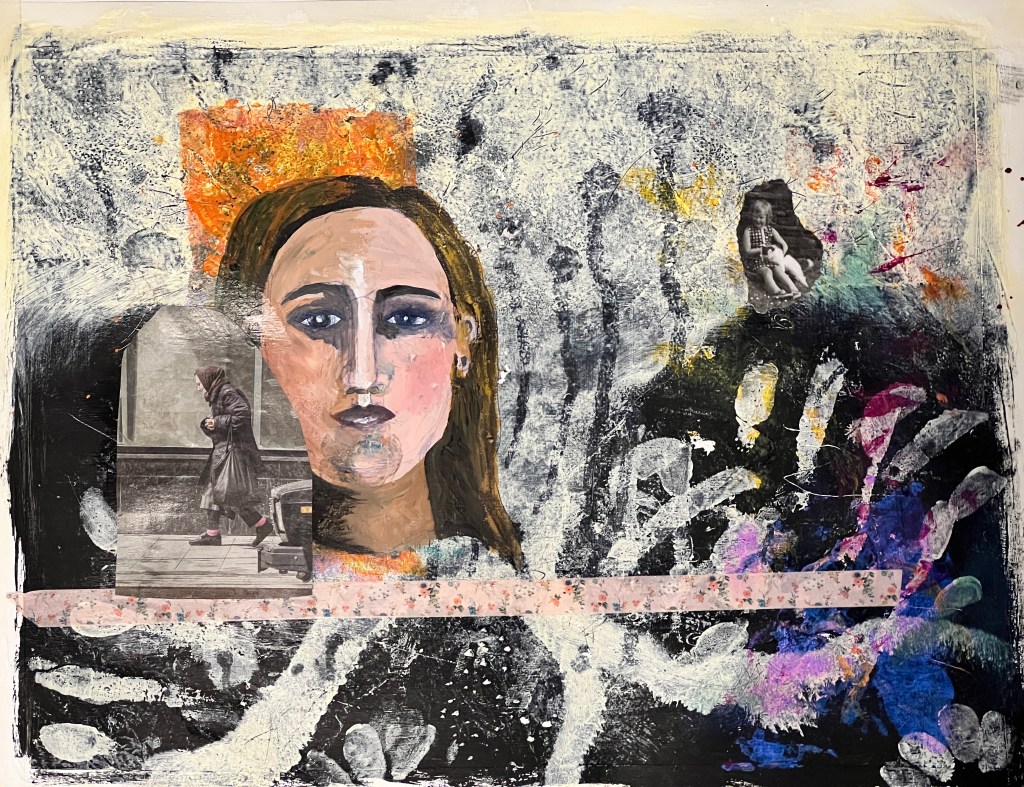

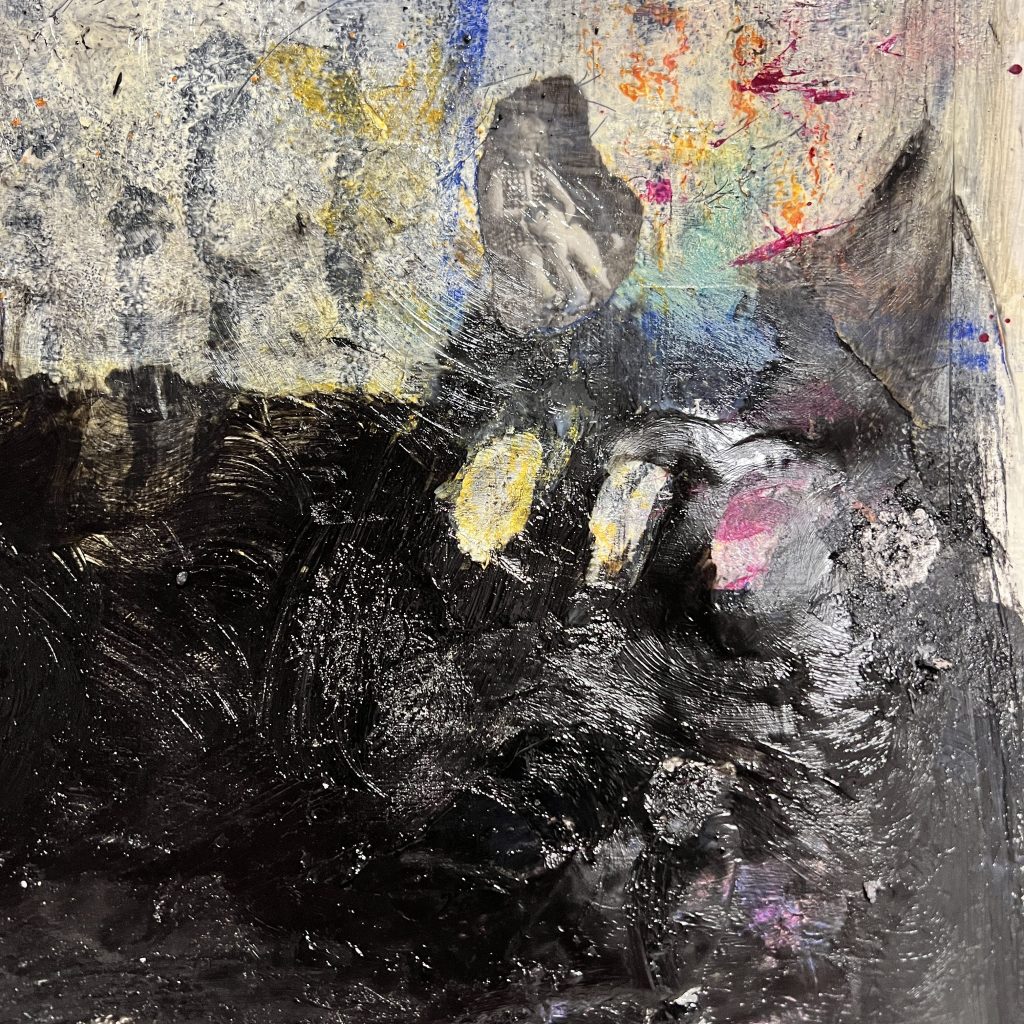

Each stage of the above painting was considered, I found painting over areas really difficult initially and parts of the painting started to make sense, there was a point that I thought it would never look right, and there was anxiety and insecurity, an emotional tug of war in the process, the time it took to dry in between the layers helped me to consider what the work was about and what was the next steps until it felt balanced.
Strategy and ideas generation with KH
We discussed where do ideas come from, personally my idea for new work comes from my personal experience which is fuelled by new input in the way of news, such as the cost of living crisis focusing on families facing poverty, child poverty, politics and how their decisions affect the poorest in our society, artists who I connect with, but also everyday experience that connects a thread of memory. Research is part of my process but where some people may have a linear strategy, mine is not linear. I normally start with a mind map, sometimes I start with an idea of what I want to achieve but then I will plan, work out what materials I have which skills, and what I need to gain to achieve my goals. I have realised that I must give myself deadlines and goals to work towards so that I don’t languish in lacklustre Circles getting nowhere. My art is also my release and always feel better during the making.
Material thinking with PJ
Using one piece of pale green paper crate one thing out of this piece of paper by folding, cut, scrunch, this is the thinking, the making, this is my go too with my making, using the materials to explore and generate new ideas. This lecture resonated with me as it’s a familiar way of working if I am stuck, I will play and ideas come from this play. This also happens with painting as I try then cover over in feeling my way through.
Through the discussions around this concept we explored digital material where is the haptic the visceral feeling, does there need to be a feeling it depends on your personal perspective and what you hope to achieve.
My relationship with the material and how I apply change to communicate a narrative. A synthesis of my connected ideas formed into an object.
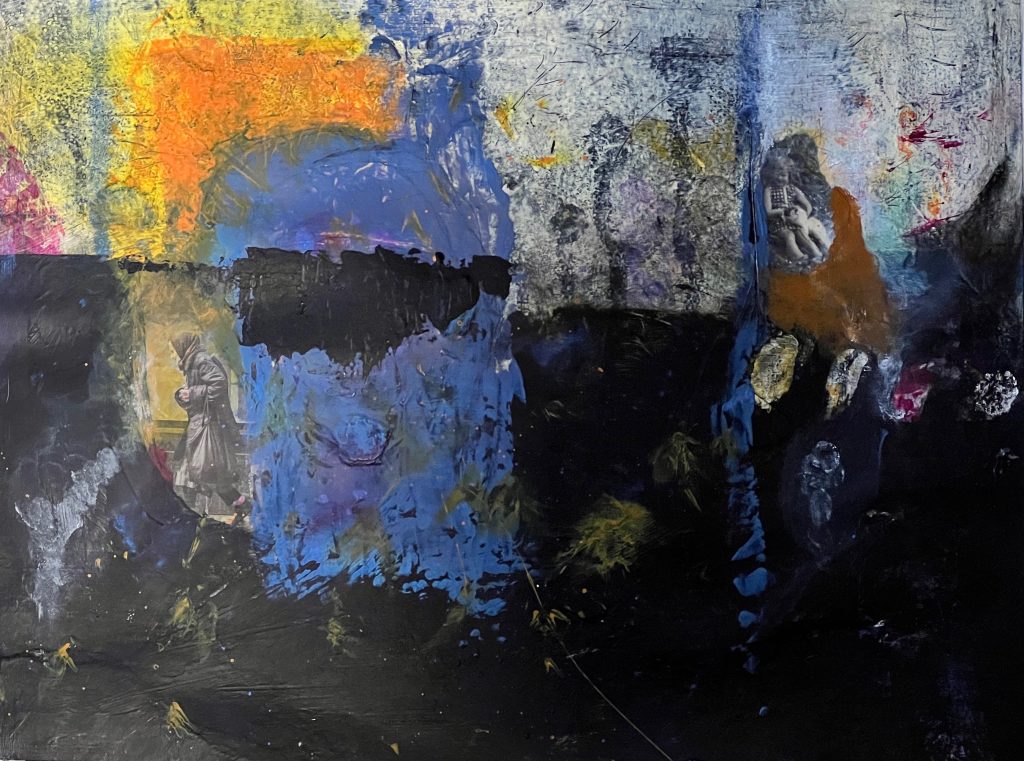
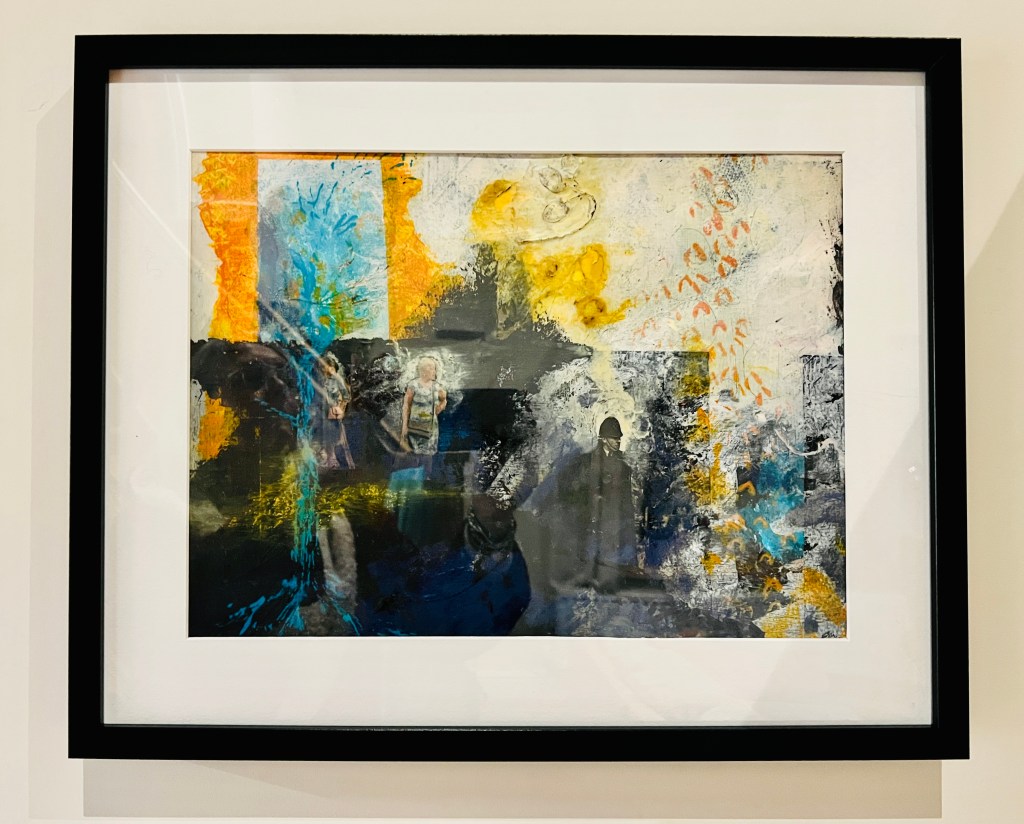
“Allan or glaw rh2 / Out of the rain pt2 Mixed media acrylic on heavy paper 30cm x 40cm Unframed”

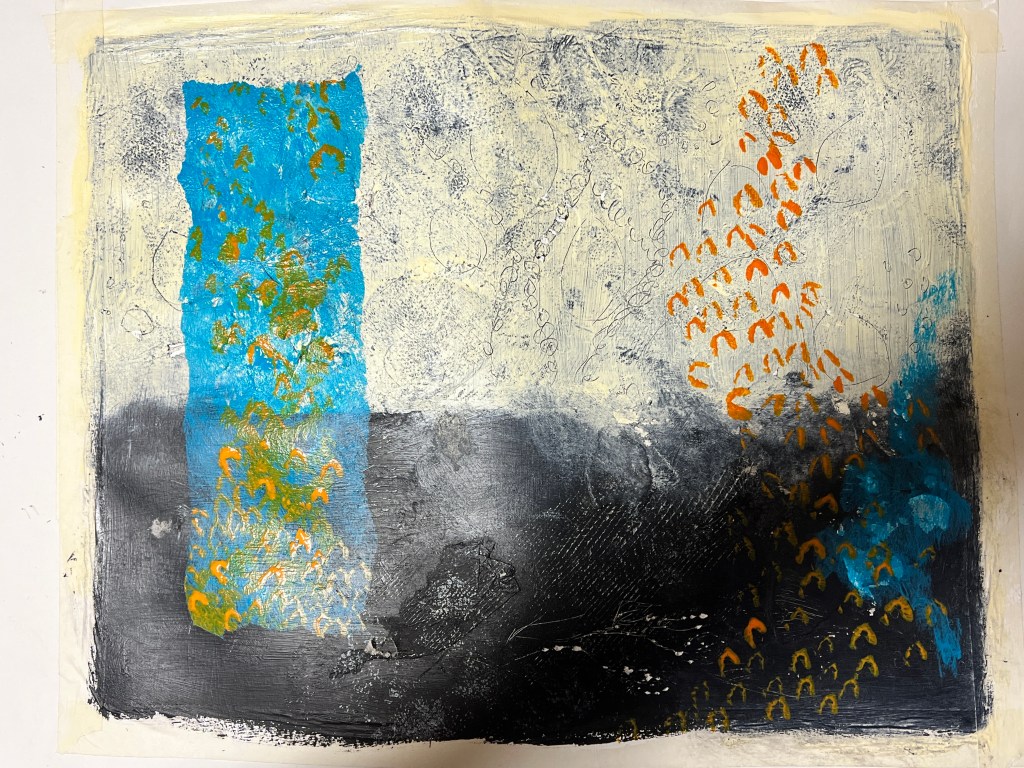
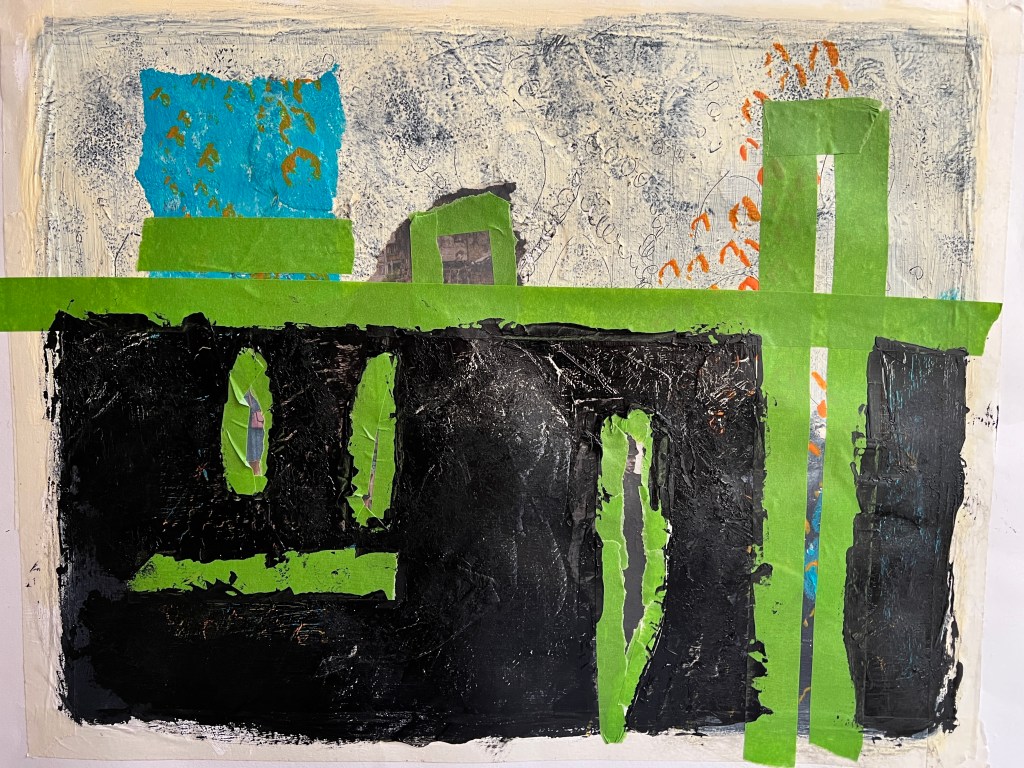
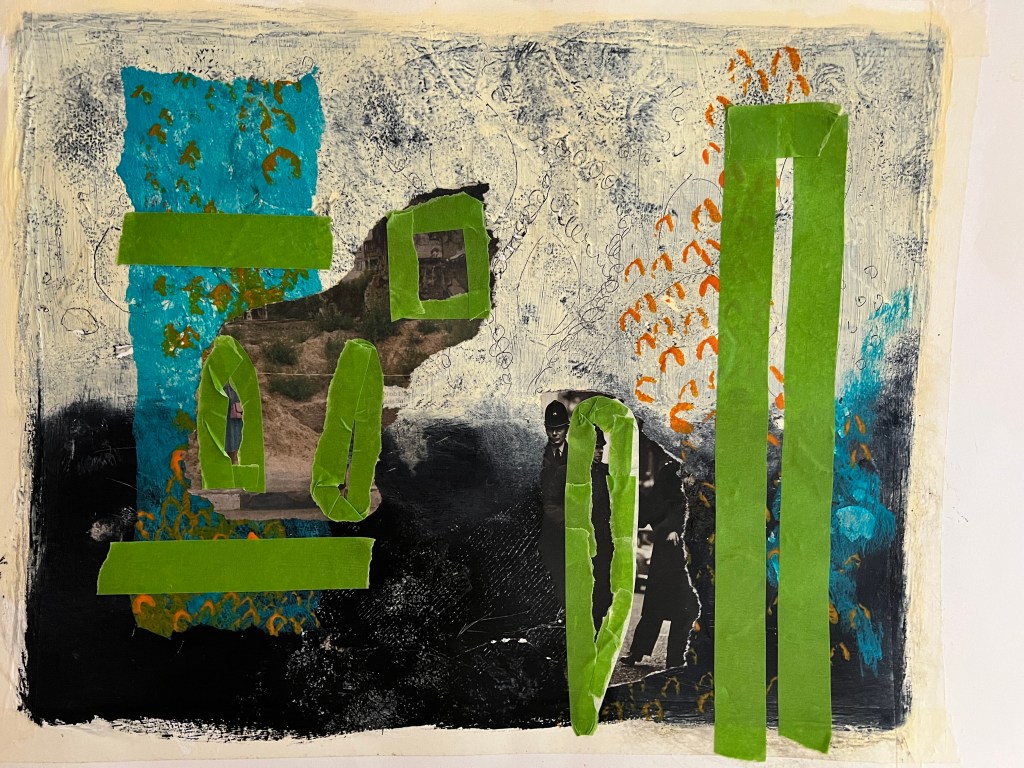
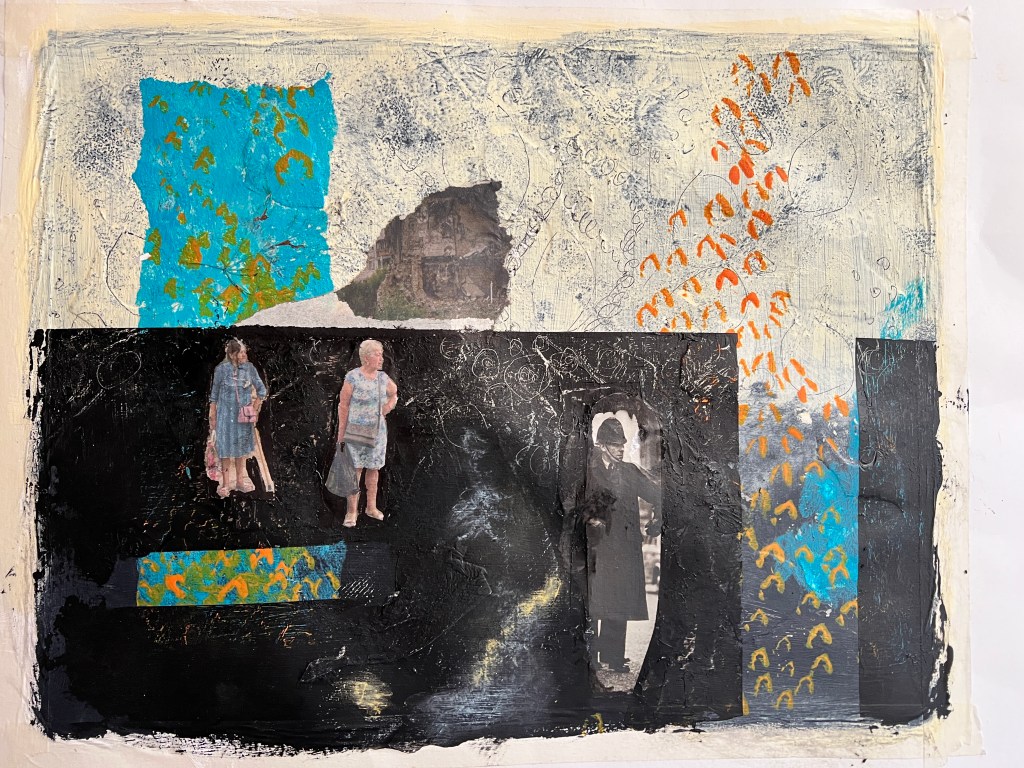
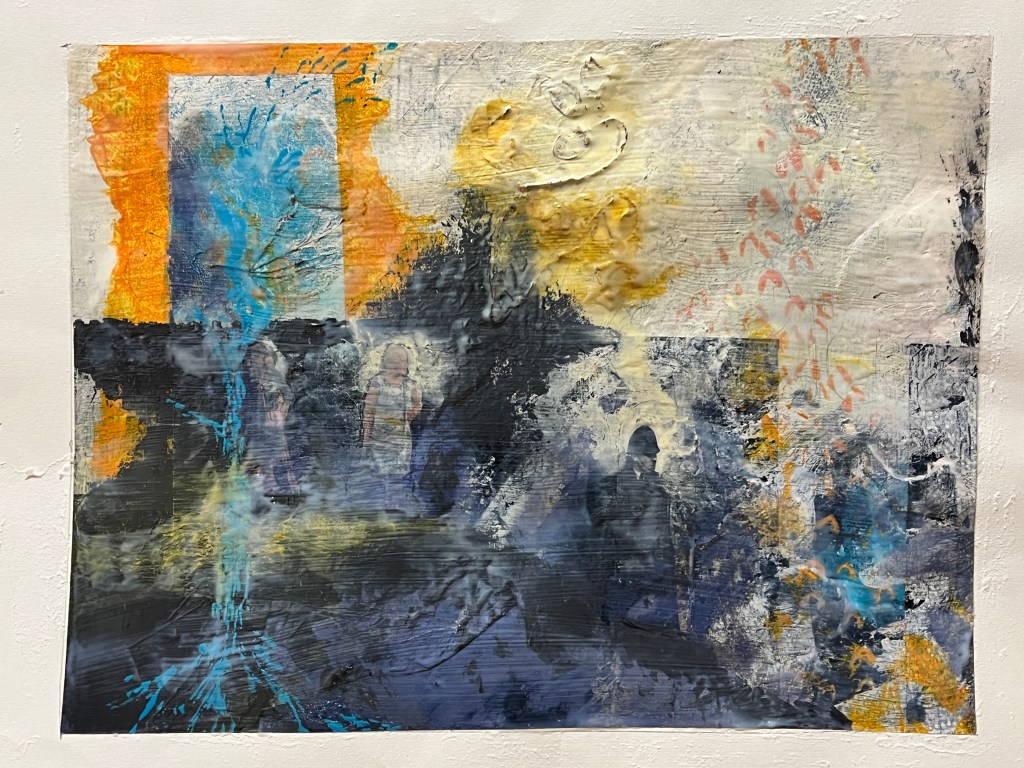

My second painting showing my process, how I have applied the layers, my application of exploring my trauma narrative, the collage from newspaper magazine was a piece about protest the Police man is one from my childhood. In the news there has been a lot of press about extinction rebellion, climate catastrophe, as well as the ongoing Ukrainian war and the cost of living crisis, these feed into my thinking and my artwork. With a mix of my historical narrative, growing up in a then dysfunctional family Blaenau Ffestiniog’s damp rain slate slag environment with little optimism, with the highest rate of suicide in the country. These were my thought processes whilst painting this, the colours particularly.
The painting is on show in Life: Full Colour Gallery in Caernarfon as part of their open exhibition. November 12th – December 24th 2022.
Gareth Griffiths / Audrey West
I was invited to the Private View of Audrey West’s exhibition with Gareth Griffiths at the Storiel Bangor as part of the Utopias Bach collective that I have joined.
Audrey West’s paintings evoke a feeling of her intimate relationship with her history, her hereditary trauma. As a Jamaican her story began by studying her own ancestral history and what began as a research voyage into her past, became a visceral discovery about slavery and the impact it had on her distant family members, she described this feeling with such emotion it moved me to tears, her paintings and mixed media pieces felt more personal once i understood where they came from.

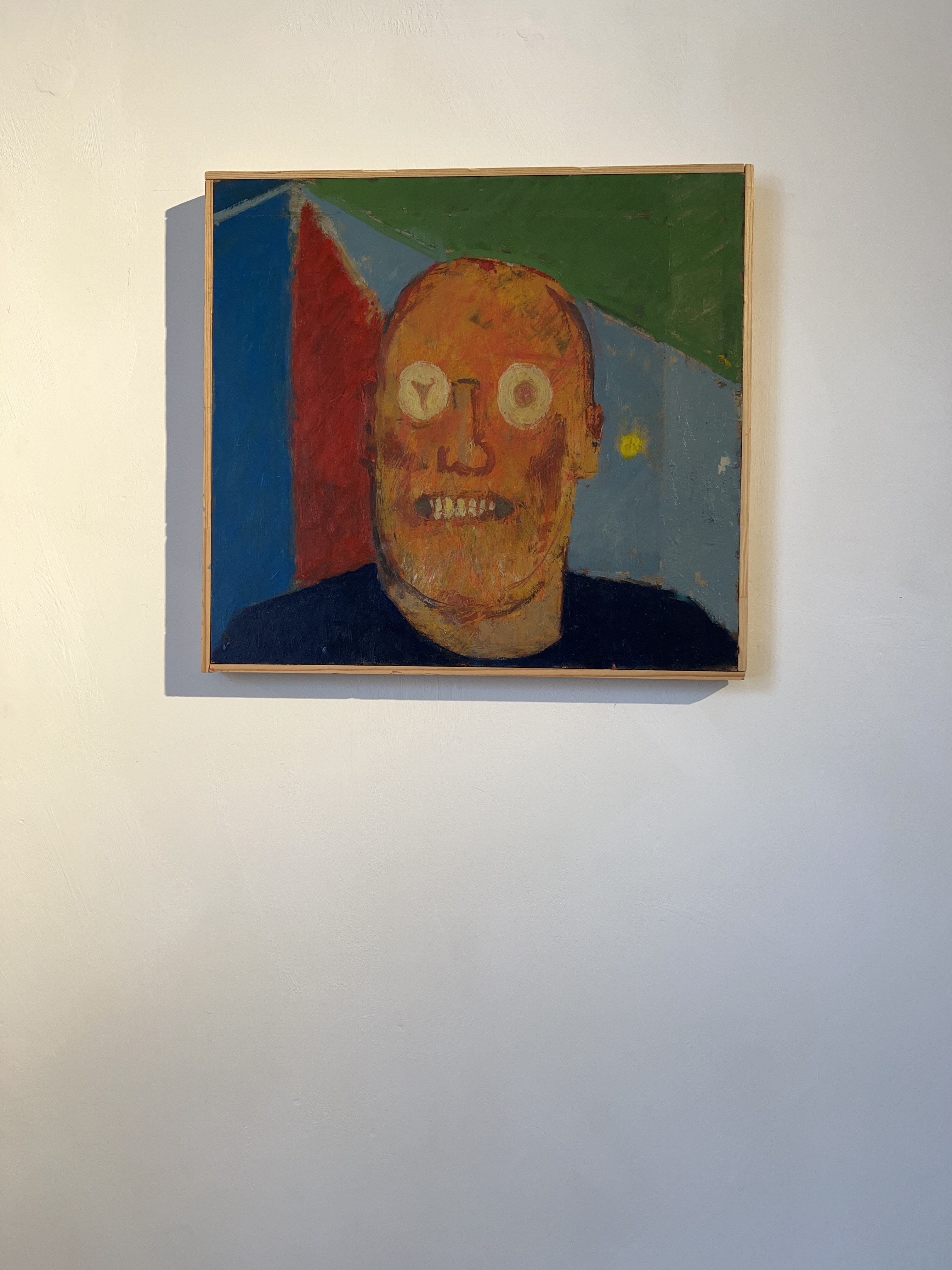
Gareth Griffiths had spent part of his life in Jamaica and had connected with Audrey and show work together in the space. I was drawn to Gareth’s work, the multitude of meads painted on so many different materials, from mirrors to skateboards, people he had met throughout his life, his work was personal and included several self portraits, the colours and unconventional way that they had been displayed really worked, it felt like going into someones studio. Below is an image of the Gallery.

Cerith Wyn Evans
Mostyn Gallery visit was interesting, It was not an exhibition I would have chosen to go to see the exhibition that was showing, however I am really glad that I went. The talk we had from the funding officer was really interesting, it was an in-depth look at the demographics that dictate their audience and how Llandudno has a predominantly older generation, a huge tourist footfall in the summer months as well as working with local schools and groups to bridge the gap from the public into viewing visitors as this attracts funding, she explained how funding is predominantly from the Art Council of Wales but also from council and government pots to enable access for all.
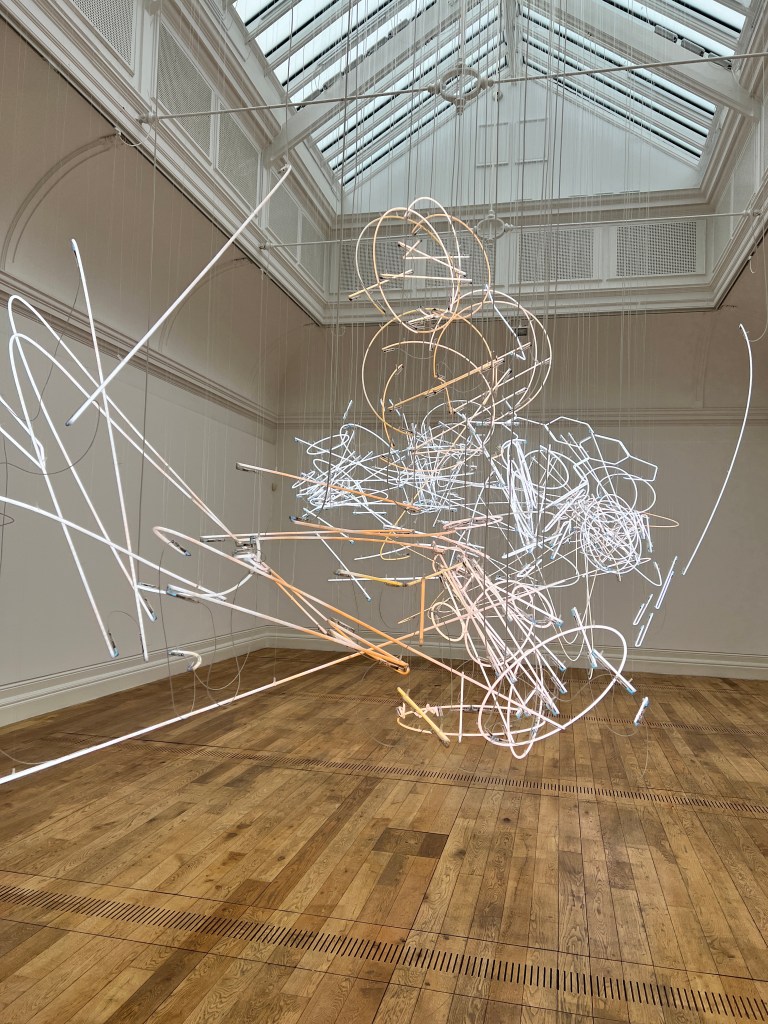
Cerith Wyn Evans’s exhibition was visually stimulating, he used intricate fluorescent tubes hung from the celling of the gallery in such a way that it looked like a magical sky scribble, the steward explained how the work had arrived with a map for the floor as a diagram of instructions to be able to hang, this in itself was impressive, he also had car windscreens hung with smashed pieces into them which reflected the light beautifully. I am glad I went and made a connection.
Shani Rhys James
Oriel Davies Gallery in Newtown visit, the drive from Bangor was beautiful which was compensation for the time it took, but we went through Caernarfon, down to Phenrhyndaedraeth, up through the Celtic forest to Dolgellau with spectacular views all the way there.
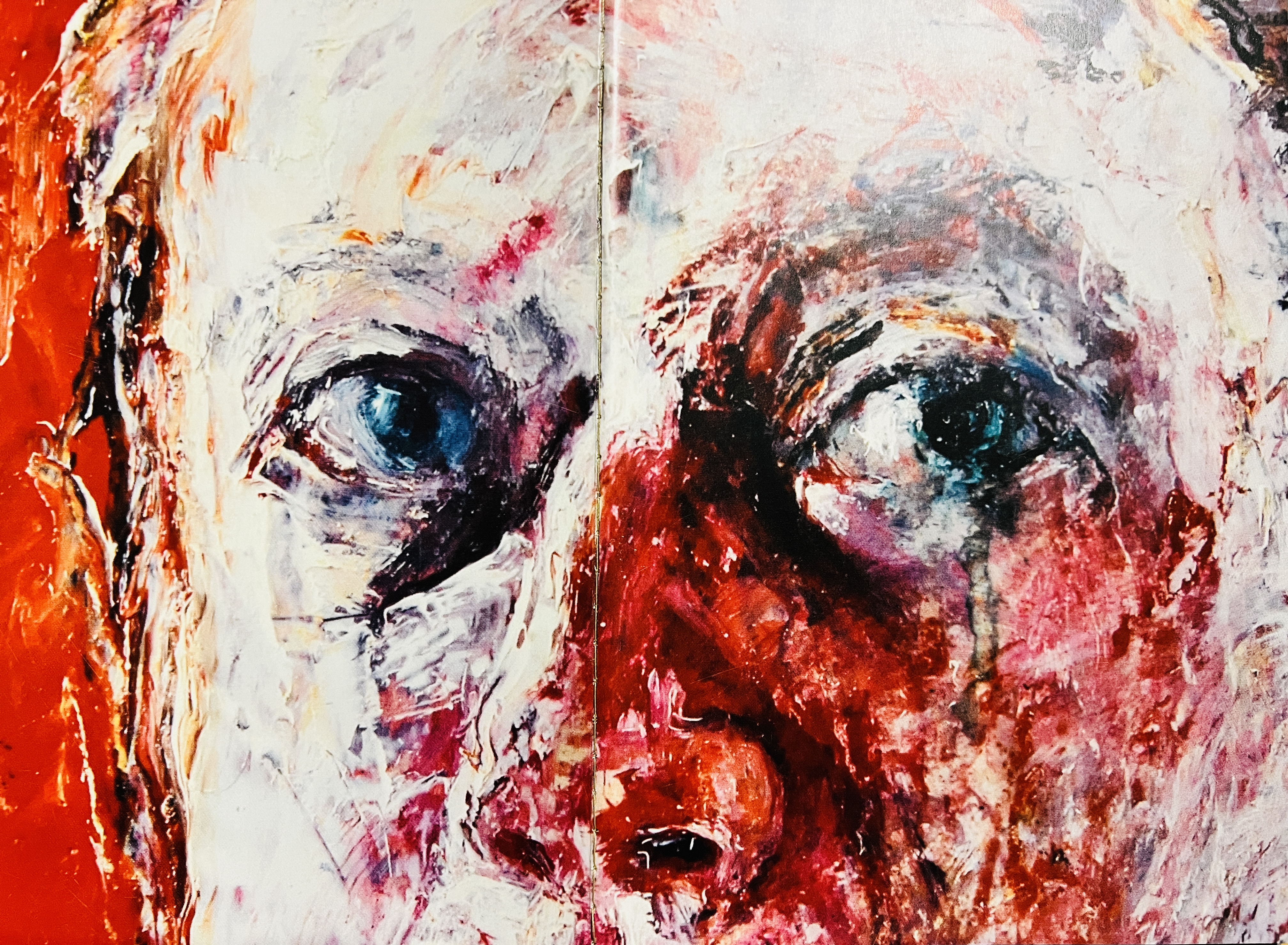
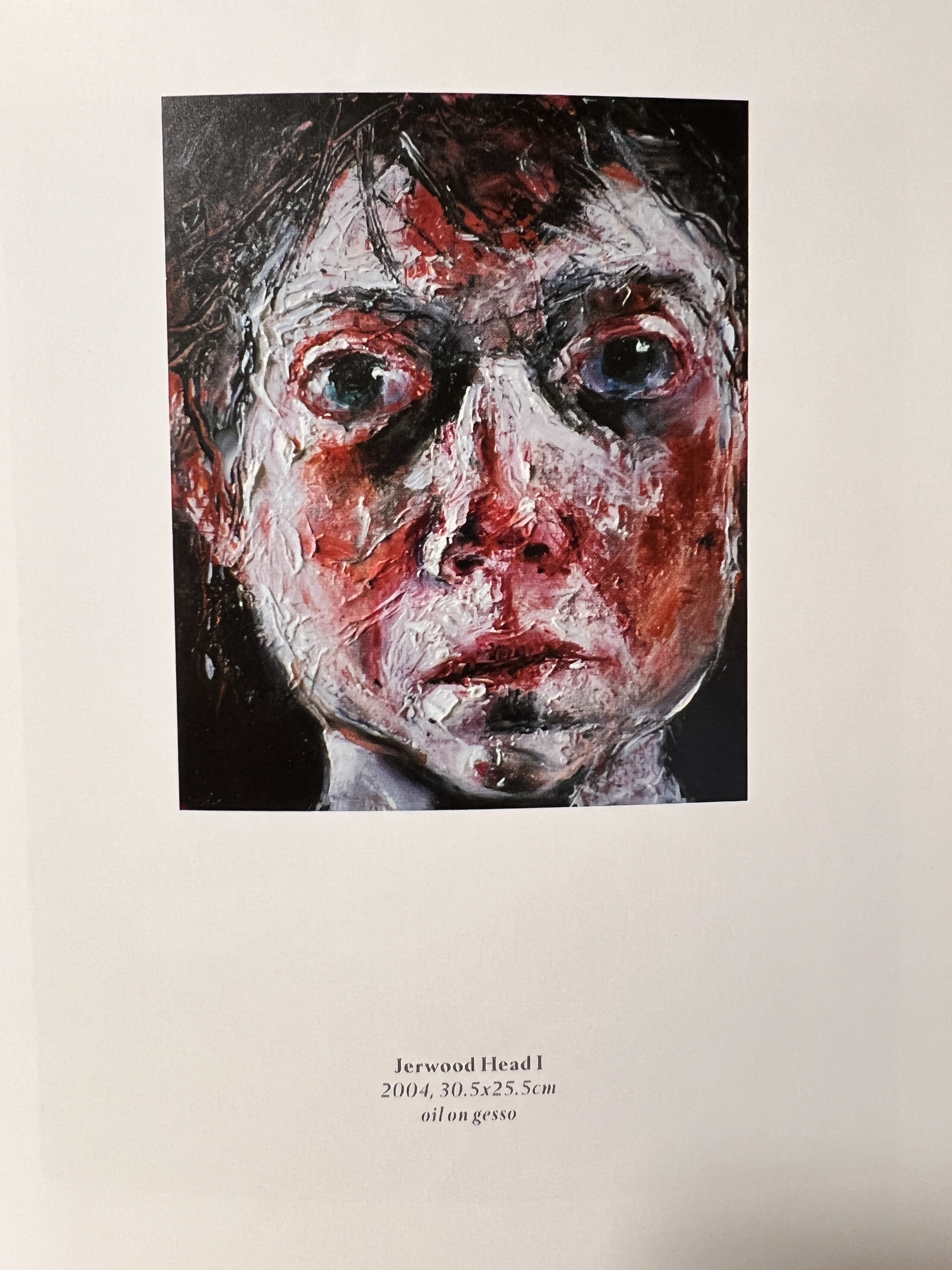
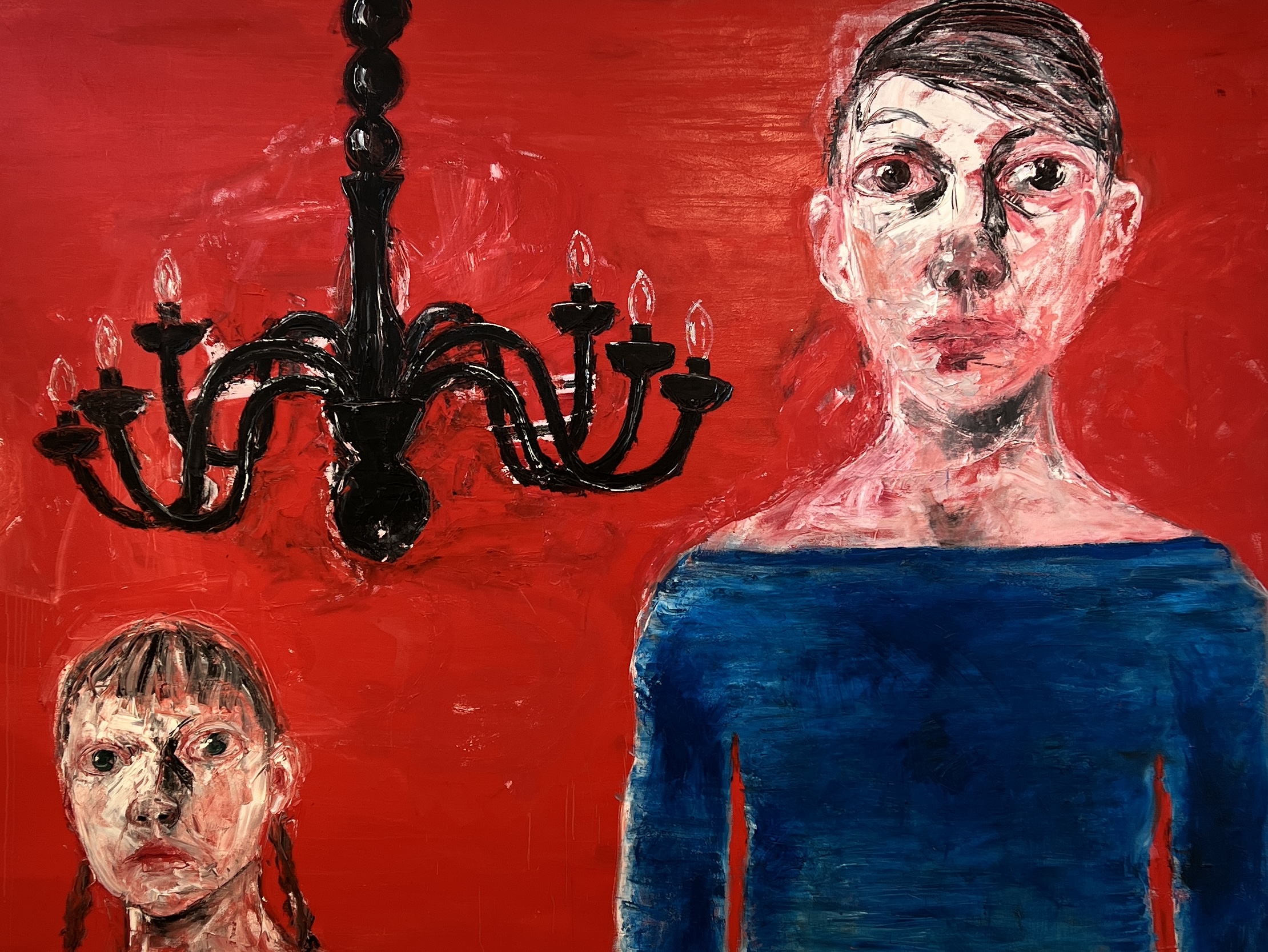
I had not researched what was on and was totally blown away when I got there and Shani Rhys James was showing with her husband Stephen. I have been a fan of her work for such a long time, her portraits stare at you with a glare, there is no smile, just raw emotion, dripped in red, her expressive marks, the way she depicts her subjects feels raw yet there is a personal connection, her painting of her own mother is not a pretty painting by any means, but to me it shows a deep love for the subject and the scale of the paintings were phenomenal.
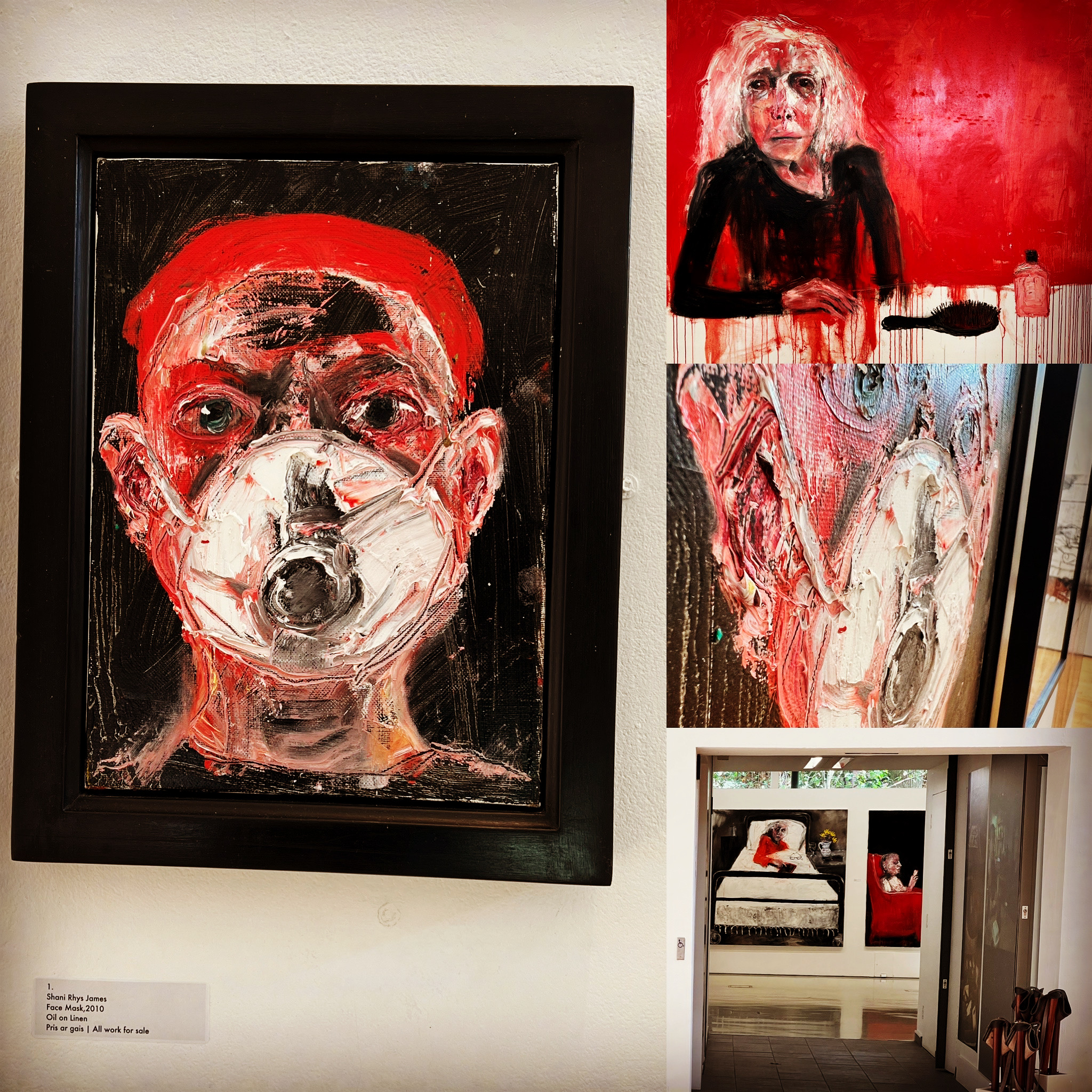
Stephan Jones Hughes the director of the gallery gave us a historical insight into Newtown in this very rural part of mid east Wales and how the Gallery came to being a community gallery, a sense of place being relevant to locality, with its challenging demography, predominantly older people live in this idilic location, however it does have tourists passing through on their way from the Midlands to the Welsh coast, it has very small pockets of ethnicity and only a small section of diverse group, to be diverse to all of the population the programme has to be inclusive, they are also moving towards social prescribing which is the new community referral where a health professional will refer patients to improve their health and wellbeing in a non medical setting such as art making via the Gallery.
Group Critical evaluation
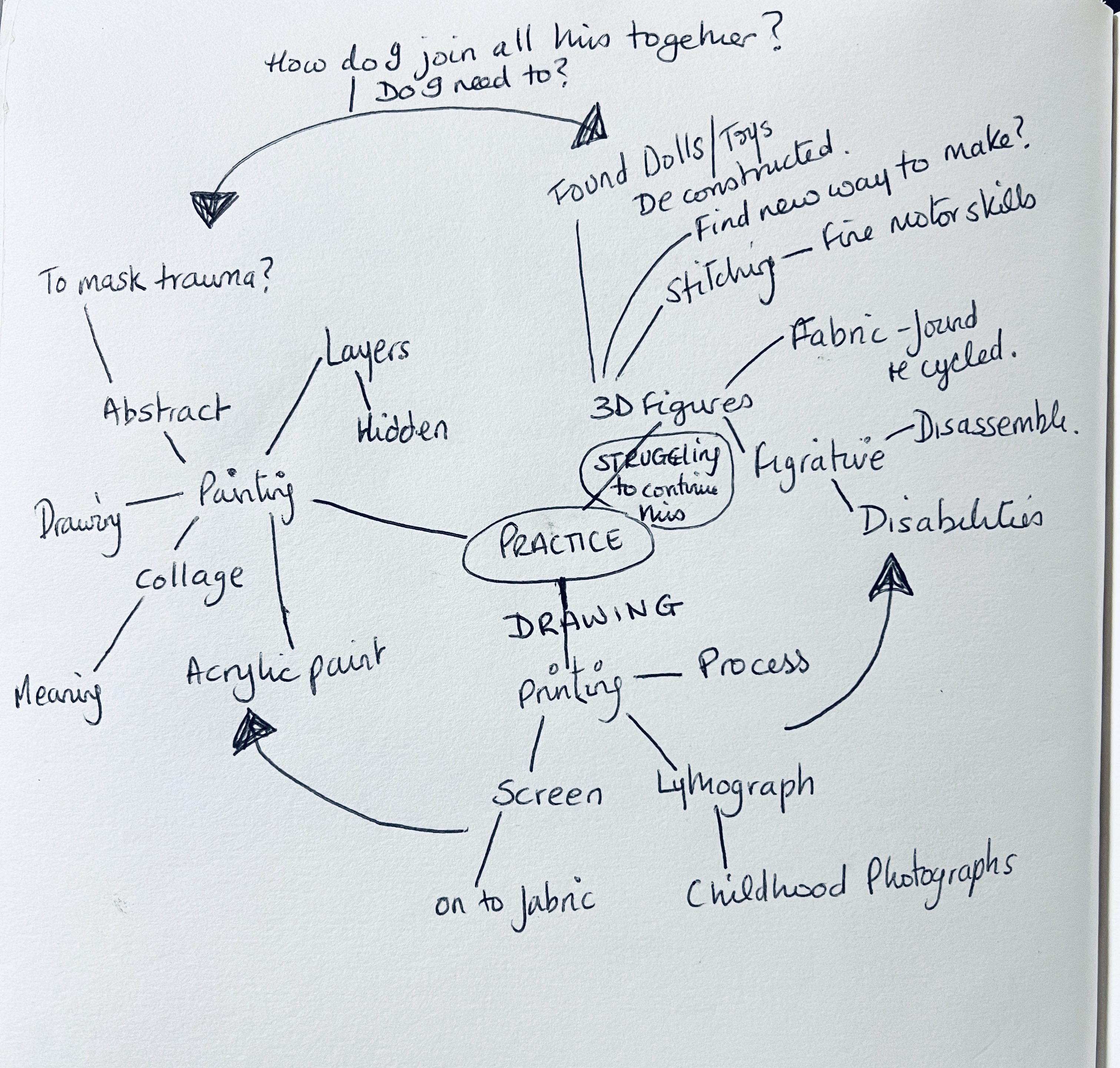
One of my initial mind Maps, changing my media to continue to express myself and my narrative, searching for answers on how I join everything together, My starting point is to paint, it is to explore if by painting I can express the same narrative through this medium. Layering has always been present, not just in a practical sense with fabric and stitching but in an emotional manner, layering narrative to form a protective barrier. My challenge is to marry my processes together, or at least explore if it is possible to find a way to do this using my figures, printing and painting or possibly as Gareth Griffiths has, they are all part of my process, they do not need to be married together?
Reflections
Having identified in my group crit that I aim to research by reading, I have started to read Susan Sontag regarding the pain of others, this is an interesting insight into how we view images and as an artist displaying images I feel that it is an essential read, I have often felt that we are so saturated by images from phones, TV, laptops. Initial images of the war in Ukraine sent shock waves across all media platforms, with news specials, all other news stories were suspended, we as individuals were shocked, we were upset and our sympathies and support for the down trodden was in full swing, however 10 months on and people are still being slaughtered, bombs are still falling. Yet the news has become stale for many. This saturation of images of horror anaesthetise the shock, images become just that, a detached reality that does not personally have any affect as it is only an image.
I am sure that I am not on my own, I am still horrified by images of suffering, be it from war torn countries, to starving children in Africa in their drought ridden homes, to families here having to access food banks to survive, knowing that there are children having to go without food in one of the richest countries in the world makes me so angry, the voiceless, the homeless, and myself unable to change the situation except by painting their plight intertwined by my own pain, is this why I am empathetic to others plight, I do not know.
Paul asked me “why dolls and toys” I am sure that initially it was as a need to express myself figuratively by using cheap second hand materials, but also I had few toys as a child, I don’t remember owning a baby doll or having attachments to any, I had a teddy but this was given to one of my siblings when I left home at 16, therefore, for practical reasons, but also possibly as a nostalgic longing for a childhood I feel that I had missed out on having. I don’t remember the innocence of childhood as such, not how it is described by others. I was the oldest child and my parents were fairly young, so I grew up with them, possibly.
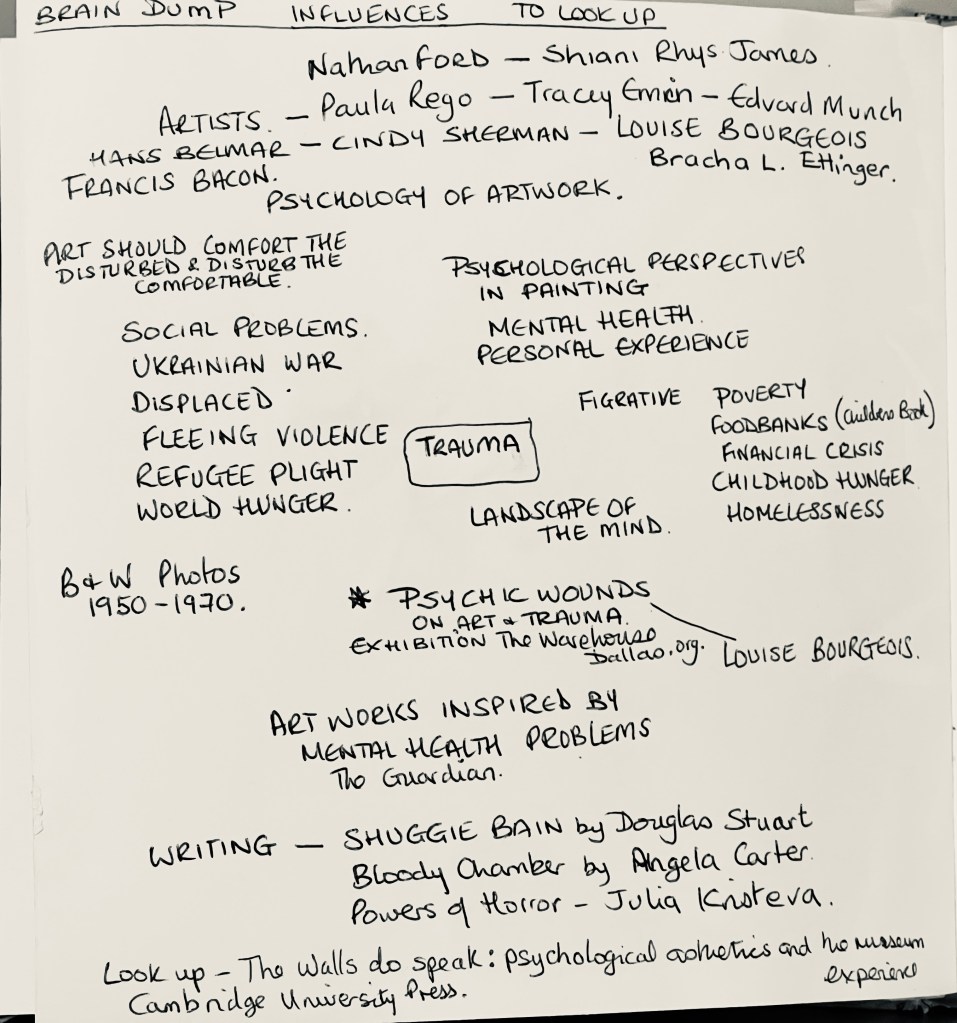
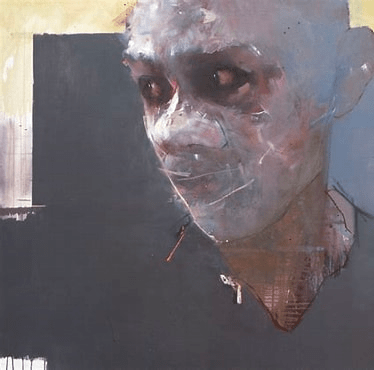
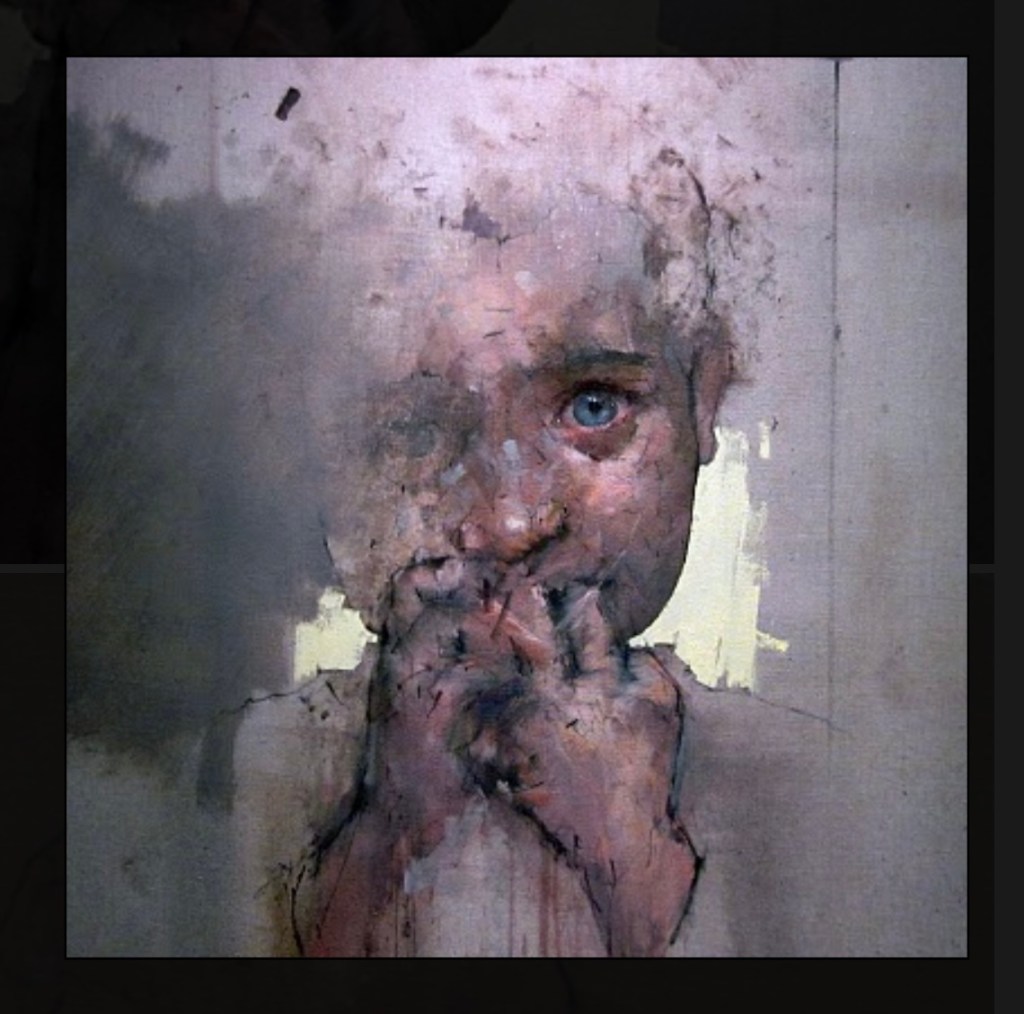
Nathan Ford Introduced to me in John McClenaghen’s seminar last year called Psychological Perspectives, his seminar focused on how the artists use our focus point to a particular part of the painting leaving other part out of the main focus unfinished. However, for me I saw something else, I saw especially with Nathan Ford’s paintings, a striped away version, the true essence of the person, the parts you need to see, psychological for me being the rawness of emotions shown within these incredible beautiful paintings, what do you see when you look at me? It was one of those moments that something clicks and you see a door open of possibilities.
“Nathan Ford’s paintings are an essential part of his communication with the outside world. He marks the passing of time with portraits of his children, family and friends, all faces he knows beyond mere flesh. His larger works, mainly urban landscapes, are an exploration of fleeting sensations of light, form and colour.”

Books and Research
Psychic Wounds, On Art and Trauma
My research led me to an exhibition which took place in February 2020 called Psychic Wounds, on art and Trauma, the exhibition guide includes essays, images of the works of art featured and it also has an online website thewarehousedallas.org the show was curated by Gavin Delahunty. There are so many pieces of art in this collection that I am inspired by, emotionally identify with and I will discuss these further as my research evolves.
“Psychic Wounds: On Art & Trauma examines over 60 international artists whose memory of historical trauma has provided them with a unique power to generate works of art. Although there have been important examples of art that address wounding, scarring, and healing throughout the 20th century, the proliferation of violent imagery since World War II has led to new kinds of artworks that marshal consciousness of traumatic events and their cultural processing. These developments in art practice run parallel with the emergence of “trauma studies” in the mid-1980s, which confront the repercussions of psychoanalysis, the Holocaust, global conflict, sexual violence, and race and gender discrimination”.thewarehousedallas.org
This painting drew me in, it’s subtle ghost like, ethereal figures the colours are also subtle, yet as Shani Rhys Jones’s use of red blues, lilacs, these group of naked people or is it one transforming? It is on the cover of the book which I have just purchased, I will discuss this further in my module, there are several essays and foreword which i will comment on.
“Bracha L. Ettinger Israeli-French, born Tel Aviv, 1948 Eurydice — Medusa — Pieta n.1, 2015–2018 Oil on canvas 16 x 12 inches (40.6 x 30.5 cm) Courtesy of the artist and Braverman Gallery, Tel Aviv“.

Griselda Pollock After-affects / After-images (Trauma and aesthetic transformation in the virtual feminist museum). On my reading list.
Jill Bennet Empathic Vision, Affect, Trauma, and contemporary art. I am currently reading this book, which on the subject of trauma looks at the distinction between visual language as a vehicle to express trauma that is as an artist, rather than as a patient in Art Therapy.
Elaine Scarry The Body In Pain, The Making and Unmaking of the World, This book was suggested to me and Susan Sontag writes of the book on the back cover “Elaine Scarry has written an extrordinary book: large-spirited, heroically truthful. A necessary book” As I am currently reading Susan Sontag I was compelled to purchase.
Maria Lassning, Film Works. which is now also purchased and on my reading list as well as the recommended books for this module, as I said I find reading difficult but I am keeping to my small sections each day and this helps to retain the information which will improve my understanding and language used within my subject area.
Rebeka Elizegi Collage by Women, 50 Essential Contemporary Artists. This book is available at campus but I flicked through it and wanted to buy my own copy as it is relevant to my practice.
Liverpool visit to Fact and Tate for the Turner Prize nomination artists.
I got the train into Liverpool and met everyone at Central station, it is only a short walk to Fact and we were shown the current show that was on before getting a talk about Fact and the work they do. I found the room hot which made me feel unwell but I appreciated the time they took to talk us through their event schedules and program delivery.


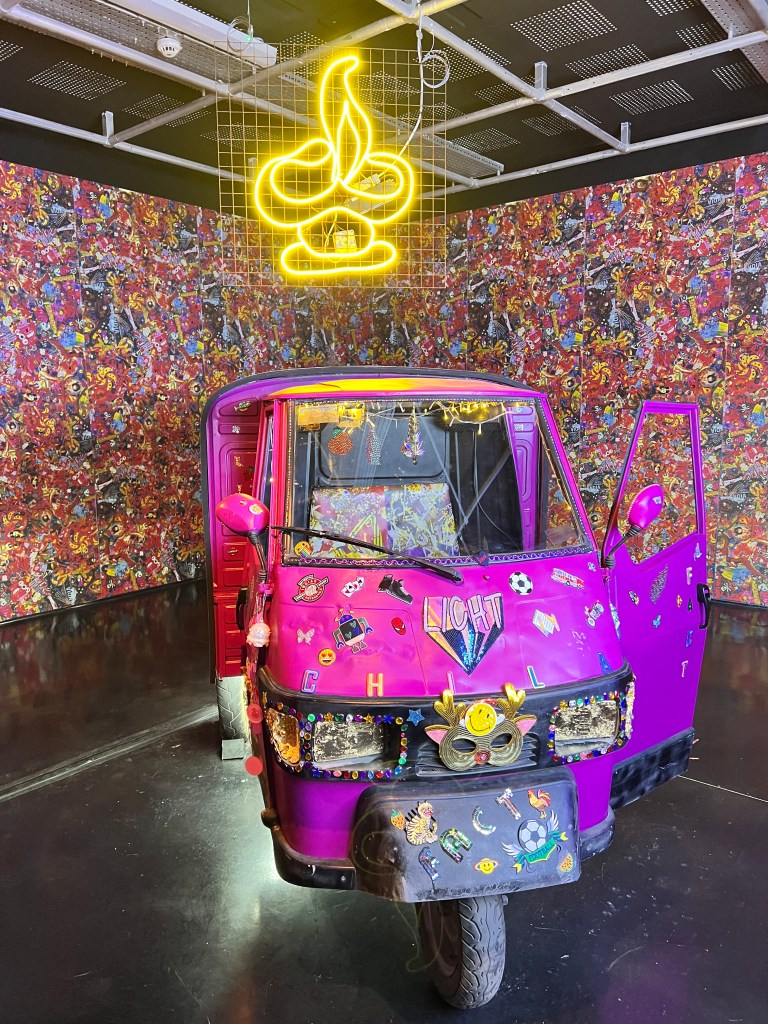
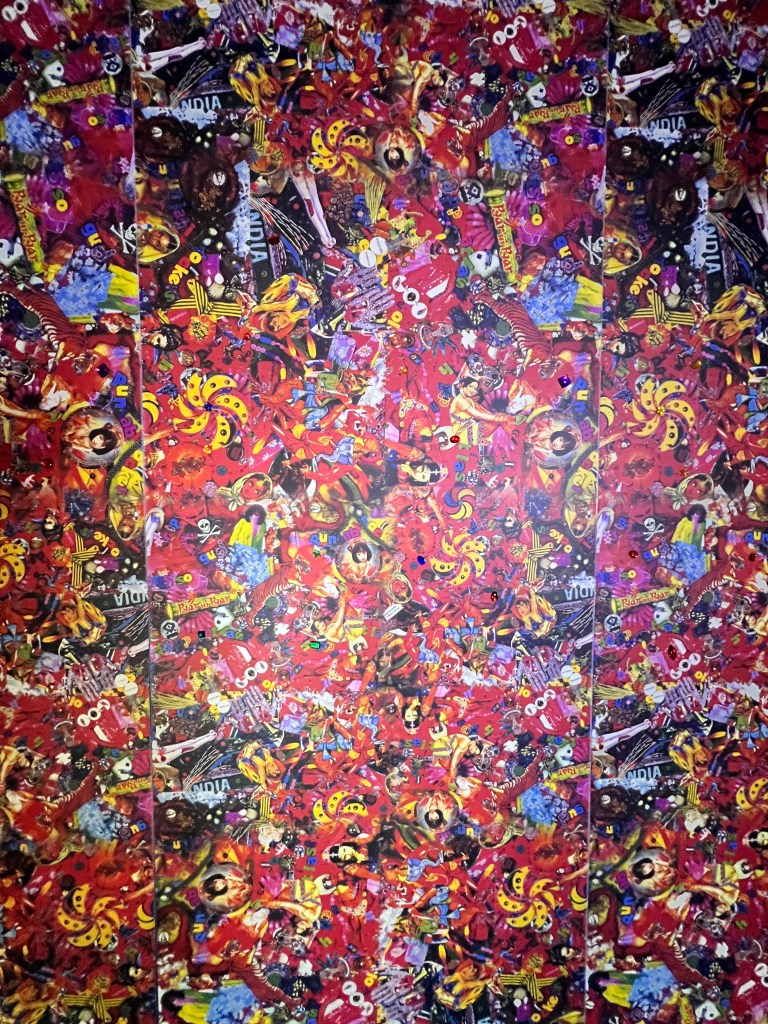
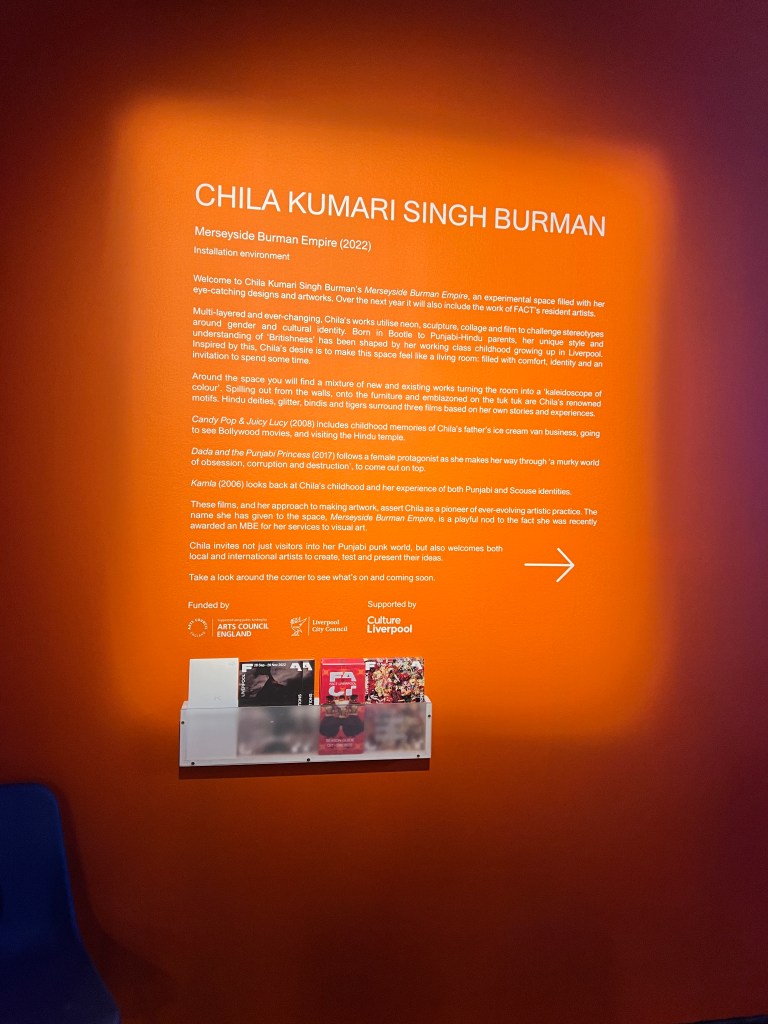
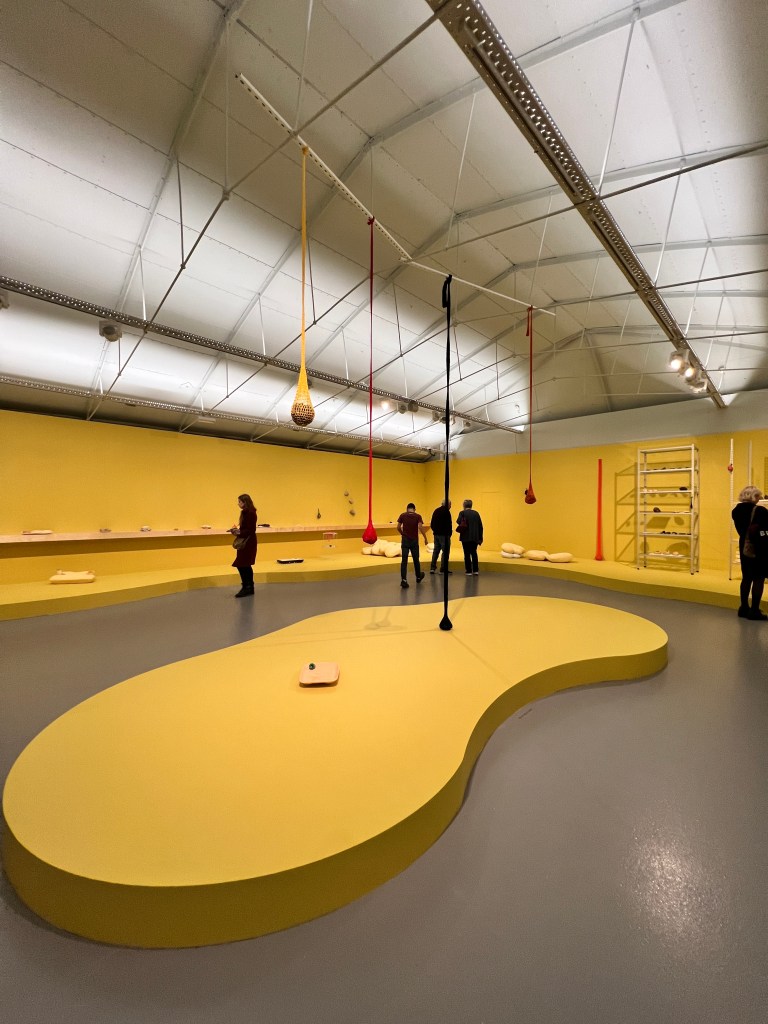
The Tate nominations began in a room where they had video instillations of their nomination and I was drawn to one artist who used textile processes to make structural forms that reminded her of going to the market with her mother to buy fruit, the Tate displayed her work in a Yellow room, the room was far too big and the work was just lost in all that yellow! it just looked like a half empty shop without cohesion to the display, had I not seen the video, I would have been left thinking what is this? I was disappointed. The other entries were far stronger in their visual presentations, the piece about gender and accompanying film was really superb as well as the room with the shed, I liked the fact that earphones were dangling from the celling and each had different sounds, but it also felt alien, a little like Matrix where humans are plugged in to experience their lives a little like we actually are attached to out smart devices.


Acrylic painting course, online in a facebook group
This was a free abstract painting course by Judy Woods, an Australian artist, the free part was leading on to a paid course that I did not take, what I found challenging was that they talked about using mediums, I had no idea what these were and had to research, as I have stated in my progress paintings I experimented with her process but added my own elements.
I also got a book from the library Hazel Harrison, The Encyclopaedia of Acrylic Techniques, A visual directory of acrylic painting techniques, with guidance on how to use them. From tools to palette, to mixing colours, supports and canvas’s which I have not yet used.
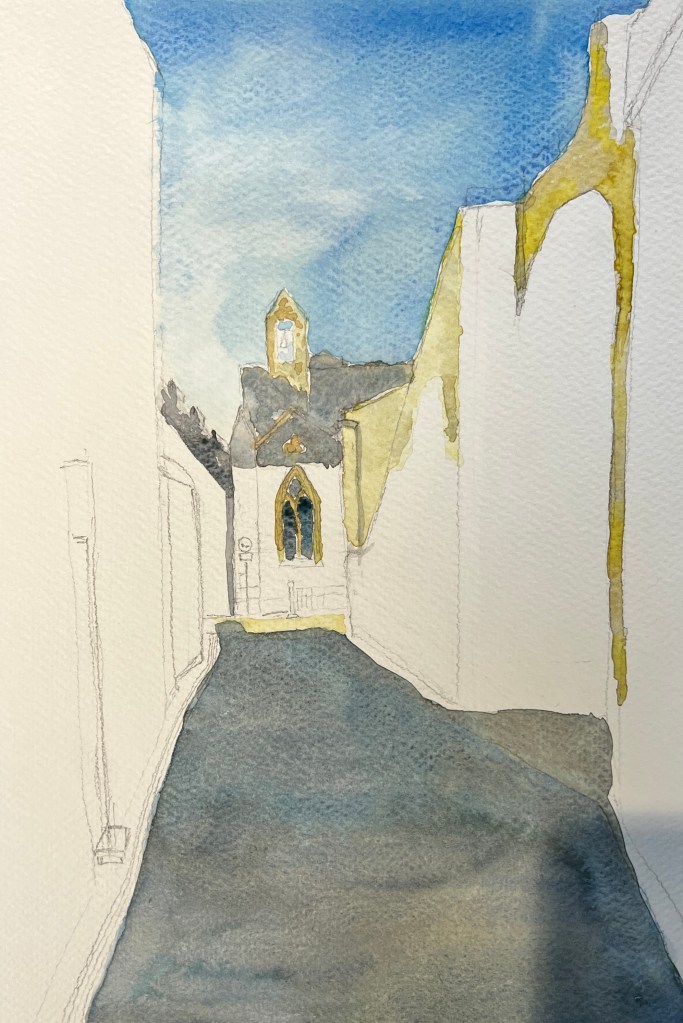
Watercolour Painting Course with Andrew Jenkins in Dr Art House, Cae Llechi, Caernarfon for x6 weeks.
I decided to do this course despite my not using watercolour as a medium, but felt that I would gain insight to transfer into my practice, colour mixing, composition, vanishing point, painting, drawing from life as opposed to from a picture. It feels very much like a directed class, it is only two hours every week for x 6 weeks. I have learnt about the application of wet on wet and how the paint can cauliflower, it has given me a huge respect for watercolour artists, it is not an easy medium where you have to apply the lightest areas first leaving the white areas blank. Doing the course has enabled me to realise that I will not be specialising in Watercolour Painting, but the course has moved my painting forward.

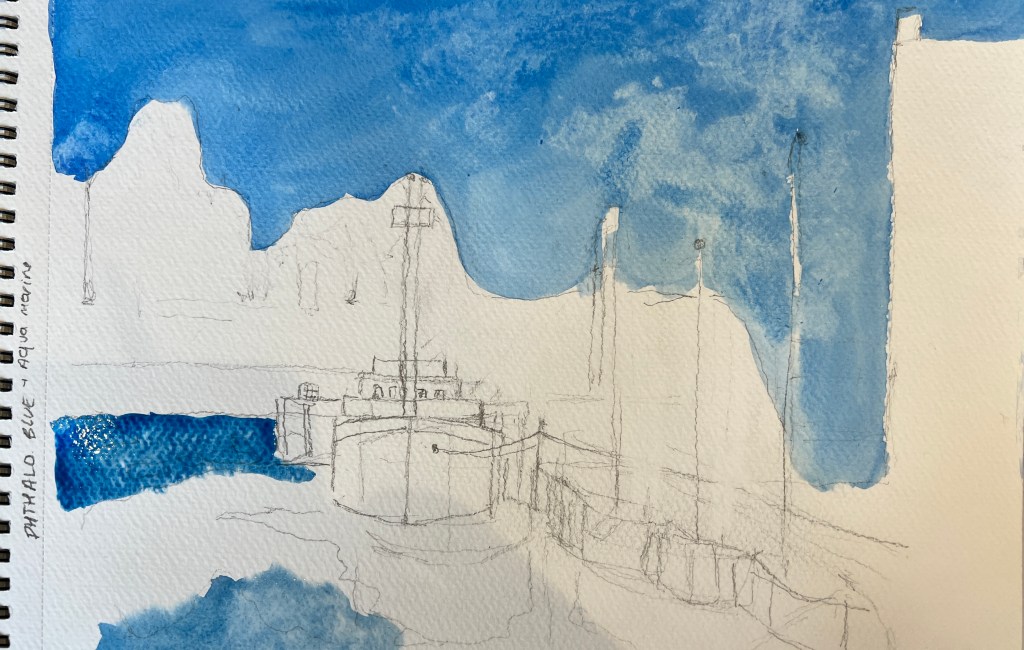

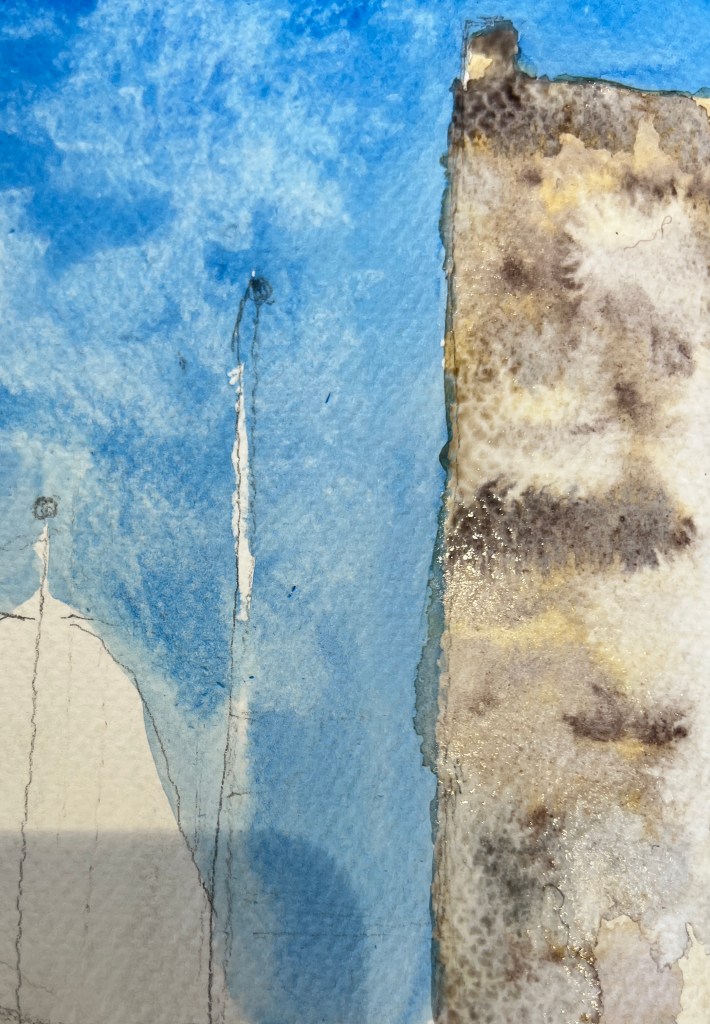
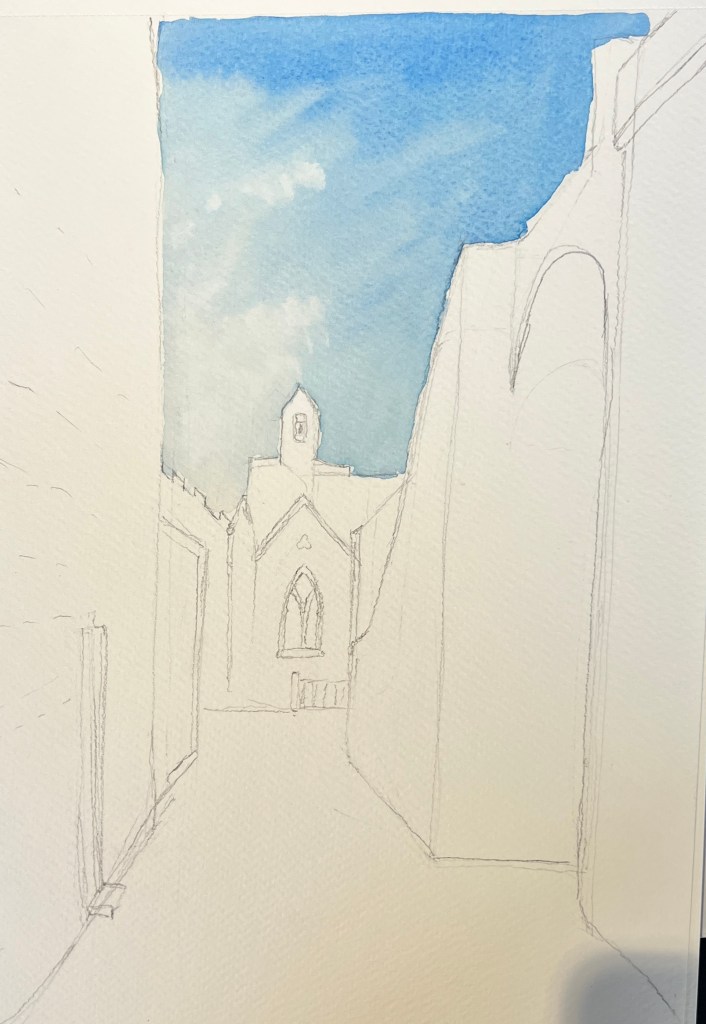
Progress and Process
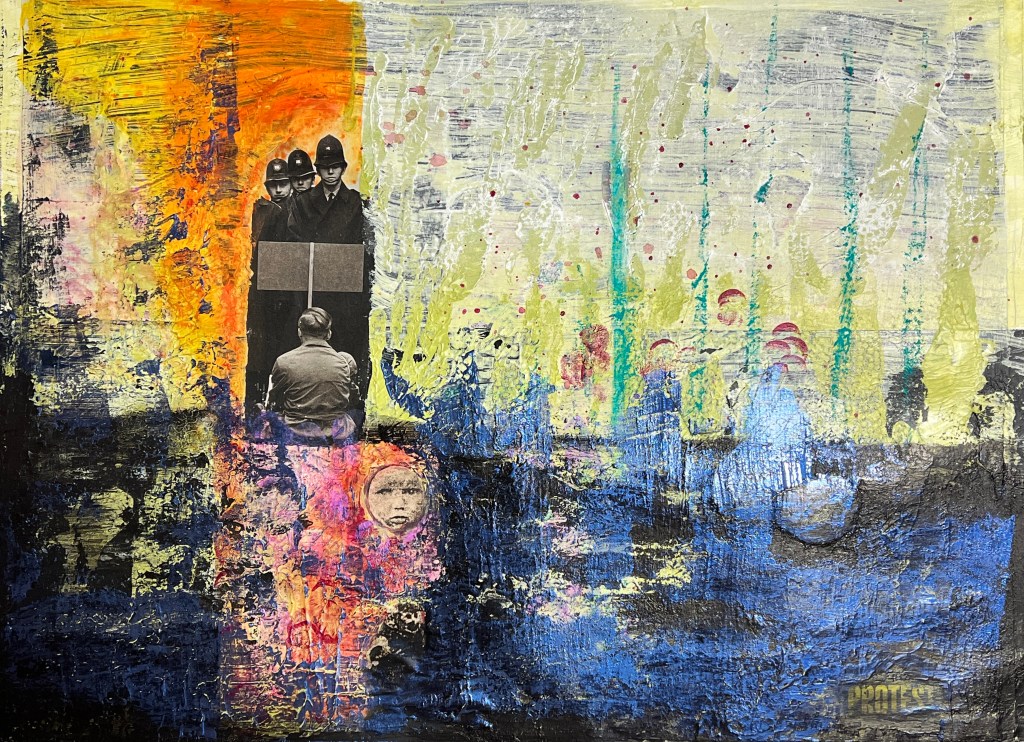
My third painting has been a work in progress, I struggled with the image, with the collage, with the layers, as you can see below it has undergone many transformations and I finally had to say i’m done! It has now been varnished and will not have any more work done. This painting it yet to be titled, My initial thoughts were of protests, fire, growing up at a time when summer houses were being set alight in my area by “Meibion Glyndŵr” and anarchy was in the air, but also the burning of the gorse which happened every autumn to clear the mountains for grazing sheep. so possibly “Y Llosgi”, “The Burning” I had not anticipated how difficult it is to name pieces of art and that the name can add or take away from the narrative, the time my thoughts were engrossed with while making this painting was significant.


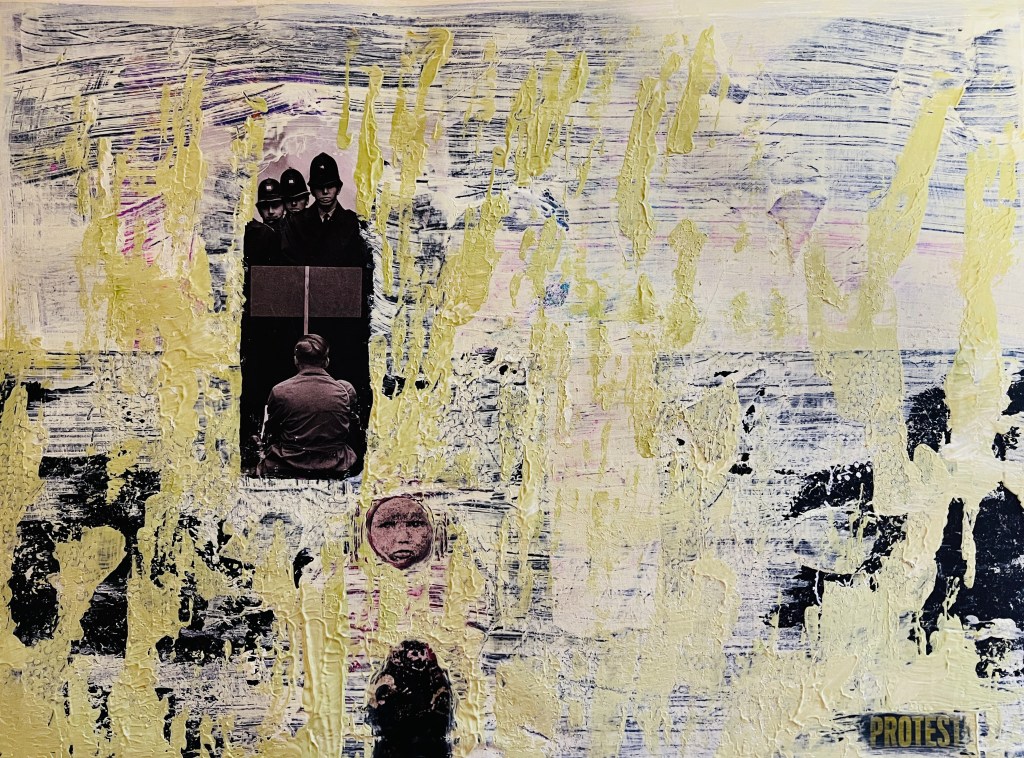
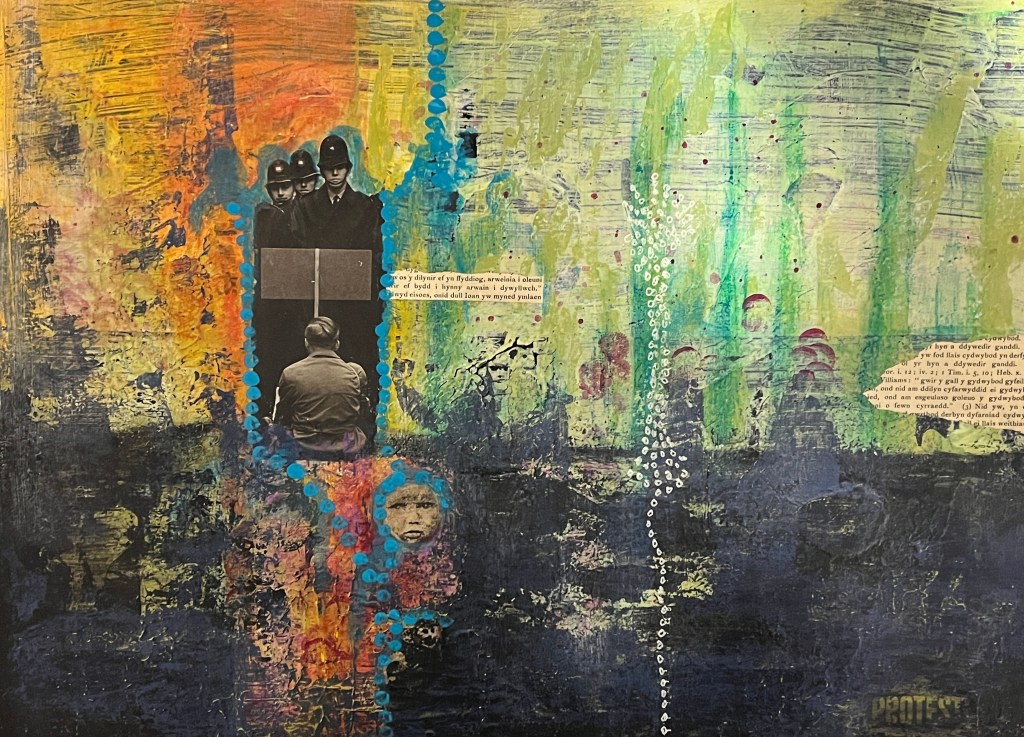

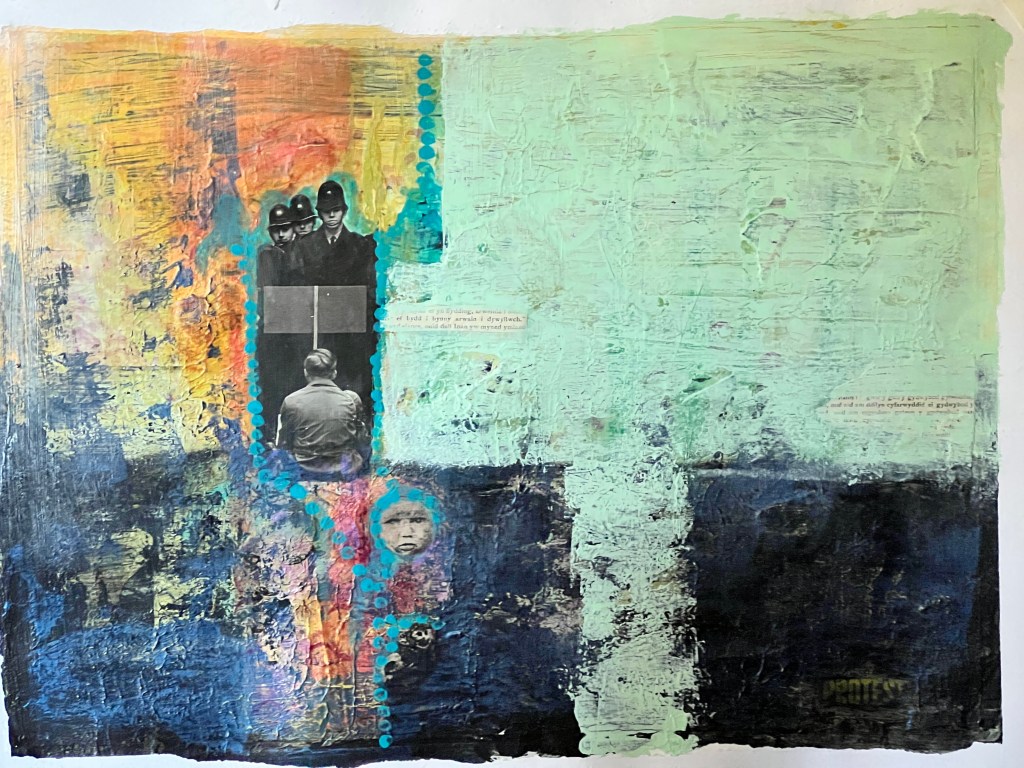
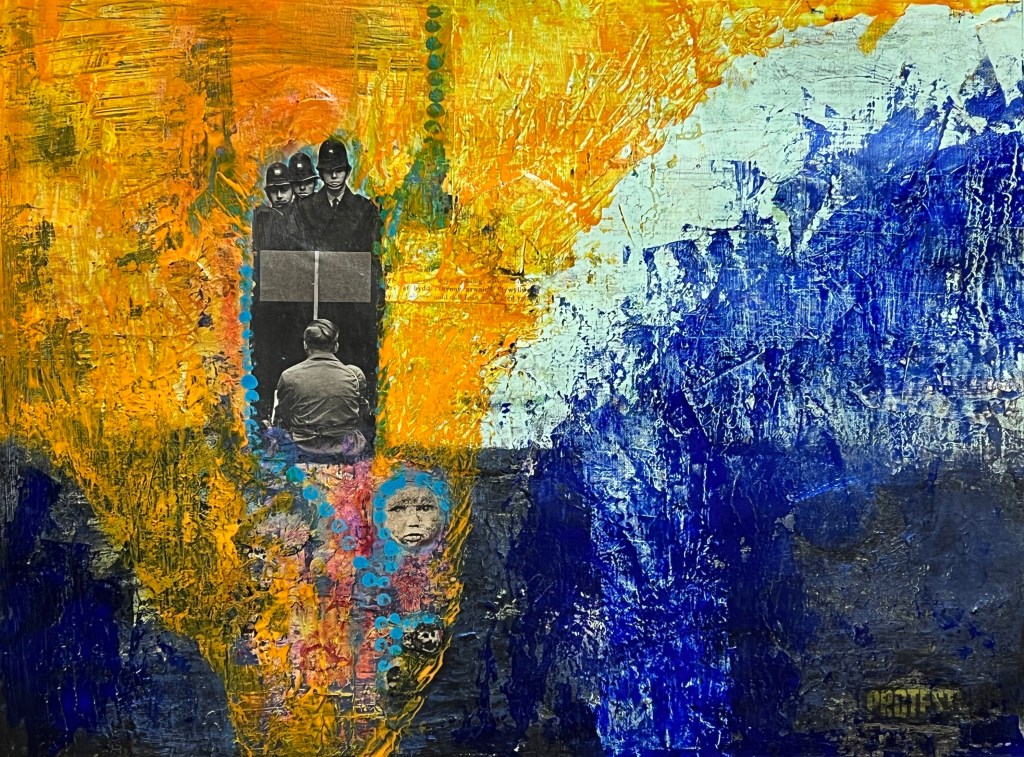
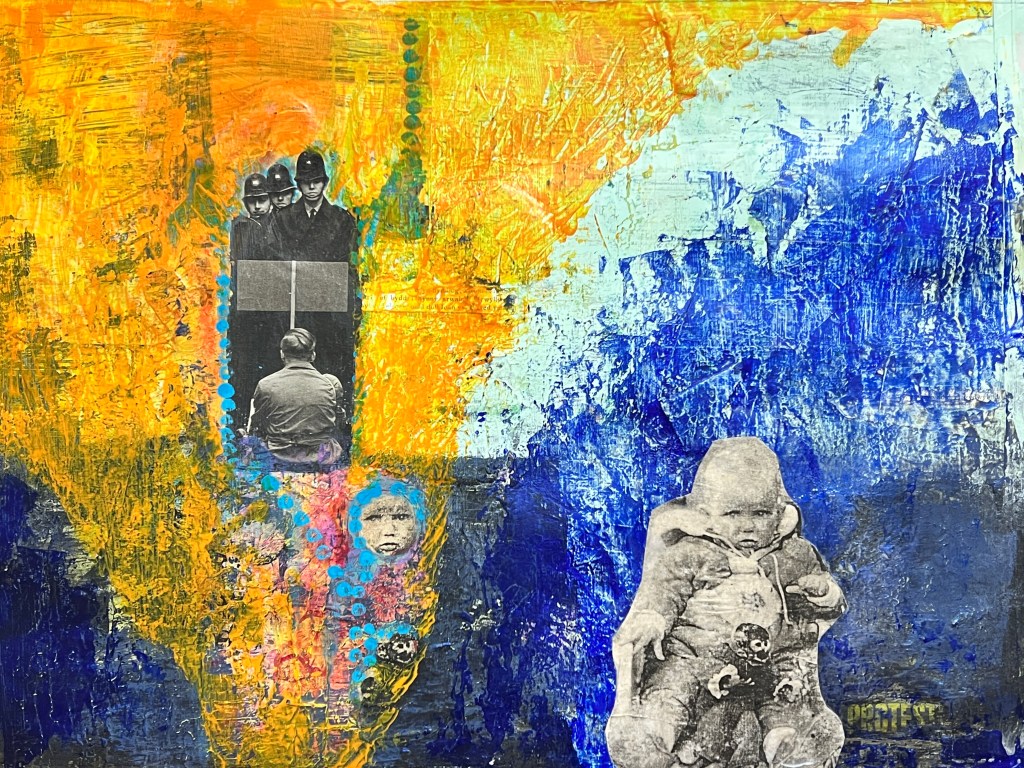
At this point in the painting I wanted to put it in the bin I felt that placement was all wrong and there was no balance so I painted over areas and added more collage to balance out the painting.

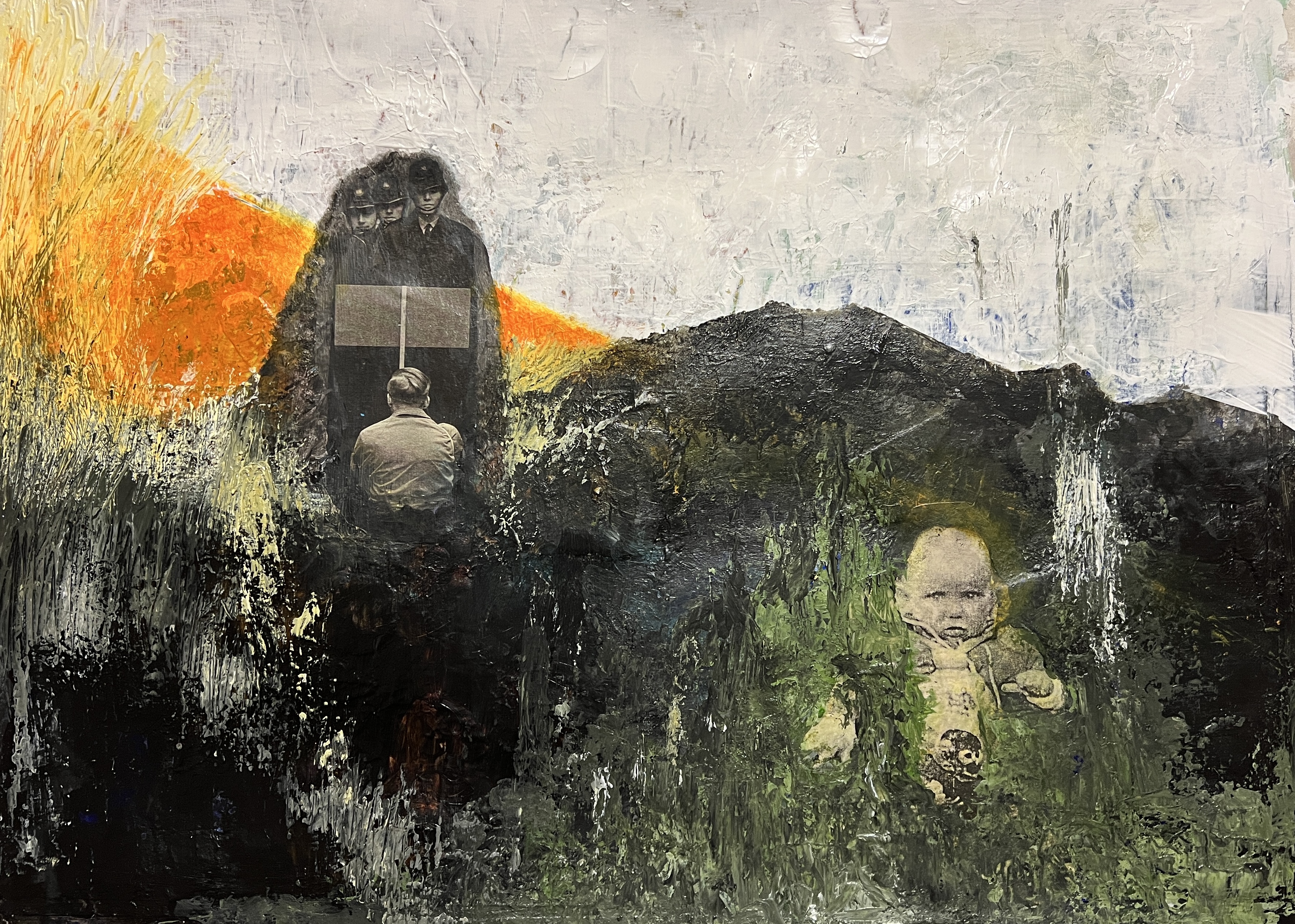

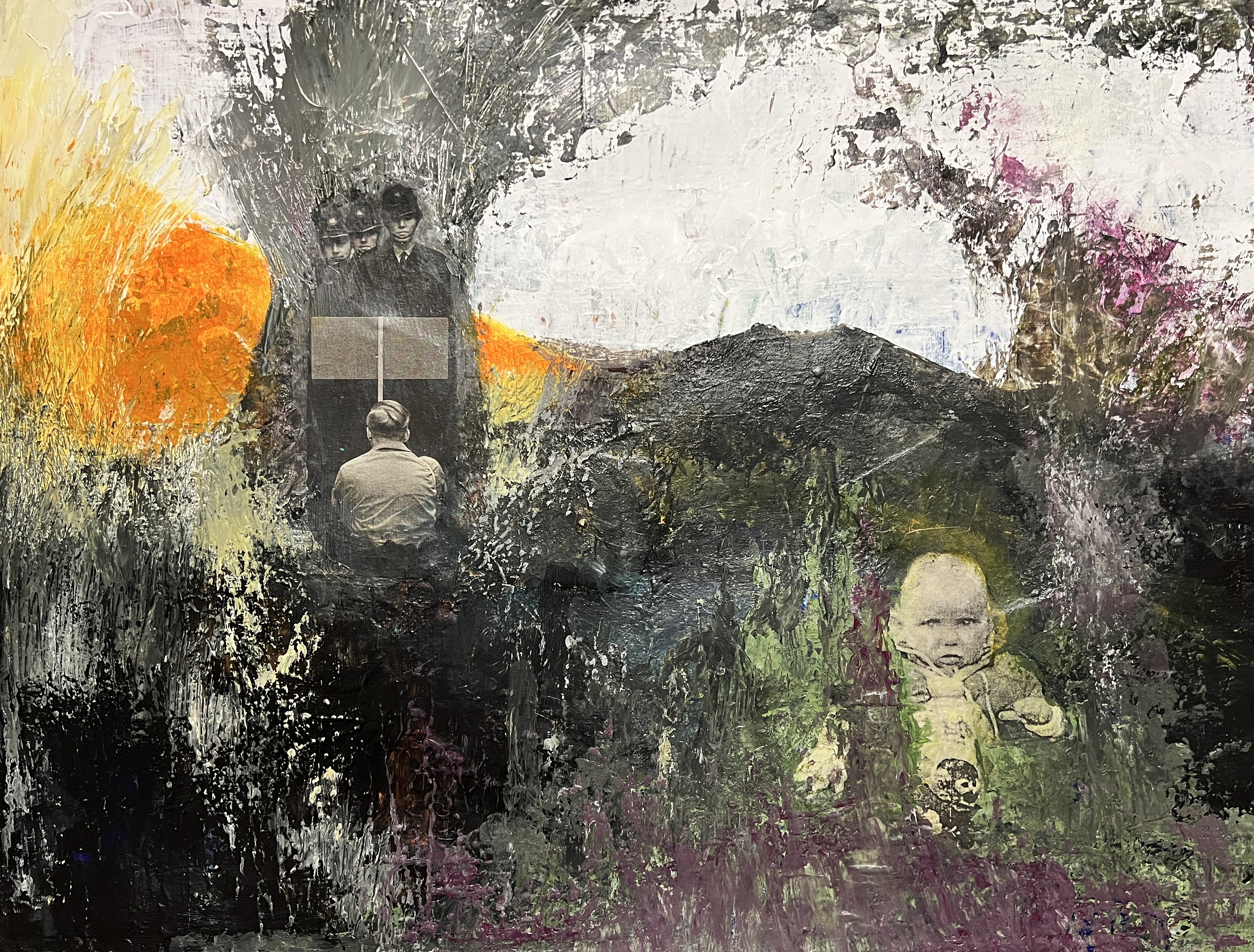

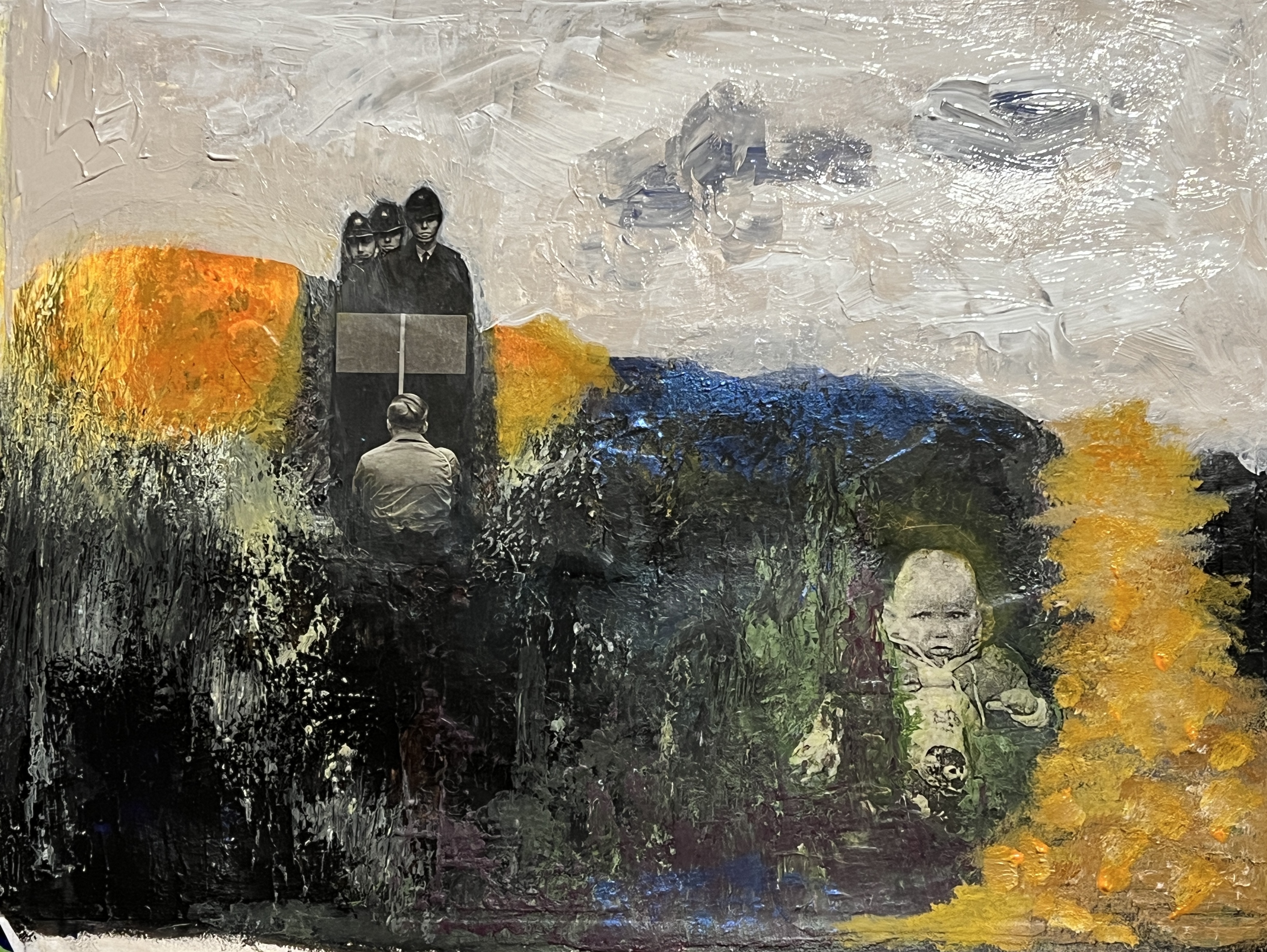
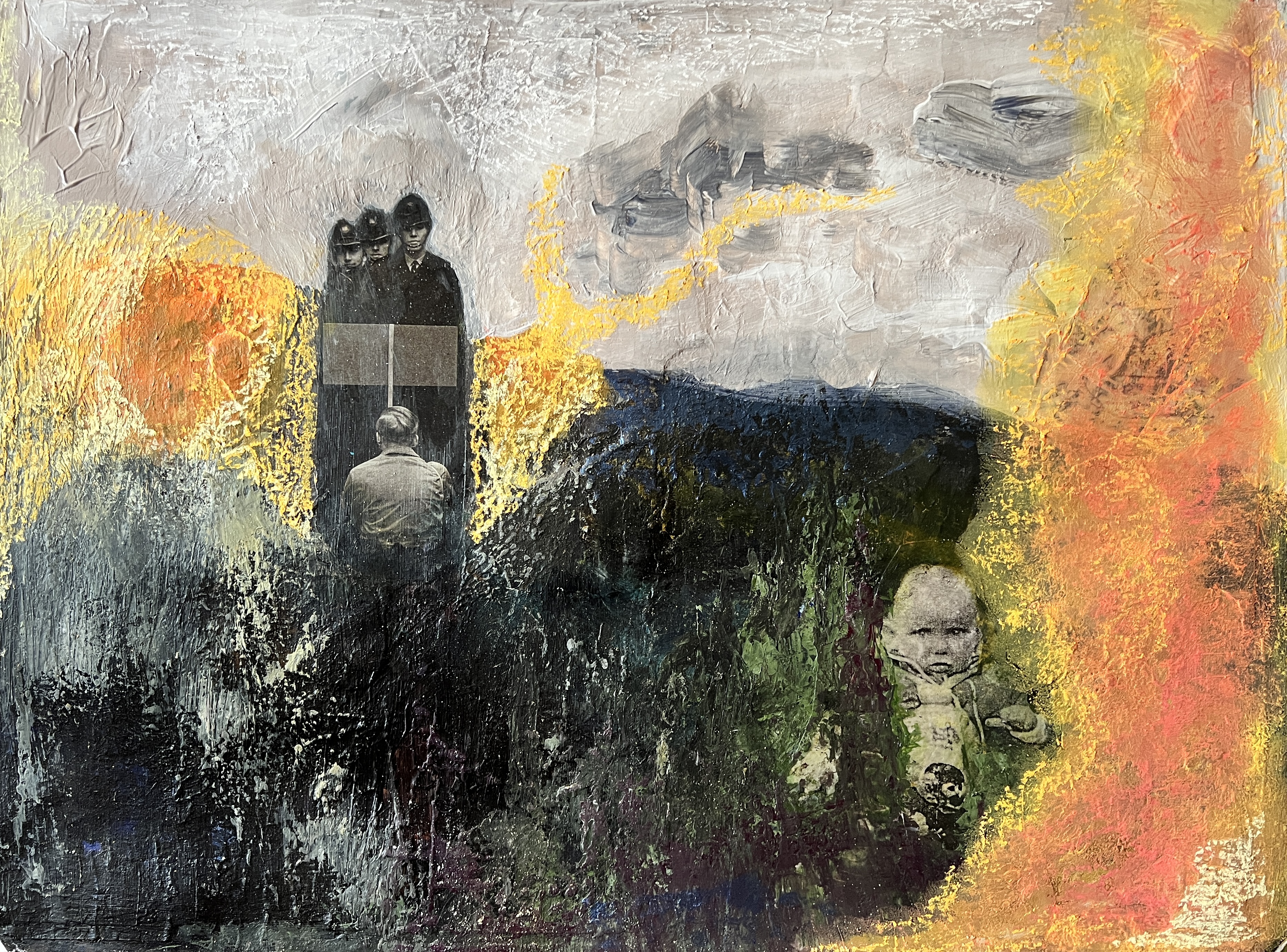
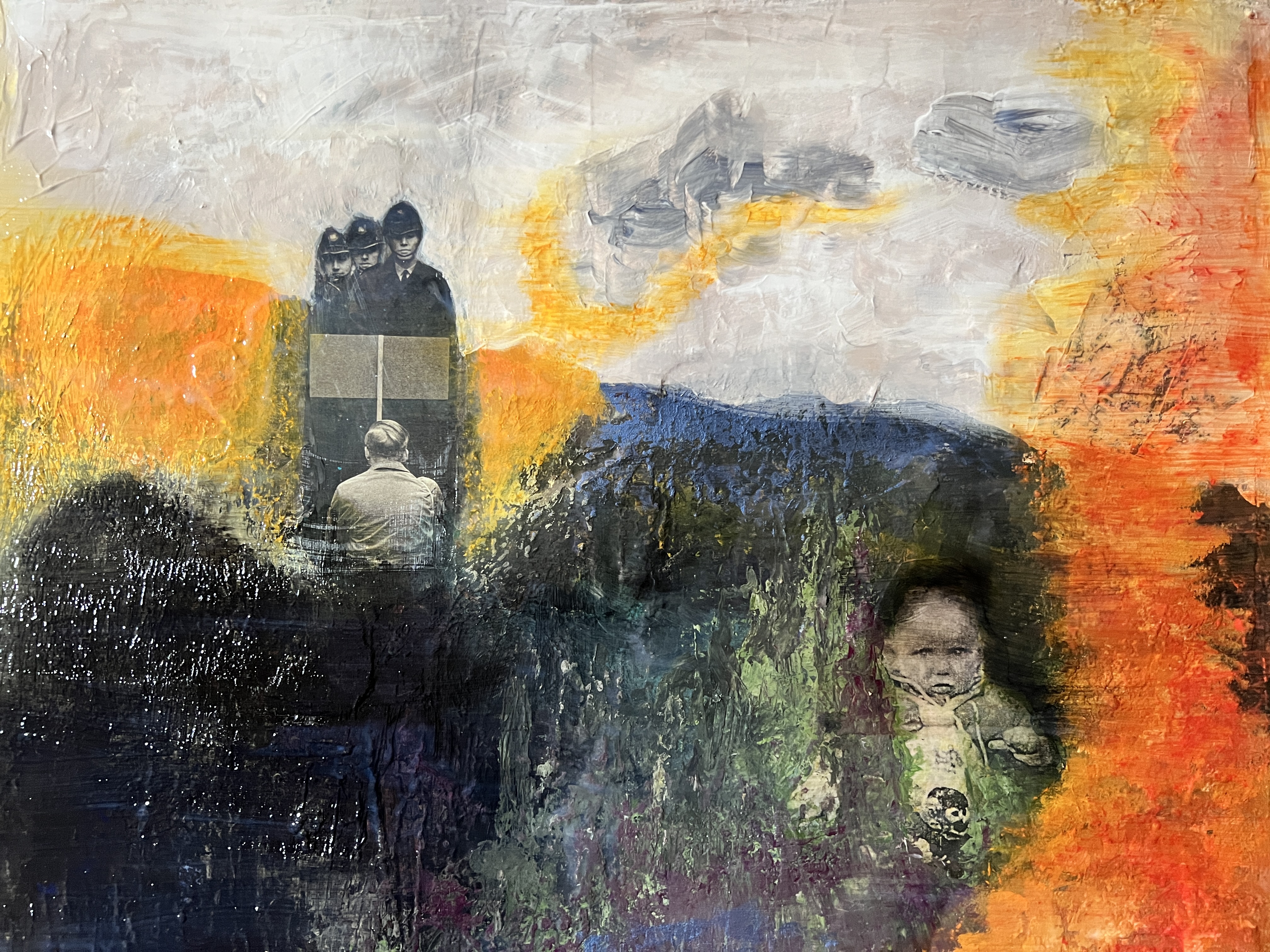
The final picture has now been varnished with Gloss Acrylic Varnish, I am not sure about the Gloss but it does make the colours sing. The final stages of the painting I added colour with layers of paint and pastels.
Reflections
Practice talk with my peers, I was nervous but got advice from a fellow Artist the previous day, she said wear magic socks, stand with your feet slightly apart and you will feel more confident to command the room, I felt much more confident and felt that I presented far better orally than I have before, my feedback was very useful, and both books suggested have been since purchased, I explained that I had initially wanted to marry my practice together, printing, stitching processes and painting, my pain management has been poor with the changing weather being colder and wet I have found that my hands have been particularly painful and therefore, I have concentrated on what I am able to do.
I do plan to experiment with marrying these processes together initially I plan to paint landscapes that my dolls can be added to be it through paint, lithograph or collage. I aim to also try to make bodies on my sewing machine for my Jasminite heads and I plan to paint on to these, or to paint an essence of these, as in the image above by Bracha L. Ettinger in Psychic Wounds, their memory, their links to a childhood that never was. KH talked in my tutorial about objects that have a resonance; reclaiming words, negative objects changed into positive, wiping away the negative of what happened and turn it into a positive. I am not sure if there are objects, for me it is more about a time and place, and in painting, more than with the figures I a feel that I am reclaiming those places, changing the narrative, moving away from what has been towards what is, the place in that time has gone.
My learning plan mapped out my transitional skills that have been forced upon me due to the pain I am having in my hands meaning that I am struggling to make figures that require fabric manipulation and long lengths of time stitching. It has been a difficult year and I have had to change my job and change direction in my practice.
My main points in my learning plan were to complete the skills audit to fully reflect where I am as an artist and following the skills audit, use my sketchbook, research in the area of Psychological perspectives in painting, a painting course to advance my knowledge, collage techniques, drawing and WordPress tuition. Gain knowledge in areas I find weaknesses, reflect on new knowledge I gain and using my WordPress as a visual weekly journal. To make a body of work to challenge my current development to push my practice further. Read and research the ongoing area that I am studying.
I have moved my practice forward, I have been challenged by changing direction, painting was always something I wanted to do but could not find my voice in the medium, due to necessity I have had to find my voice through painting but feel that I am only at the beginning of expressing myself with paint, imagined landscapes from my past re imagined with a new narrative of hope, the trauma is encased within the layers, the layering healing old wounds, psychic wounds, finding research that unlocks so much of the language and theories that will enable me to move forward.
 CarysAnne.Art