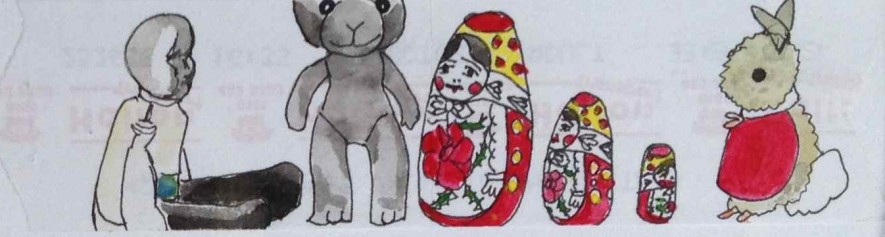
Module starts in June 2023
Week one, module handbook with a Power Point presentation going over every aspects of what will be needed for this module including dates, submissions and exposition schedule. This is a 60 credit module and therefore it will be dedicated study and practice time to achieve outcomes on time. The Thesis is 30% of the mark which is much less stressful as this is my weakest aspect of my study. Task one was to read through our Thesis proposal from last year.
My Abstract from last year: ‘My thesis sets out to test the hypothesis, how can artists who have suffered traumatic events in their lives visually interpret this within their art practice, is it important? I will look at the definitions of trauma, define the differences between art therapy and artists who work through their trauma, consciously or not. My literature review is not that of Therapy based practices, rather, literature that emphasizes on horror, the way we view horror and on visual language, how the photograph is important part of this visual language. It sets out a personal journey of discovery, this may be considered cathartic, however, my mission is to undertake an understanding of how the memories of traumatic events visually play over in one’s mind and its interpretation of this into pieces of art.’
Having read through my Thesis proposal, I have realized how much my practice has moved forward, how by deeply exploring the theme of personal trauma, I was able to work through issues that were holding me back as an artist. This change has enabled a change in direction, by working with people outside of my specialism
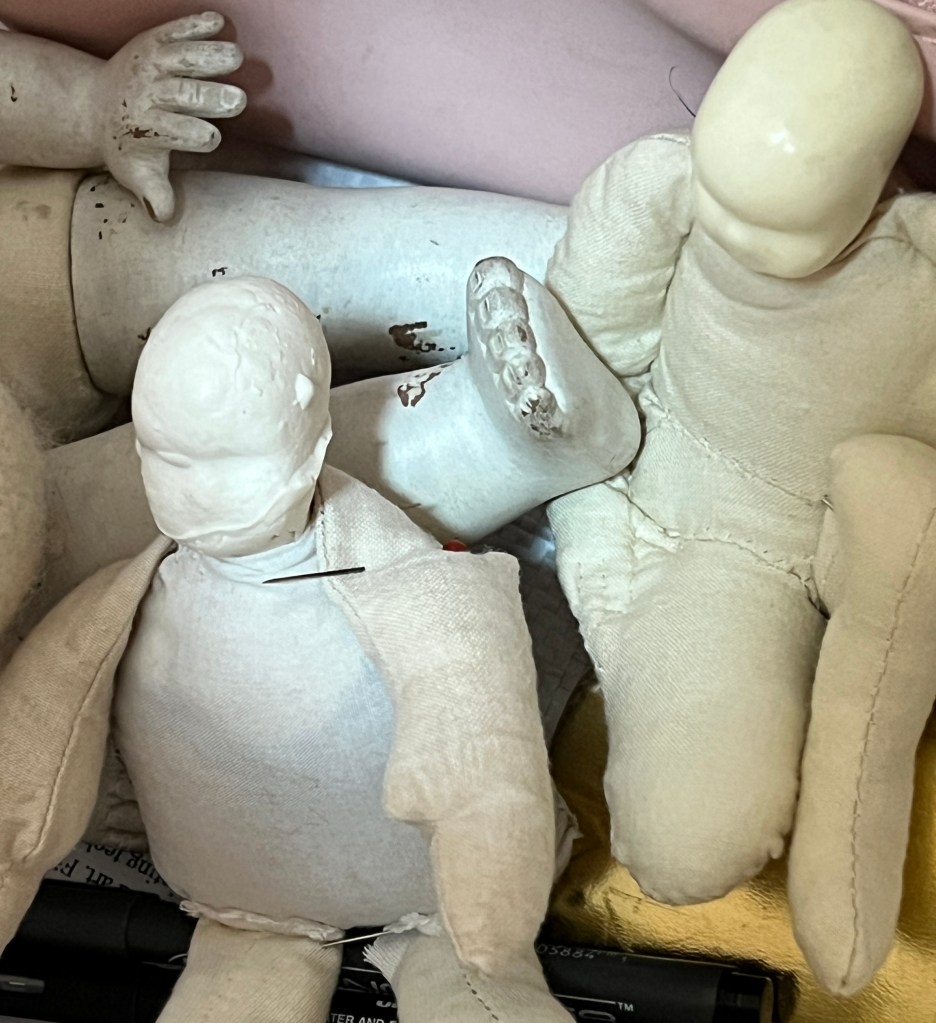


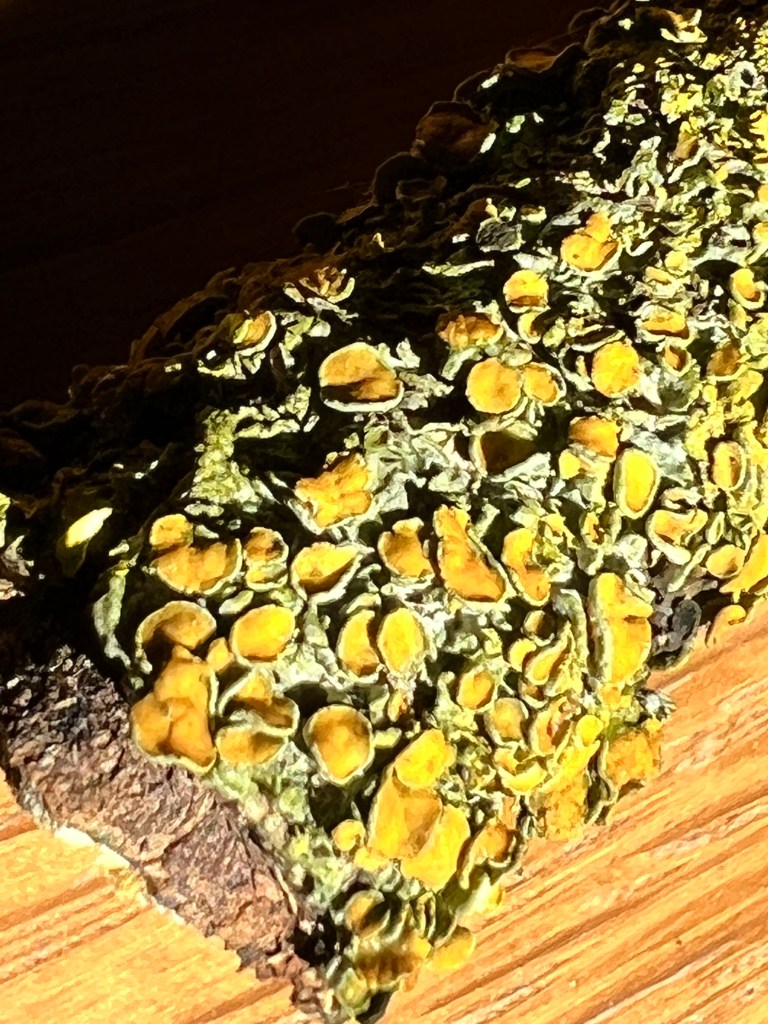
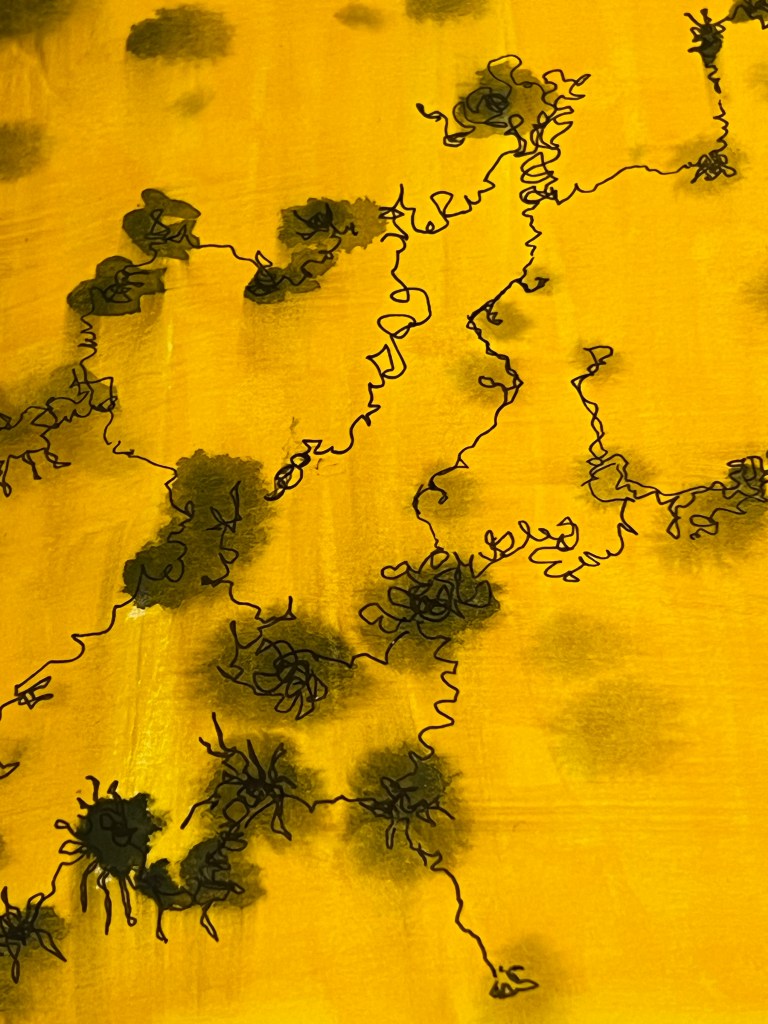
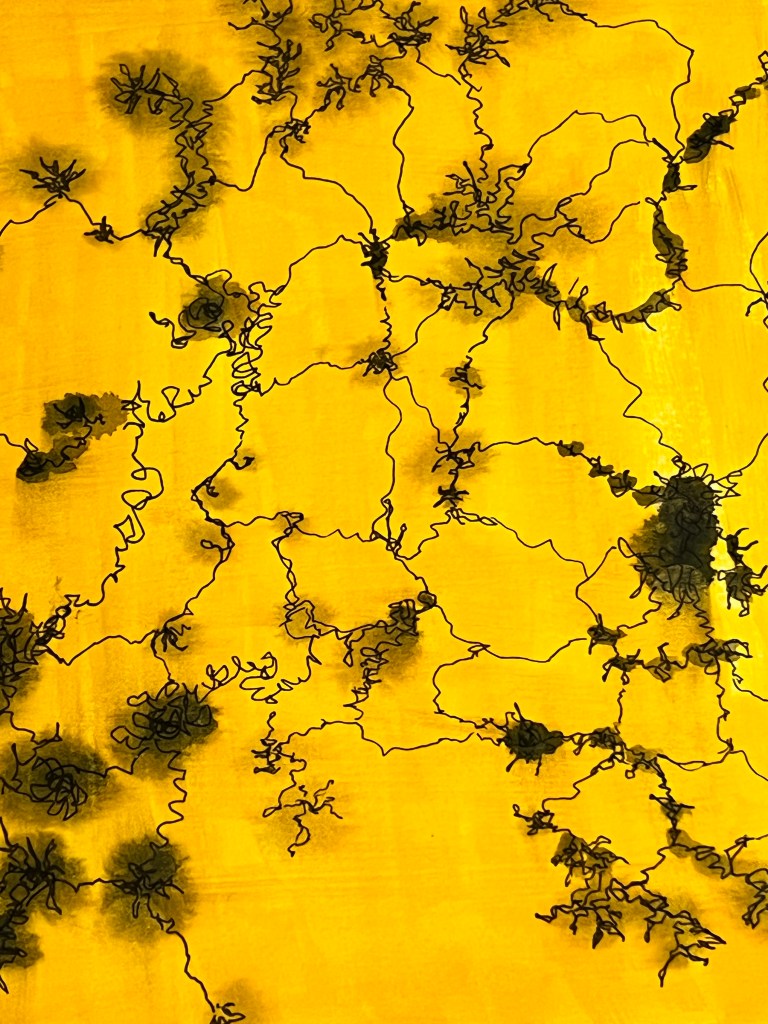
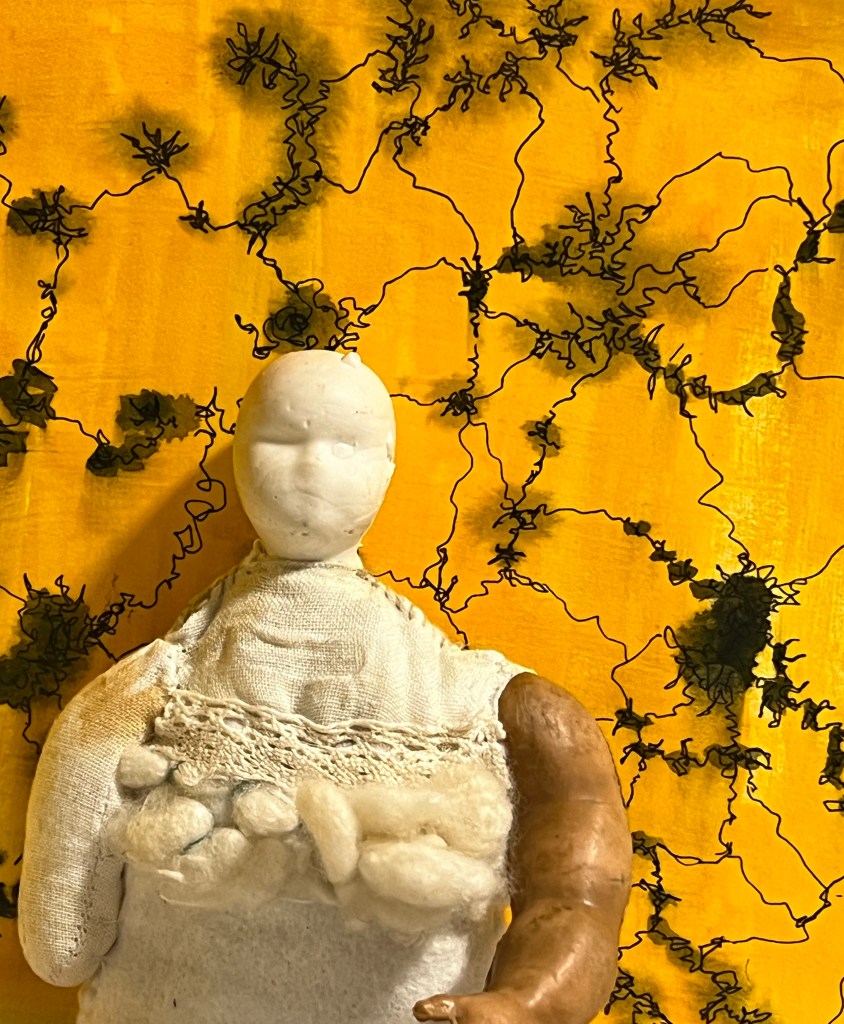
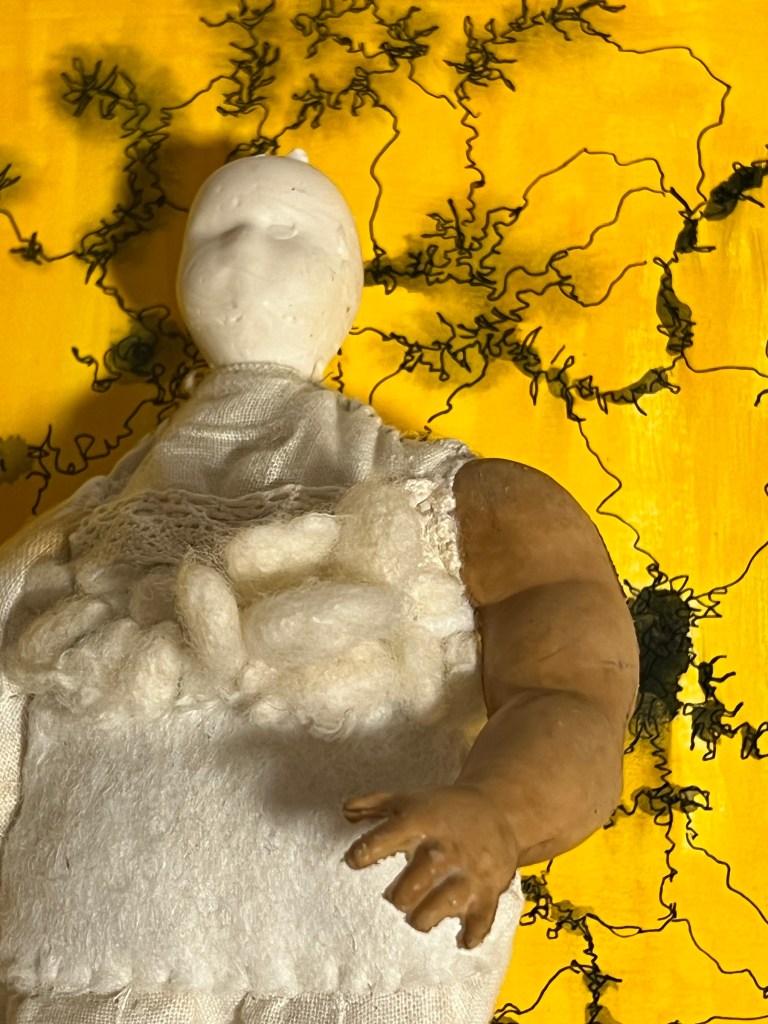
The article below is only one of many articles that I have found whilst researching which is a new focus relating to climate trauma, and how this relates to my own relationship with trauma as I move through my healing process by making pieces of art that attempt to piece back together the shard fragments of memory.
Can Art Change Attitudes Toward Climate Change?
A study found that people who viewed climate data in the form of an artwork were less likely to lean on their preconceived notions.
Elaine Velie June 12, 2023

A new study found that using art to convey environmental data eased political perceptions about climate change. As wildfires rage in Canada and New York City recovers from a week of smoke, the study’s findings could help scientists more effectively communicate their research at a pivotal point in the future of the planet.
Nan Li, Isabel I. Villanueva, Thomas Jilk, and Dominique Brossard of the University of Wisconsinand Brianna Rae Van Matre of the nonprofit EcoAgriculture Partners conducted the research, published May 31 in the journal Communications Earth & Environment. Li conceptualized the project two years ago when she heard artist Diane Burko speak during a webinar; the artist, whose practice centers on climate change, was pondering the real-world impact of her work.
Burko depicts the consequences of Earth’s warming atmosphere, such as melting glaciers and disappearing coral reefs, and often accompanies them with scientific maps and charts. Li and her colleague Dominique Brossard developed a study to answer Burko’s question — how does the artist’s work affect its viewers? The team chose Burko’s 2020 mixed-media work “SUMMER HEAT, I and II.” The graph at the lower left depicts the Keeling Curve, a visualization of the amount of carbon dioxide in the atmosphere since 1958. The blue represents melting glaciers, and the red figure is Europe, which suffered an intense heat wave in 2020 when Burko created the work.

In Li’s study, which surveyed a total of 671 people, participants were asked to look at both the Keeling Curve on its own and Burko’s artwork. The scientists also showed the viewers the works as Instagram posts. In one striking finding, the researchers discovered that participants perceived Burko’s artwork to be just as credible as the standalone graph. People also felt more positive emotions when they saw “SUMMER HEAT, I and II” than when they saw the Keeling Curve alone.
The study notes that some evidence suggests that emotion changes the way people think about climate change, which led the scientists to the final portion of their research: Would people be less politically polarized about climate change when they looked at and thought about Burko’s artwork than when they looked at the Keeling Curve?
The results verified the team’s hypothesis: People on both ends of the political spectrum moved toward the middle. This effect, however, was only observed when the scientists asked the participants to reflect on how Burko’s artwork made them feel — simply looking at “SUMMER HEAT, I and II” did not change viewers’ ideas about climate change.
Nonetheless, the recent study’s findings posit art as a promising alternative to raw graphs and data. Previous research has found that data visuals by themselves can actually elicit skepticism and amplify biases. (One study even found that liberals and conservatives even moved their eyes differently along climate graphs.) Mona Chalabi, an artist known for her cartoons and graphics that humanize data, won the Pulitzer Prize this year for her drawings illustrating the incomprehensible wealth of Jeff Bezos. Her artworks translate mind-boggling numbers into familiar analogies.
Speaking of her team’s discovery, Li told Hyperallergic that the findings highlight “the need to move beyond using art to merely adorn science,” encouraging “deeper introspection” on art’s role in the field.
“This study could pave the way for a transformative shift in climate communications and science communications in general,” Li continued. “Highlighting the power of art to provoke emotions and promote self-reflection.” https://hyperallergic.com/827074/can-art-change-attitudes-toward-climate-change/
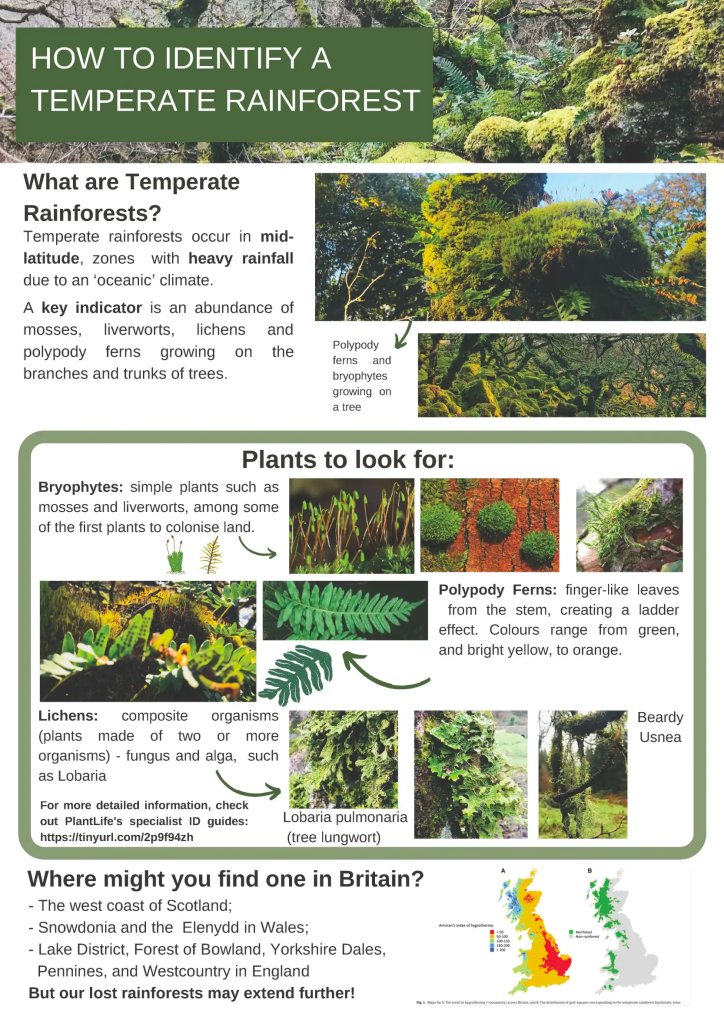
I have been listening to the audiobook by Guy Shrubsole ‘The lost Rainforests of Britain and found this book to be very informative, but the way that Guy narrates his book, his exceptional knowledge and enthusiasm as well as whit makes even the most dry statistics in the book enjoyable. His enthusiasm for the ecology of these sacred spaces at times spilled over for me to take up arms against anyone who mentioned taking down trees. The fact that this book is relevant right now when it discusses the vanishing ecosystems, their worth and what you can do about it, even in small ways, such as writing to your local MP. This book also has many solutions, and is uplifting in that it talks about great things that are happening to save these ancient woodlands, so giving a soothing sense that all is not yet lost in the quagmire of industrialisation and technological advances that have put blinkers on many. The release Date was 27/10/2022 and Published by William Collins, I have the audible copy.
Thesis
Going back to my thesis proposal was a stark reality check, hang on, where was I then to write that, It was enlightening in that re-reading my proposal I could see how far I have come within my practice. Being able now to articulate that my work is from Trauma and that this was ok, but now presents a problem, how do I tackle where I have been and where I am going as they appear to be in different places.
I mapped out the bones of my proposal first and took out the parts that I felt were not relevant, I added titles to where I felt my work has developed into Climate crisis, but with the background of trauma I was not prepared to start again as the proposal was still relevant, the more I worked on explaining my reasons for moving towards climate trauma the more it began to come together and to make sense, the thesis is a journey of trauma, of healing through art practice, it has given me confidence to have a voice and had extinguished my imposter syndrome, possibly not forever but working on the thesis whilst making new work also helped me to evaluate what am I about, especially as we were working towards our exposition.
Abstract
The thesis sets out to understand the differences between art made by artists following harrowing traumatic events; How trauma is defined; What are the drivers that compels an artist to produce work that subconsciously leaves traces of trauma within its fabric.
I researched definitions of trauma, and how artists making art included their trauma within that, investigating if this different to Art Therapy where art is only a vehicle for communication. I explored specific artists whose artwork appears to have traces of their pain, and that personally resonated with me. I also researched different types of traumas: personal, collective, such as natural disasters, but alsoclimate change that is currently having a global impact on people and the planet.
My artwork is made through found mixed media, these reference my own journey with trauma, through the medium of fairy tales such as The Mabinogion. Tales told to me as a child when I would escape to the woods to imagine a different world. My figures are complex pieces of personal history intertwined with dark original tales of the Brothers Grimm. The Lost Rainforests of Britain by Shrubsole re-ignited a deep longing for the forest and a focus away from my own childhood traumas.
Has my trauma been healed?
I have found a way to communicate what my work is about without hiding behind ambiguous titles. ‘Healing’ like trauma is different for everyone, however small the progress in acceptance, being able to help others through communicating the narrative within my work, is me, being able to take the bubbling, steaming lid off the pan.
New work, reworked.
The process of gathering one’s work for the exposition began to take on a form of narration, a story of where I have been and where I am going. Having to work on the Thesis at the same time was difficult and distracting at times but this process of working out my practice informed my thesis, my title ‘Can artists Heal their Trauma through Art Practice’ and the process of making while writing was beneficial.
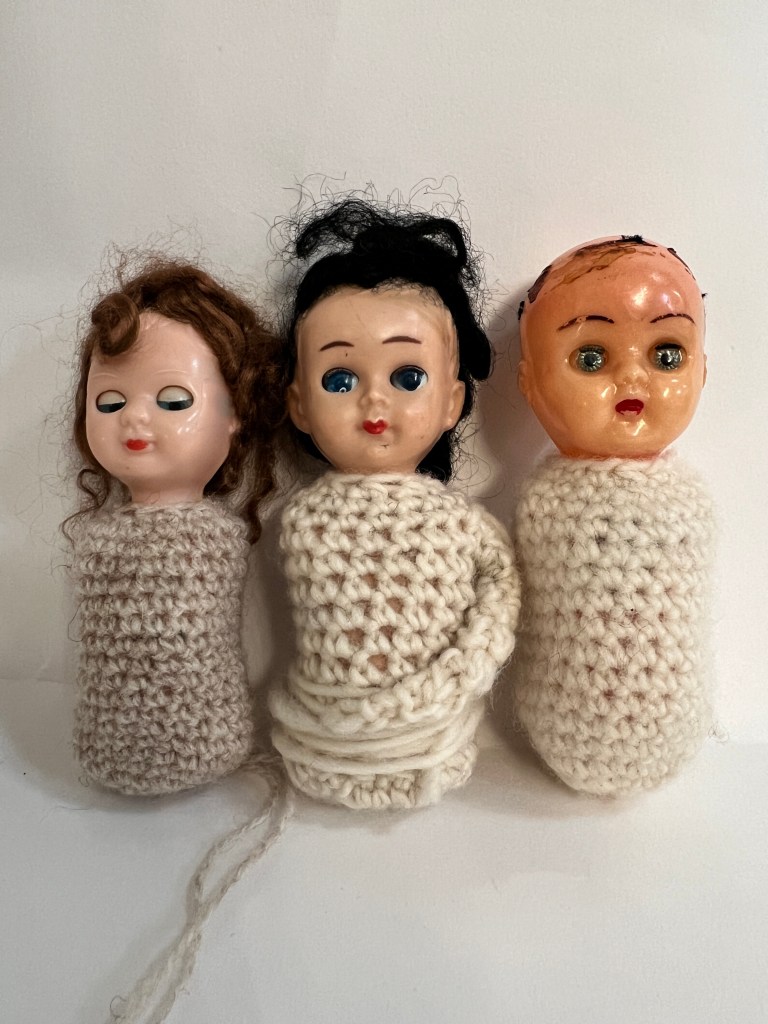
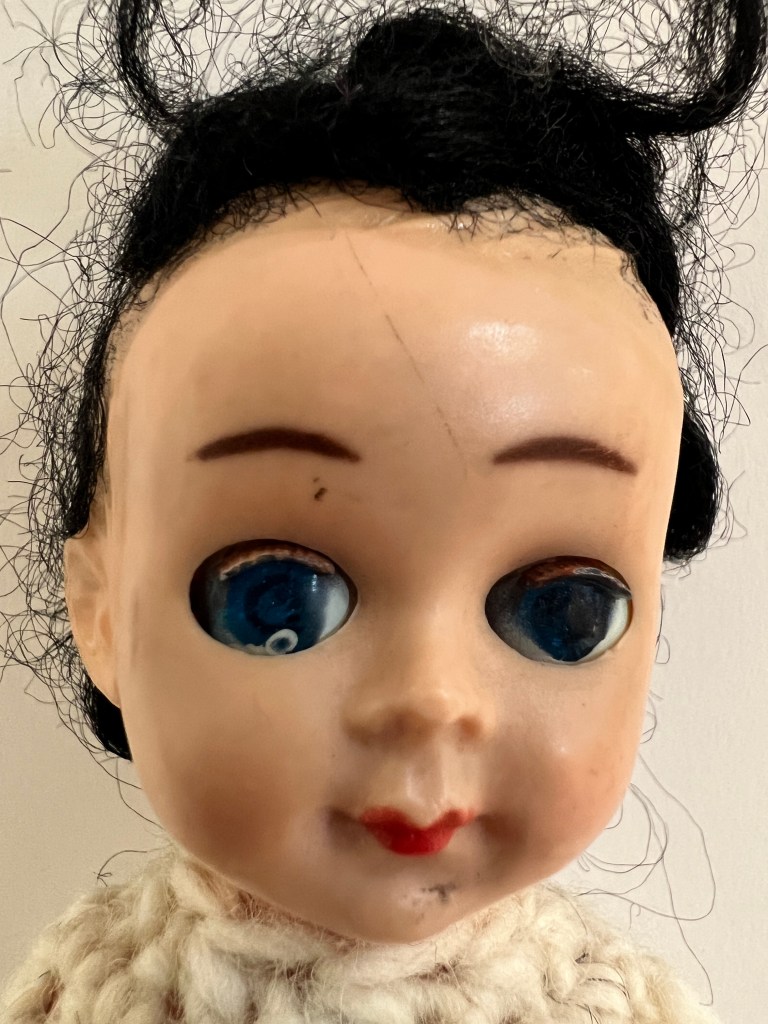
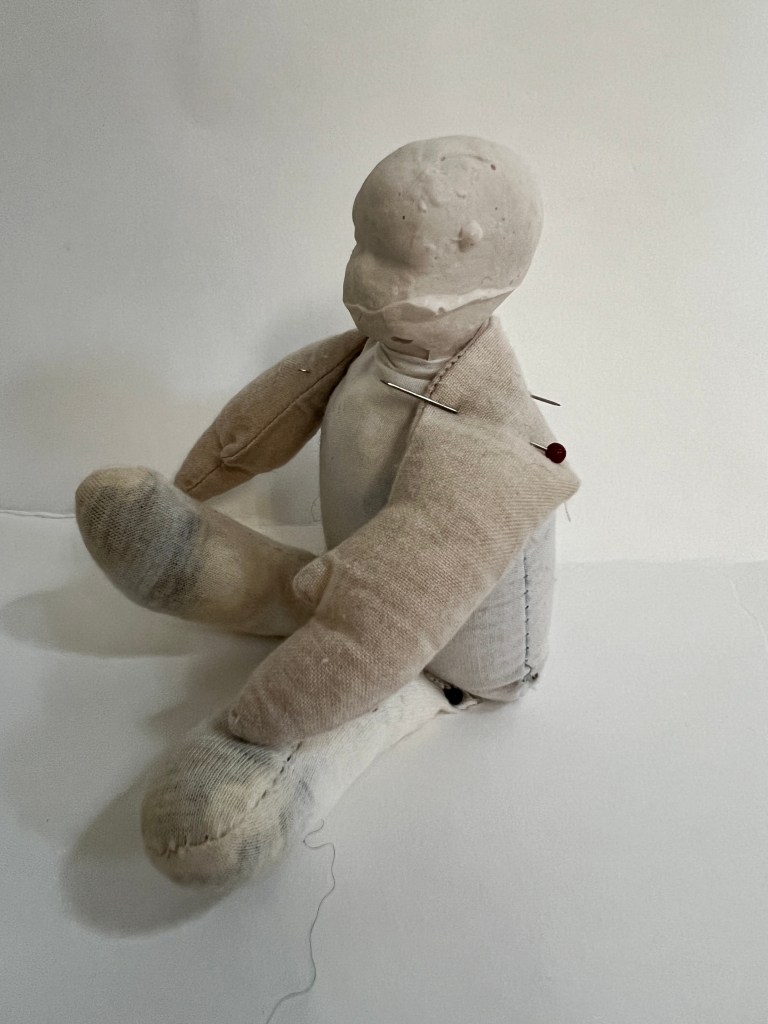
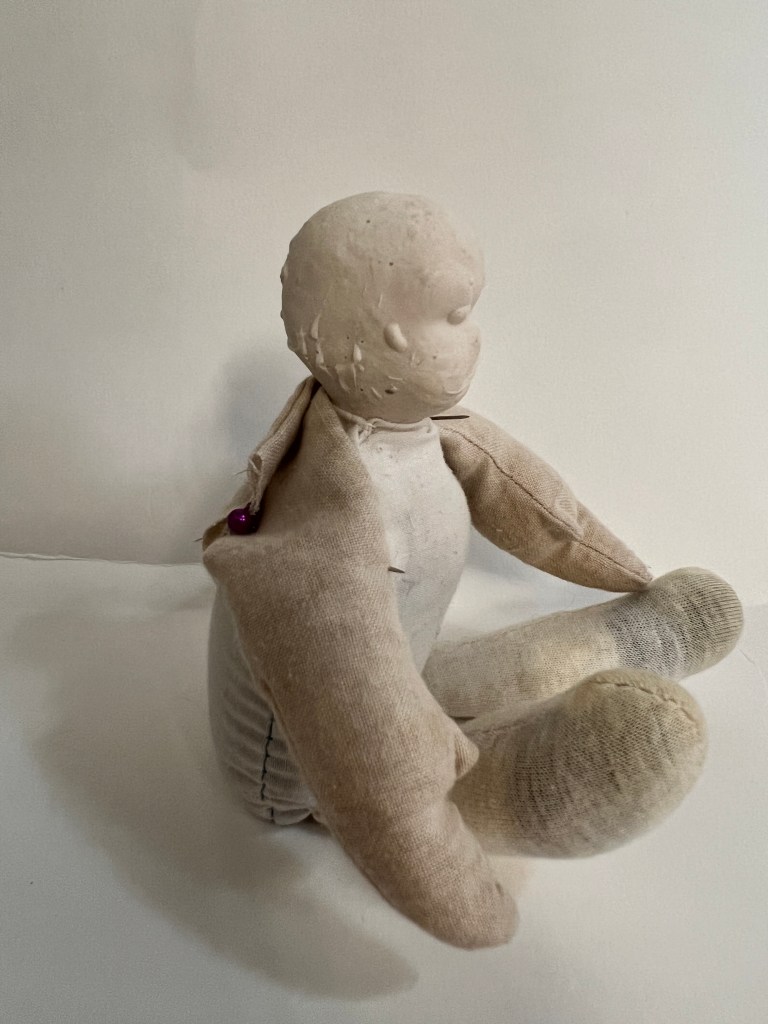
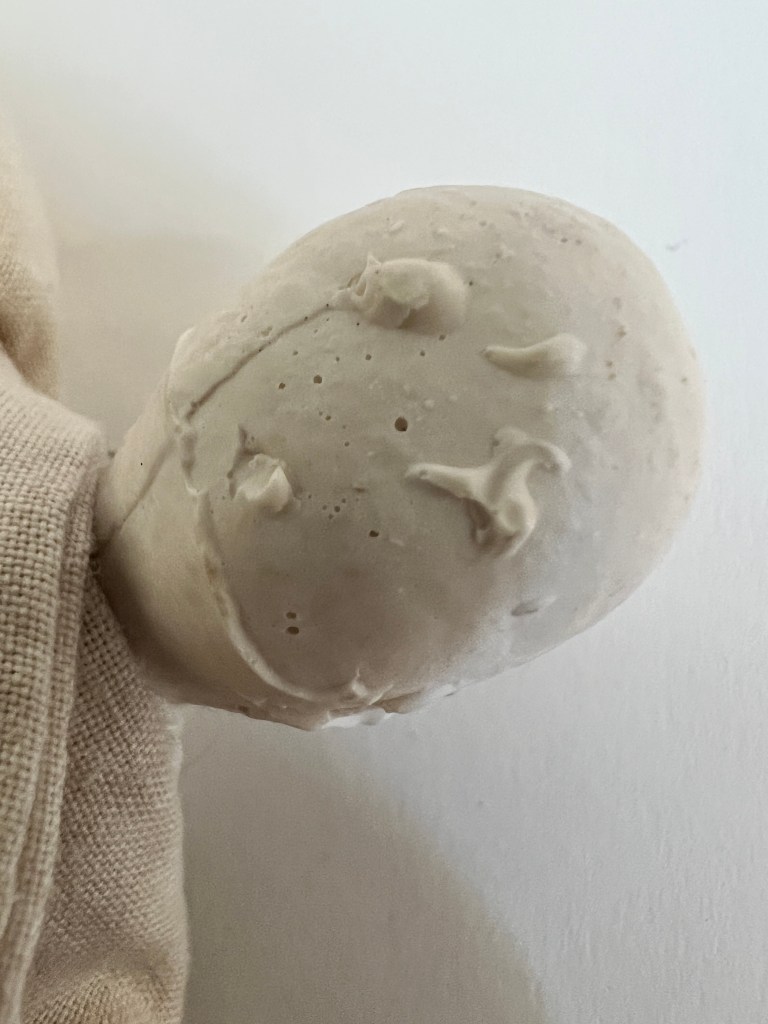
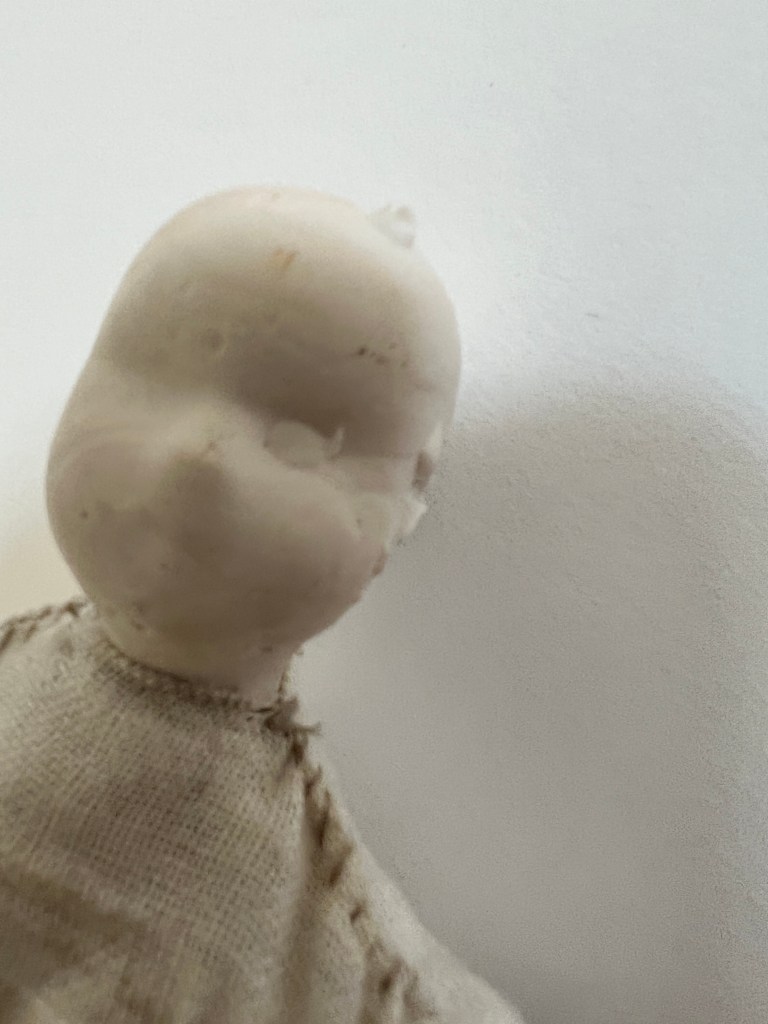
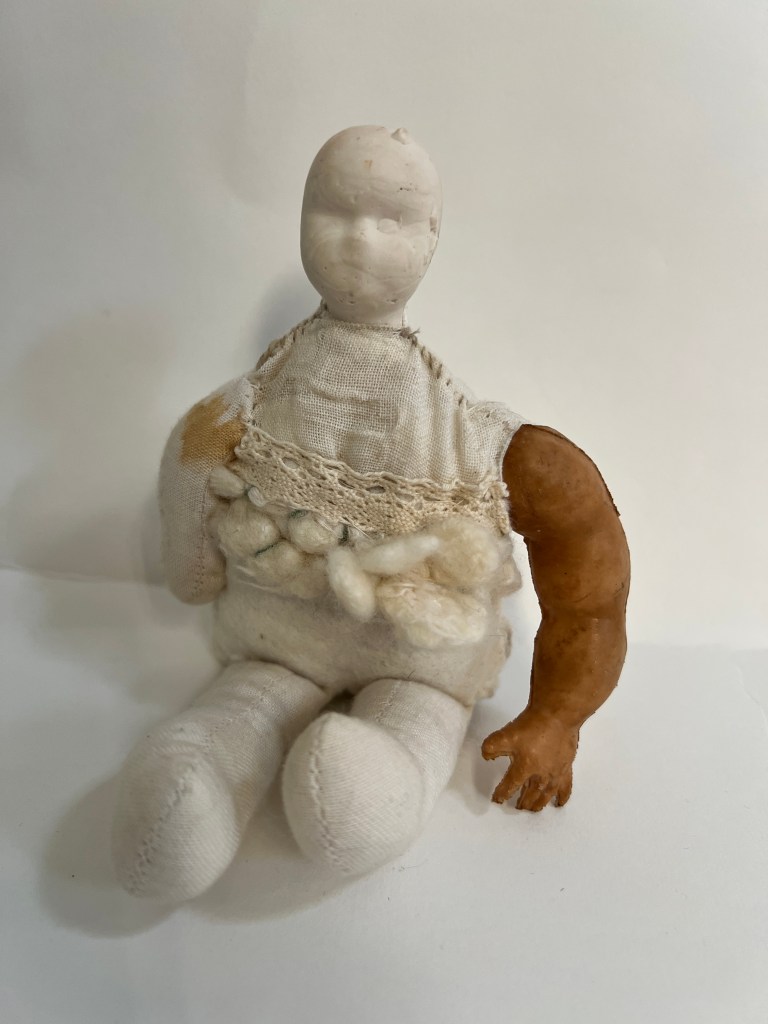
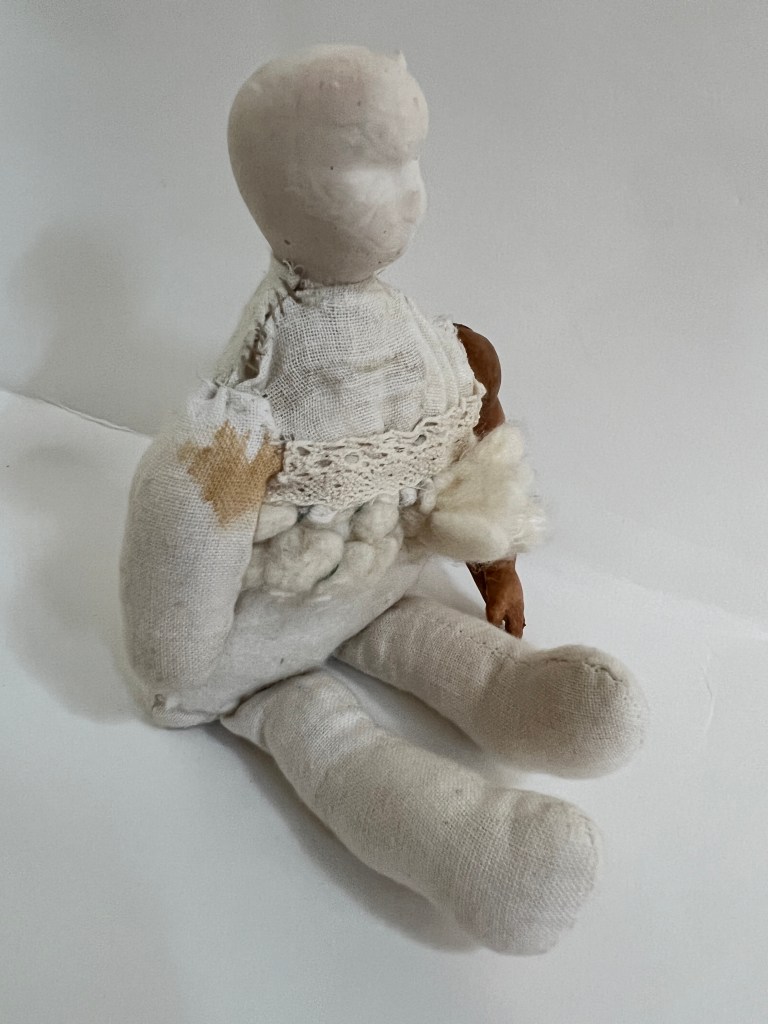
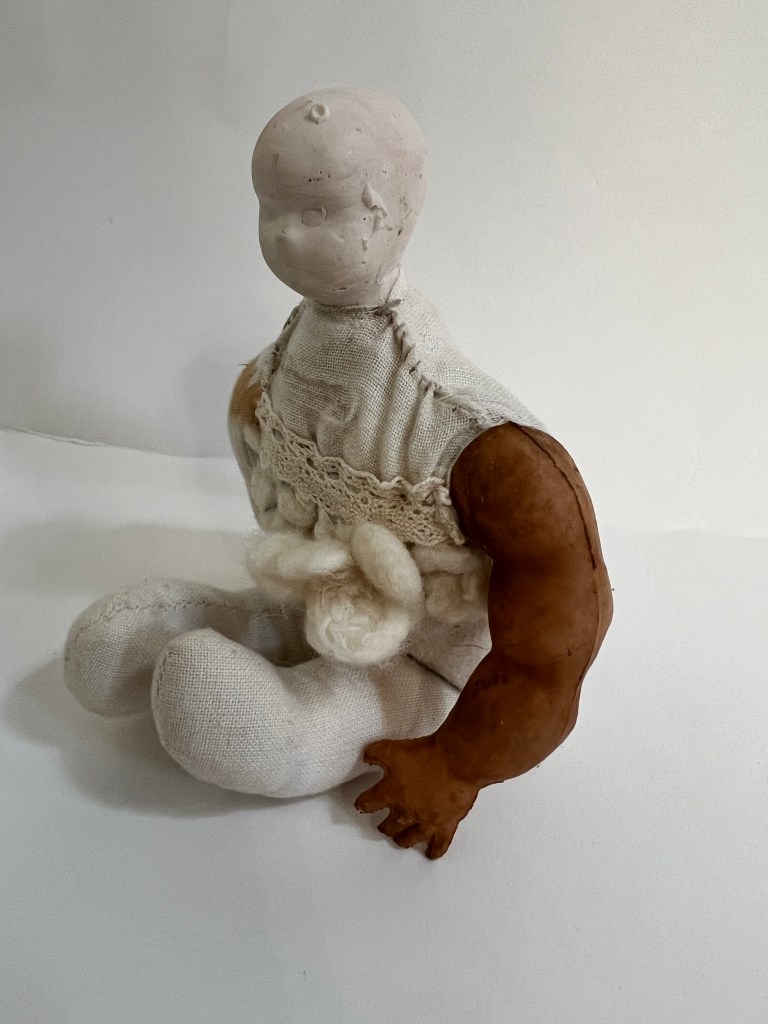
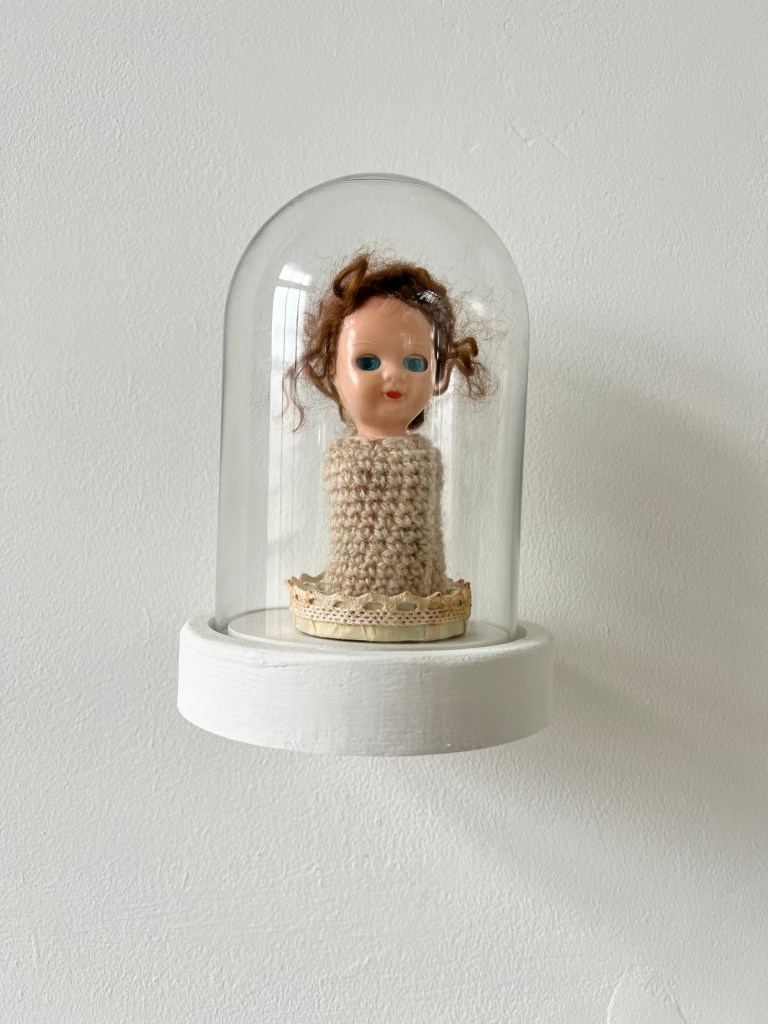
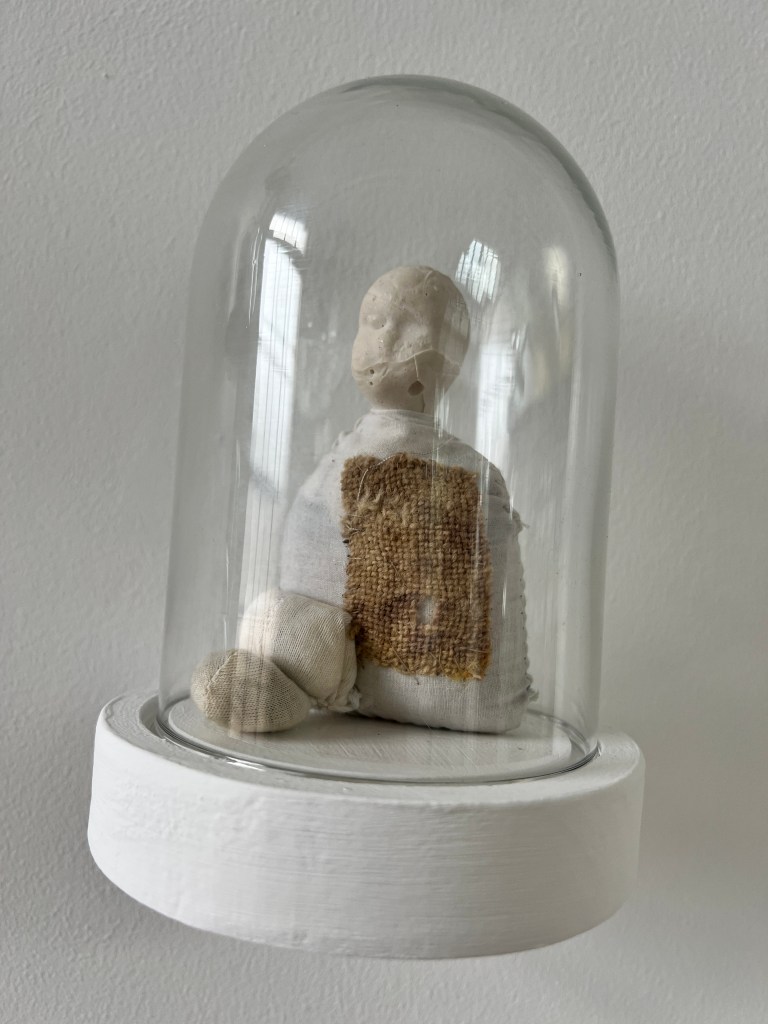
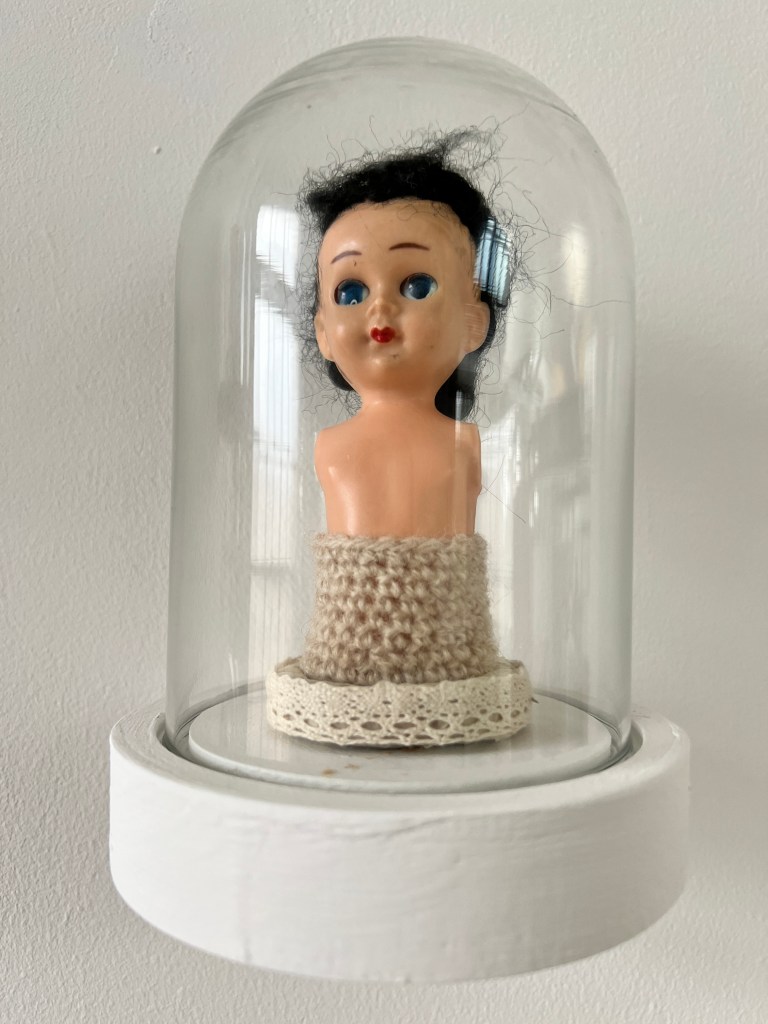
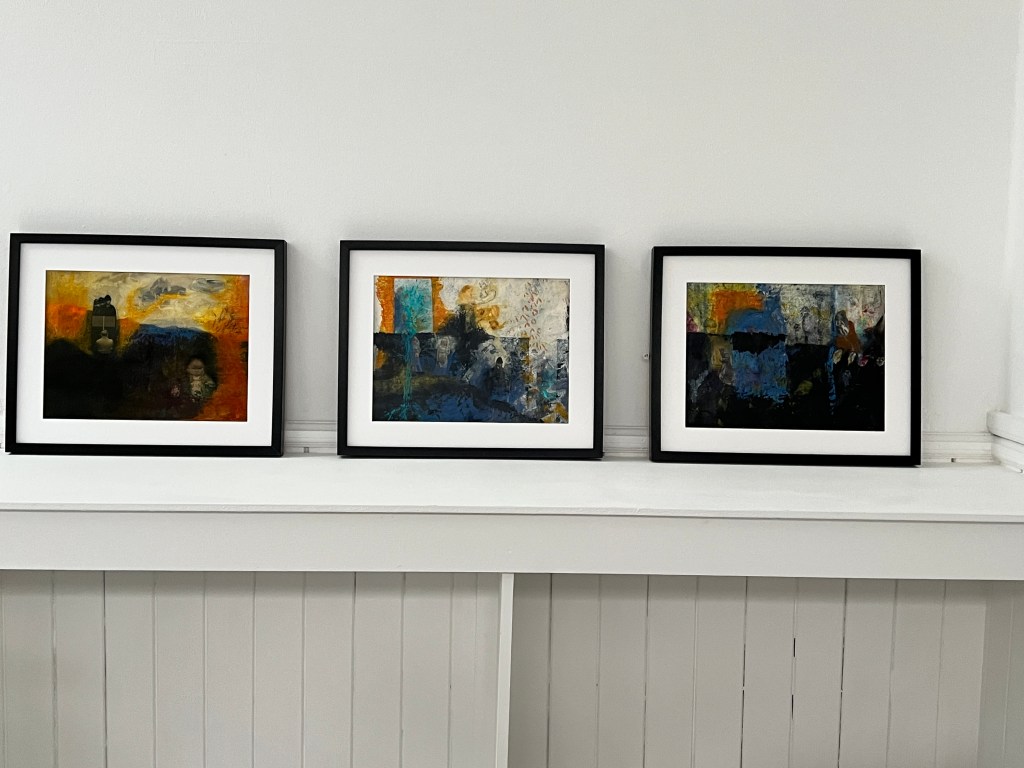
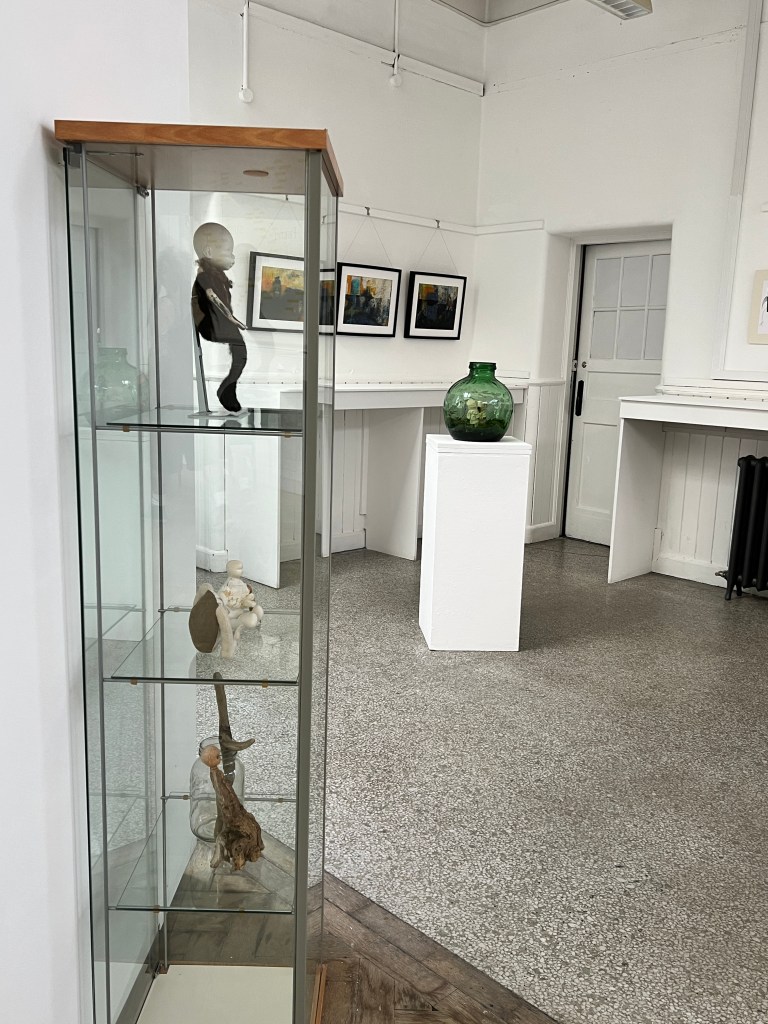
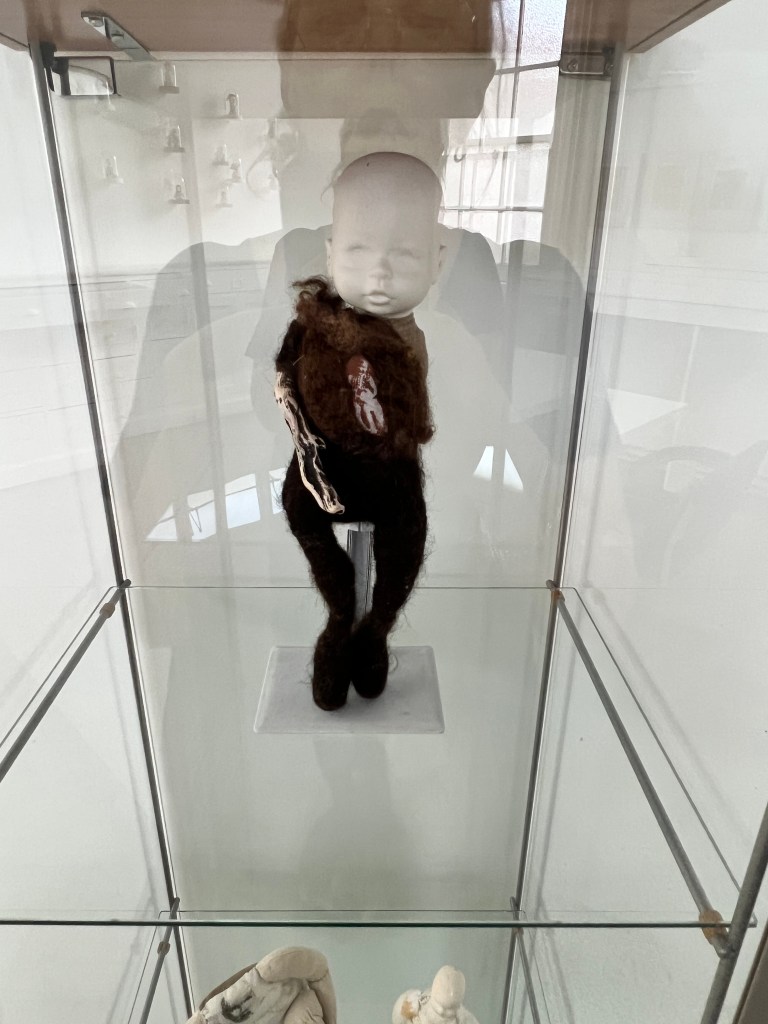
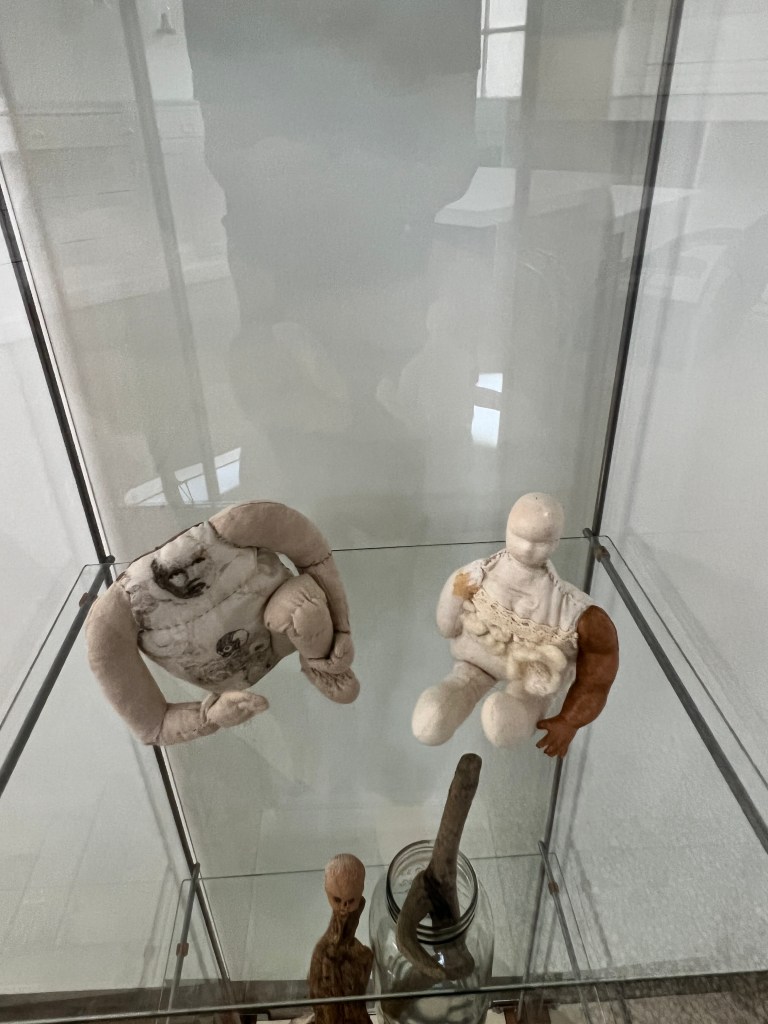
Below are pieces that I have previously made, but have altered in this module, I was not happy with the middle one as the wool was wrong, I unpicked and started again, leaving this unmade.




Learning Plan main points:
- Write brief points that explain clearly what you intend to do in the period indicated above
- Consider how you will accomplish these tasks
- List the evidence you expect to provide at the review date to demonstrate progress
- Make clear different methods of working (for example: studio work, workshops, research visits, writing, drawing etc.)
- My research will focus on the ecology of temperate rain forests of Eryri in North Wales, moss, lichens, and fungi, climate change, brought on by human consumption and erosion, sheep farming.
- I will document how previous research has led to my current study on my WordPress blog platform, as well as how an article on ‘Hidden fungi absorbing over a third of the Earth’s fossil fuel emissions had triggered this new direction in my research.
- Recording my findings through drawing, print, making a new body of work, samples, experiments, finished small textile figurative doll pieces, processed through stitched, felted and crochet to depict erosion, decomposition, and a mycelium of different species.
- I will present my findings through a series of experiments, dolls, drawings, prints and WordPress blog entries.
- Write the outcomes you hope to achieve by doing the activity indicated in section A
- Consider outcomes that are demonstrable of critical analysis, investigation, development and that involve reflection, evaluation, critical thinking, empirical and theoretical knowledge.
- A body of work, repurposed figures that have been started in previous modules, new figures, prints, sketchbook work, a body of research materials, books read, and be ready for exposition.
- Research findings
- WordPress blog
On the back of the learning plan is a guide to use the points to evaluate progress.
- Illustrate whether and how each point has been achieved or not
- Evaluate whether a particular activity is to be progressed into the next learning plan or not; try and prioritize.
- Identify successful methods and strategies for achieving outcomes
- Make observations about your management of your learning e.g. time, material and other resources
- Consider an action plan to inform the next learning plan
The Learning Plan was submitted early in the module, to set out what you are proposing to do. I find it a very useful tool to evaluate what I aim to do, what I have done and then to reflect on what I then did. At the end of the module I am able to evaluate what went well, what didn’t and what my learning outcomes were.
Creative Statement:
Following the guidelines set out on Moodle I began to write what tools I use, and answered all the questions about what I have done and what my aims were. I had originally translated the English into Welsh using google translate which is good, however I have found a far better translating site called ‘Mymemory’ https://mymemory.translated.net/ The Welsh reads much better. I made several drafts and versions before being happy with the final draft below, I feel as if one could carry on working on an artist statement but I feel that this one fits now.
Carys Anne Hughes
Cymraeg (English version below)
Mae fy arfer yn rhyngddisgyblaethol, mae’n archwilio naratif Cymraeg, trawma plentyndod, straeon tylwyth teg tywyll a themâu tywyllach erydu dadelfeniad. Atgofion mewn sepia gydag ymylon cyrliog bellach wedi’u ffrwydro, coedwigoedd glaw Celtaidd Gogledd Cymru, a phrotest ddistaw frys o ddinistrio’r lleoedd cysegredig hyn.
Mae’r ymchwil yn cynnwys cydweithrediad â myfyriwr ffiseg, sy’n rhannu dealltwriaeth o rymoedd ecolegol ym myd natur. Arweiniodd hyn at astudiaeth o fforestydd glaw Celtaidd tymherus lleol Gogledd Cymru. Yma mae rhwydweithiau mycelium cyfoethog gwe eang y pren, yn creu systemau ffyngau cymhleth sy’n storio carbon niweidiol.
Trwy wneud corff newydd o waith, gan efelychu’r ffyngau, y mwsogl a’r strwythurau cen hyn. Bydd fy ymchwil trwy luniadau, printiau a phrosesau tecstilau, dros ddoliau ffigurol bach i dynnu sylw at drawma hinsawdd, galar o gyfran maint pe bai’r coedwigoedd hyn yn cael eu colli.
English
My practice is interdisciplinary it explores Welsh narrative, childhood trauma, dark fairy tales and darker themes of erosion of decomposition. Memories in sepia with curled edges now frayed, Celtic rain forests of North Wales, and an urgent silent protest of the decimation of these sacred places.
The research involves a collaboration with a physics student, who shares an understanding of ecological forces in nature. This led to a study of the local temperate Celtic rainforests of North Wales. Here the rich mycelium networks of the wood’s wide web, create intricate fungi systems that store damaging carbon.
By making a new body of work, replicating these fungi, moss, and lichen structures. My research will be through drawings, prints and textile processes, over small figurative dolls to highlight a climate trauma, a grief of magnitude proportion should these forests be lost.
Creigiau Geirwon
Below images of a performance in Pontio about climate change by Cwmni Pendraw with pre show talks about the rare flowers of Eryri, and how climate change is threatening their existence, it was a story of how people came to Eryri, they used the guides to help them find the rare plants to take bak to their own terrariums, a victorian must have. The show was beautifully choreographed, it was poignant and thought provoking. Narrated in Welsh with English subtitles above the stage. With acrobatic women dressed in Victorian clothing to represent the ‘ladies who climbed’ in their flowing dresses. It was extremely well received with sold out shows for the three evenings and Saturday Matinee.
I attended the talk and show on the opening night of the show, the Talk
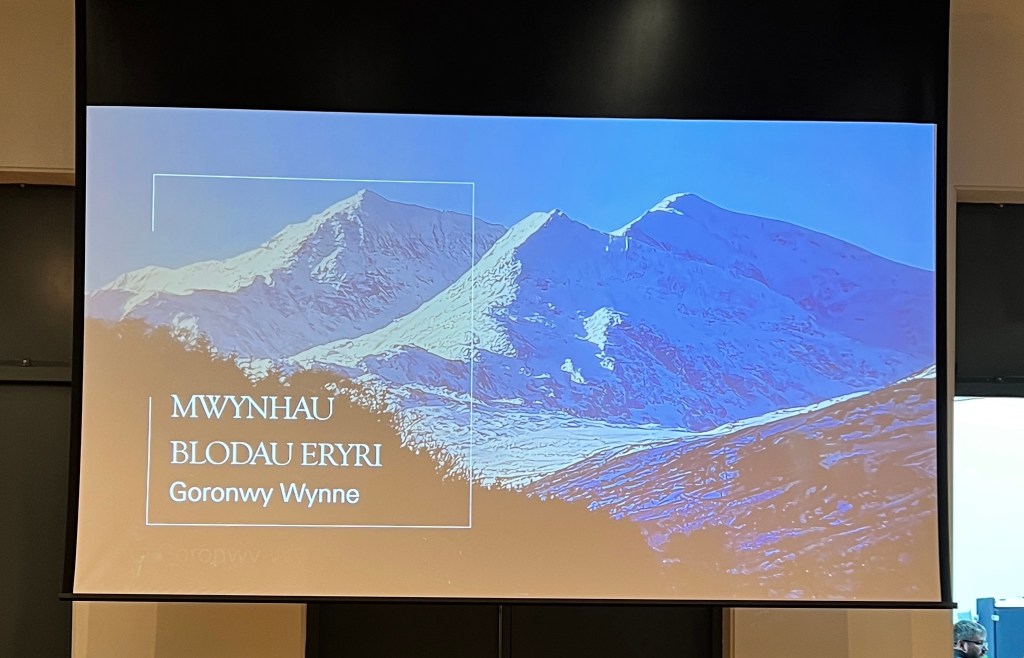
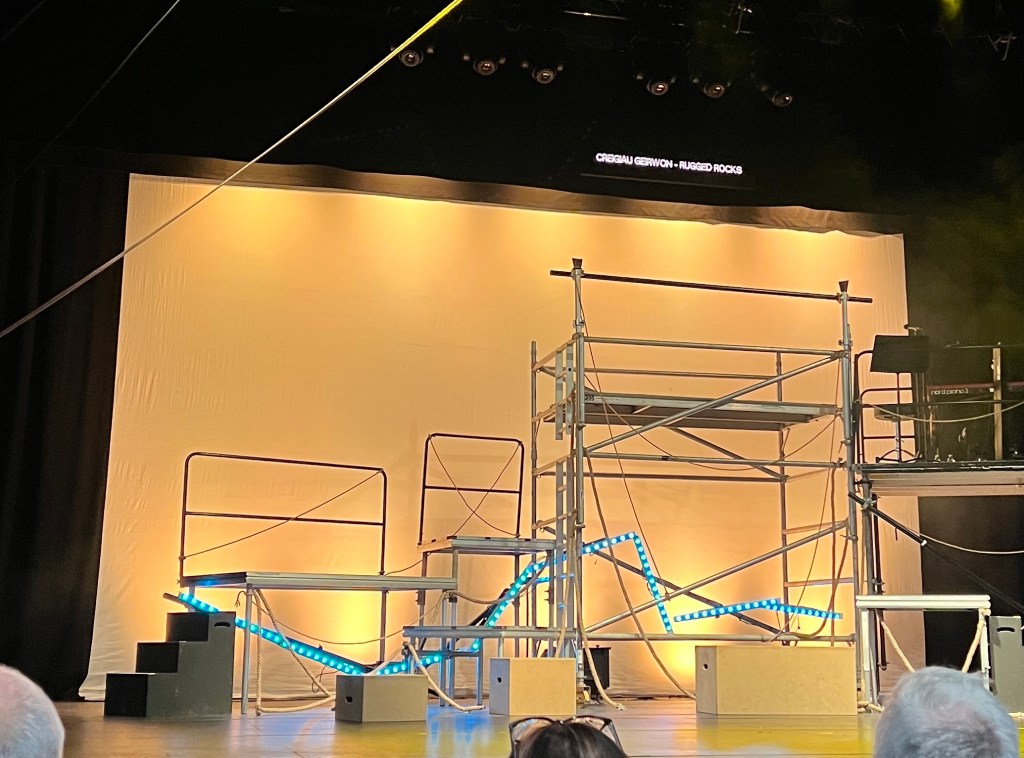
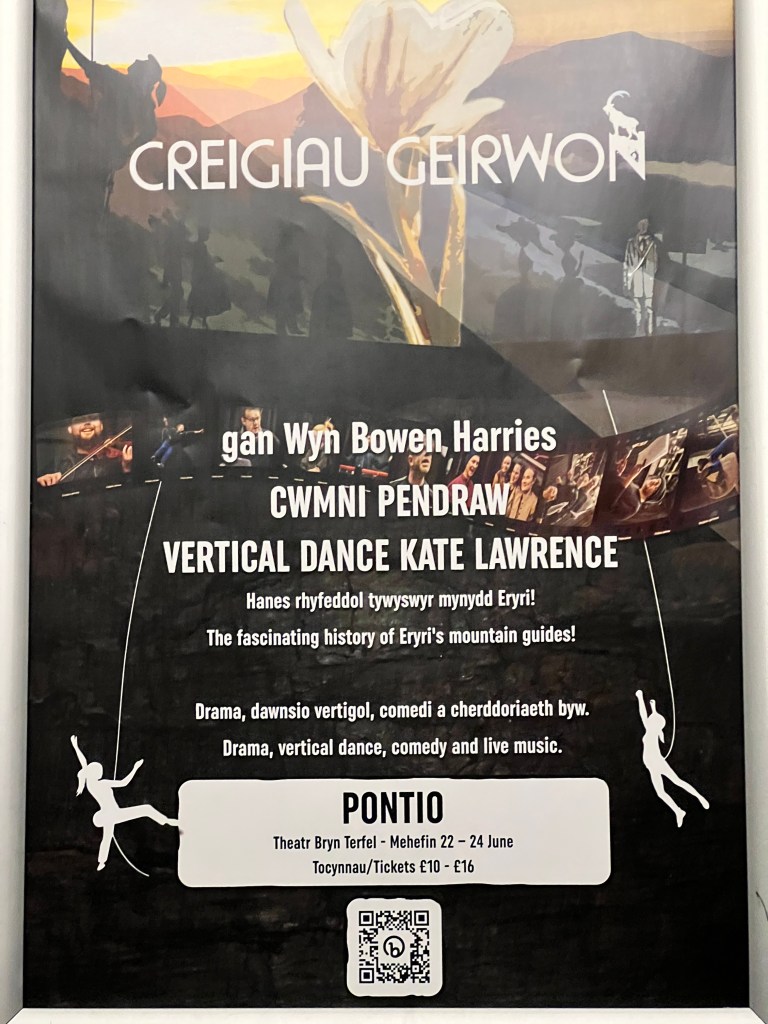


Through a series of introductory module seminars, workshops about learning plans, group tutorials, student and tutor-led seminars and critiques. in this final module we were expected to bring together a culmination of our practice and theory undertaken as studying throughout this programme.
The module learning outcomes are as follows;
1 Identify and critically discuss the influences at work within practice. I am confident in being able to discuss the influences that have led to my practice, the research I have undertaken as a result of of my choices and where they have further expanded my studies such as my previous work with Delyth a physics trudent.
2 Analyse strategies to advance and extend research practice, media and techniques to inform a reflective approach to problem solving. Being able to identify reflective models and apply these to all areas of my practice, such as Gibbs reflective model, to analyse the research I have found and apply this to my study and practice has been a challenge but one that I have embraced as I changed my focus of research to climate trauma but then explained how this linked directly to my current practice through the narrative of fairy tales and past trauma release from visits to the forests.
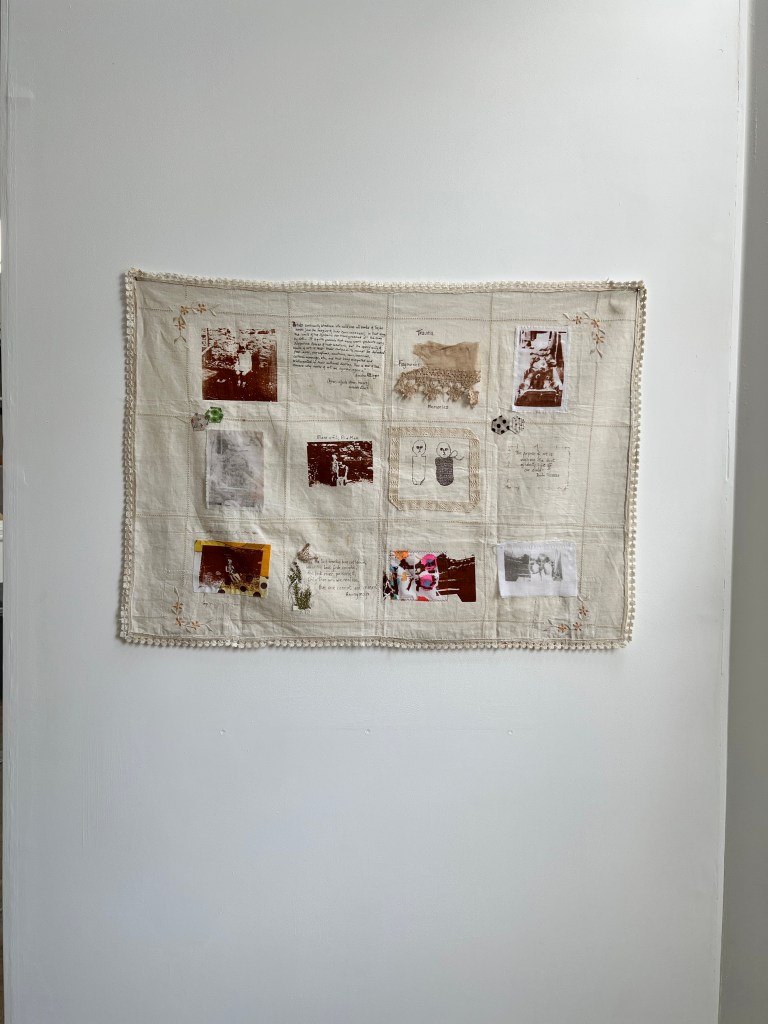
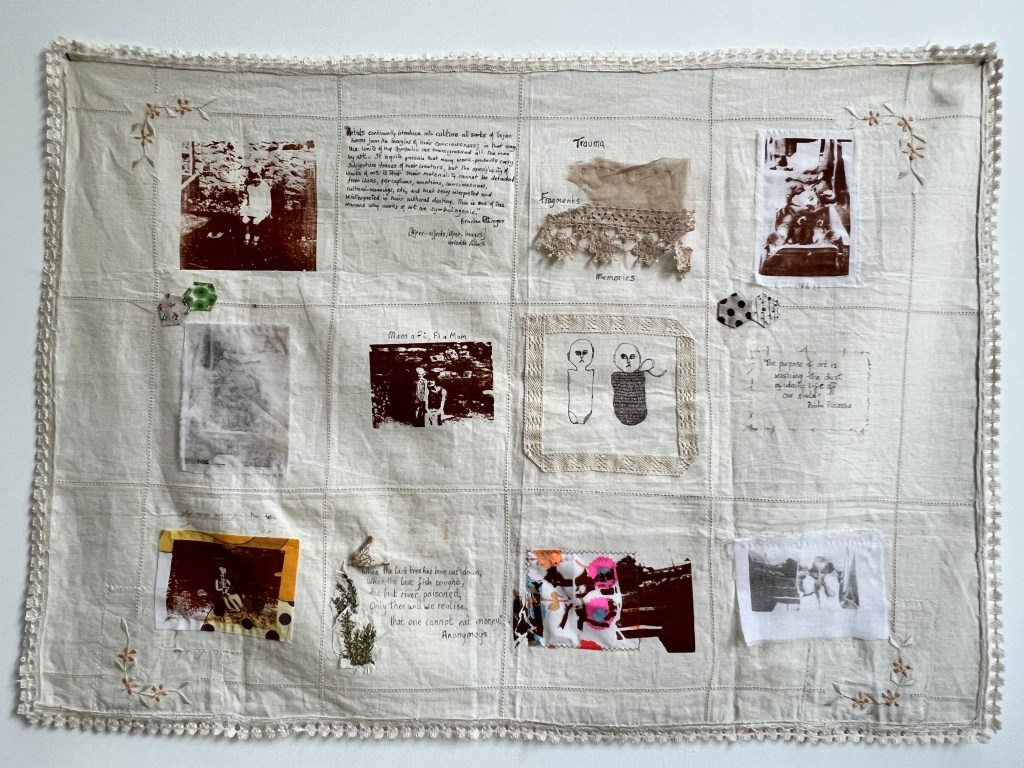
3 Critically evaluate the culmination of practice in relation to the thesis topic.In this module, my thesis and practice came together, in the beginning of the module I struggled to see these links and I was torn between the two. However, as I continued to work through my thesis as well as my practice I came to the conclusion that they are intrinsically linked, both about trauma, both working a way through how to heal trauma through art practice. By reflecting whilst making new pieces, going back to my textile practice using lithograph printing on to fabric to add fragments of memory within the pieces. My practice is a personal journey to heal complex childhood trauma, and by bringing in past pieces of work from previous modules, and re working these whilst thinking of how to narrate my own journey with healing through art practice.
4 Reflect on the influence of own values, beliefs and assumptions and their impact on practice in the context of providing new insights and rationale for exposition. I have answered part of this above, but through personal and group tutorials I have been able to hold up a mirror and reflect on how I deliver my narrative, how others respond and I have looked inwards to understand where my influences come from, many are as complex as the traumatic experiences, but many are through working with materials, the pieces are often transformed through manipulating fabrics, experimenting with techniques to get the aesthetic to tell my story. I have looked at other artists and where I see similar themes and processes then looking at research surrounding the topics I am passionate about. My exposition sets out to tell the story of my practice, I have been enlightened by how my culmination of pieces reflects a seemingly delicate muted voice of an artist who is finding her way through to become confident in her own ability to tell the story of personal trauma without hiding behind ambiguous or humorous titles although one is called ‘ do I need my head’.
5 Advance and Inform knowledge and understanding of research methods, media and techniques relevant to exposition and professional practice. This Masters program has advanced my practice through the understanding of research methods, by reading and responding to research using drawing and practice to test out whilst documenting the findings and ideas generated through this way of working. I have found a new language, one where my practice is informed from research, it has a beginning a middle and an end but also a way forward, being able to apply research methods to inform practice has led to multiple possibilities that takes practice away from doing the same thing over and over and expecting a different result. Throughout the program I have explored new techniques and media, taking many courses to explore the possibilities of pushing my practice further. I have found a new confidence in my ability to narrate my practice and I am looking forward to the future to continue to pursue research that will inform my practice.
My exposition Space
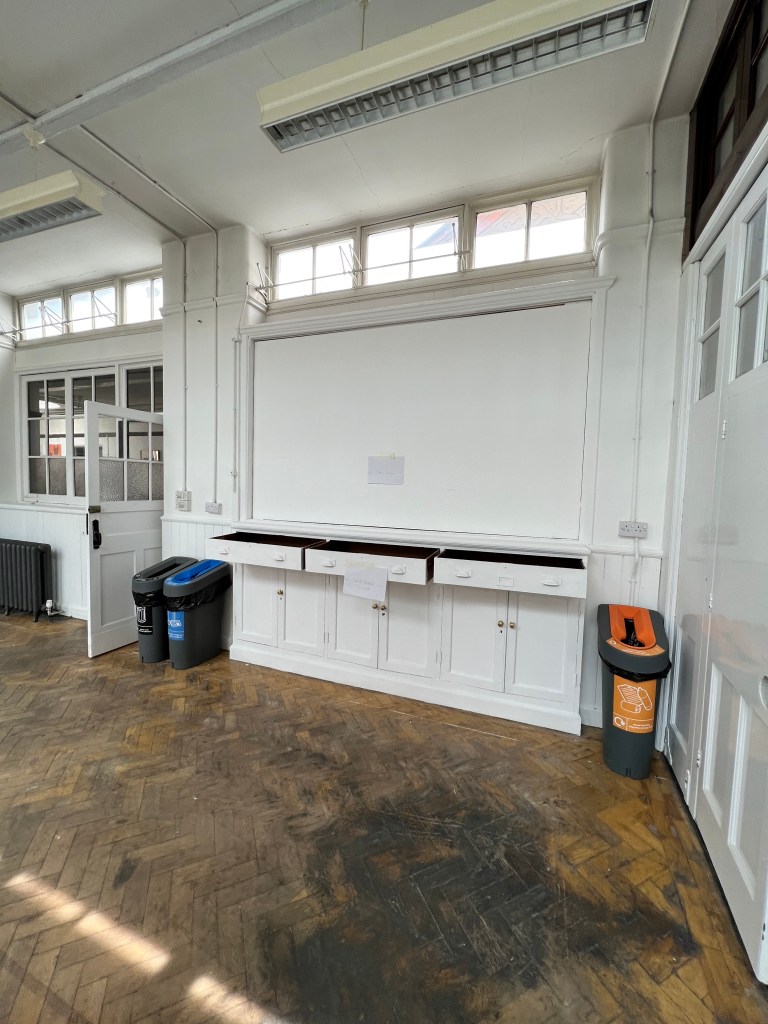
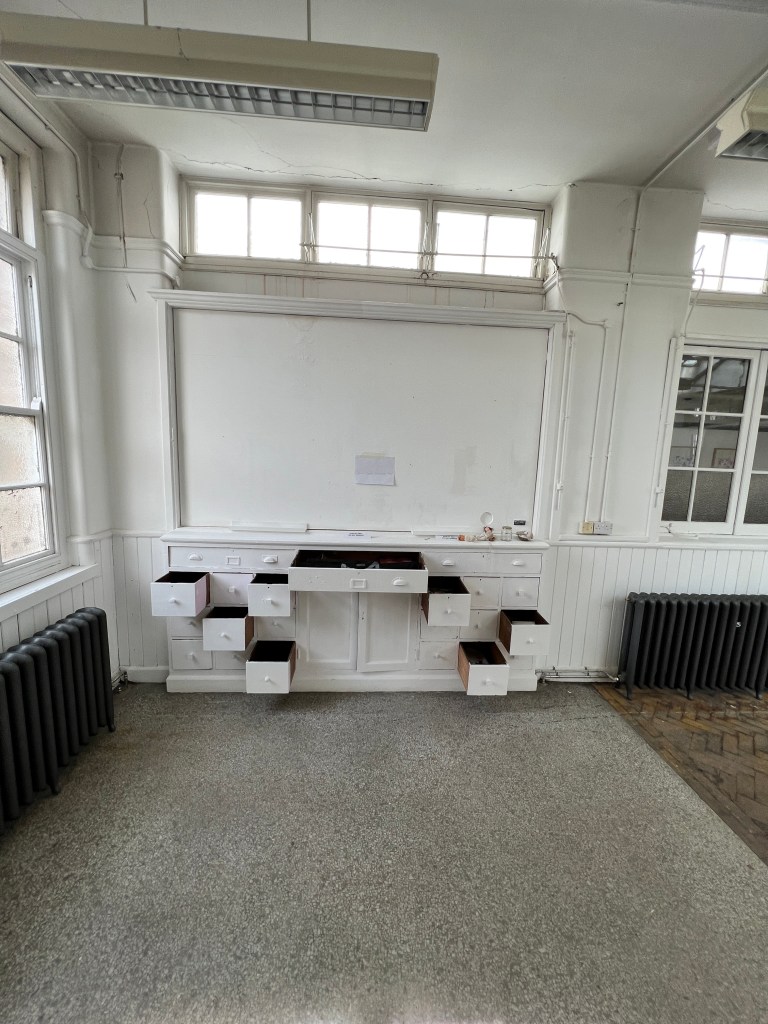
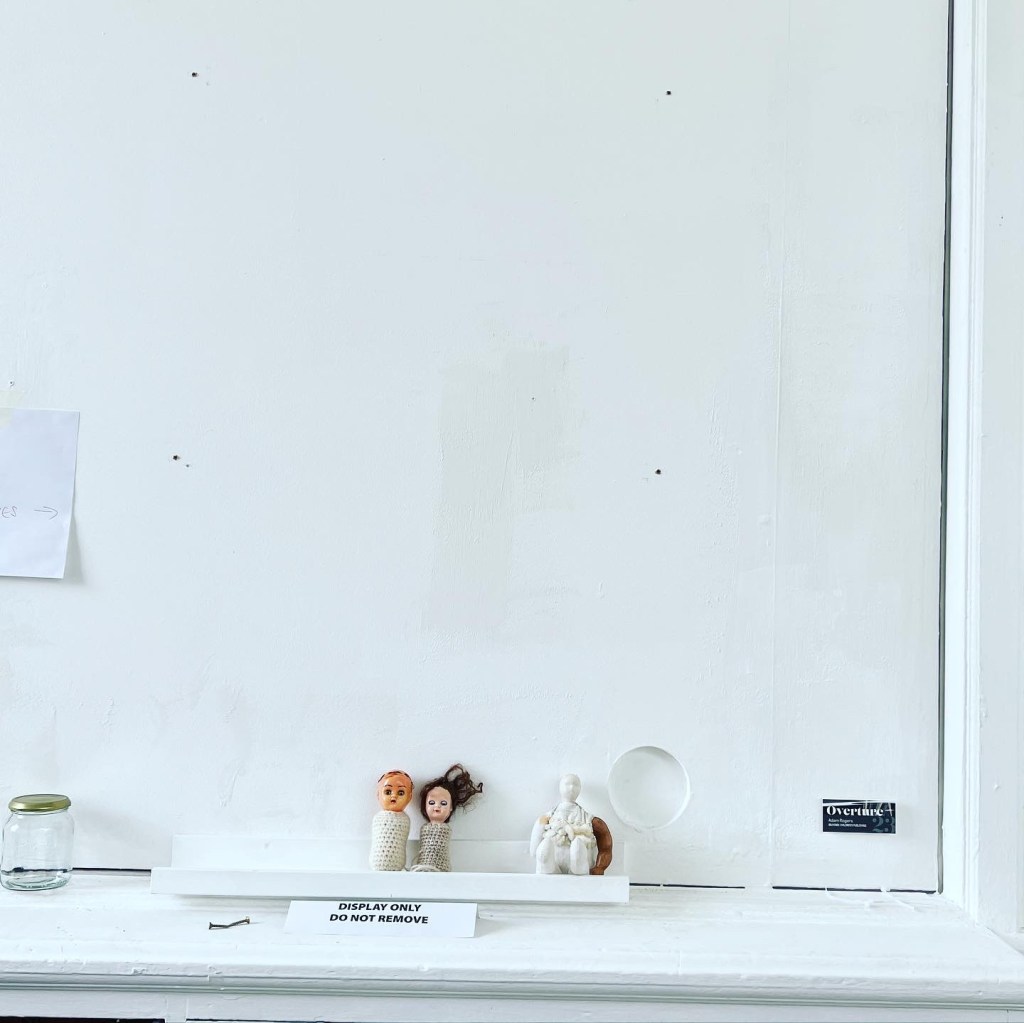
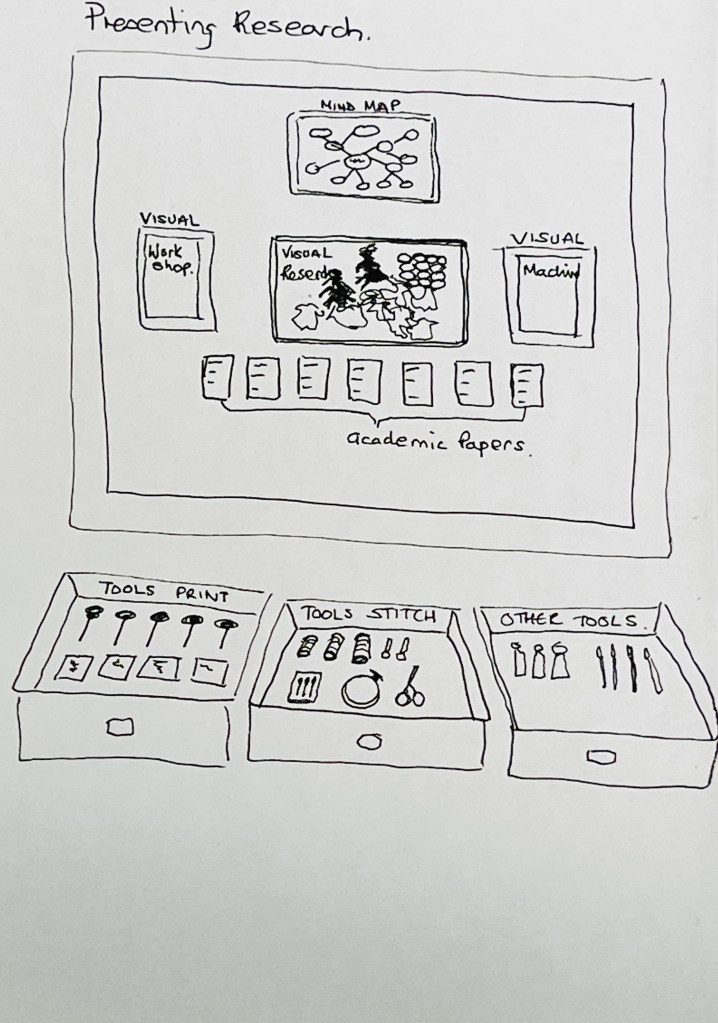
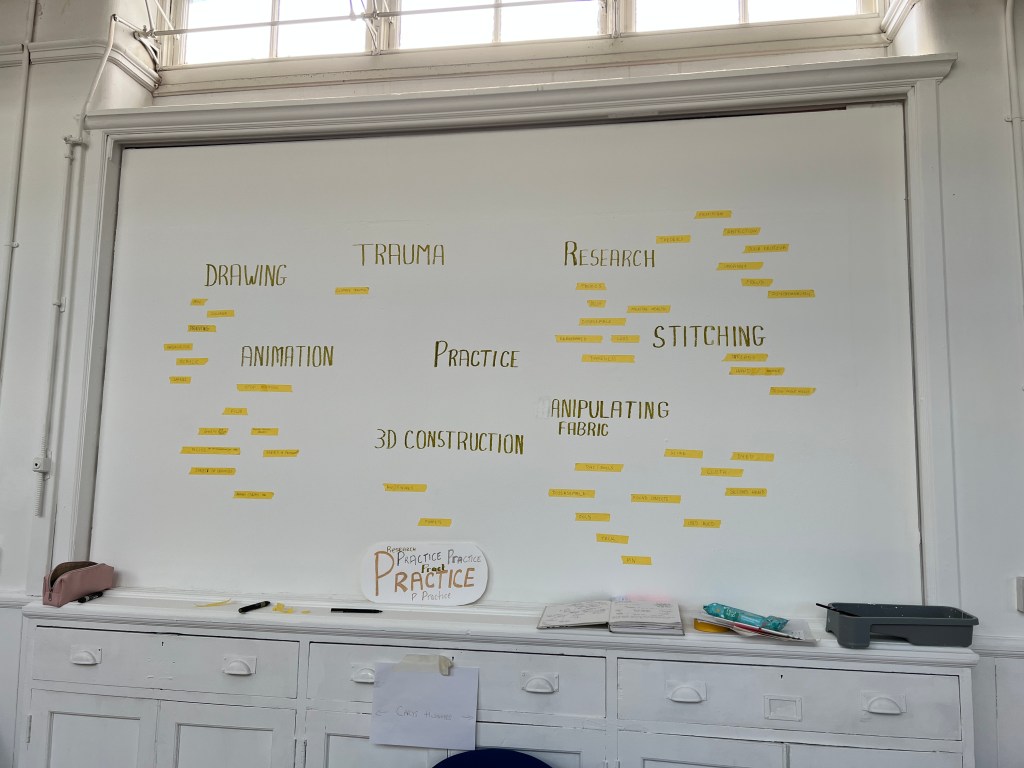
Initially I was overwhelmed with the amount of space I have been given, It was a huge area to fill, I began to draw my ideas in my sketchbook and it began to feel better as I mapped out each area.


Rain Forest day out
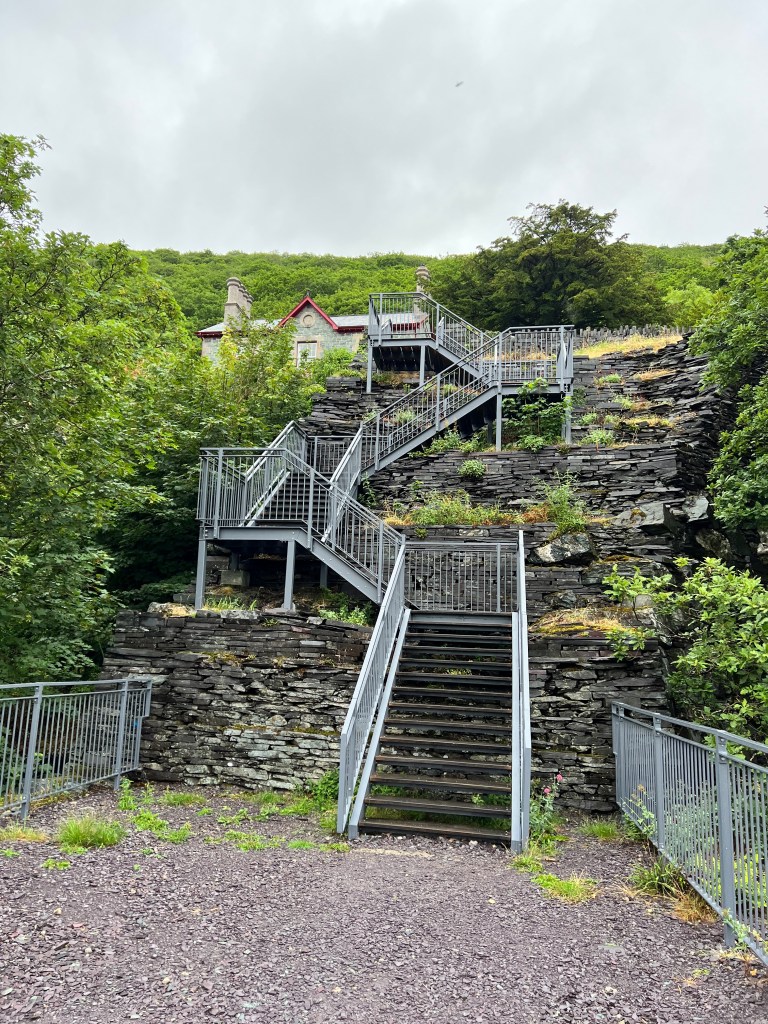
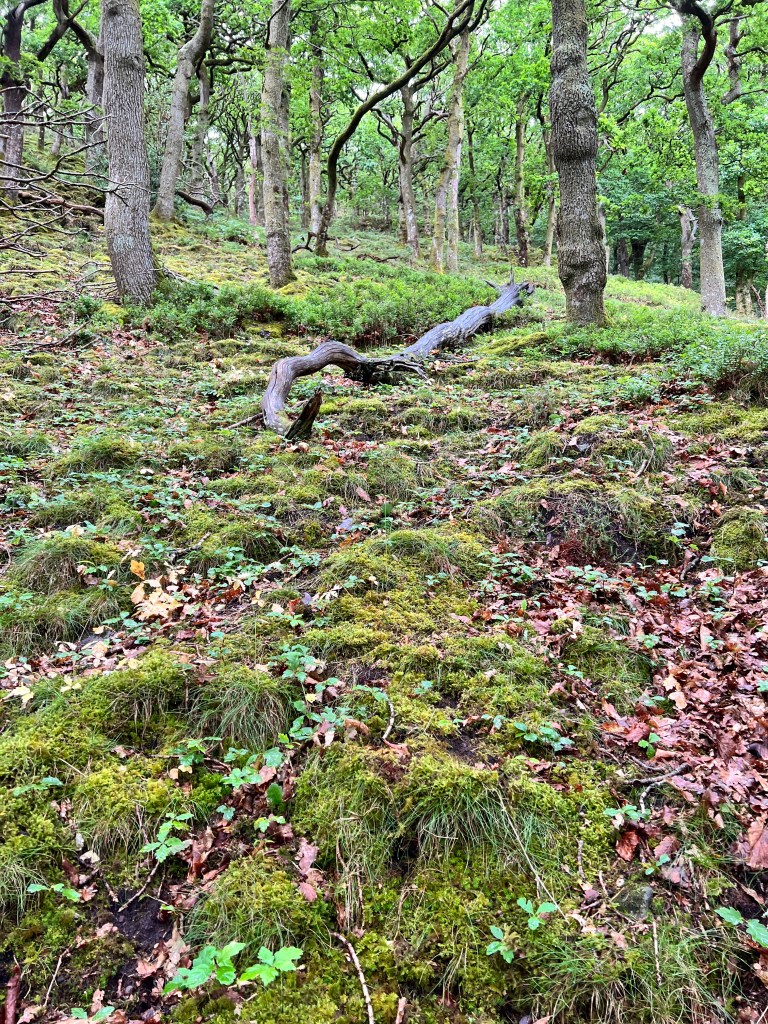
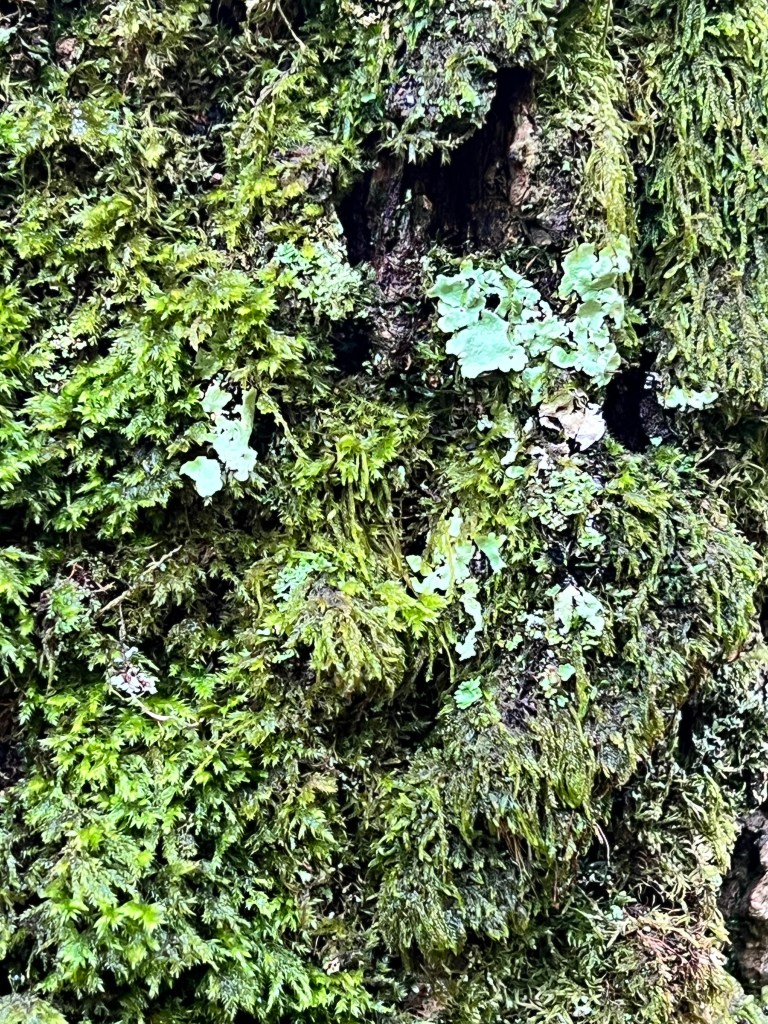
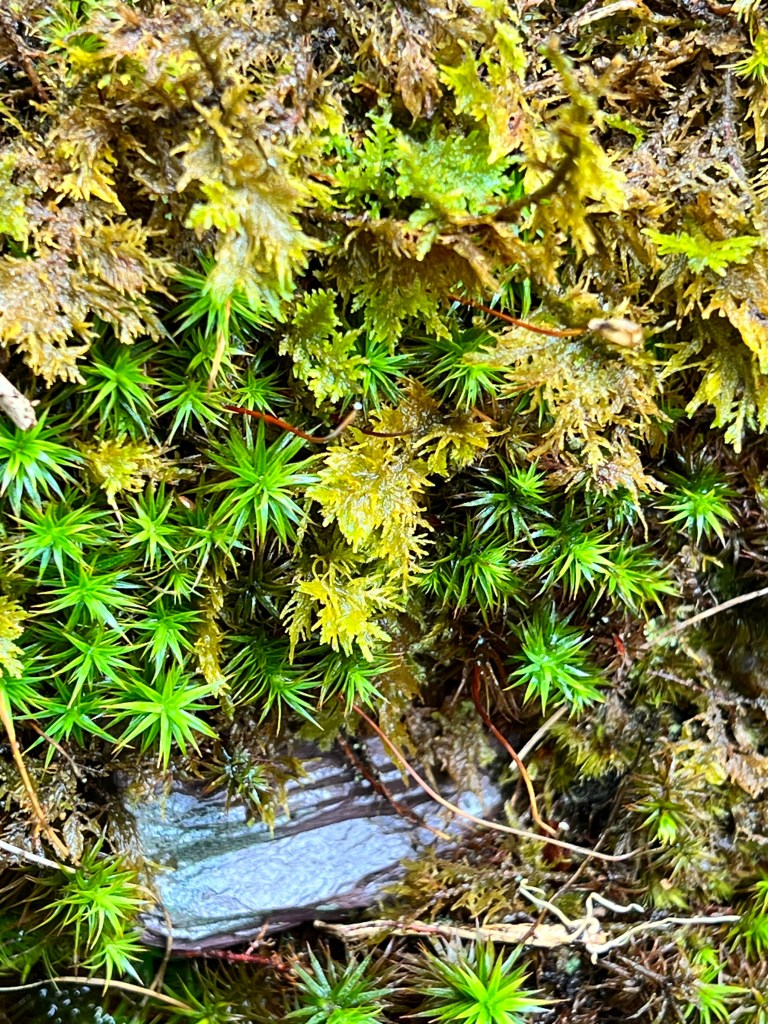
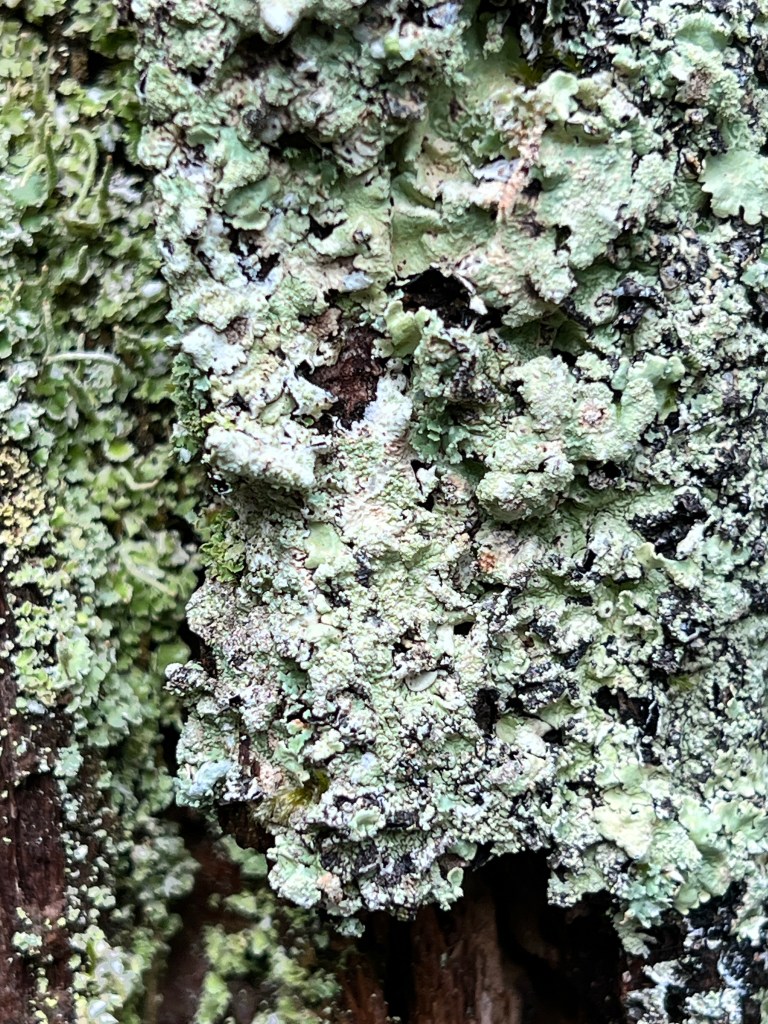
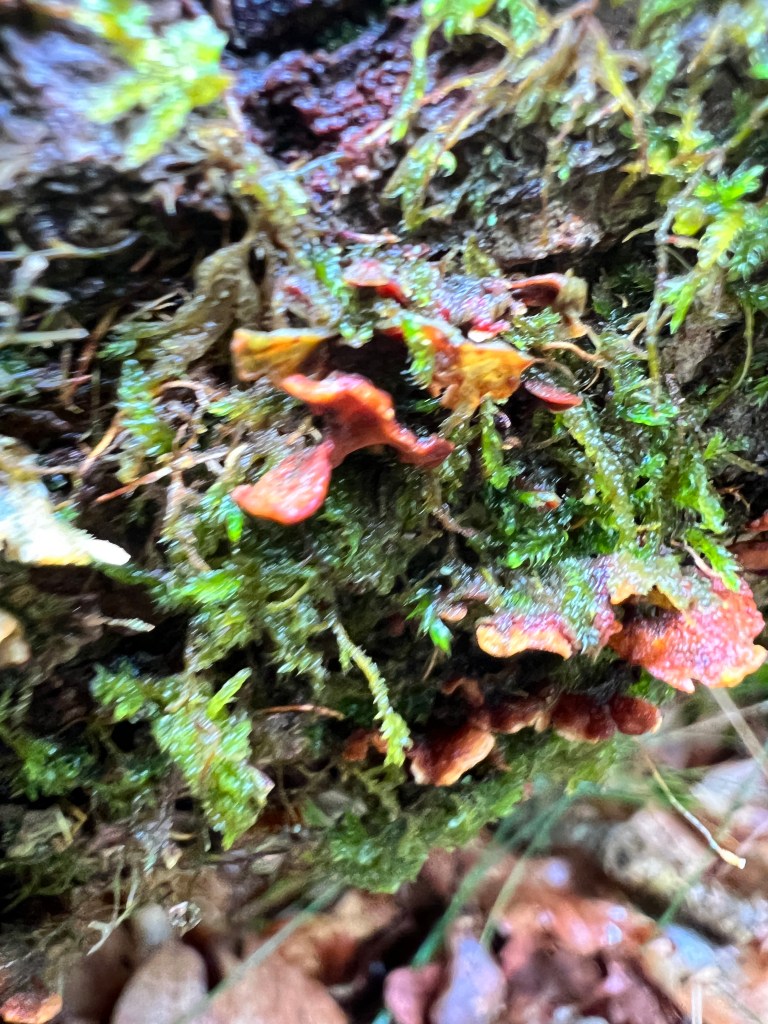
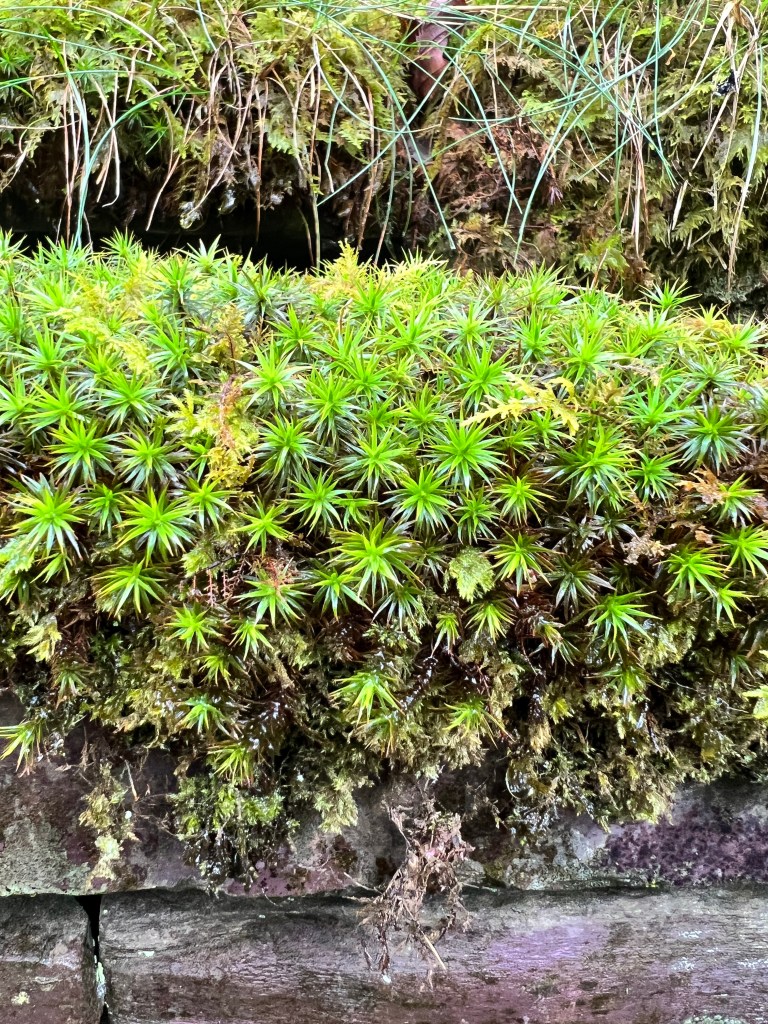
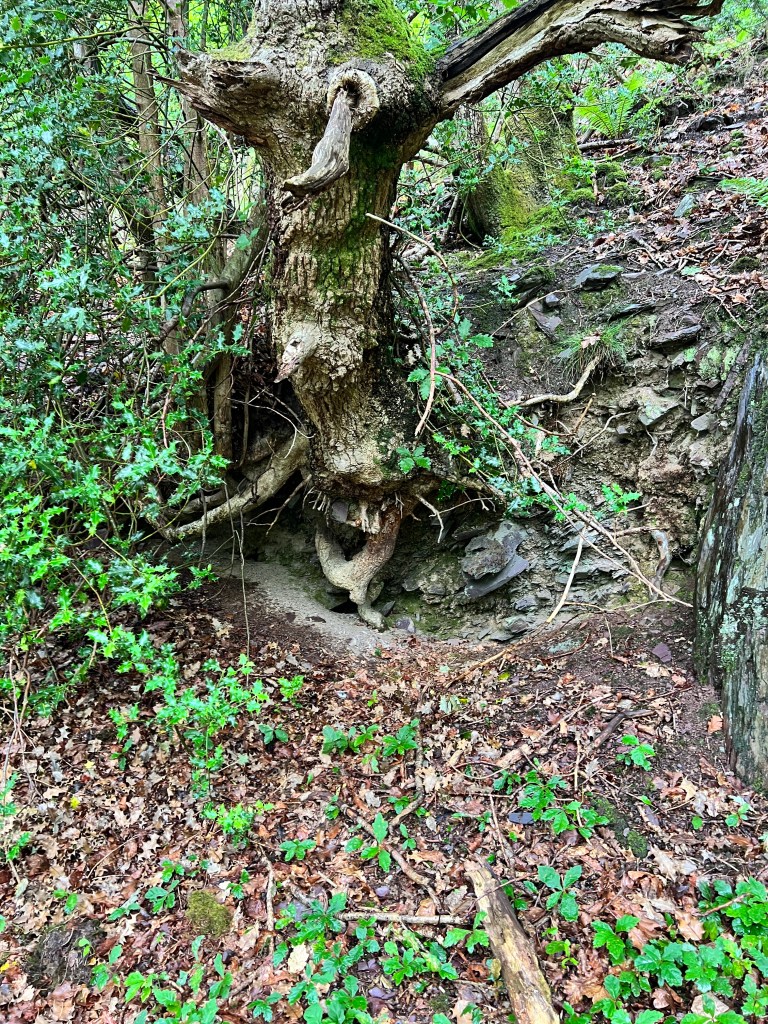
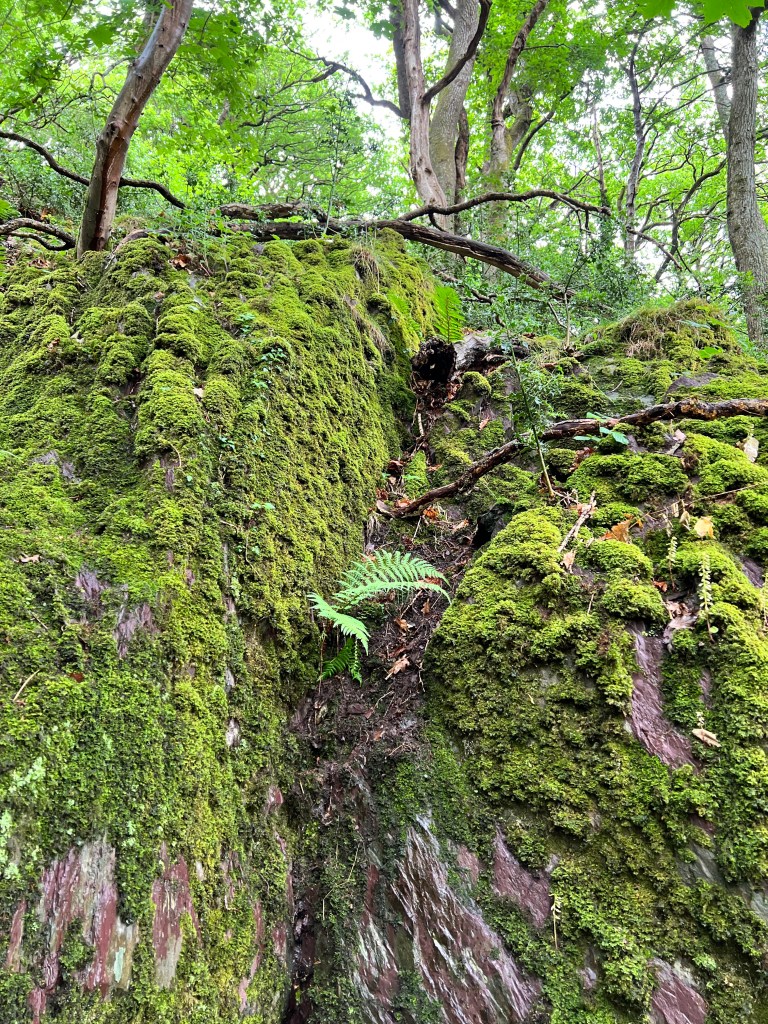
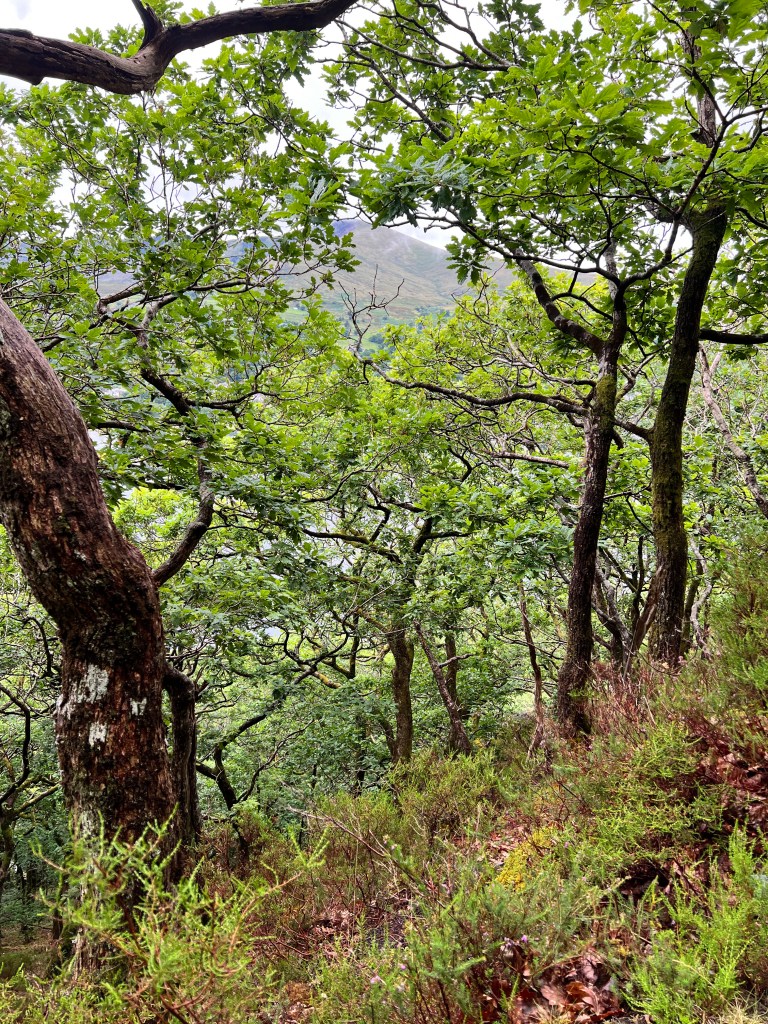
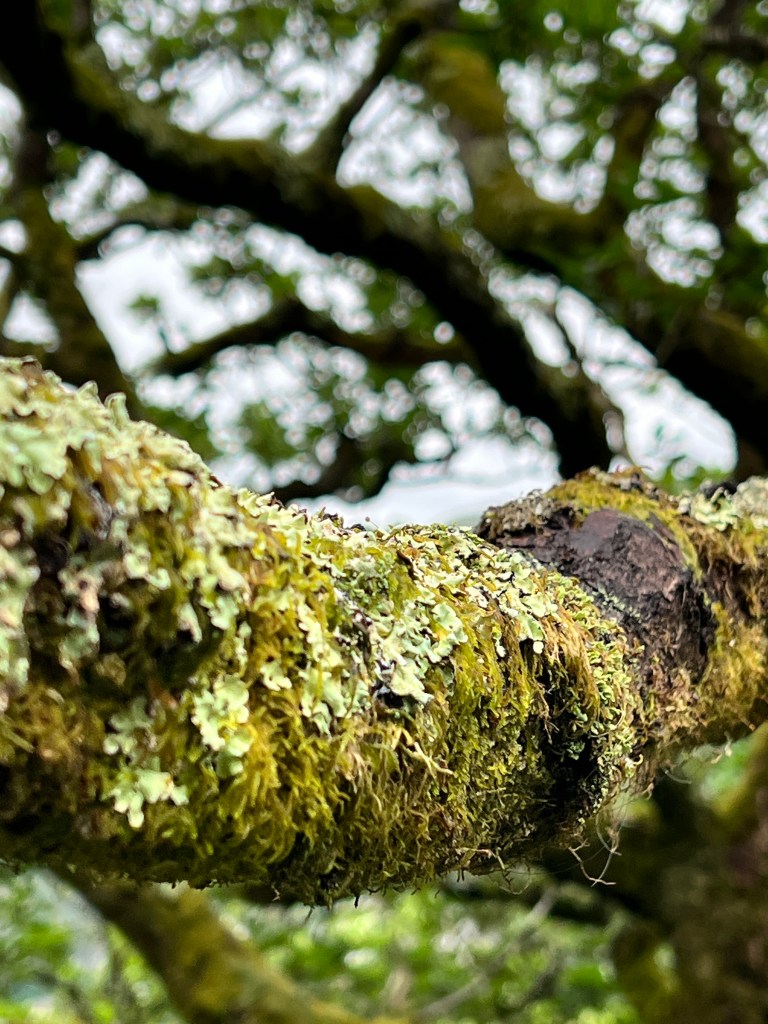
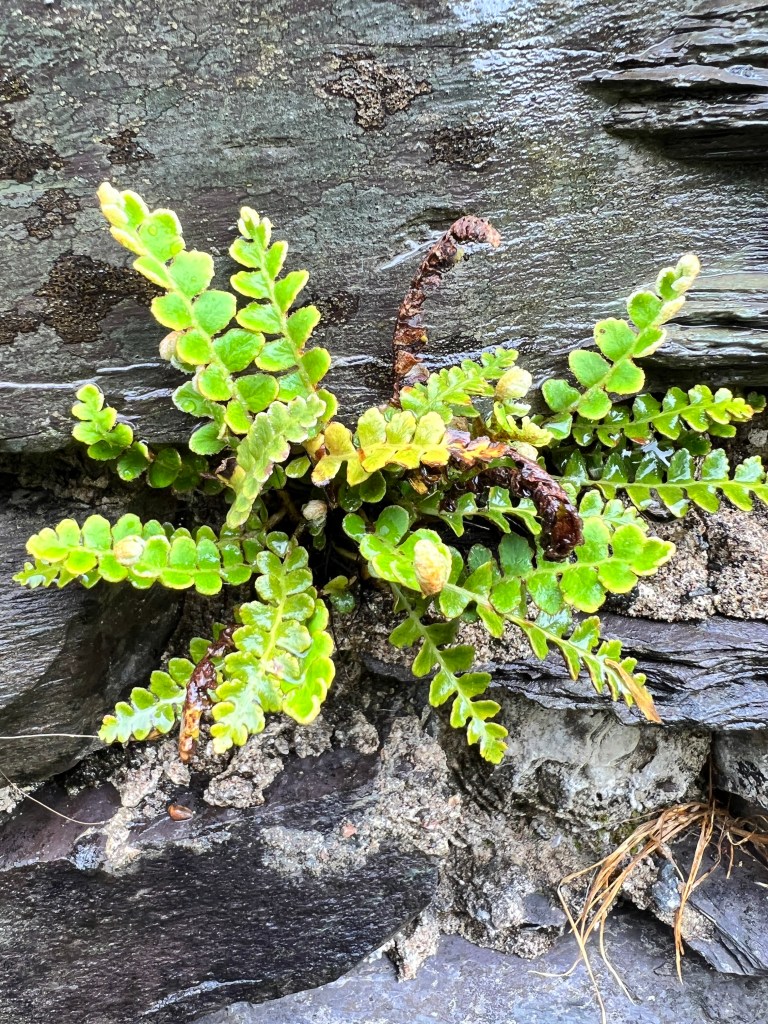
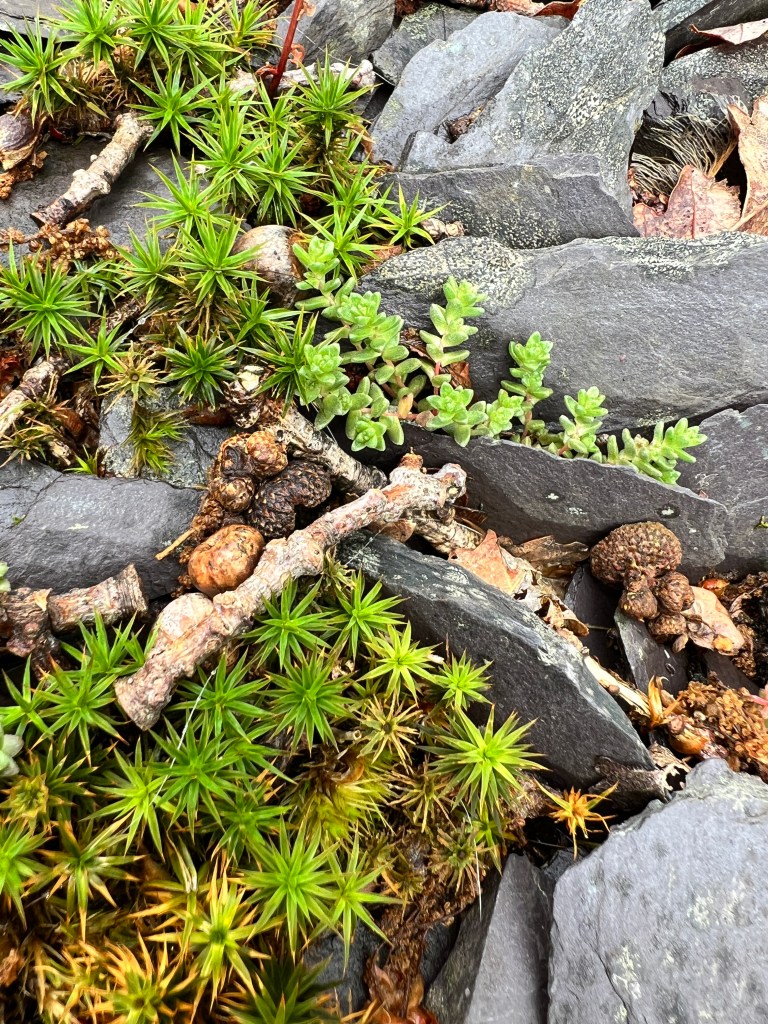
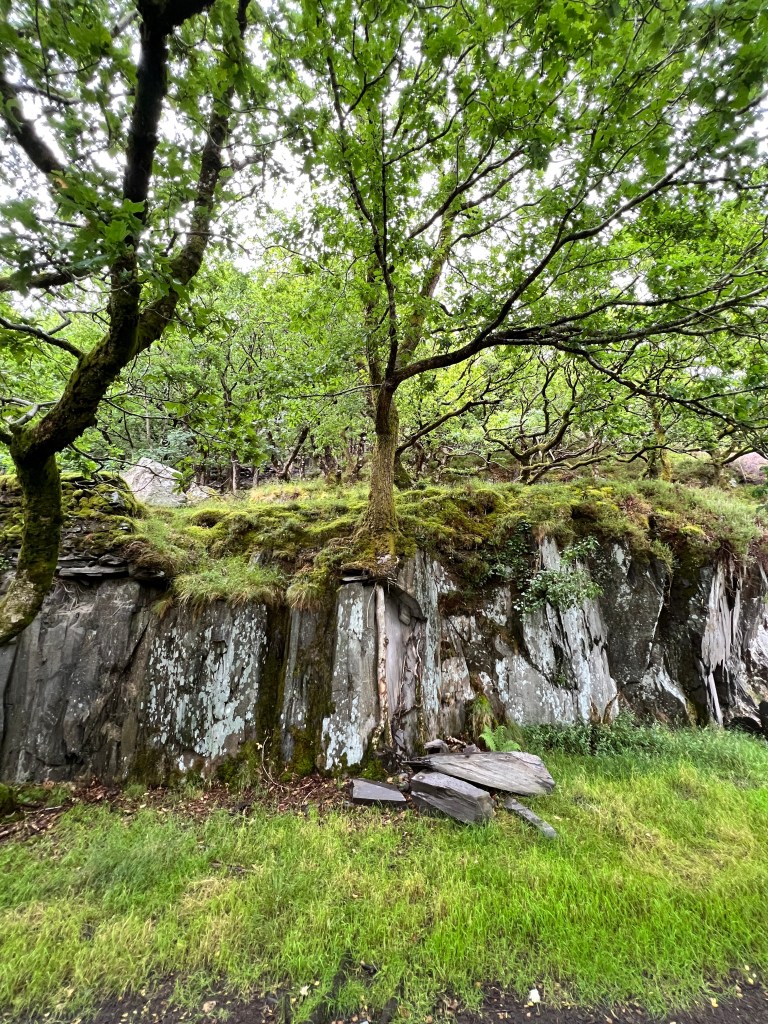
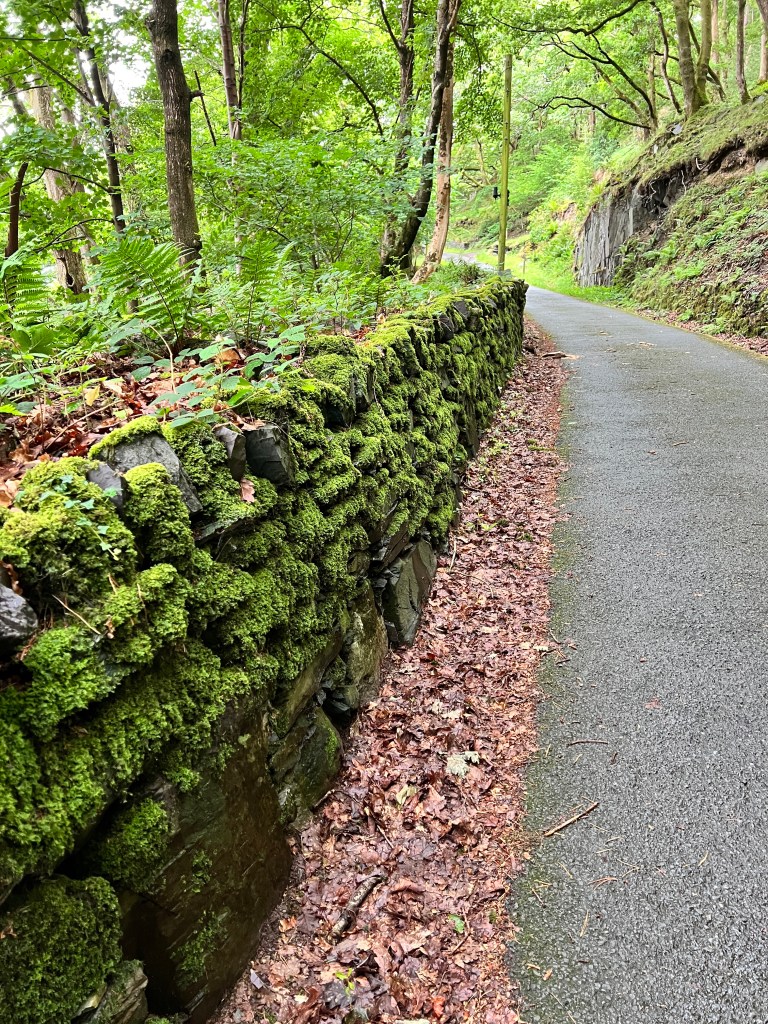
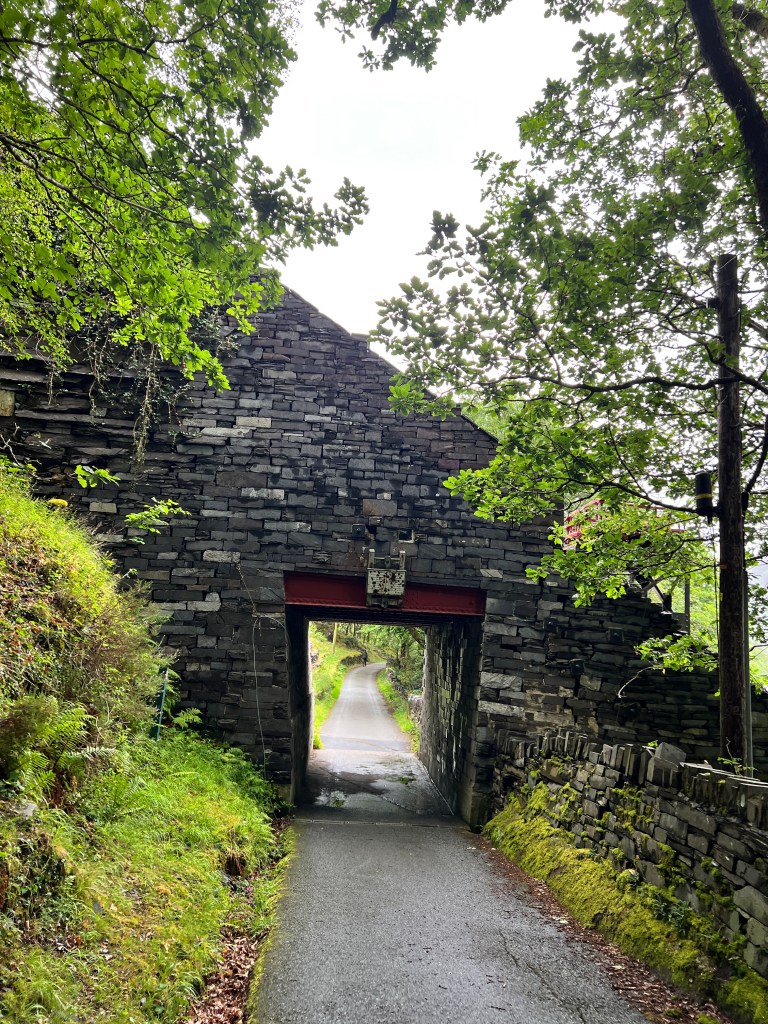
Day exploring rain forest in LLanberis behind the slate museum. I have been here several times but as I did not know what I was looking for I had no idea that this was a rain forest, there are lichen and ephemites growing on the trees and where these are more dense there is more coverage, we went on a rainy day when the rain forest is at its best, according to Guy Shrimbsole who wrote ‘The lost rainforests of great Britain’.
The Celtic forests are mapped as starting in Llan FFestiniog down through to Machunlleth via Dolgellau, I was raised in that area and was taken on forests walk often as a child as my father was a tree surgeon and worked mostly for the forestry commission planting conifers the other side of the valley in Maentwrog. The forests that have been recognized as Celtic due to the age of the trees that are within them and as such have secured funding to maintain these special endangered places, one of the main tasks is to eradicate rhododendrons which are an invasive species
The forest always appeared mysterious to me, I always felt lost, your sense of place is different, entangled with folk tales told to us from elderly relatives, at school they all talked of forests and fairies would be found in these places. My active childhood imagination would dream of escaping into the forest to be a fairy.




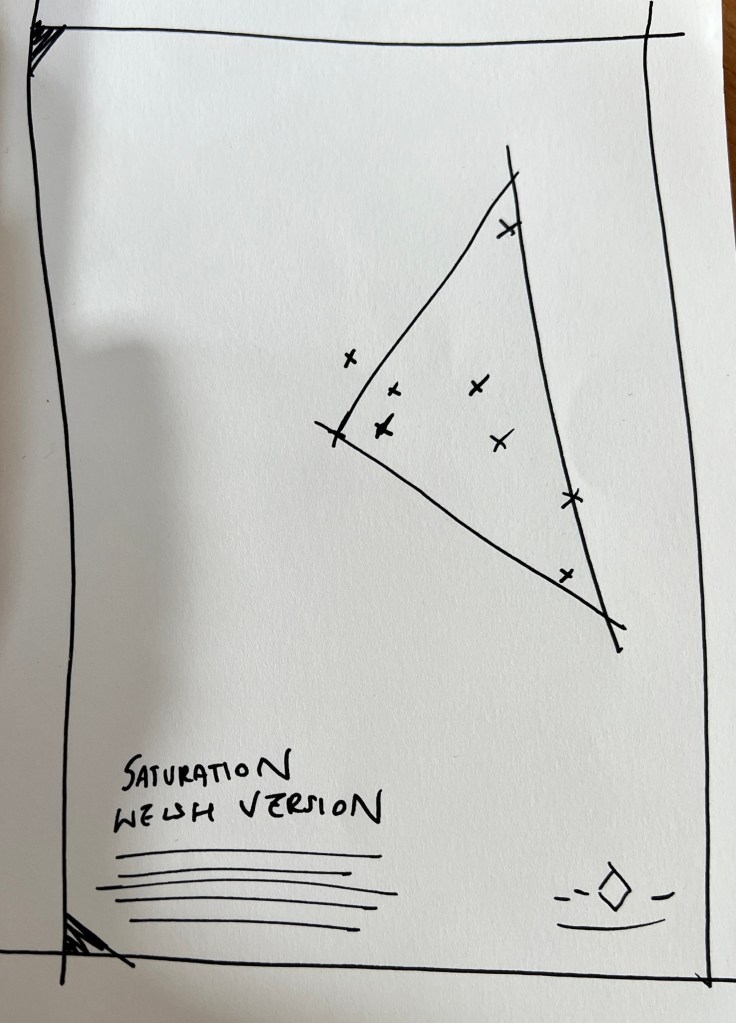
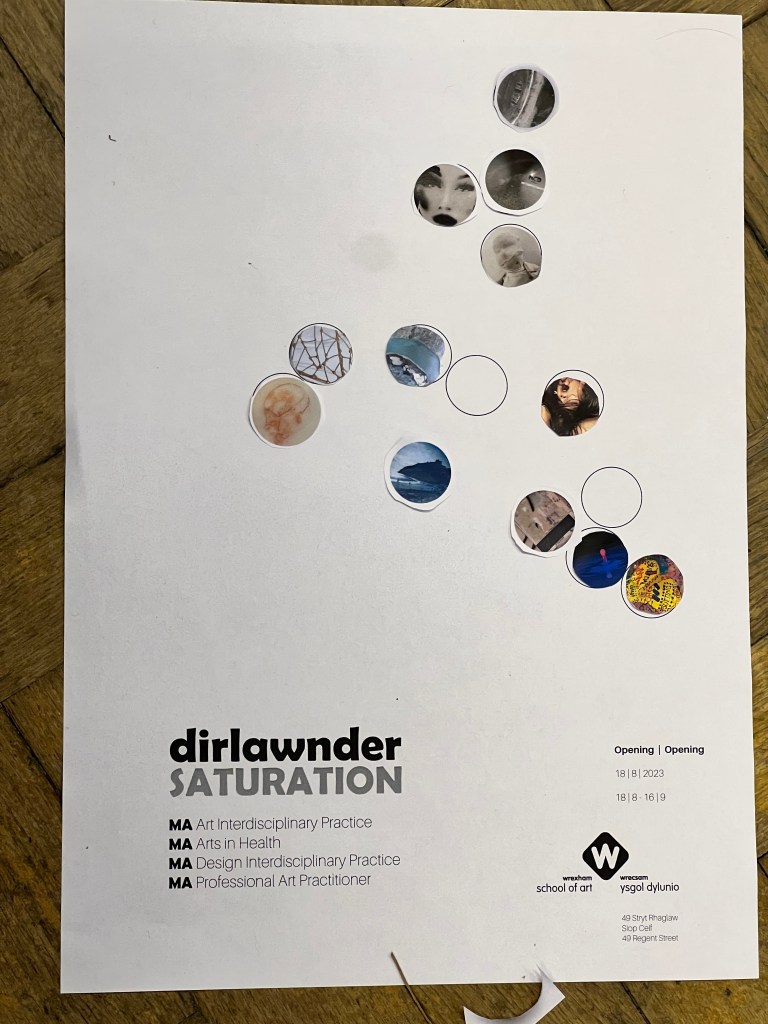
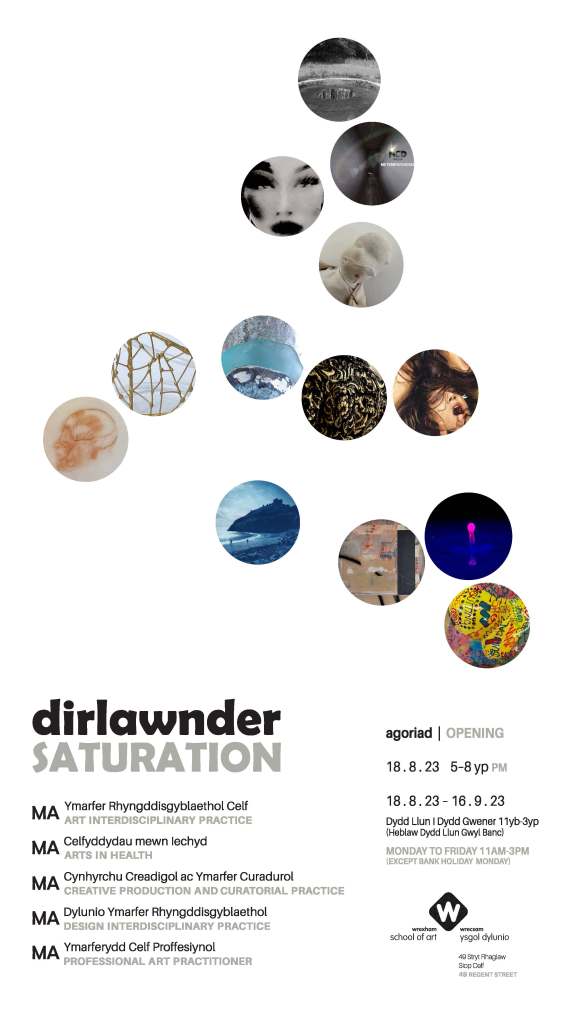
Meeting took place this week to discuss the poster, this sketch is from Seren of what we all agreed as initial ideas.
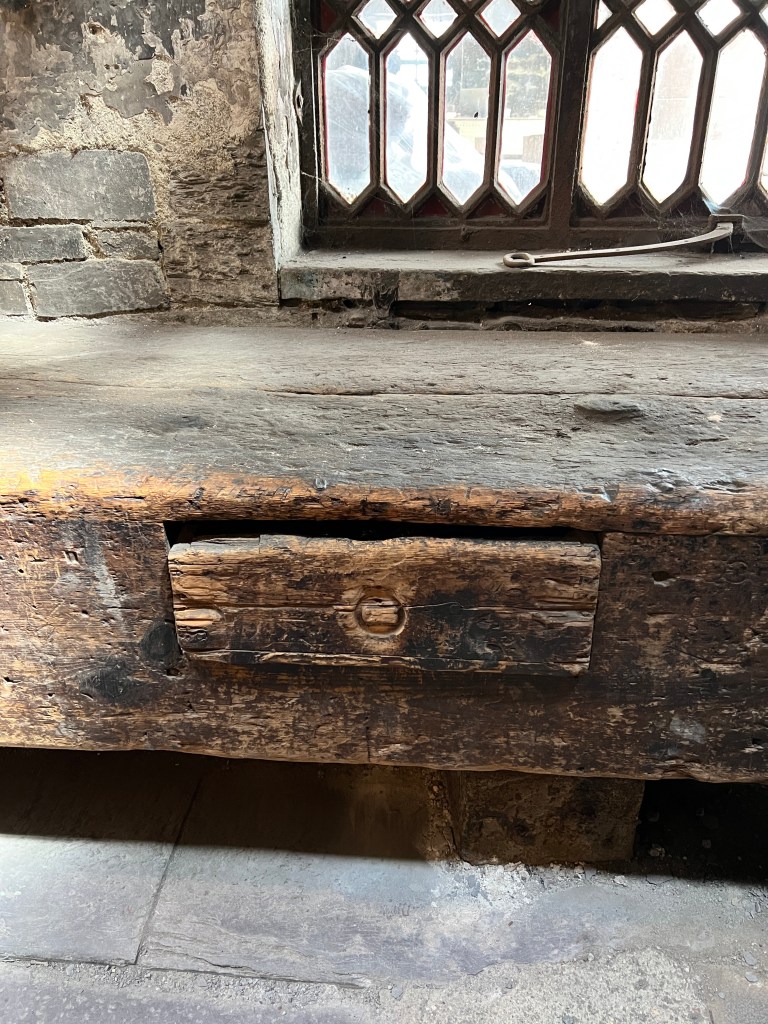
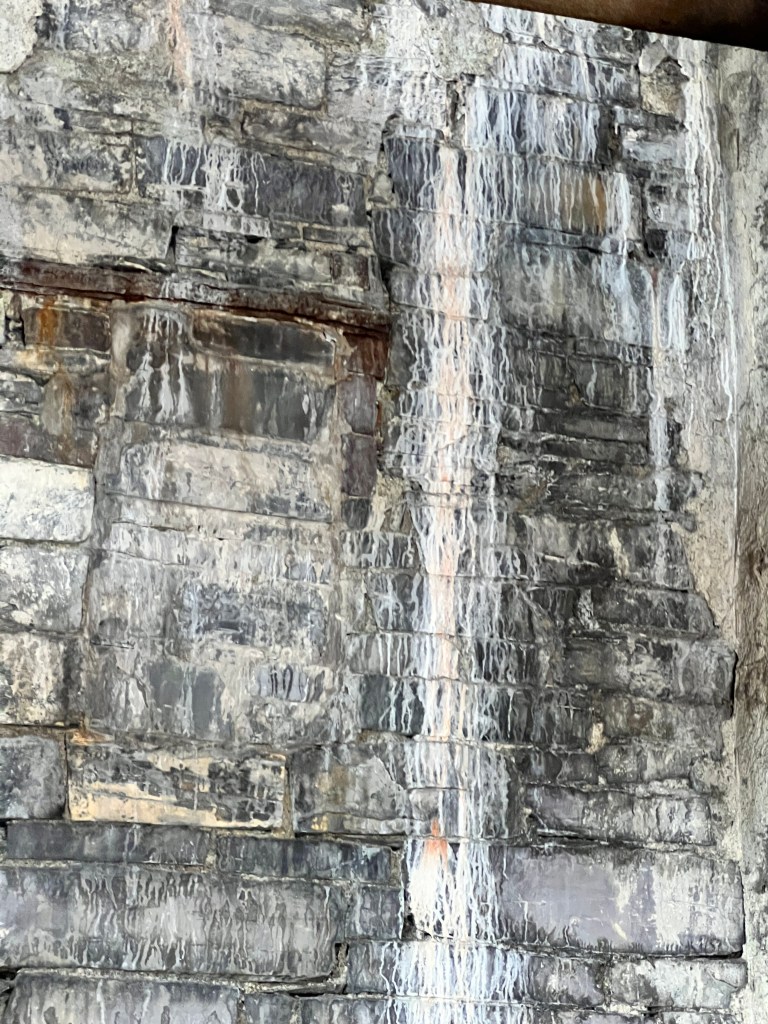
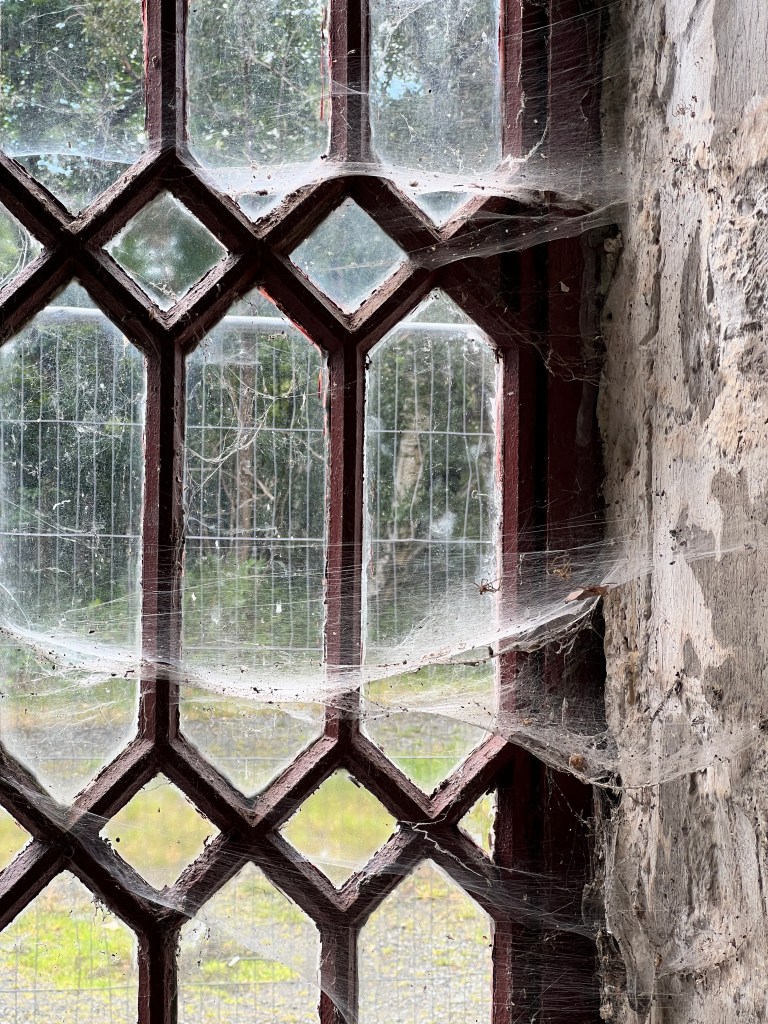
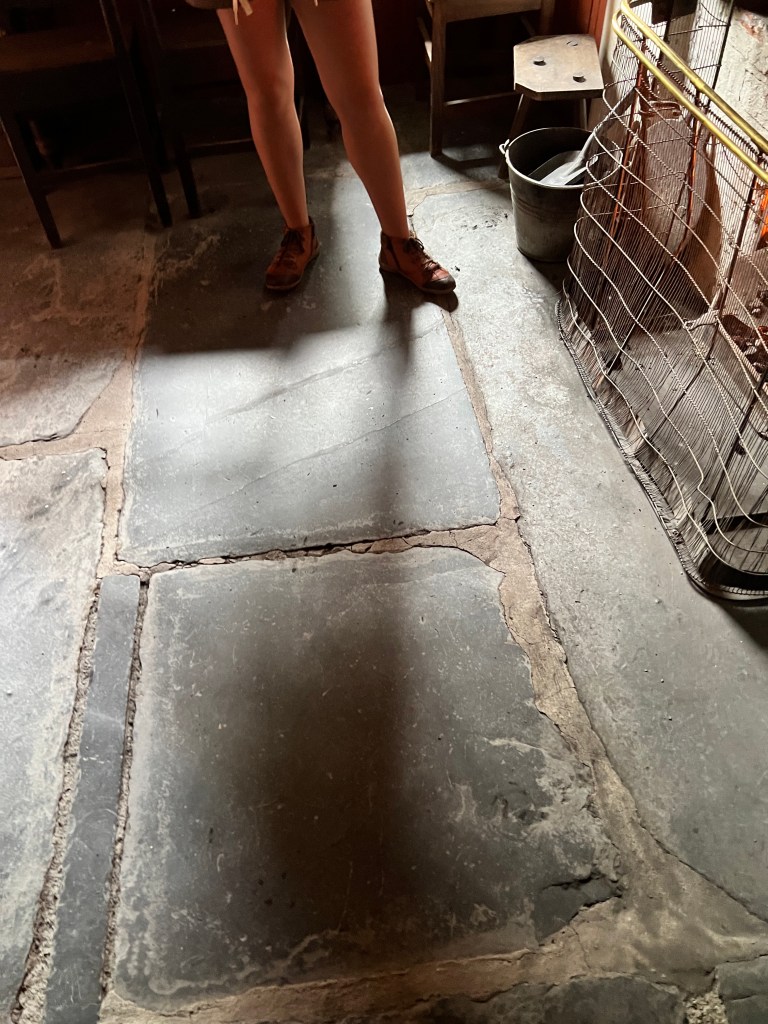
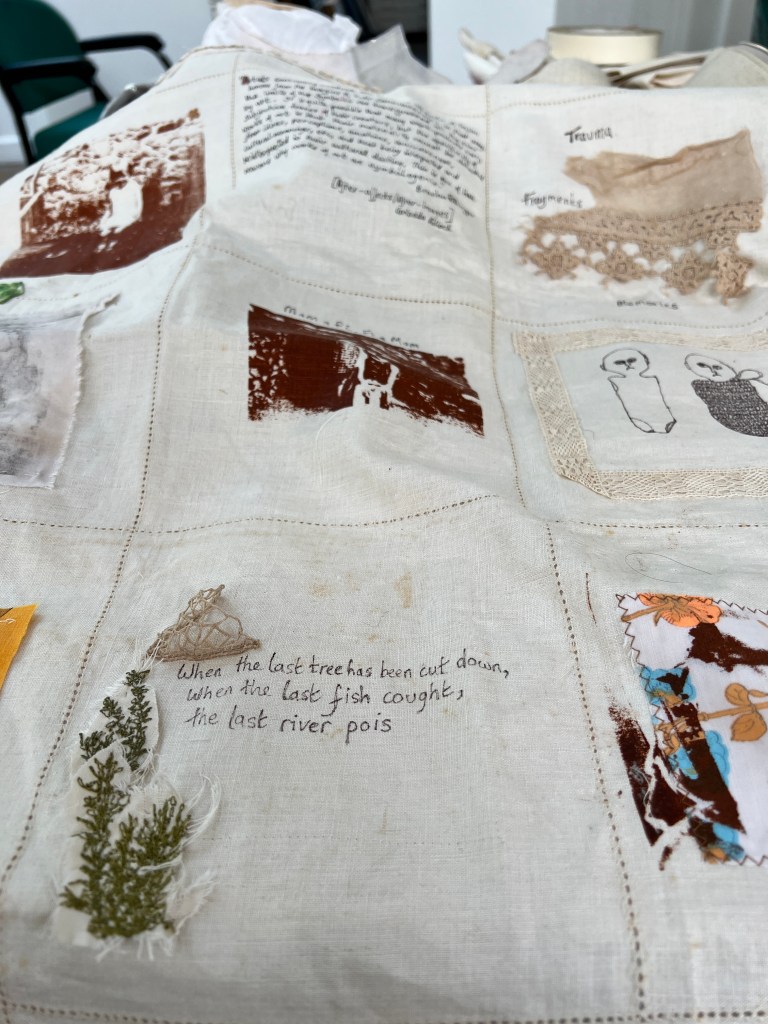
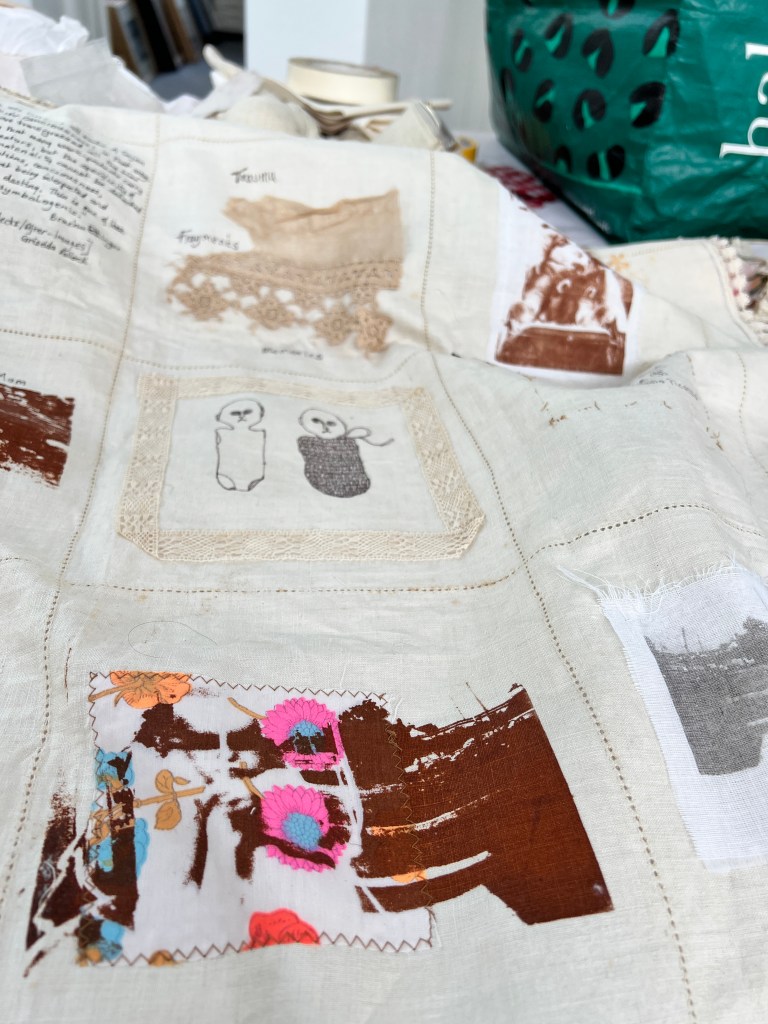
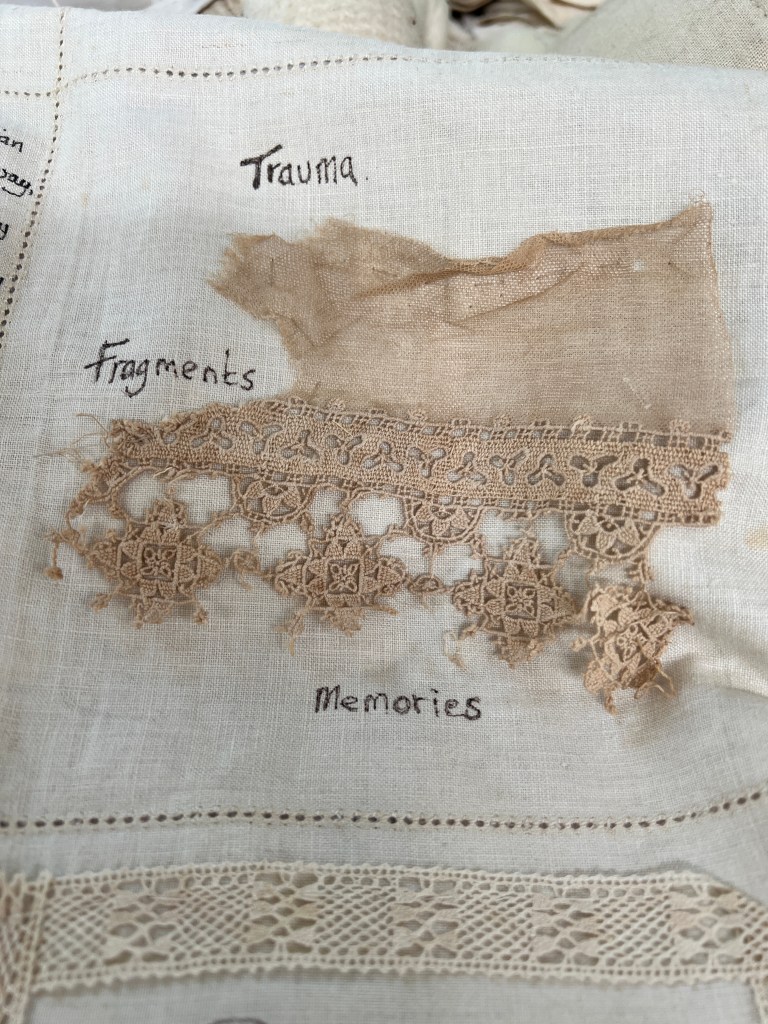
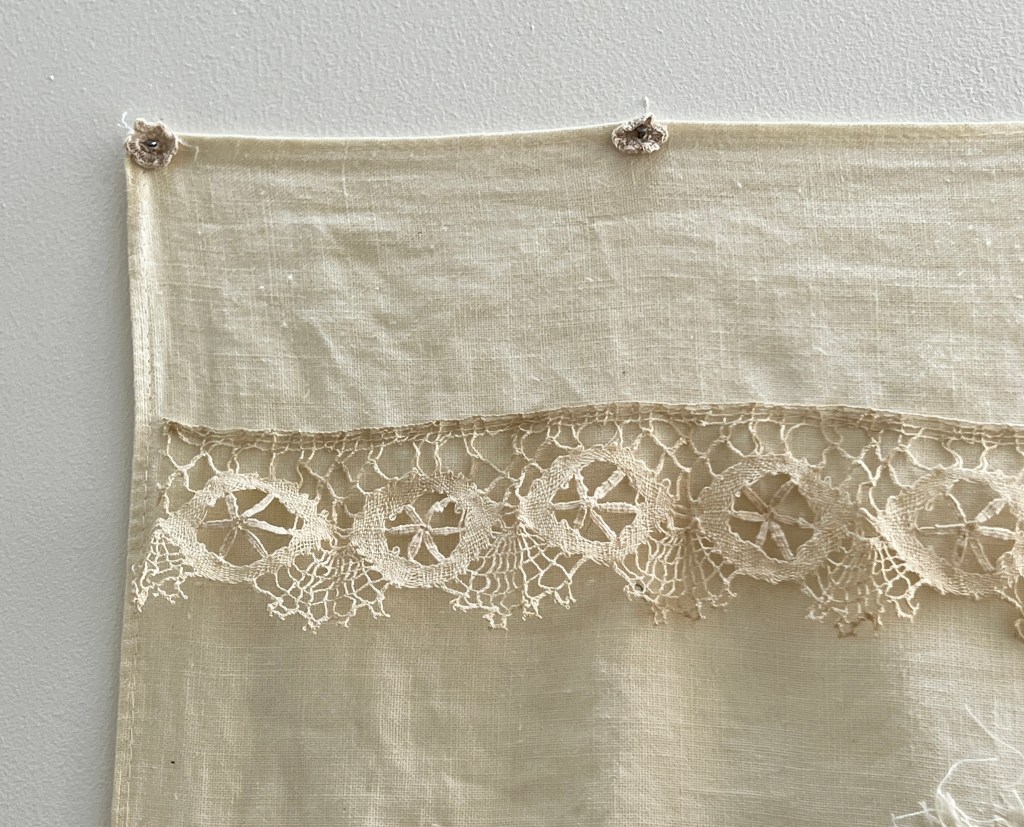
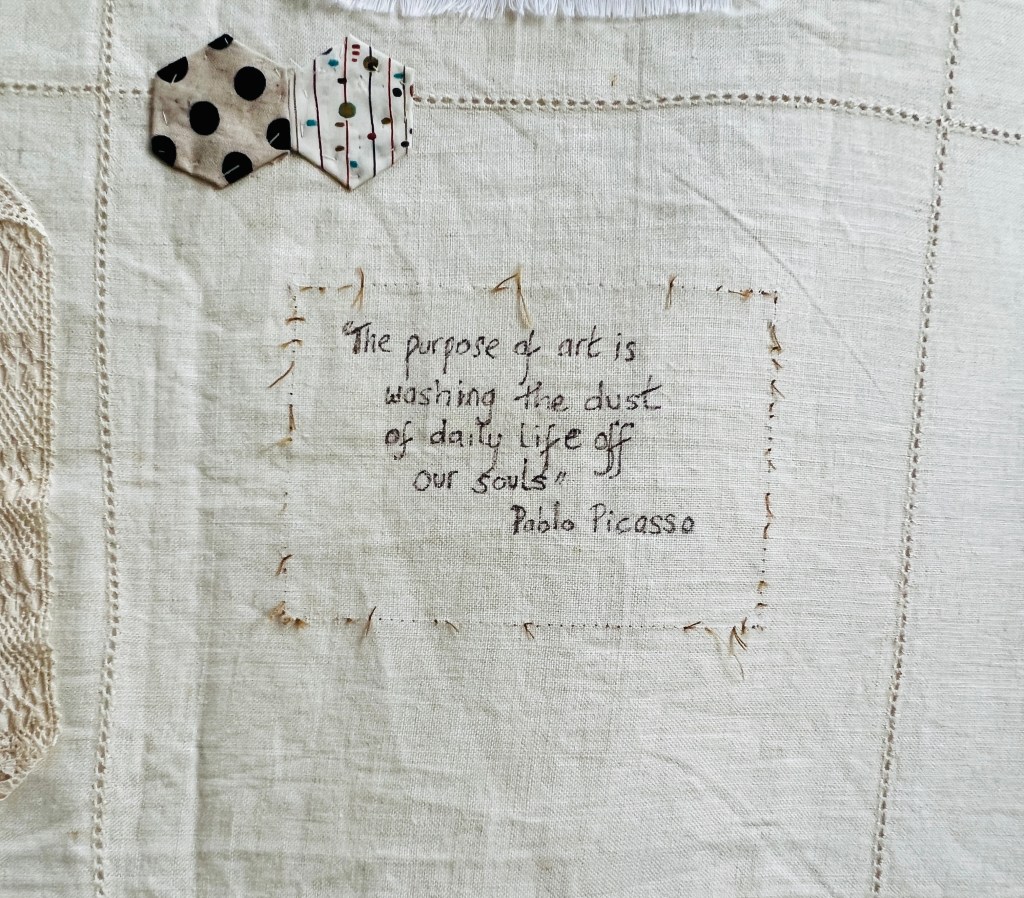
I took these pictures below as this is the aesthetic that I lean towards, this used, worn, marked by time that I find so appealing, such as in my found fabrics that are stained with the fragments of memory from use by someone else. it has its own narrative, its worn by use, each mark a point in its history telling the story.

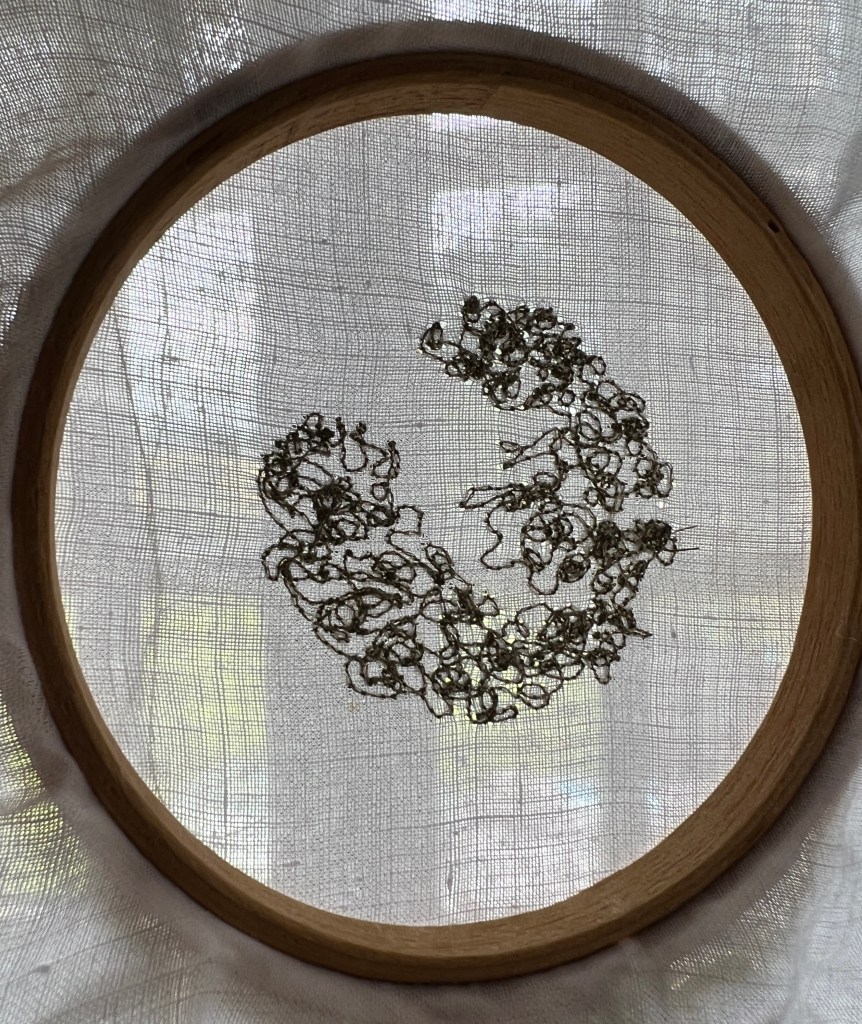
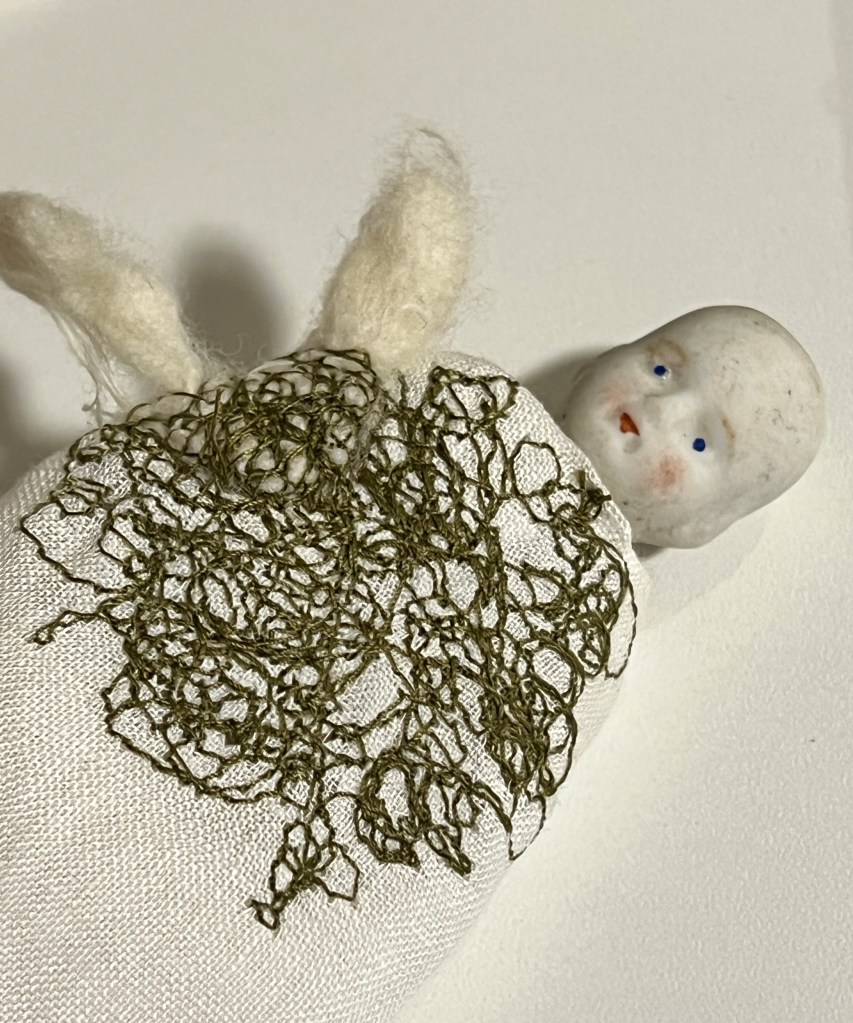
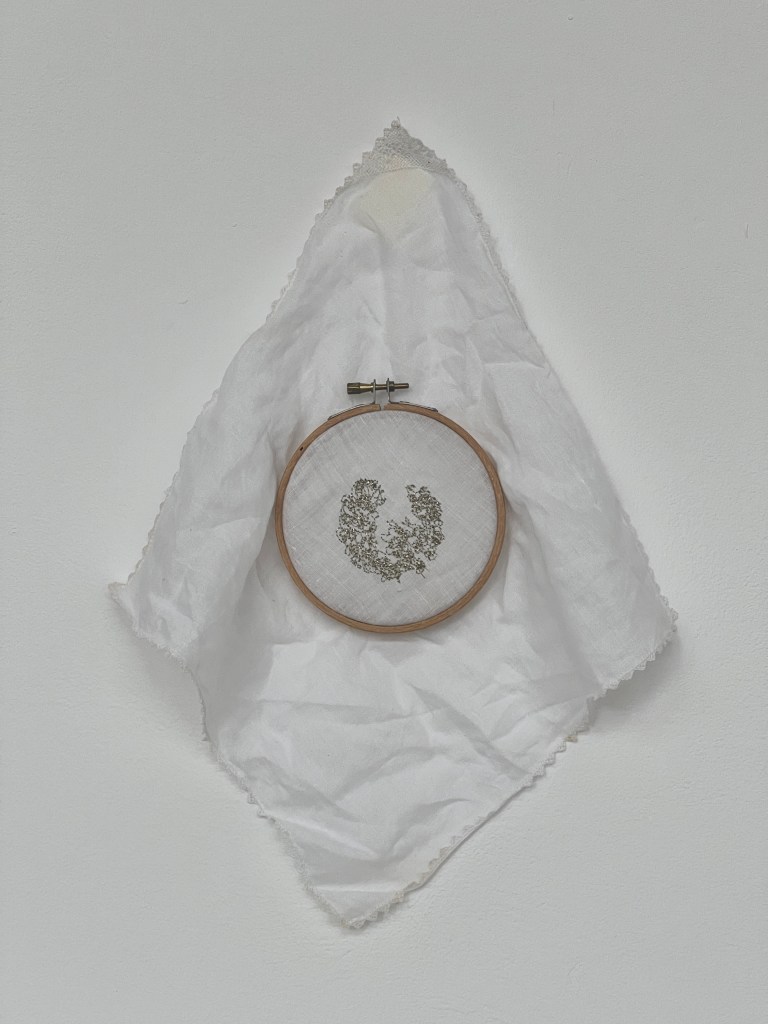
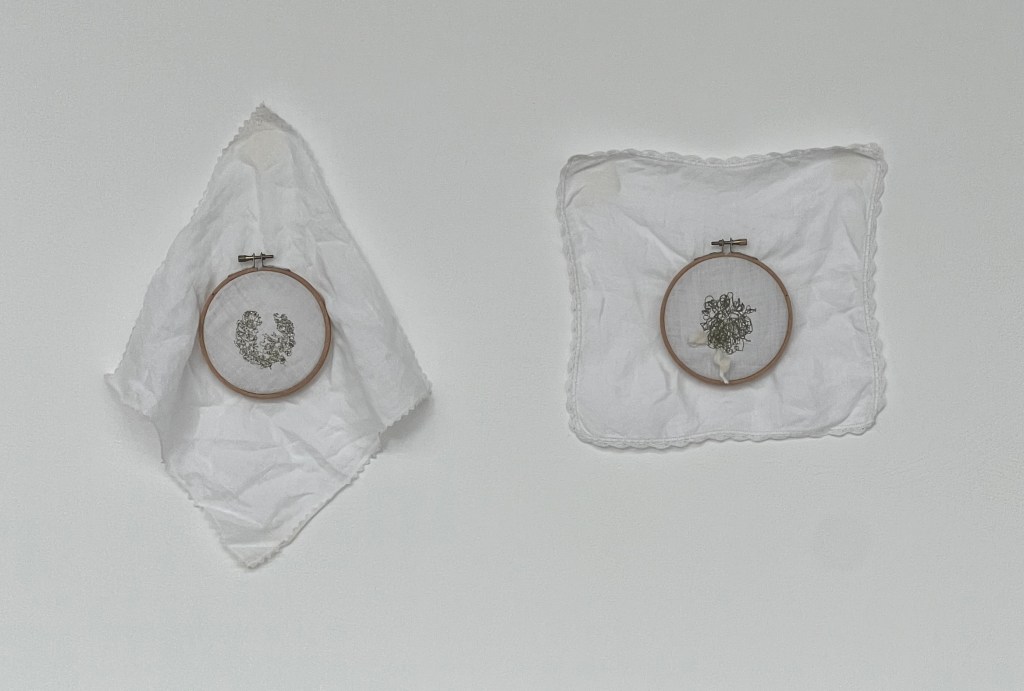
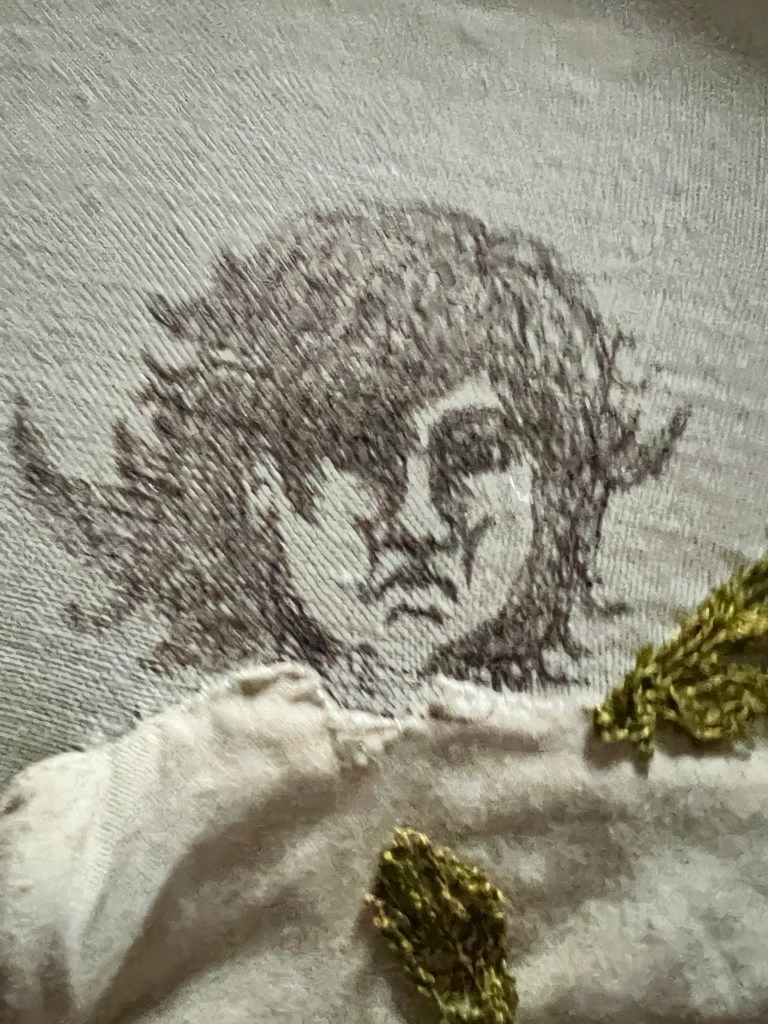
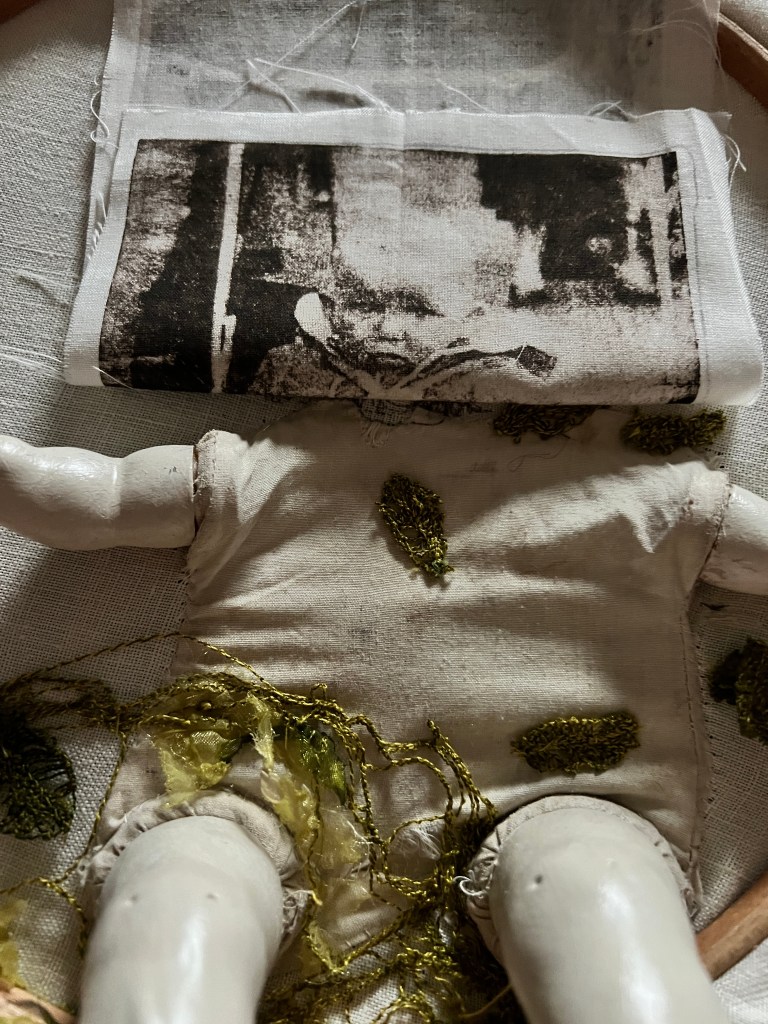
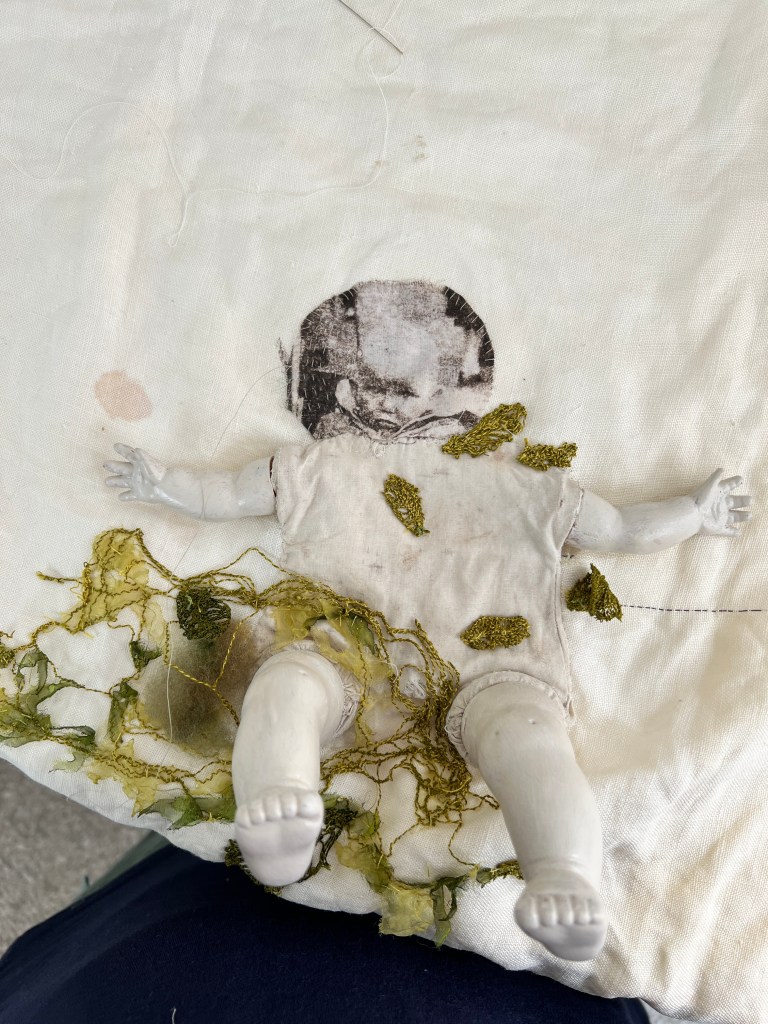
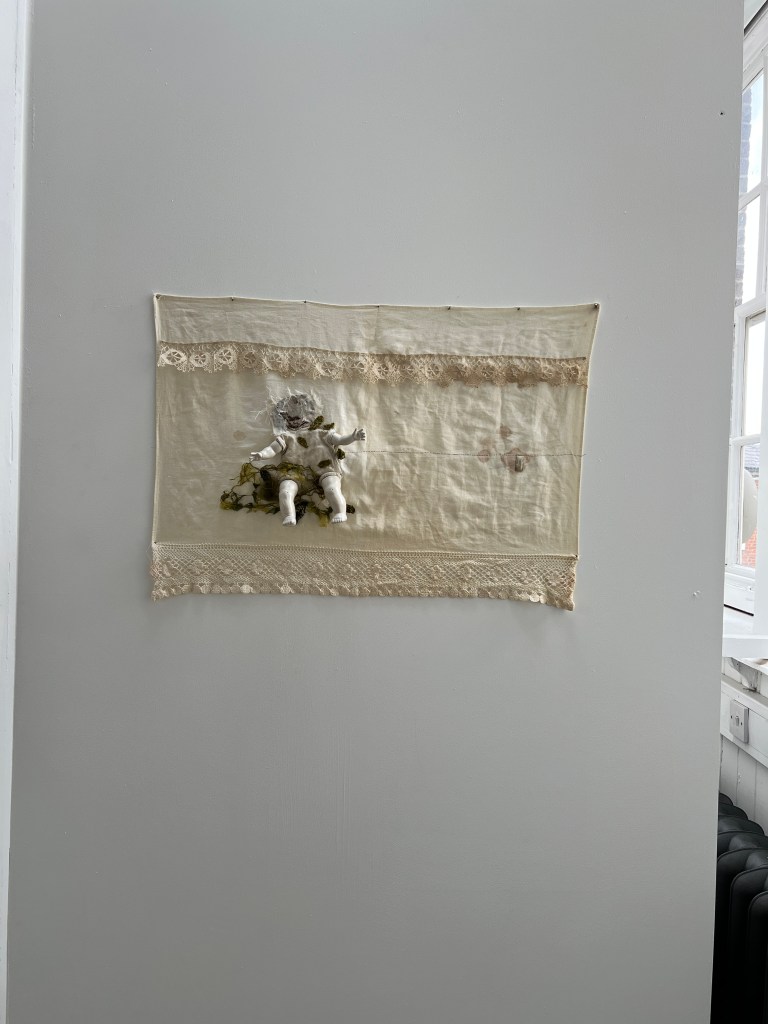
I began to explore how to replicate the intricate fungi mycelium by using free machine embroidery, using the same technique on to fusible webbing to create 3D textiles from threads (see piece with doll below)



Drawing is an integral part of my practice, it is where I record, experiment, work out process, record new techniques, some of my sketchbooks are not aesthetically pleasing as they are personal record of my working things out they are not for public consumption, however, there are drawings that I am happy to make into prints, not as final prints but more as a way to show my process, I collect, I draw, I make new work.
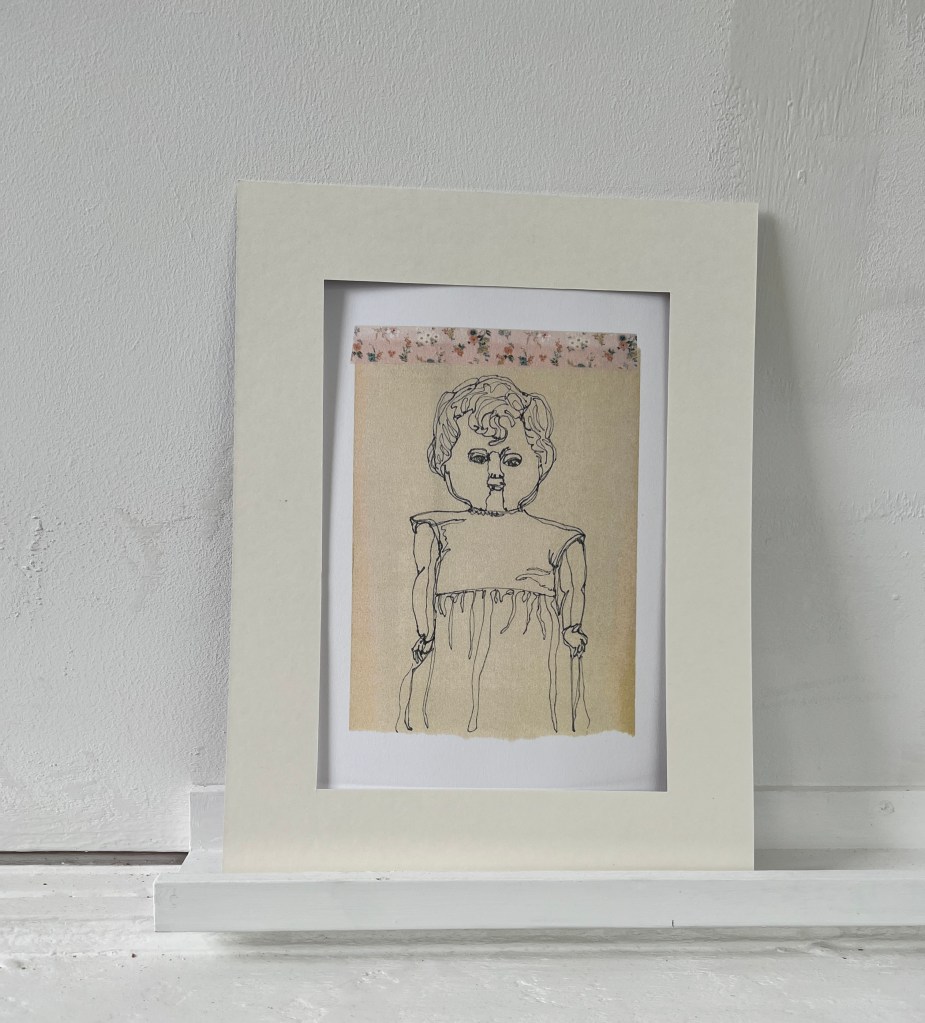
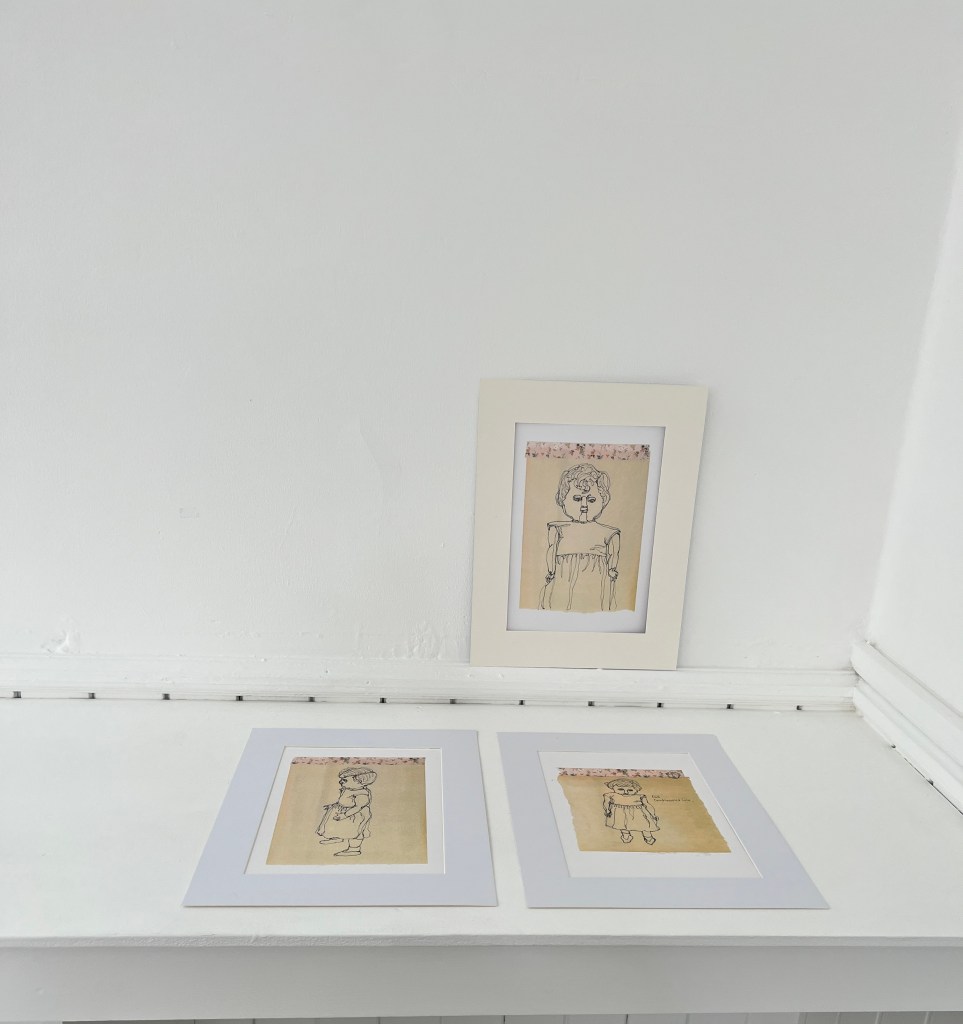
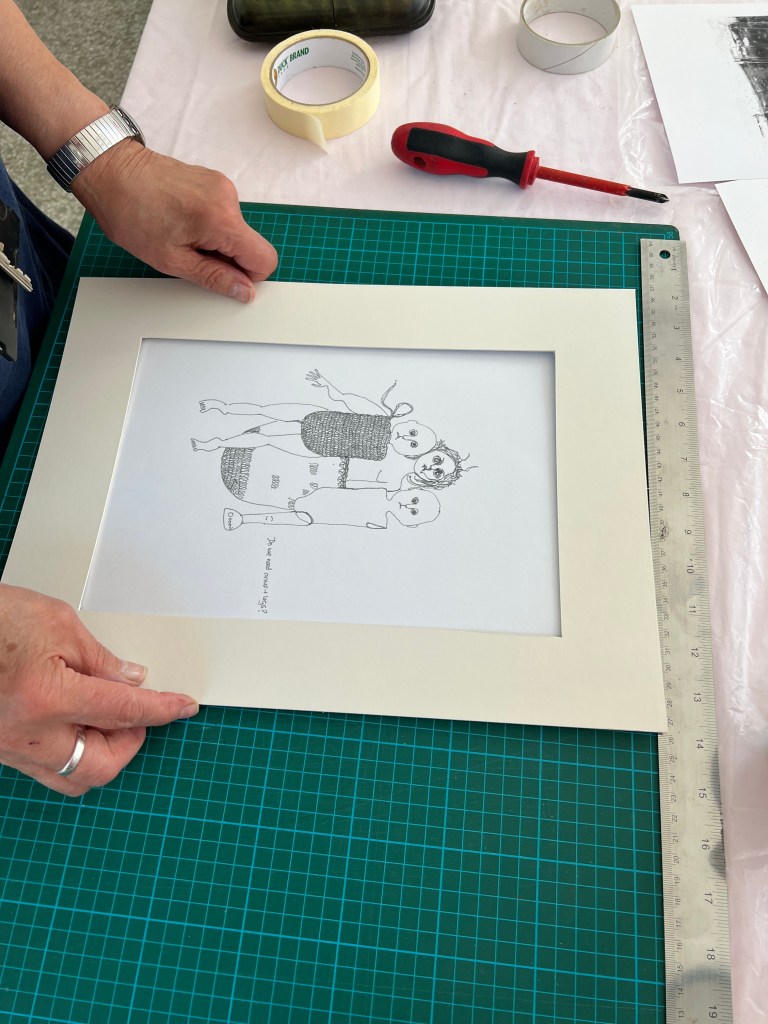
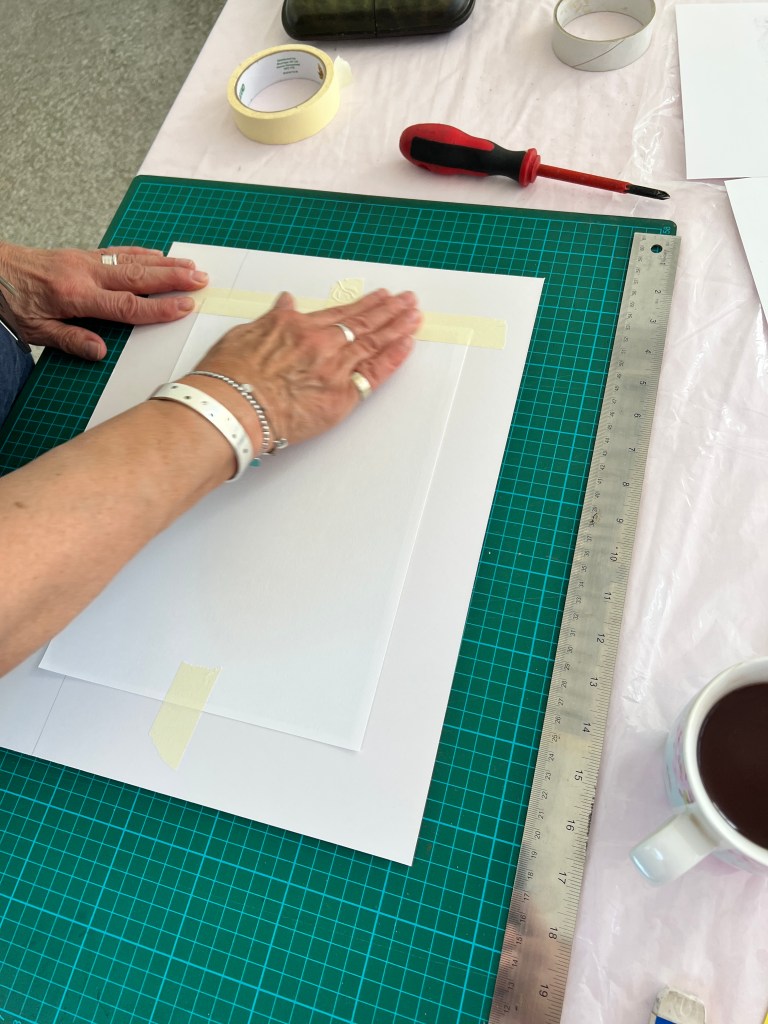
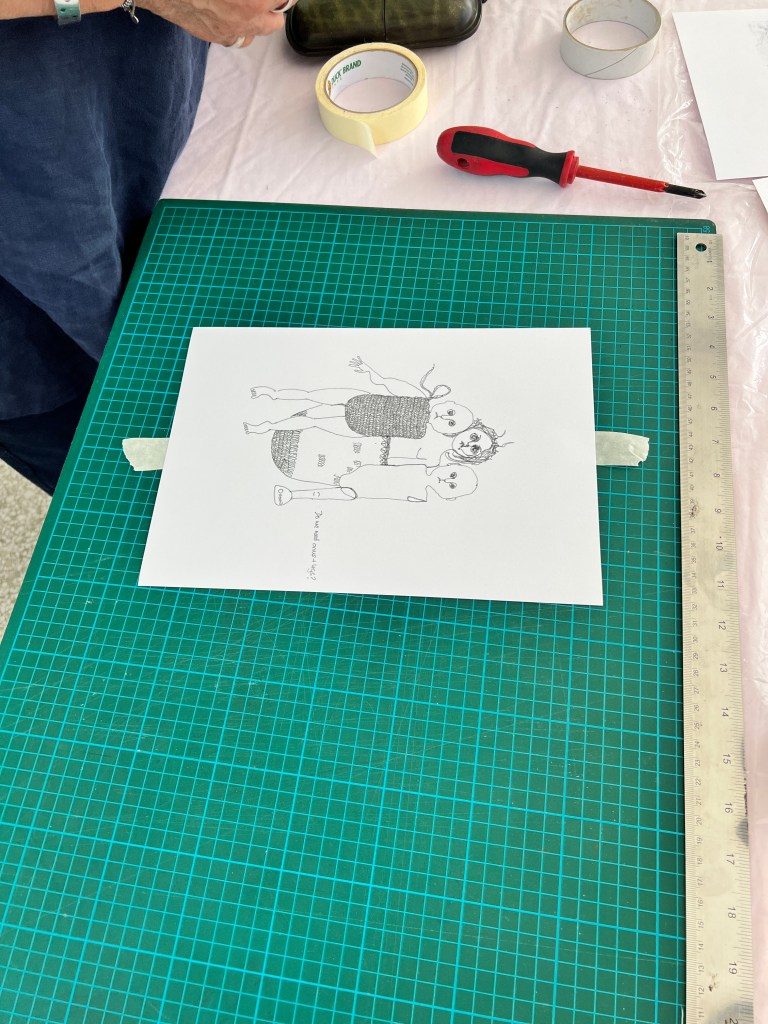
Below I have been working out placement and playing around with printing processes, inkjet or laser. Scanned images from my sketchbooks.
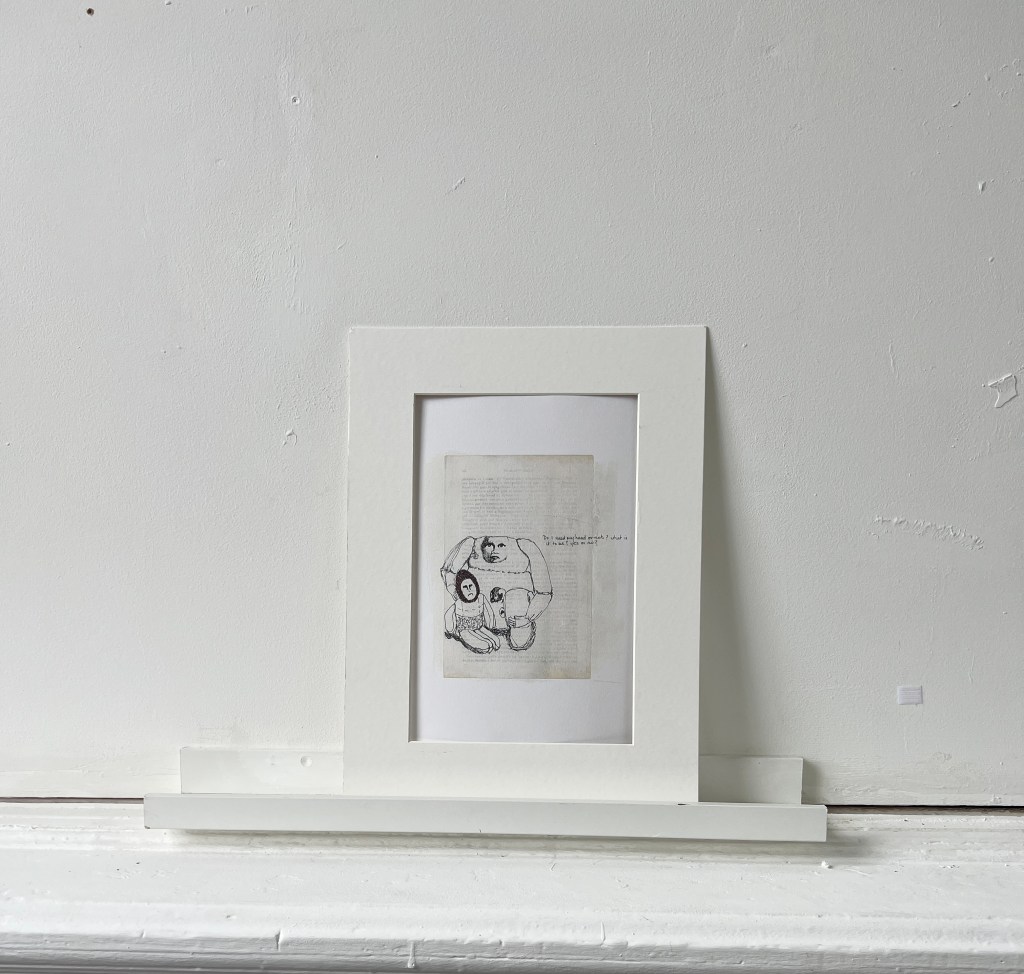
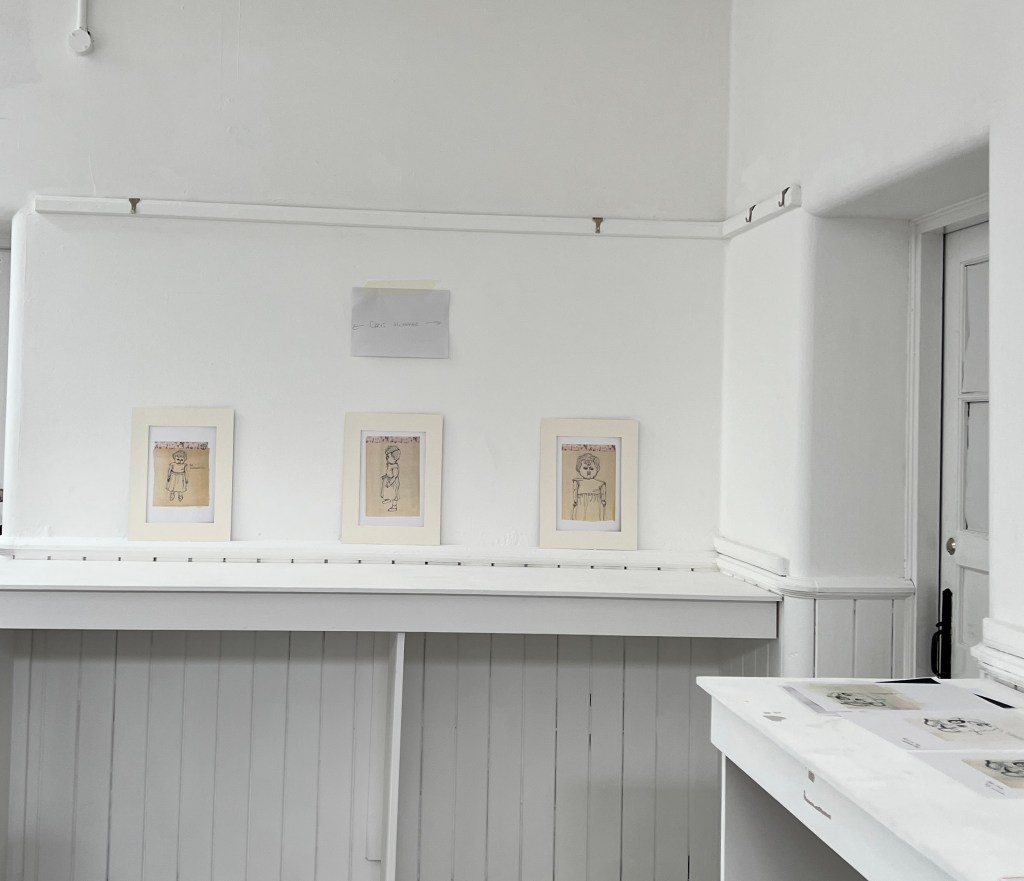
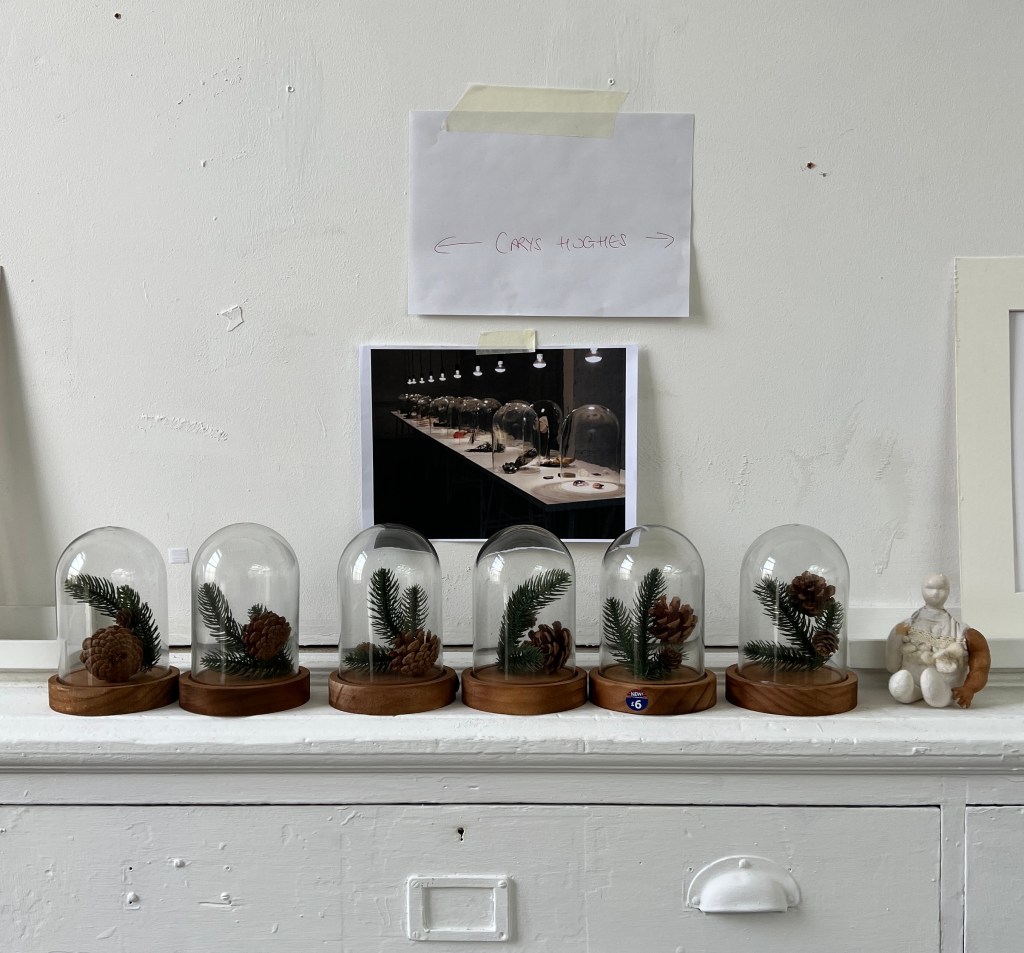
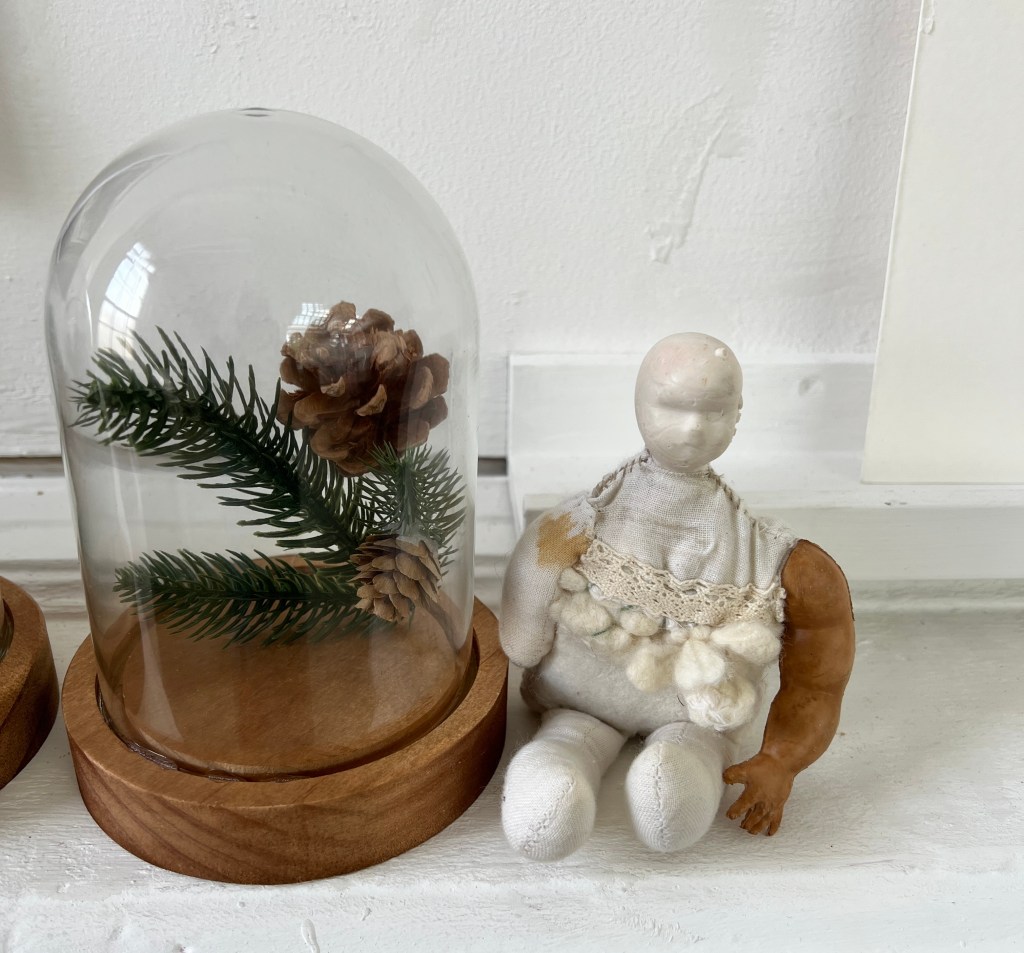
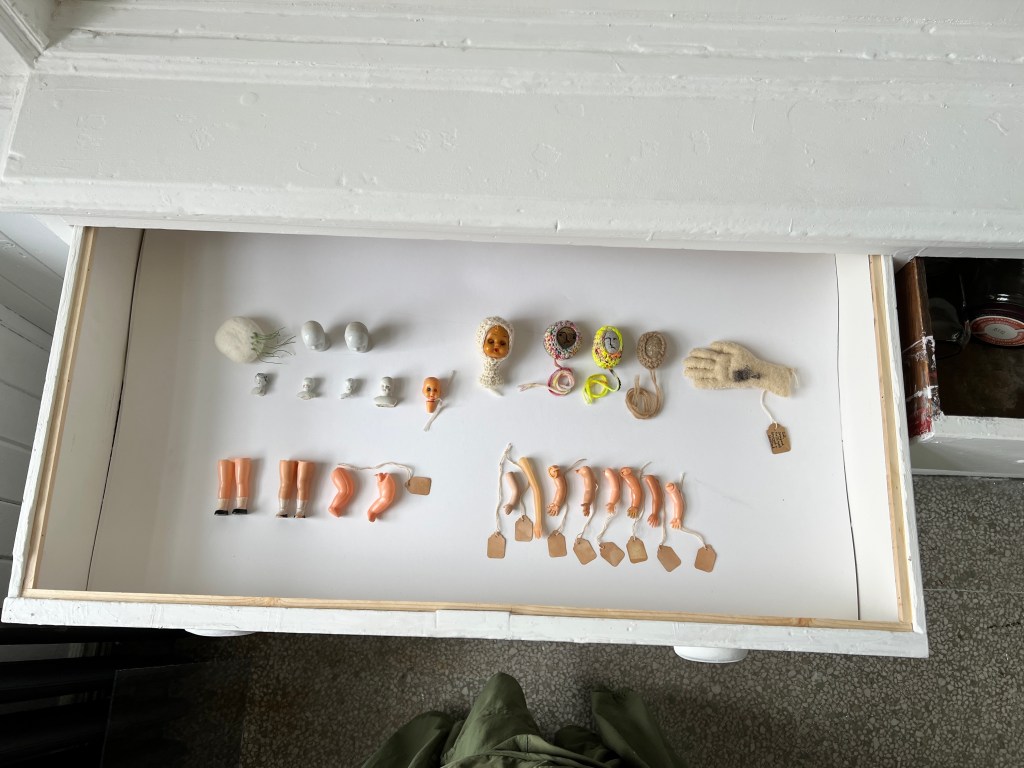
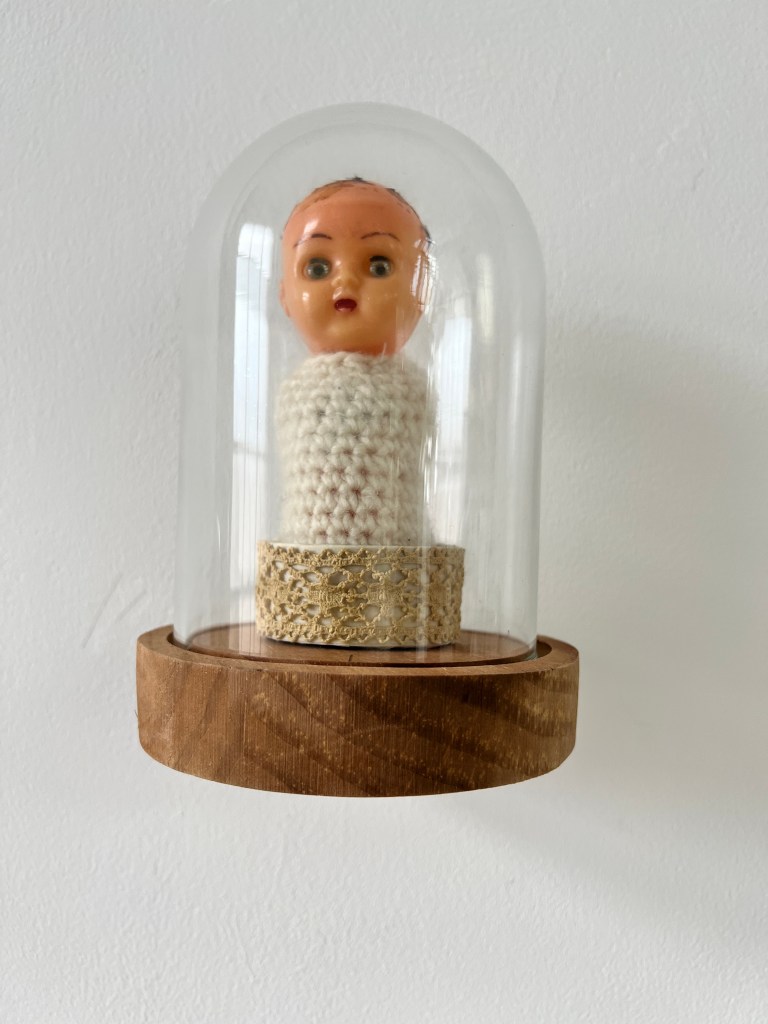
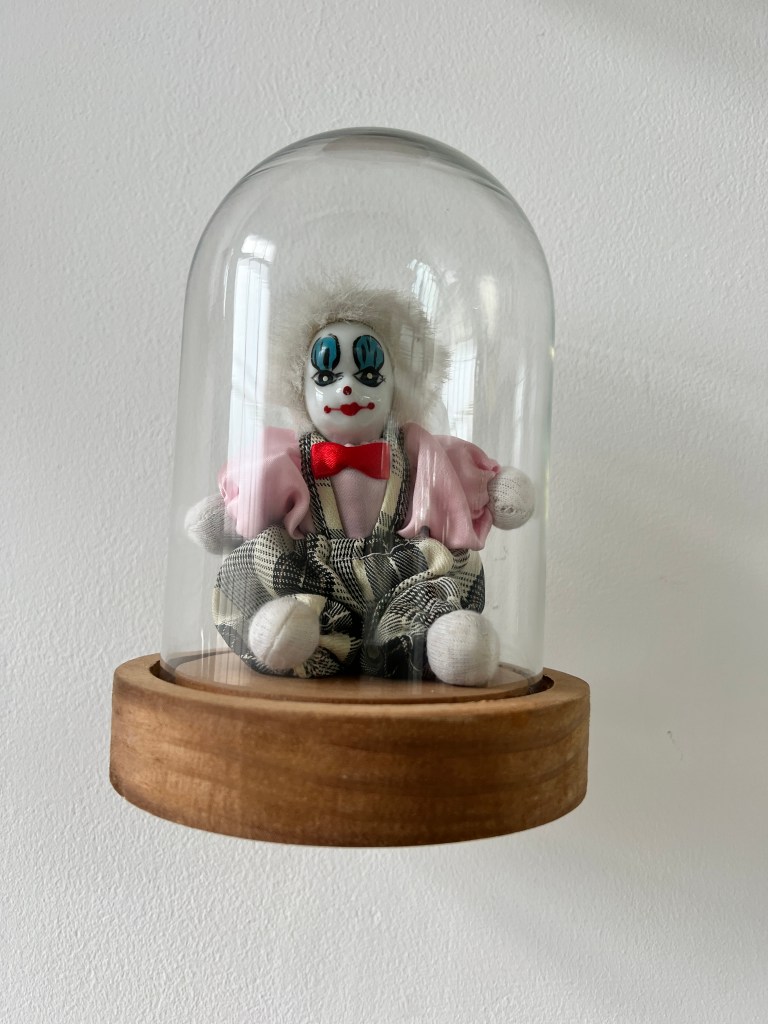
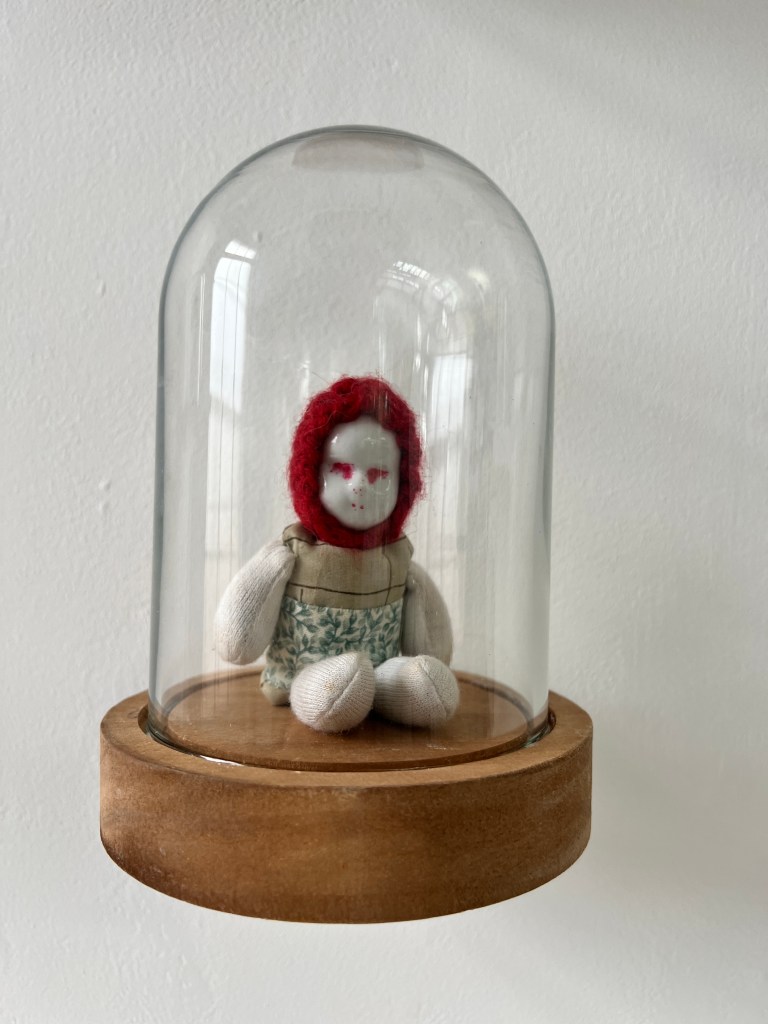
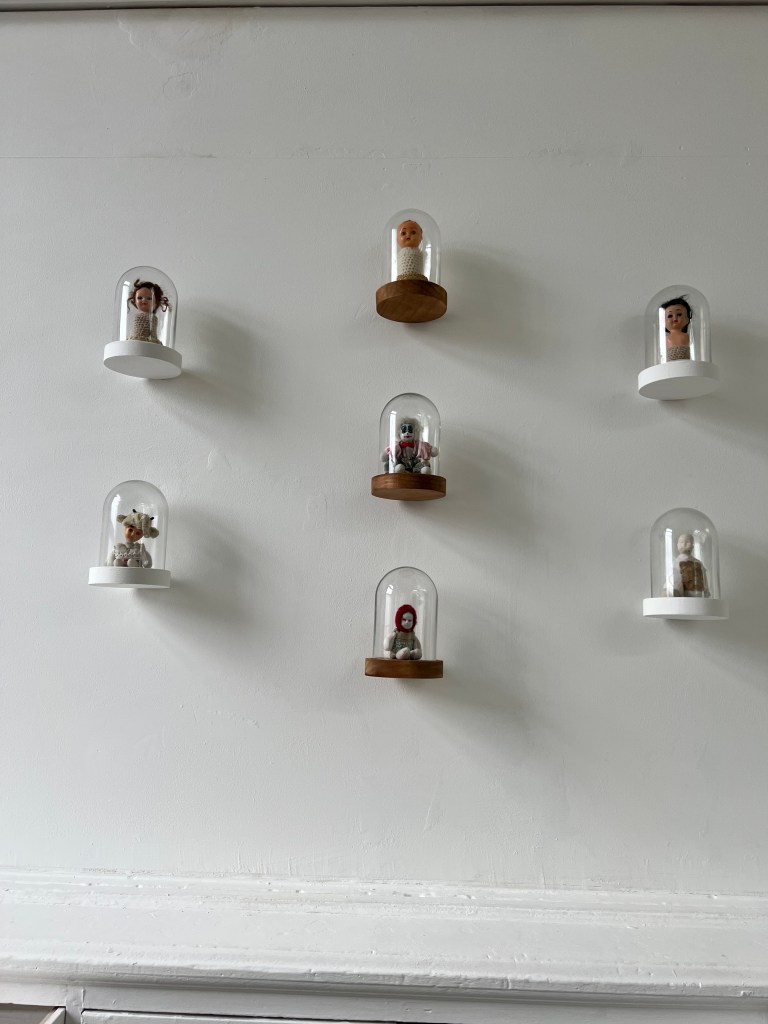
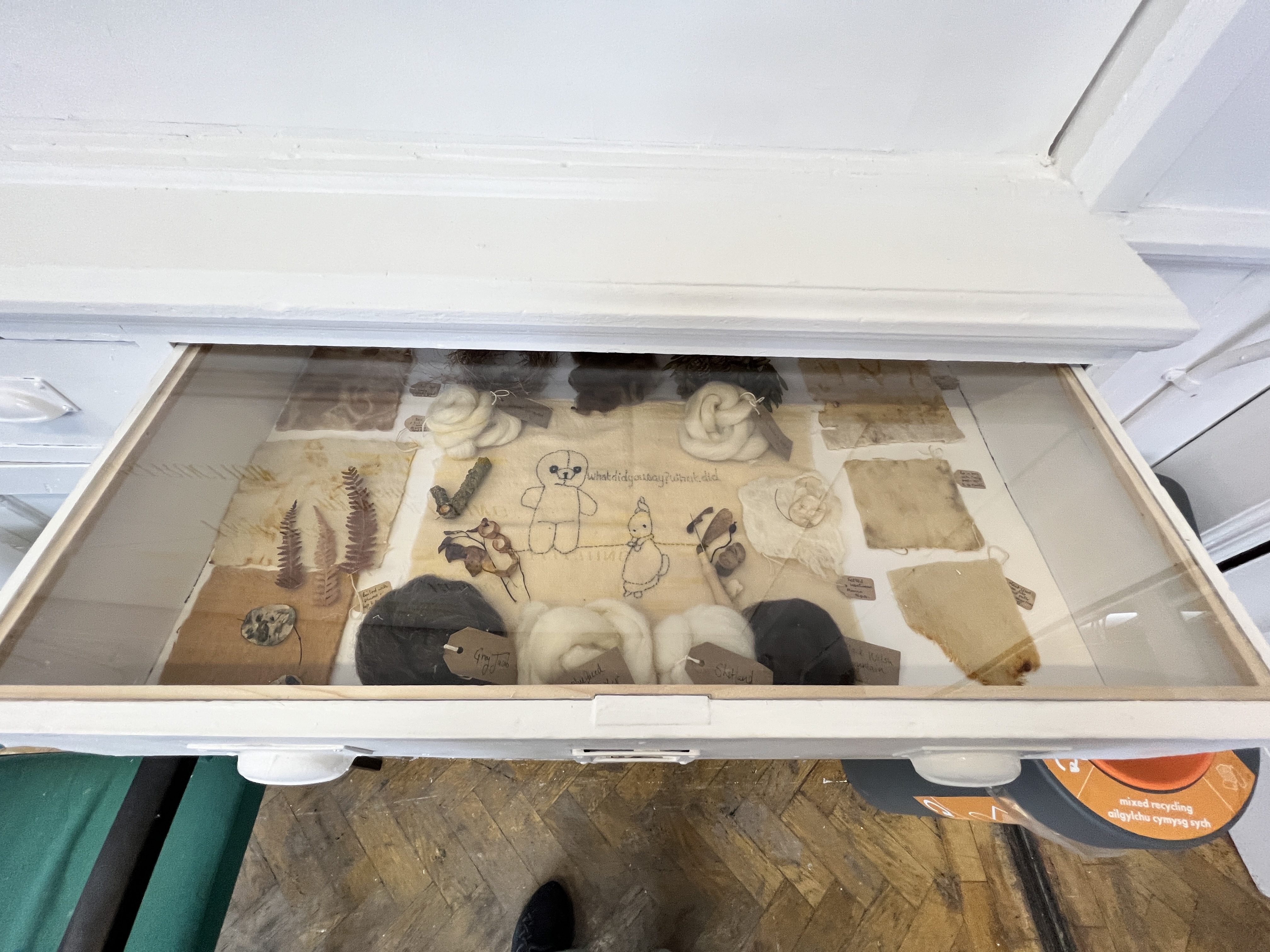
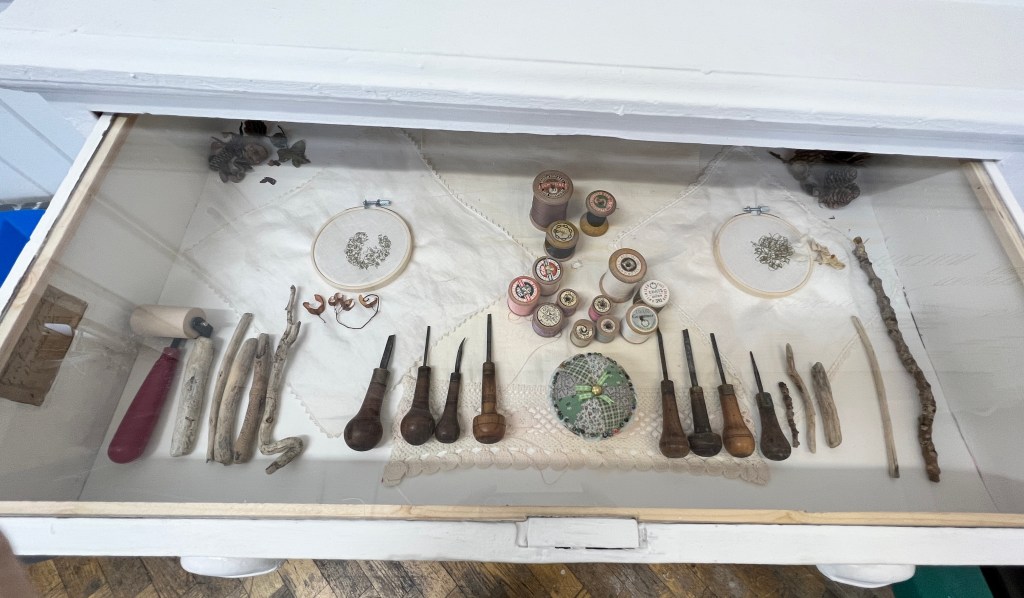
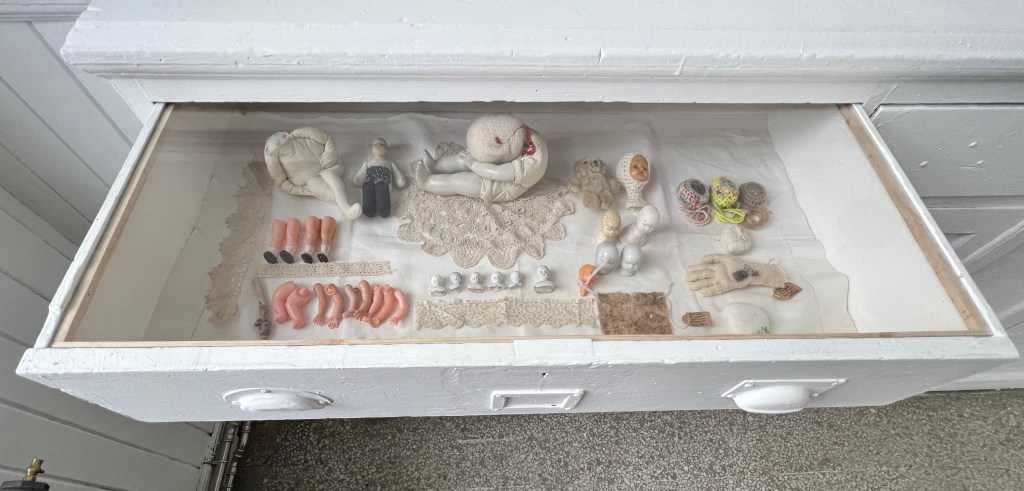
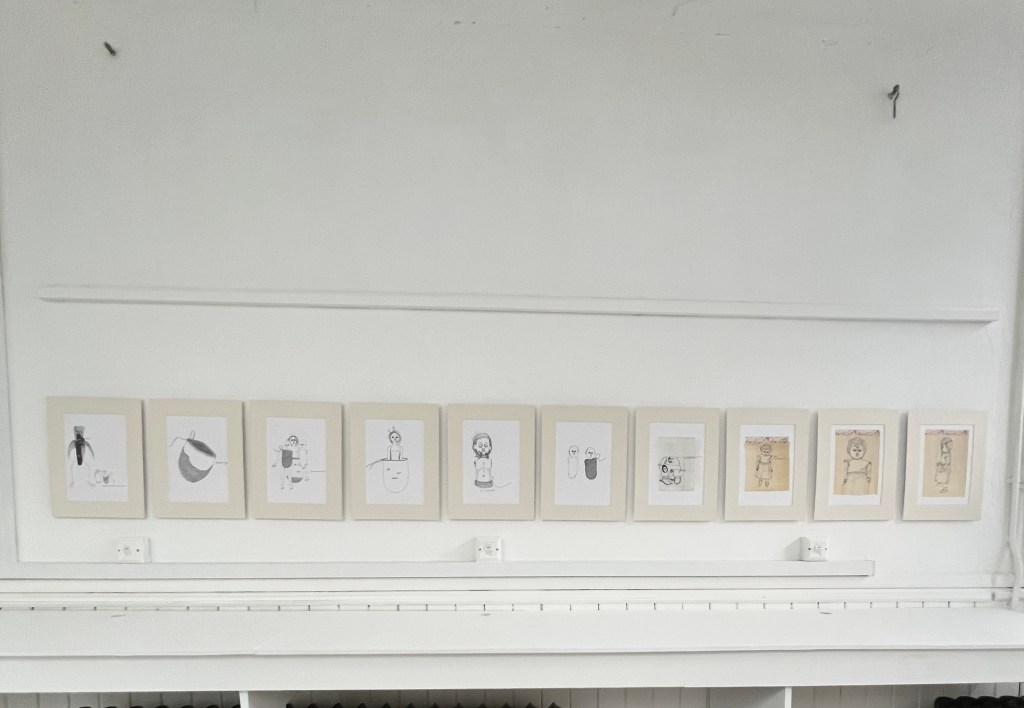
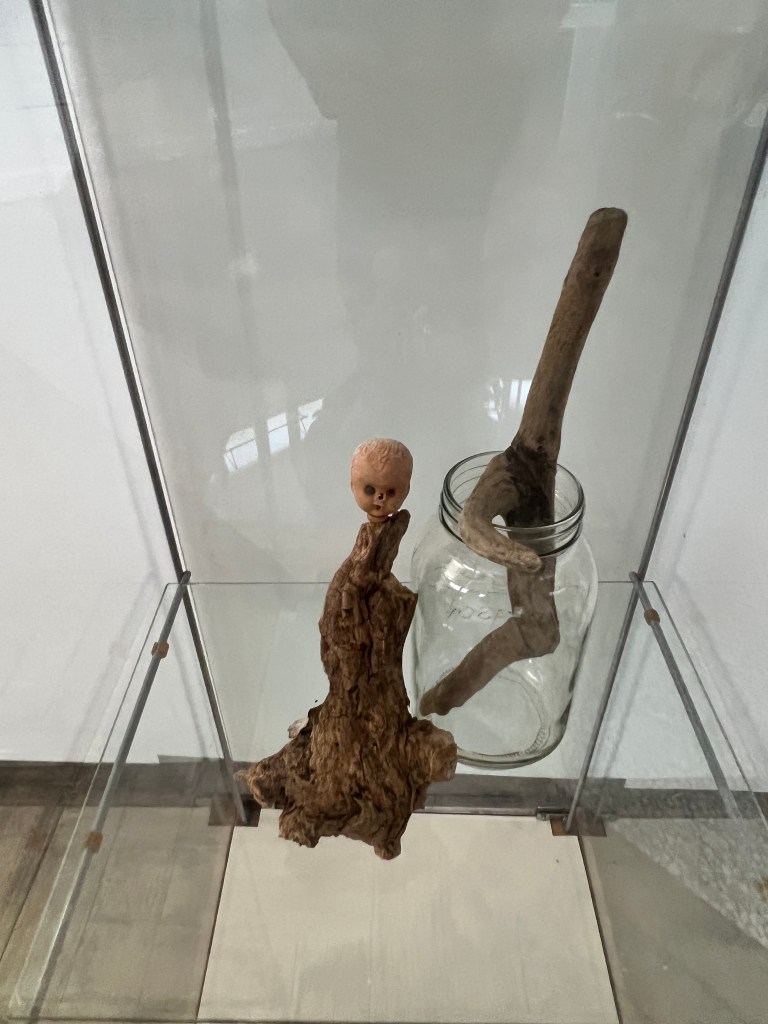
Below is my working out my ideas for display, one of my fears is that as my pieces are small they are portable and I do not want them to be stollen but also I feel that by displaying them behind glass it changes their status into precious items, instead of thrown away broken parts of found objects that I have rescued from second hand shops and destined for the bin.
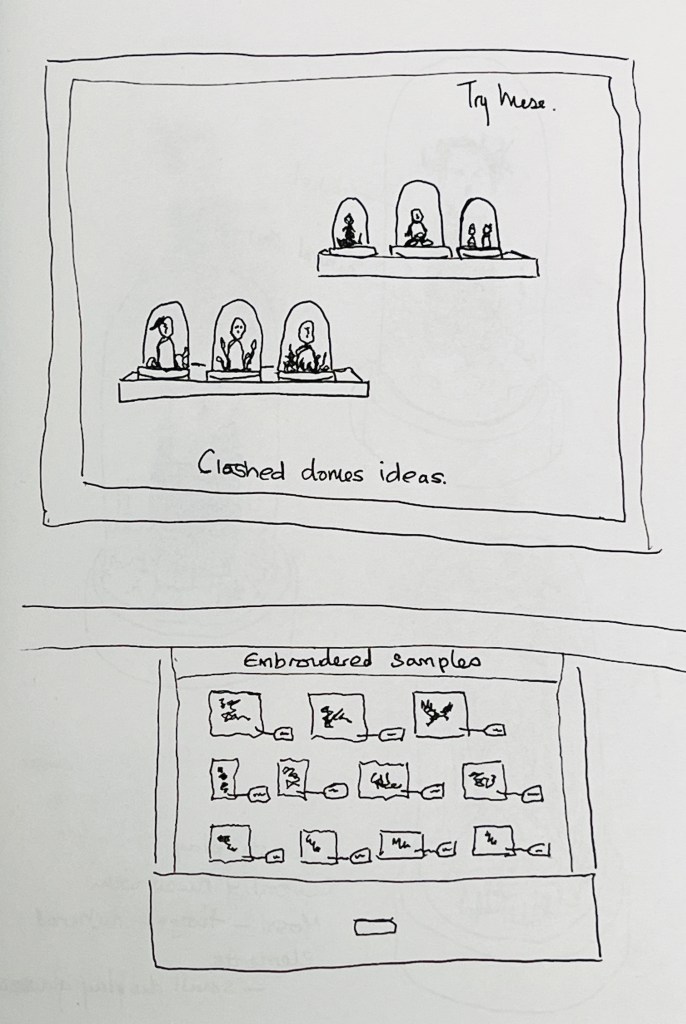

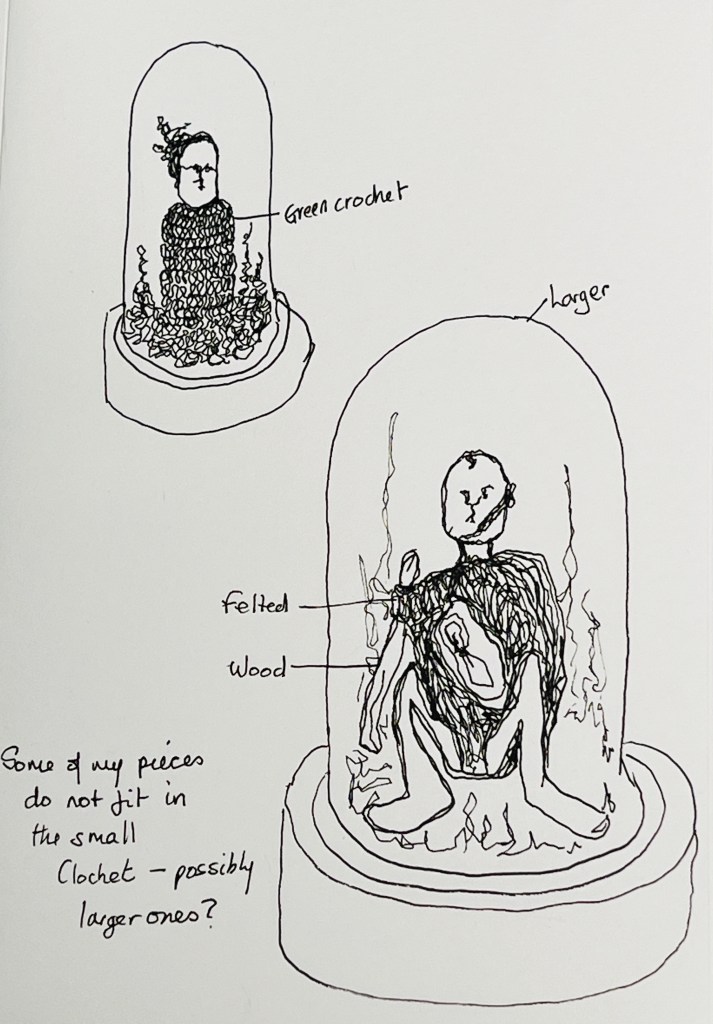
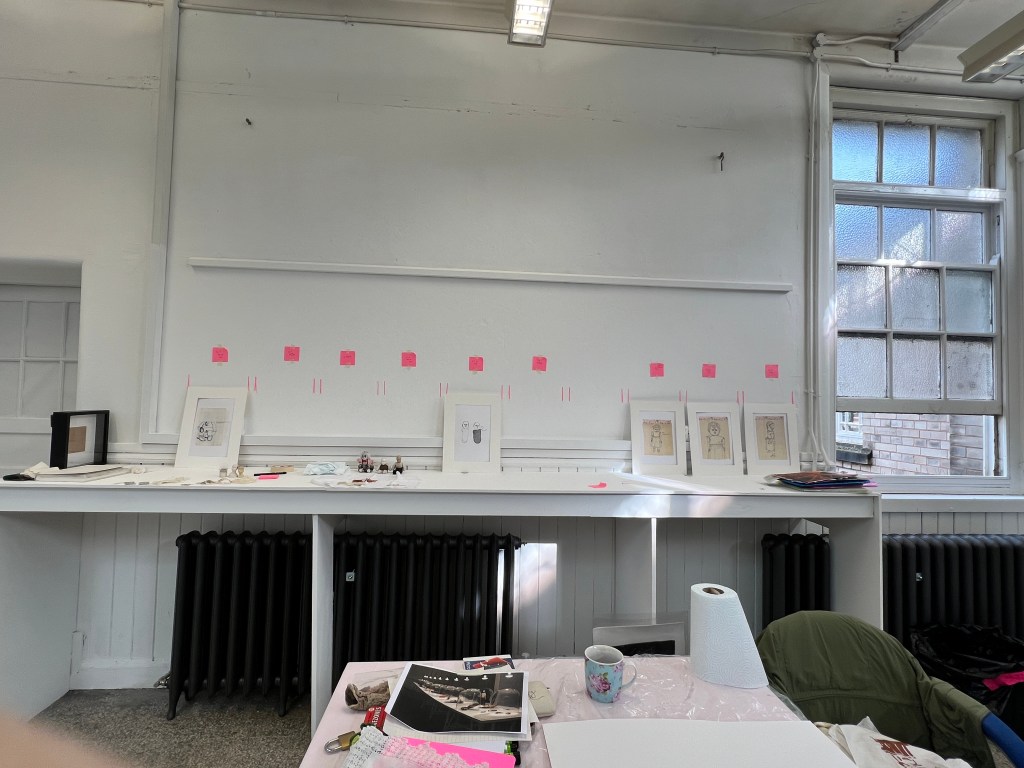
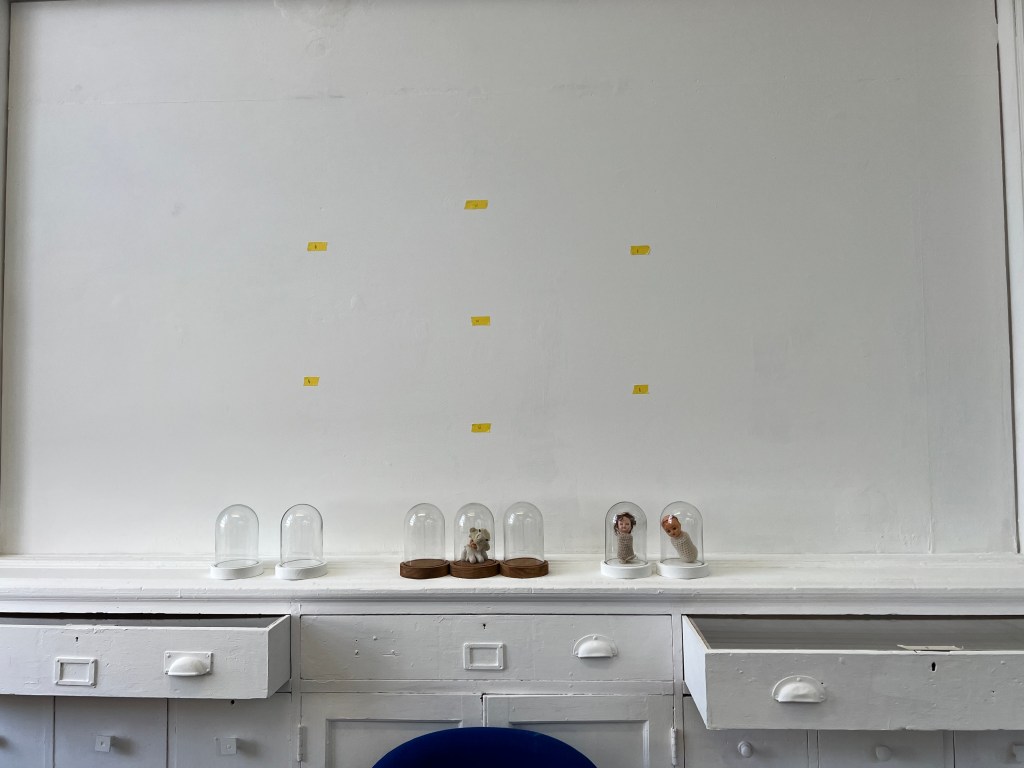
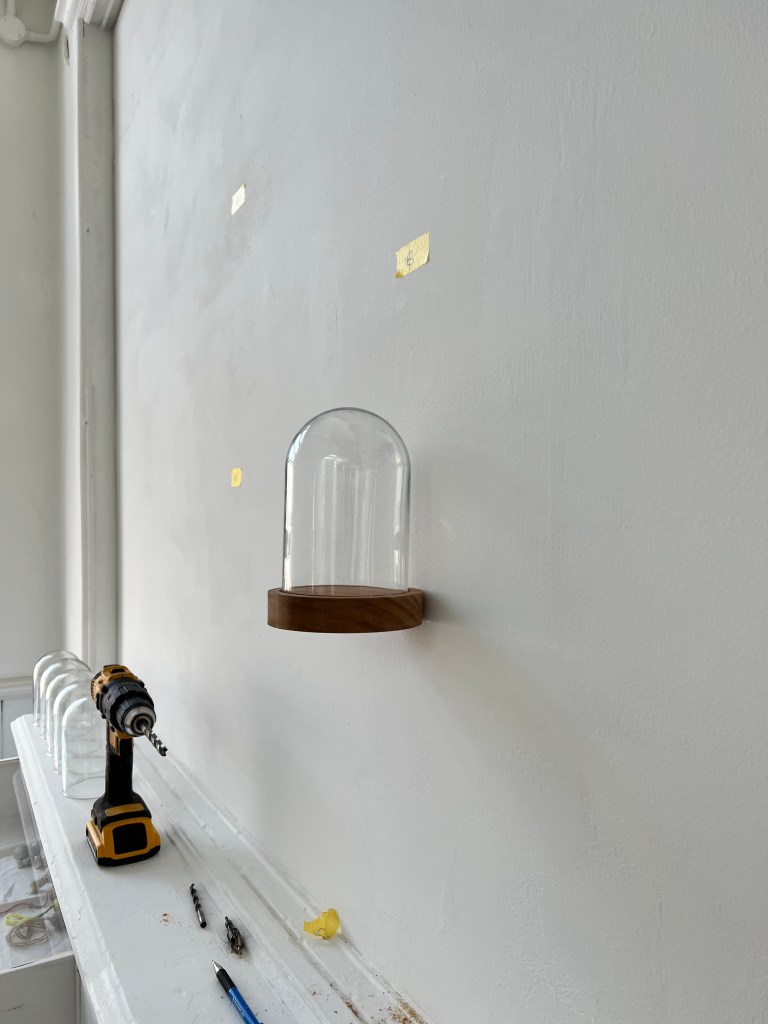
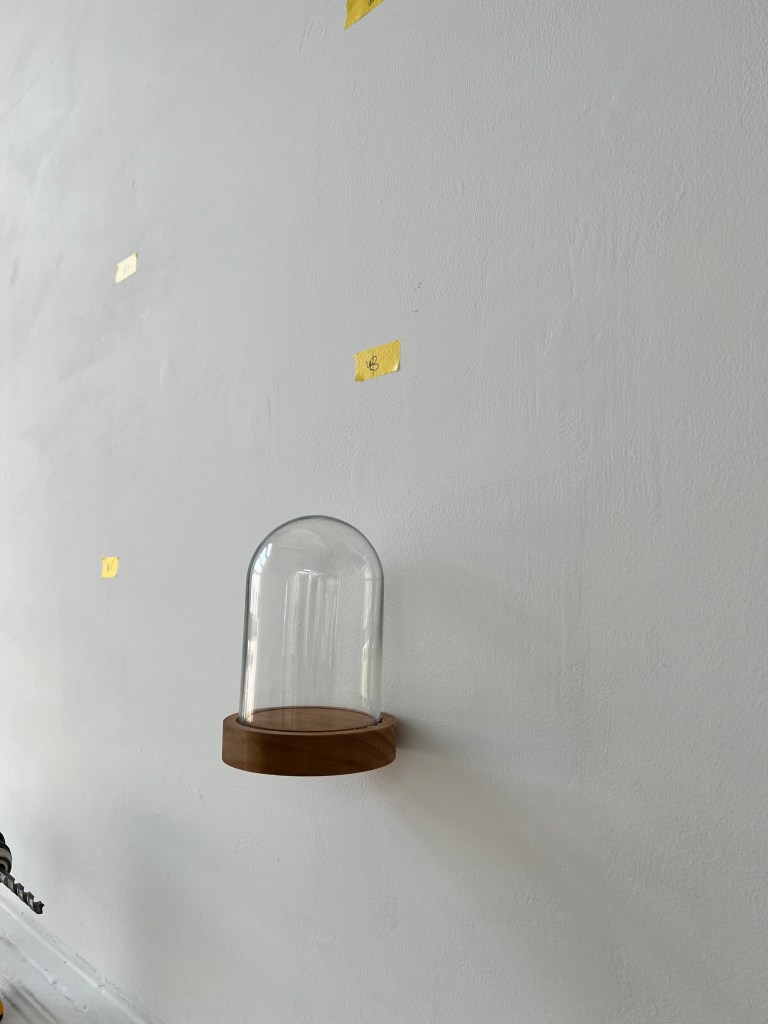
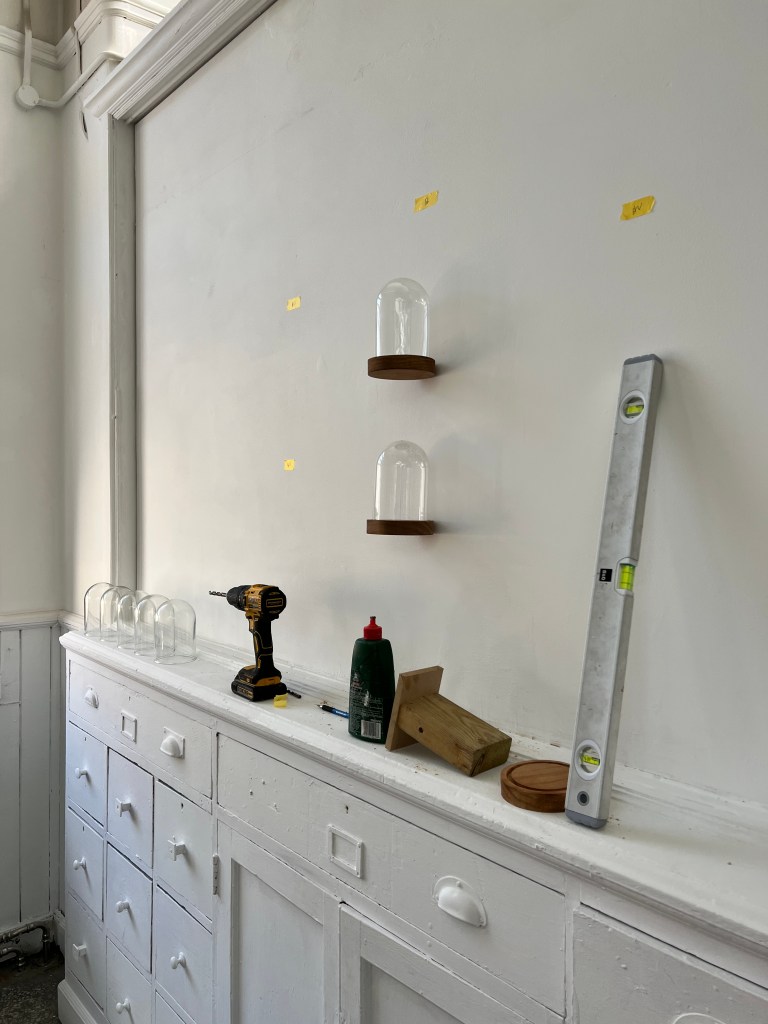
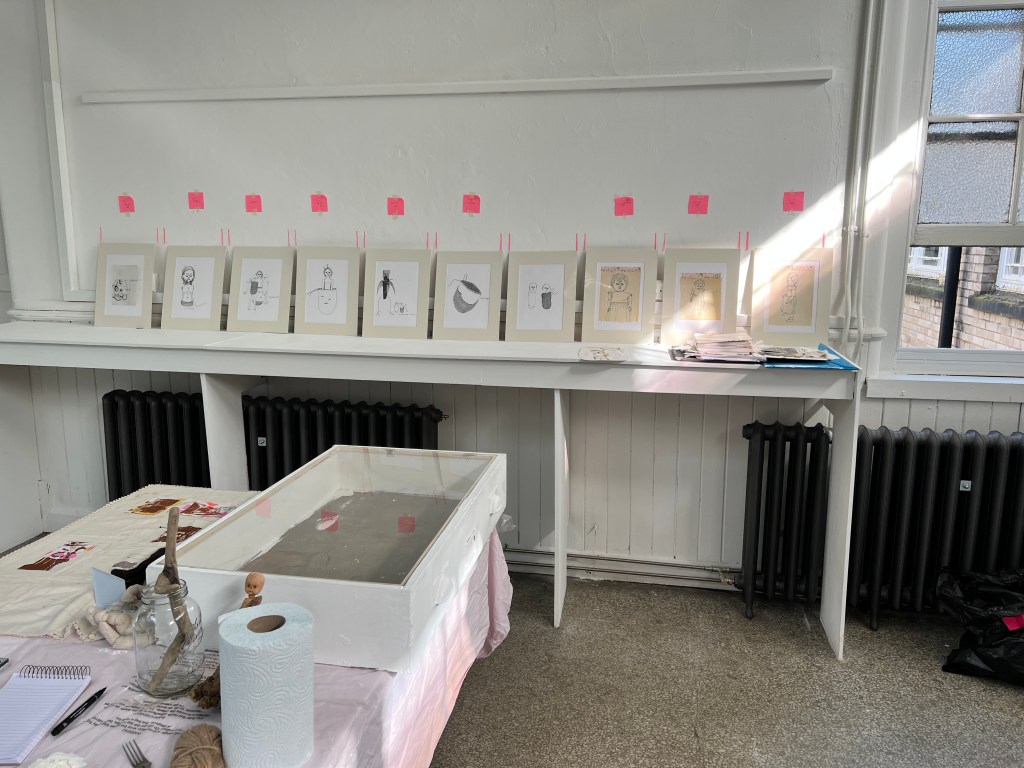
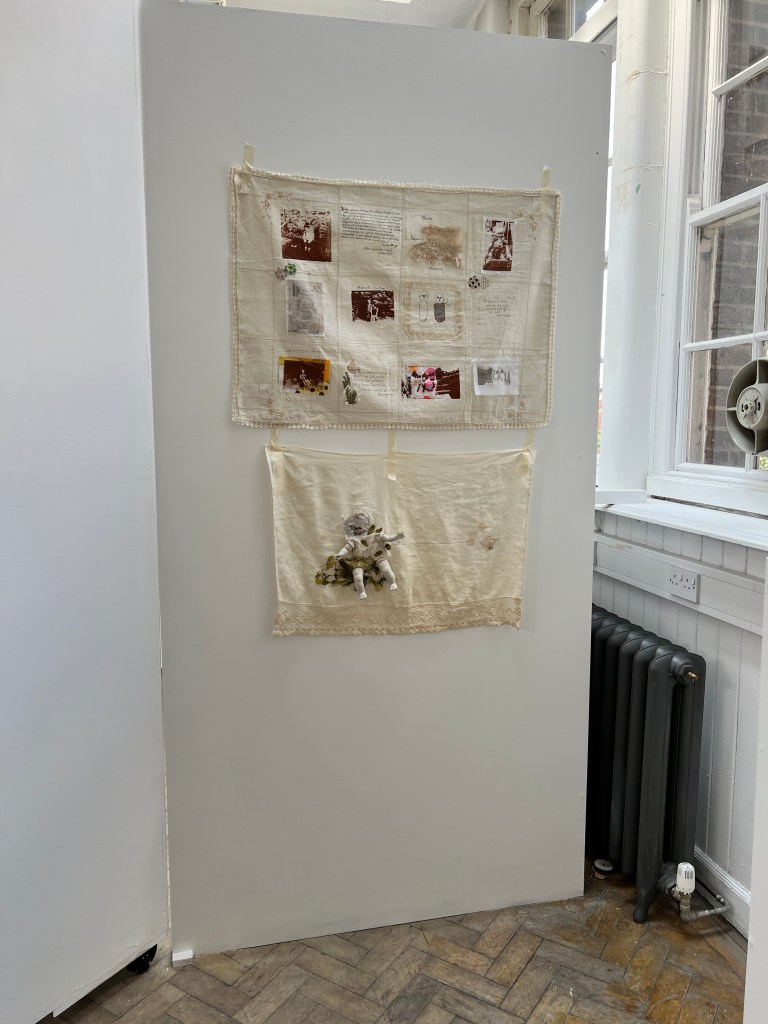
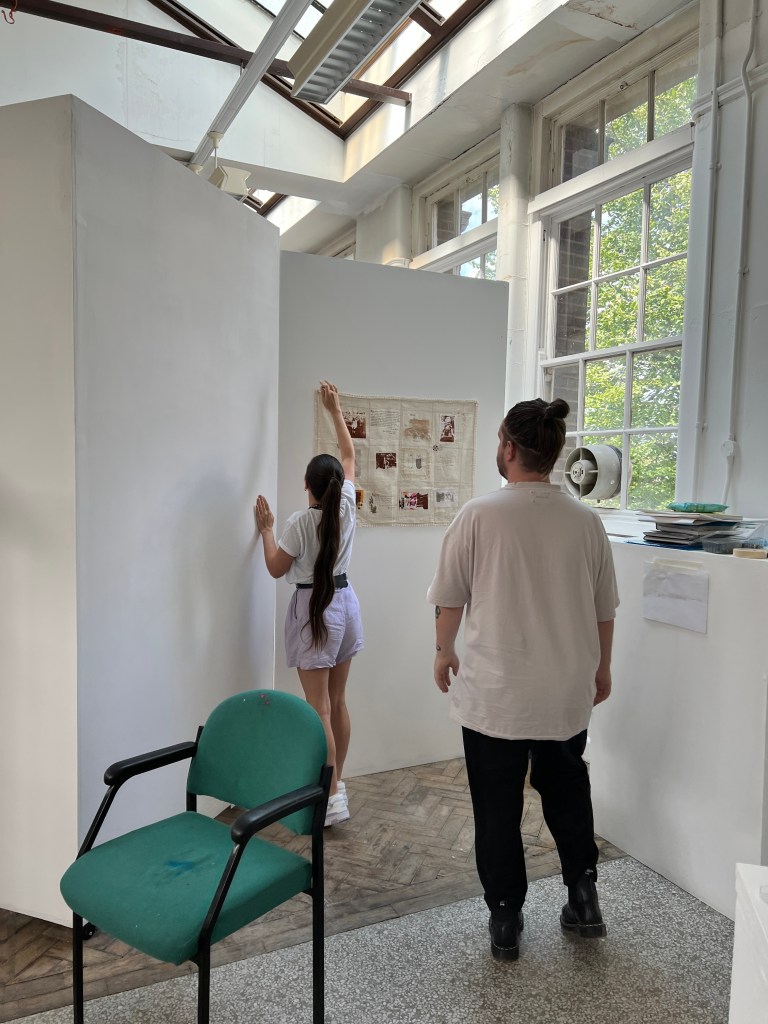
Images below show progress of placement within area.

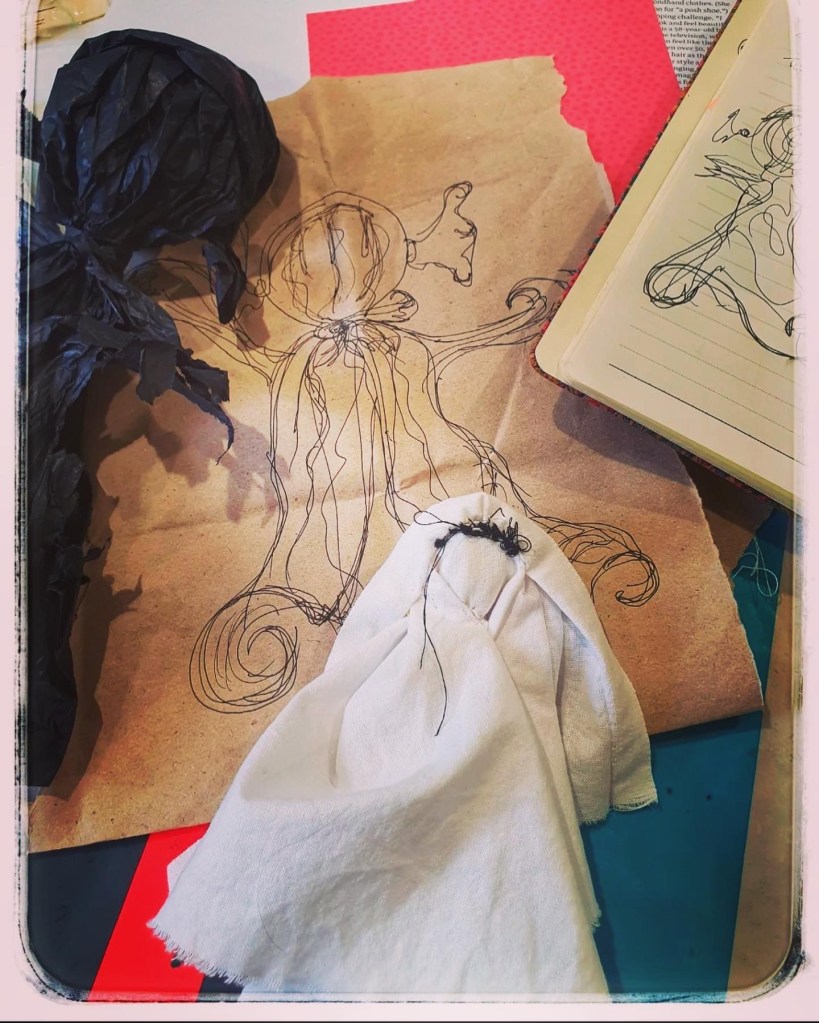
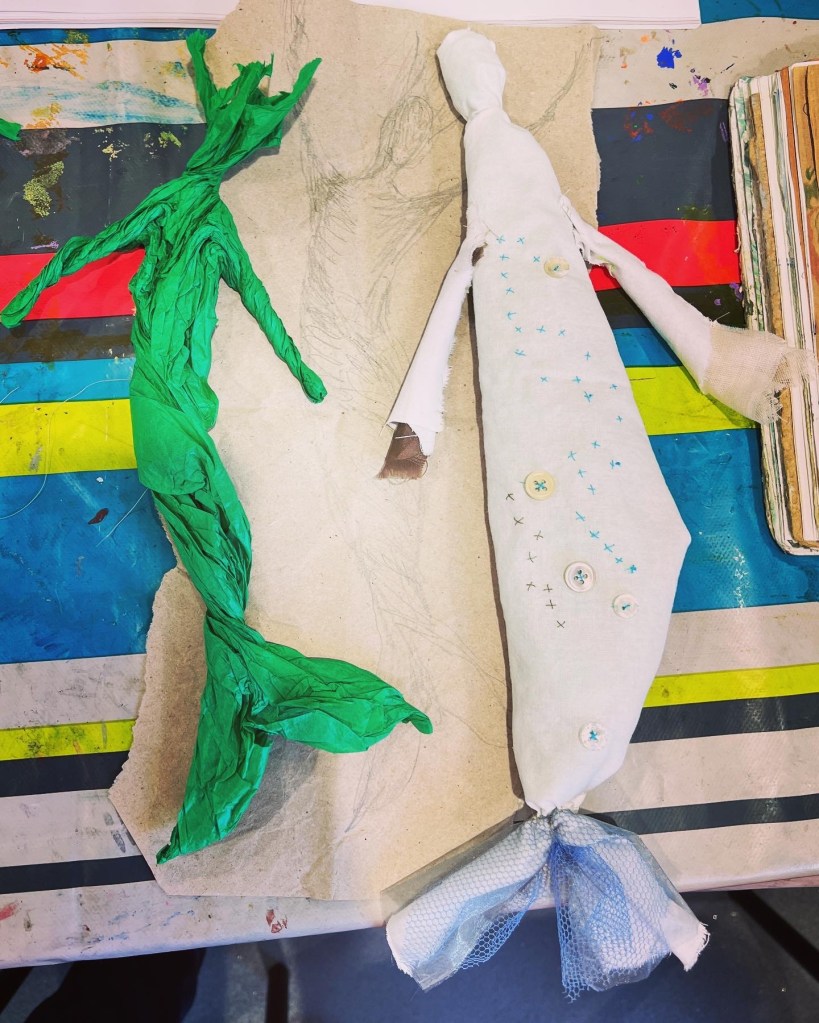
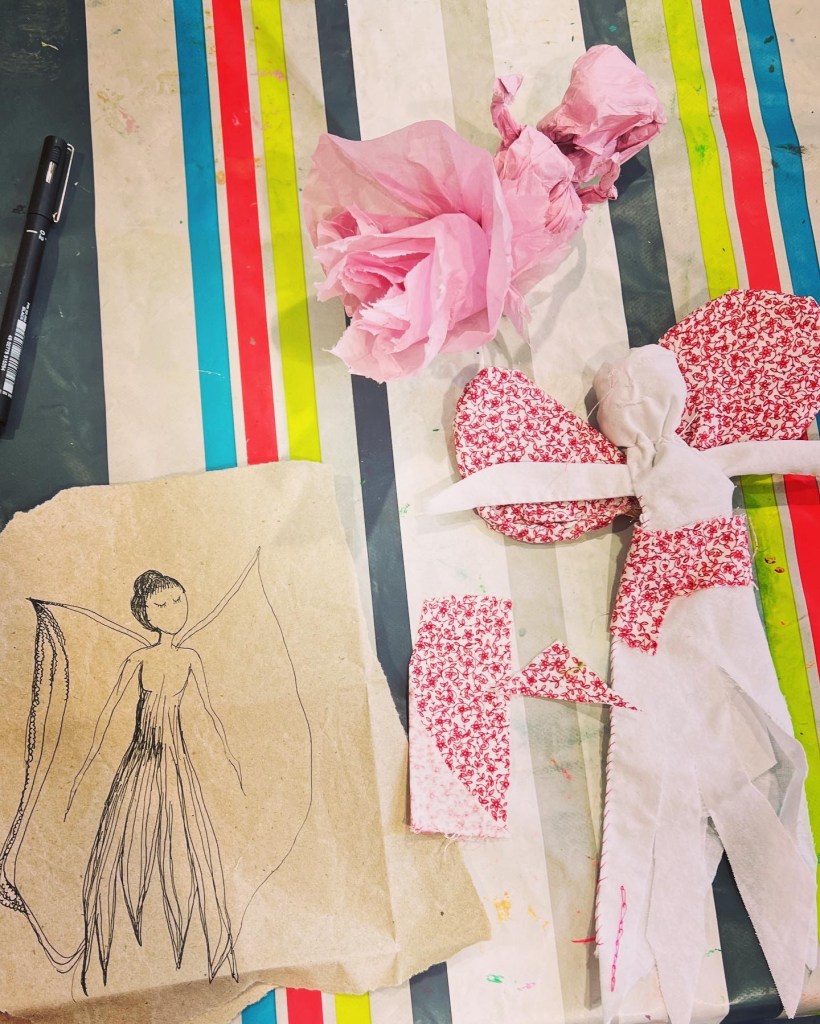
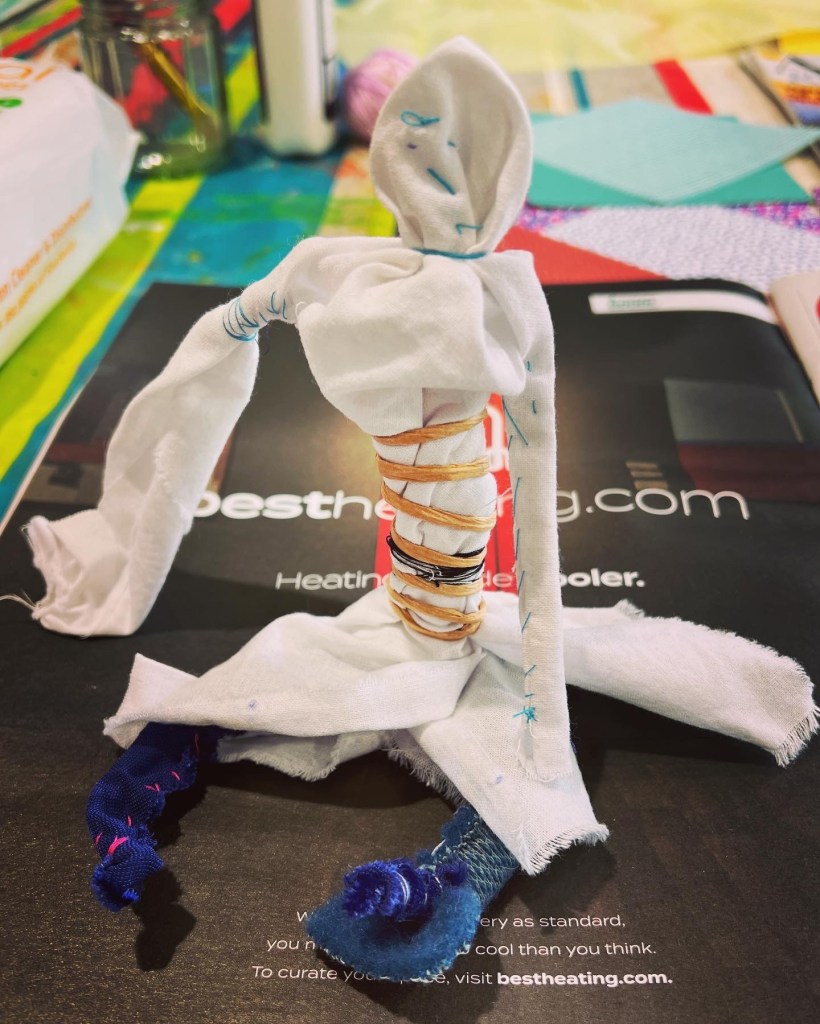
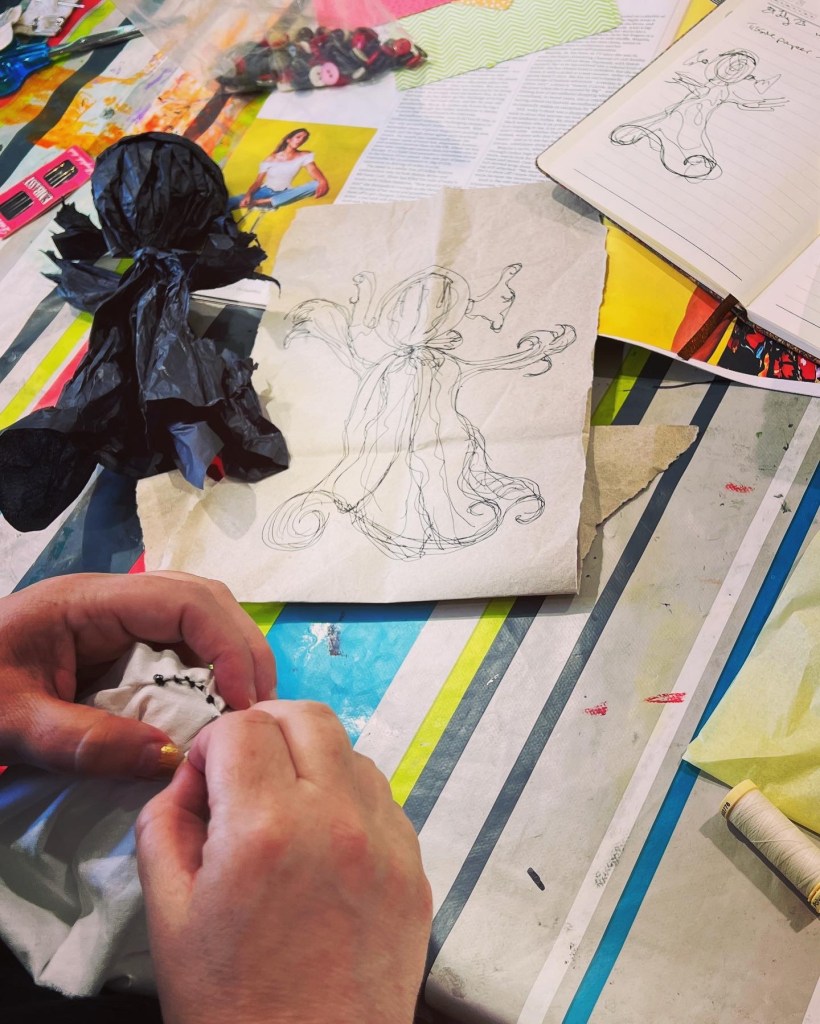
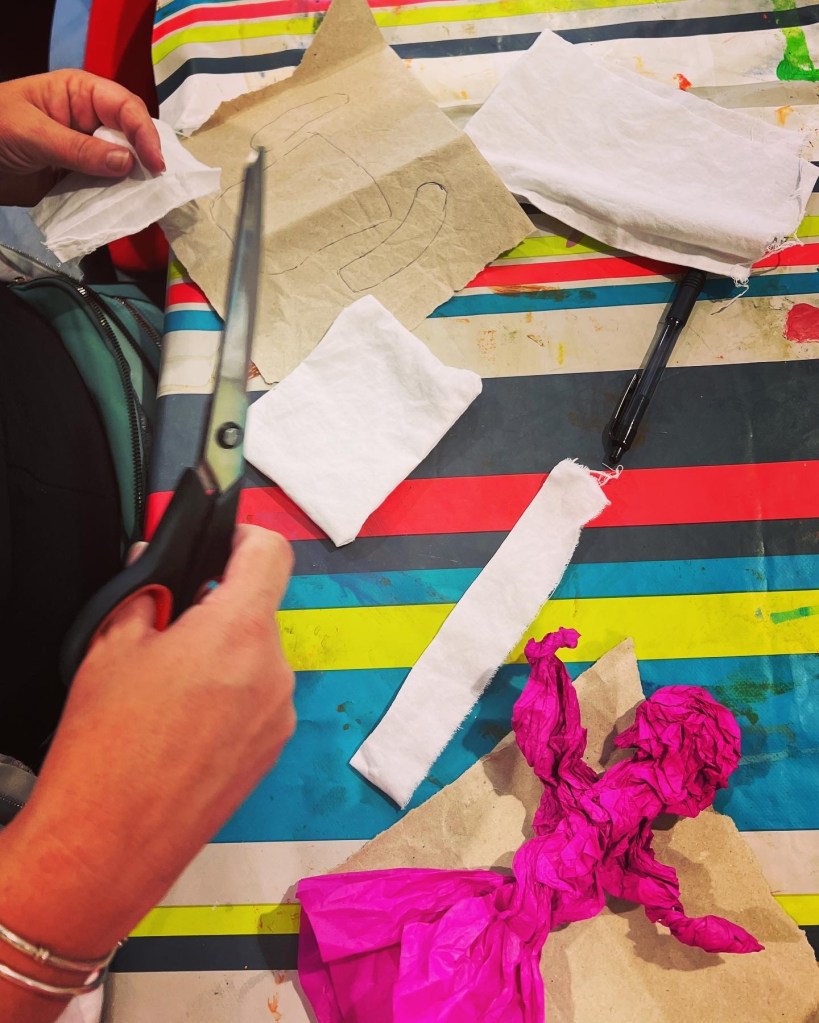
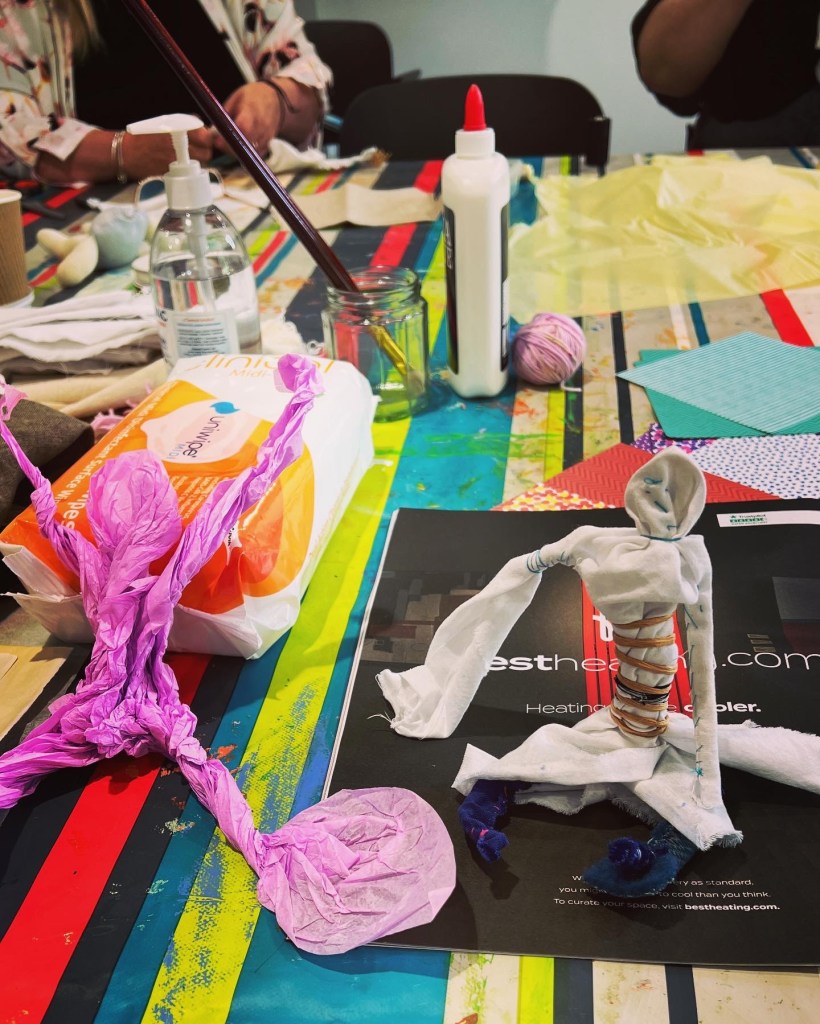
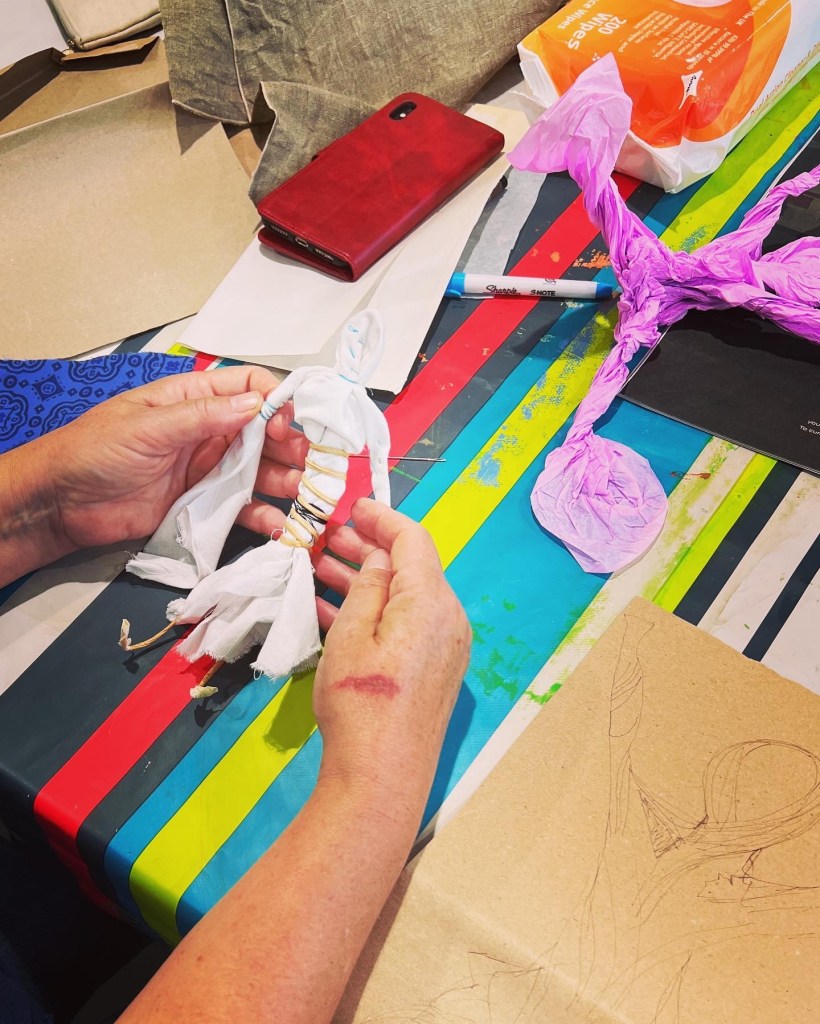
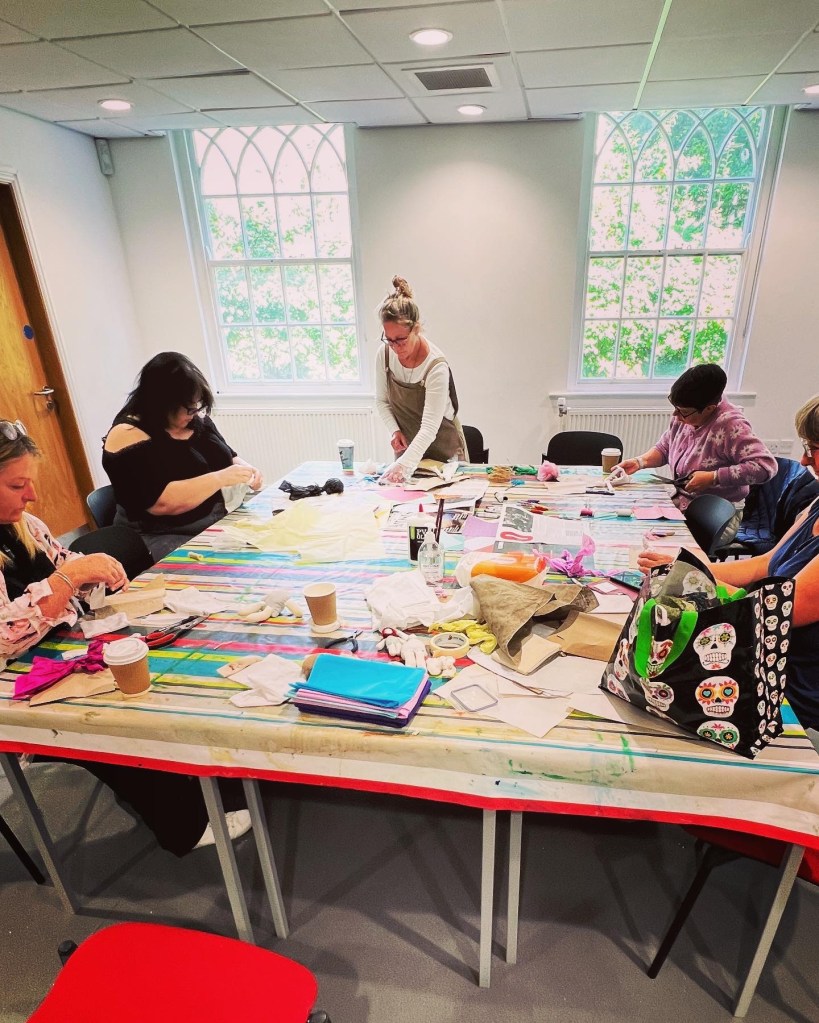
Doll making workshop at Storiel Gallery in Bangor North Wales, I very much enjoyed running this workshop, It was testing out process, how to use a sheet of tissue paper to make a figure form from this one sheet, draw what you have made then transfer this drawing to a fabric form, having to work out how to do this is learning how to manipulate materials and to loosen up creativity to produce new outcomes, not everything needs to work out, it can be a process, it can lead to new work, new techniques and renewed inspiration. I talked about my own journey with making and how this process is something I often go back to when I am stuck.
I received very good feedback from all the participants and also from Storiel and it restored my faith in running workshops that are self directed from your own passion.
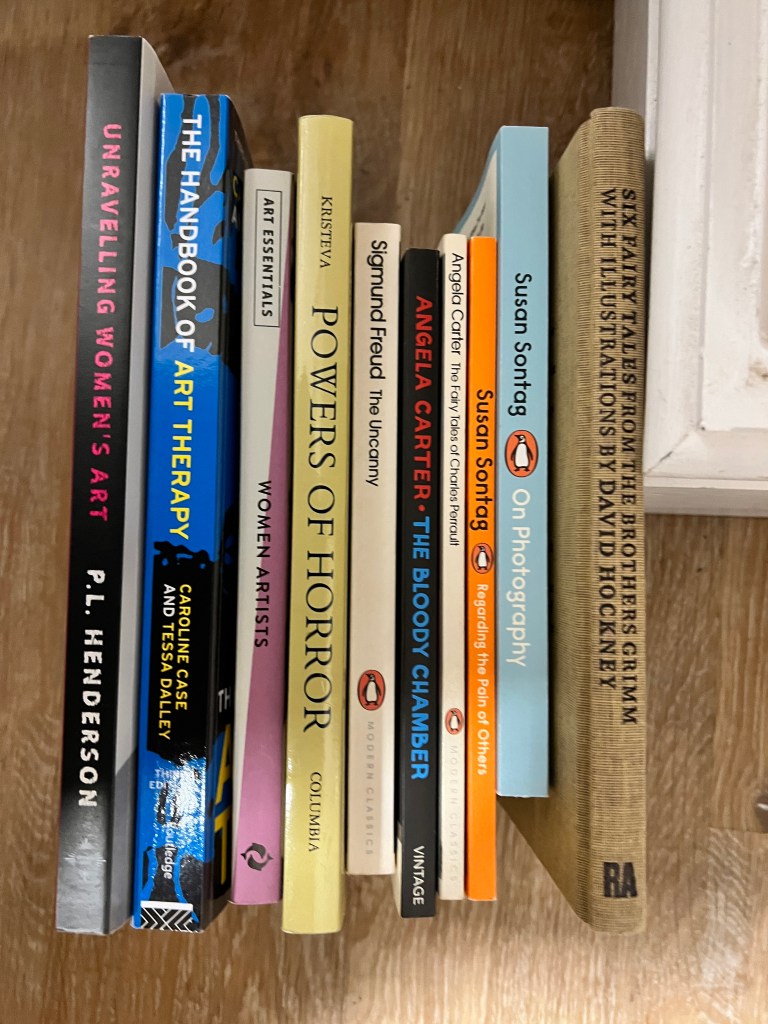
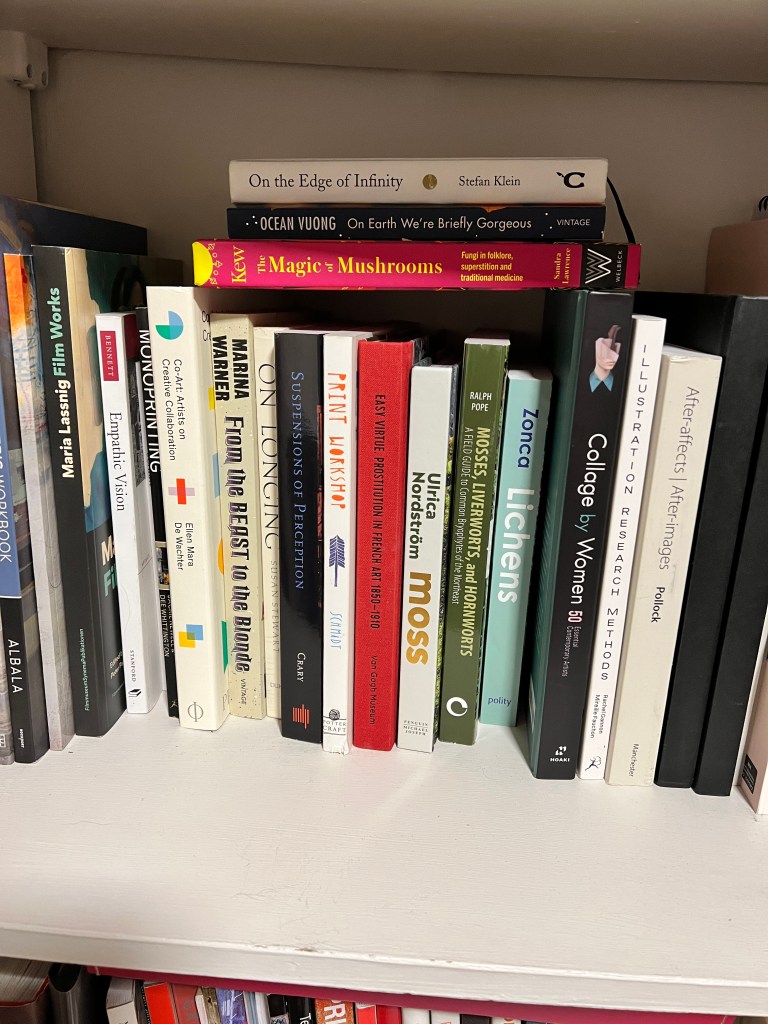

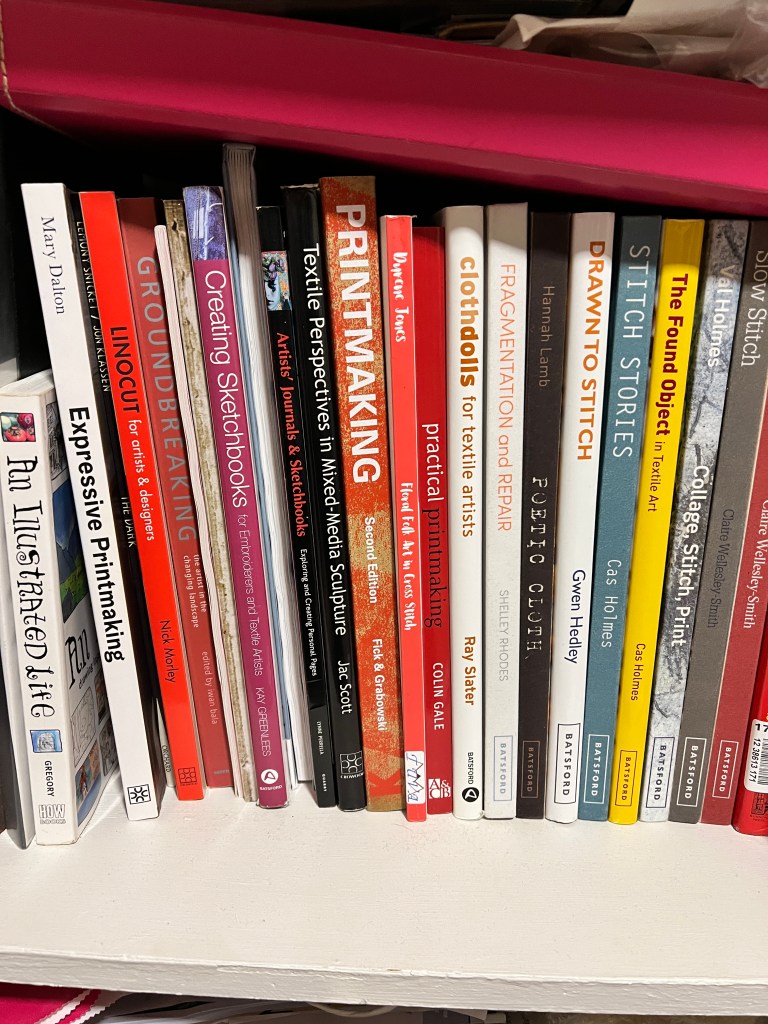
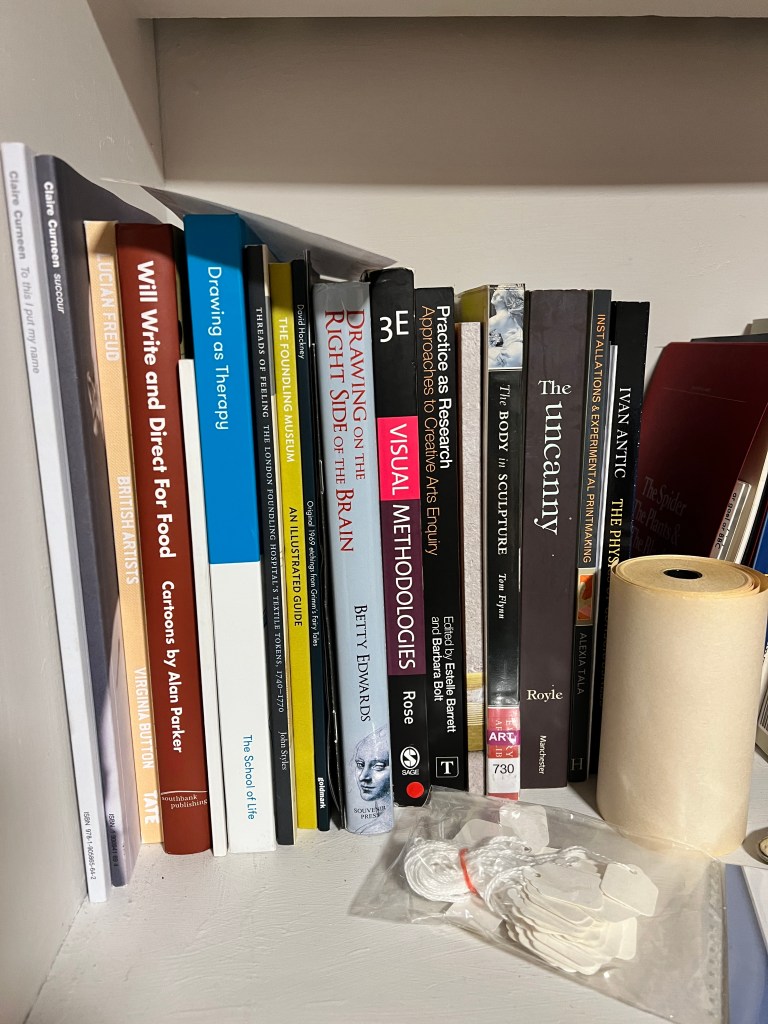
Some of the books that I have read during this programme.
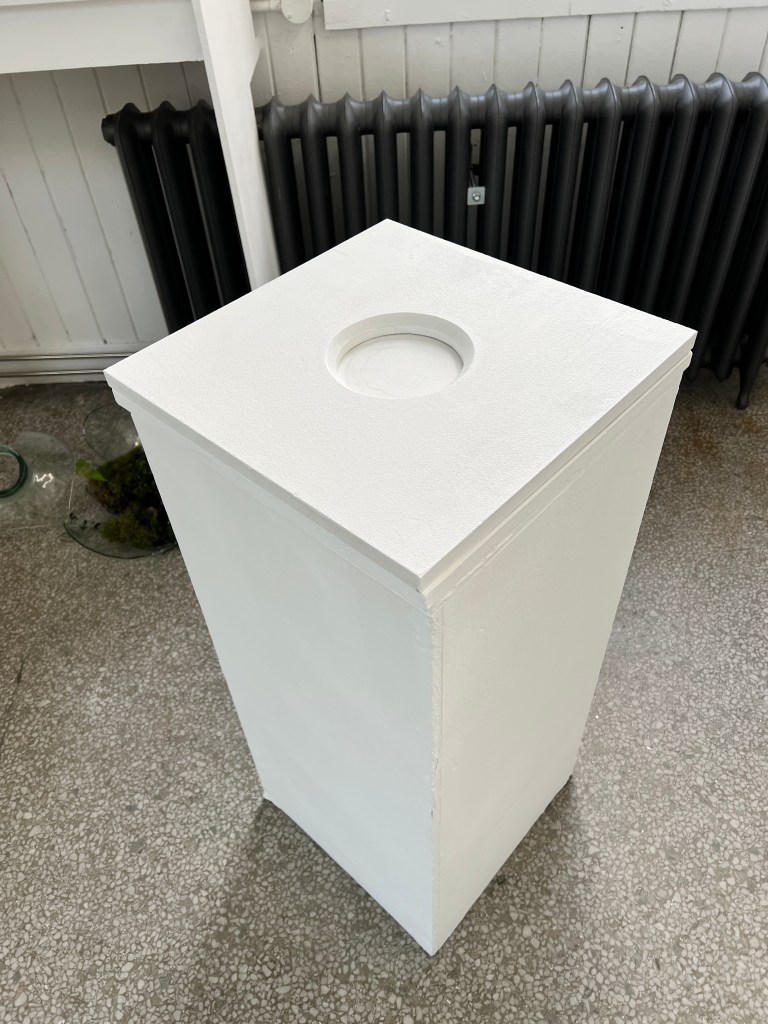
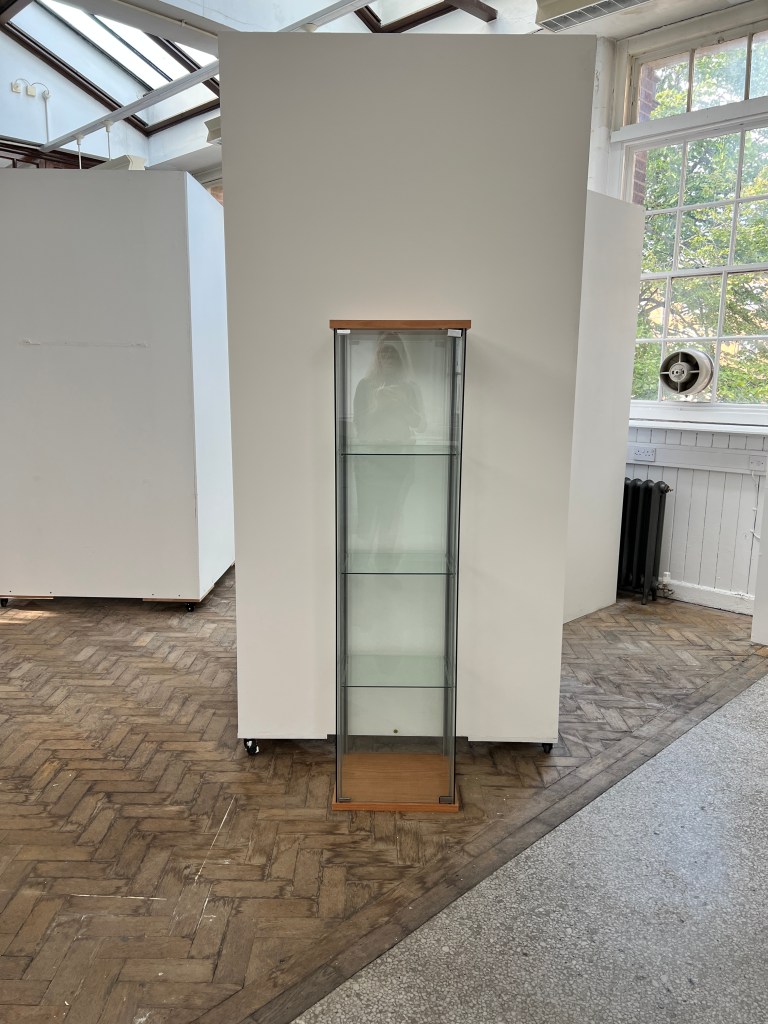
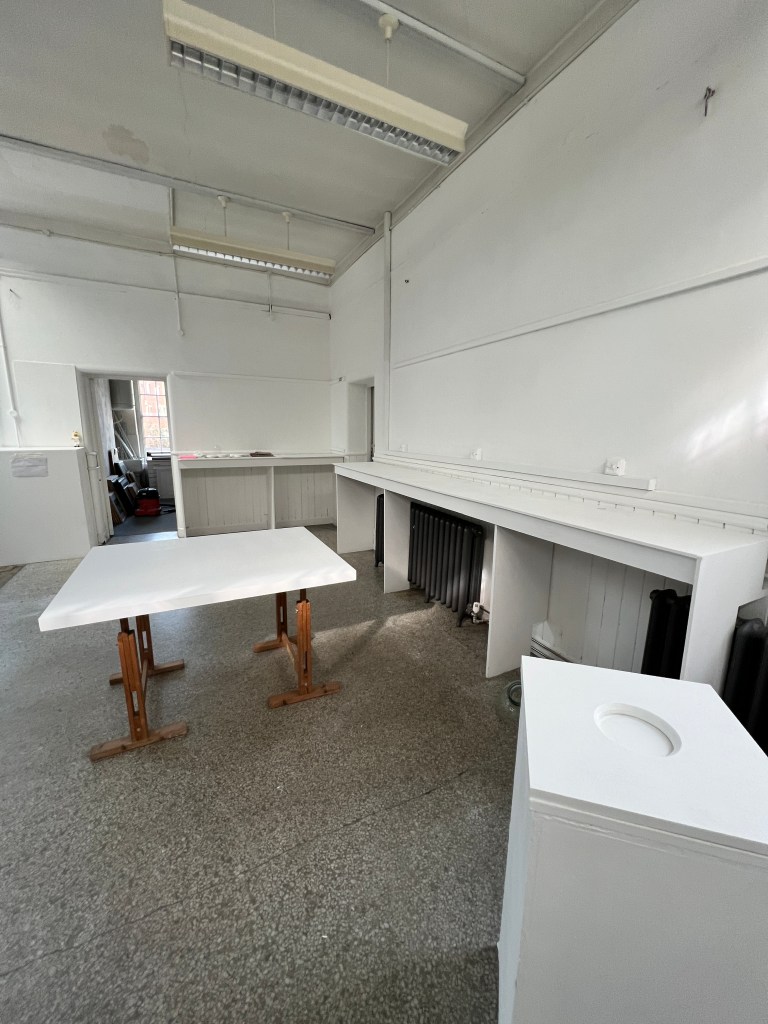
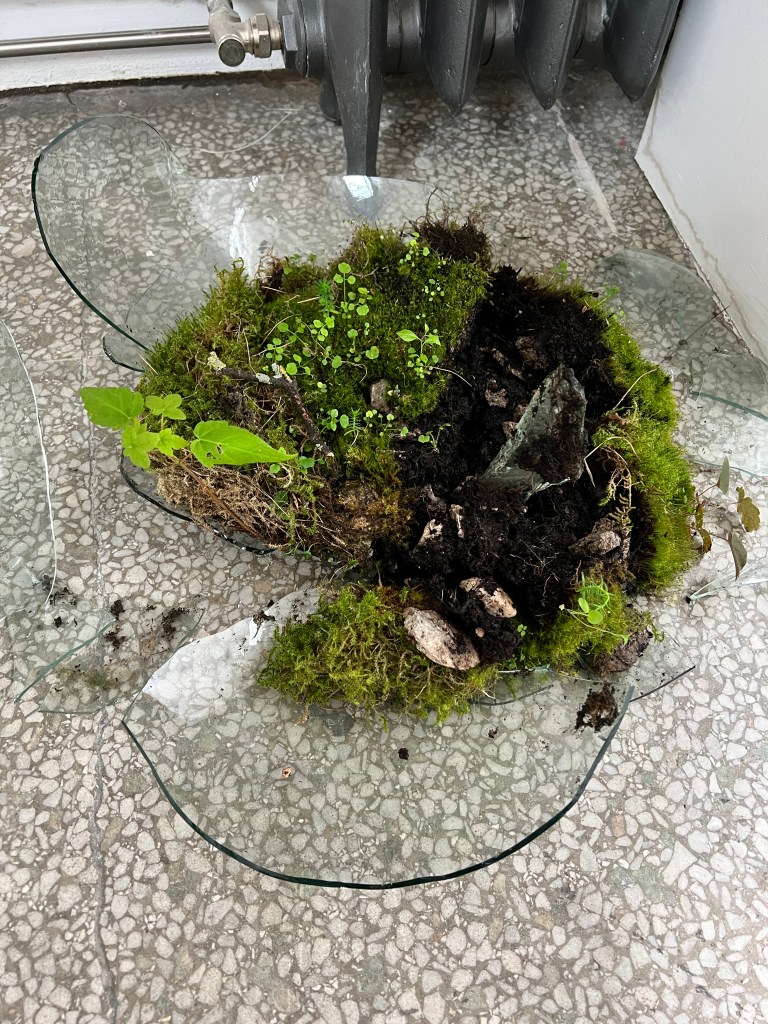
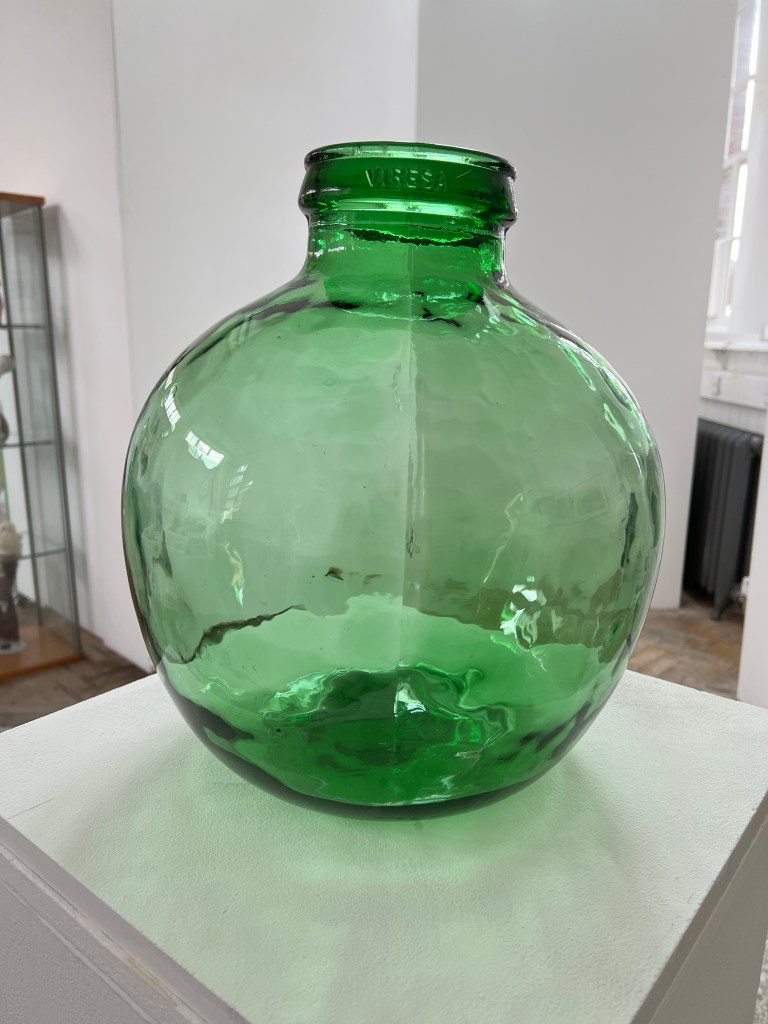
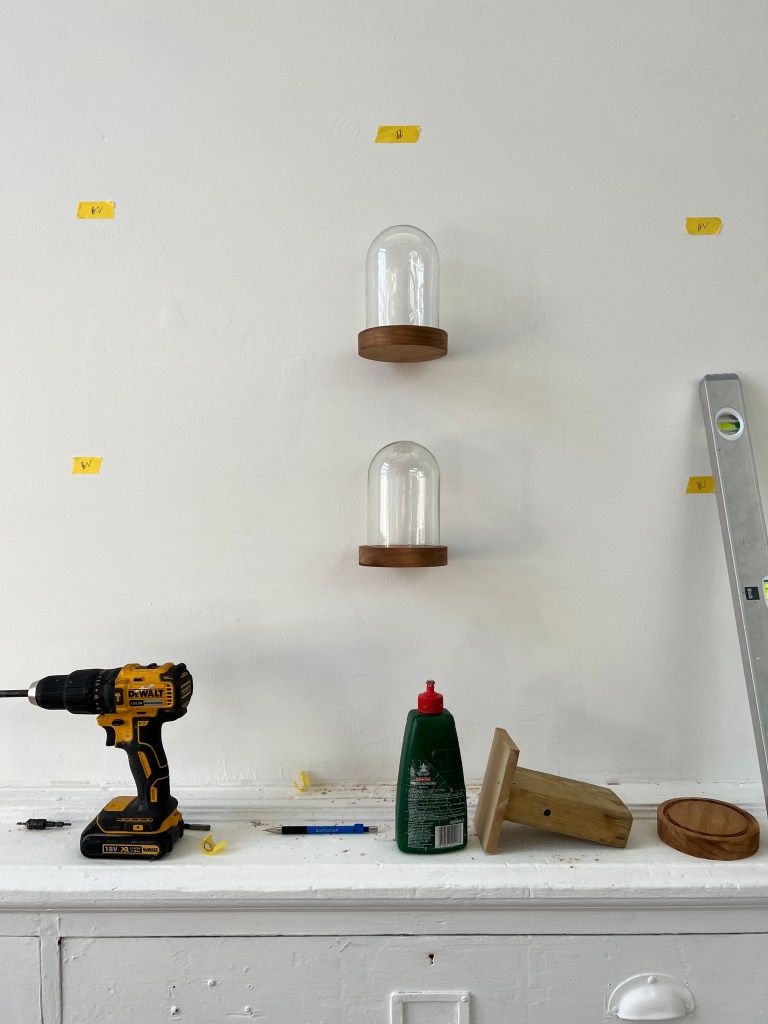
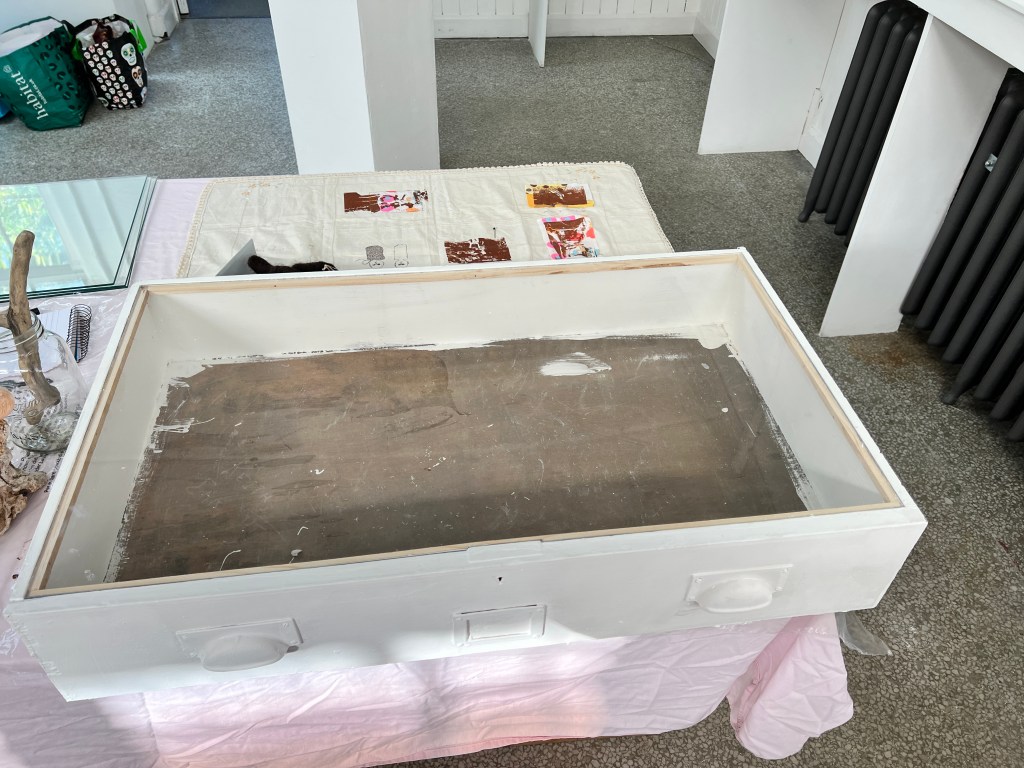
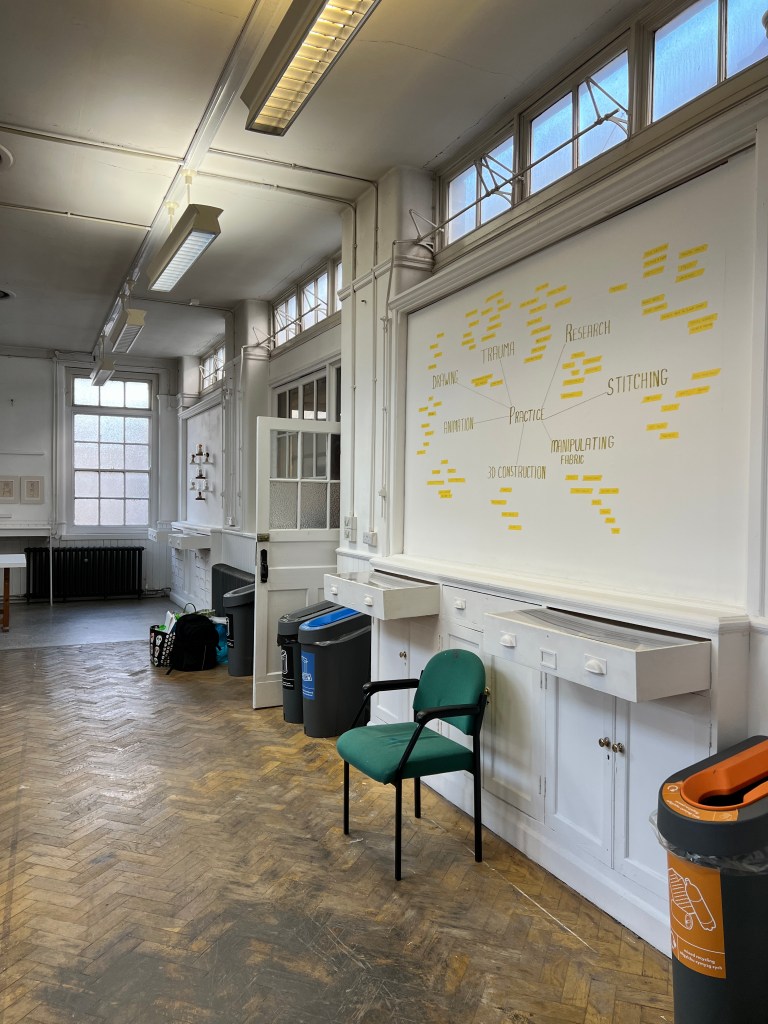
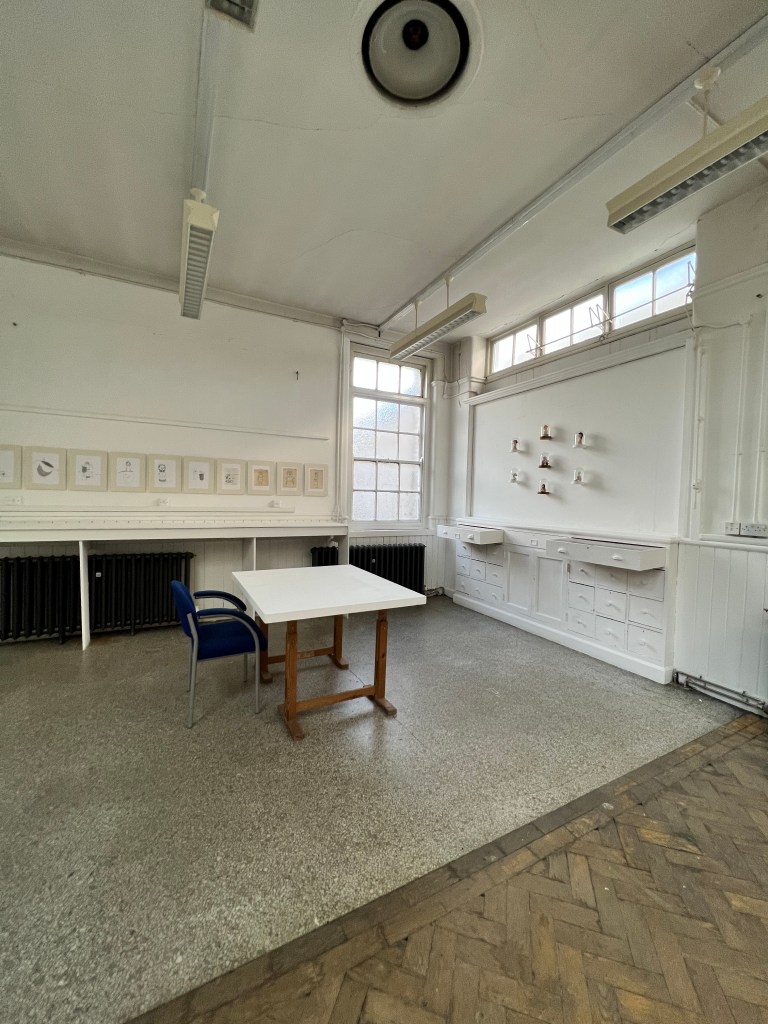
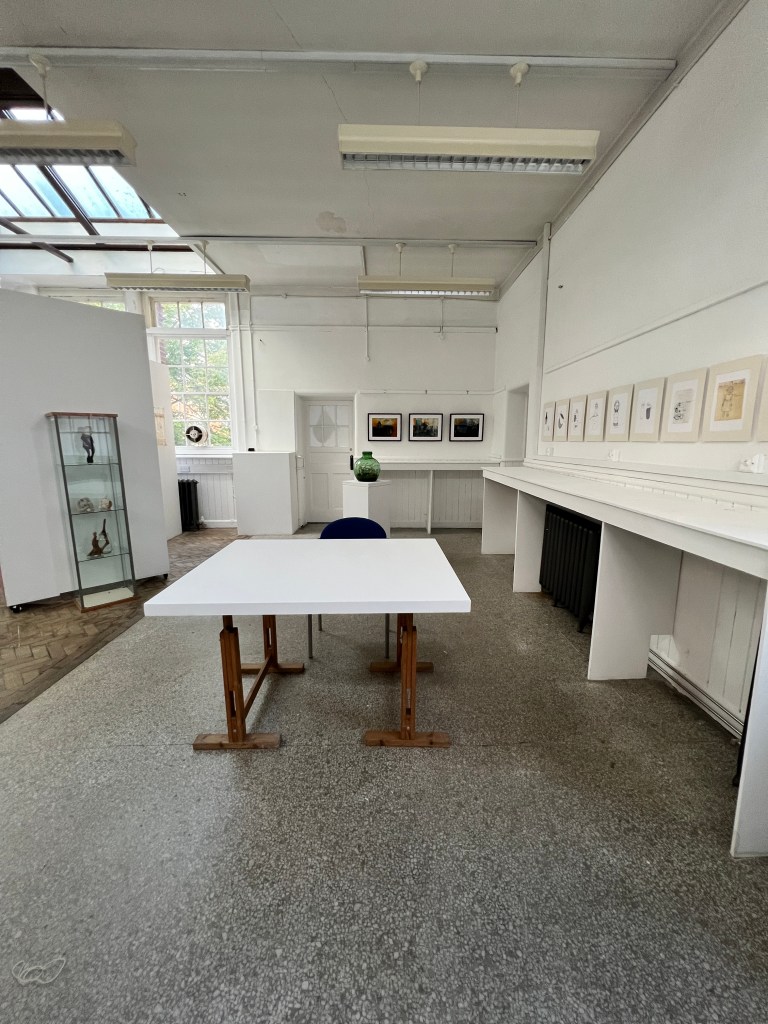
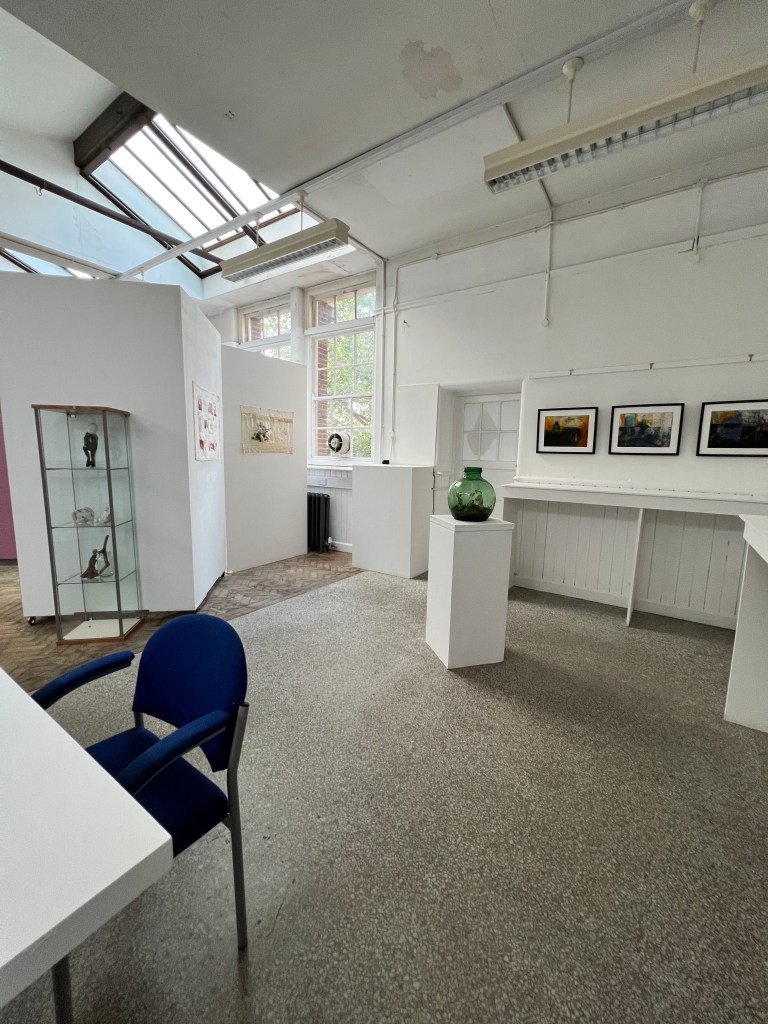
Below is progress of my exposition while I work out what goes where, what works what doesn’t , cleaning and painting, lining my drawers, getting perspex to cover the drawers. smashing the glass bottle by placing it on the floor to be saved by another student who has given me a new bottle.
Such a hard slog to paint and make good the space before bringing my pieces in, this has been an exhausting time but exhilarating too whilst bringing my work together.











 CarysAnne.Art